


The global natural gas generator market now exceeds $3 billion. Demand is rising 3% to 7% annually as data centers expand, emissions rules tighten, and hospitals seek cleaner backup power. Facility managers and project engineers now face a decision about which natural gas applications they want to evaluate. The team must determine whether a natural gas generator meets their operational requirements.
This guide provides a complete, engineering-driven overview of natural gas generators. The system operates through its functioning mechanisms which need assessment compared to diesel engines while determining operational expenses and evaluating return on investment. The presentation will address system requirements, regulatory standards, equipment upkeep procedures and the process of implementing combined heat and power (CHP) systems.
What Is a Natural Gas Generator?

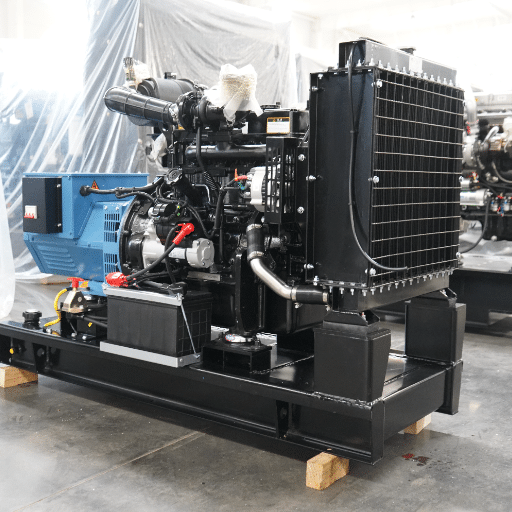
A natural gas generator operates as an internal combustion engine-generator set which utilizes natural gas as its main fuel. The engine converts a natural gas and air mixture into mechanical power which drives a crankshaft that produces electricity through an alternator. The automatic transfer switch (ATS) detects grid failure to automatically start the generator which restores power and later switches to standby mode when utility power returns.
How Natural Gas Generators Work
The process follows four basic stages:
- Fuel delivery:Natural gas enters the engine combustion chamber through a pressure regulator and fuel train.
- Combustion: The engine uses two methods to ignite air-fuel mixtures which include spark ignition and pilot fuel ignition for dual-fuel engines.
- Mechanical rotation:Expanding gases push pistons which create mechanical rotation that drives the crankshaft.
- Power generation: The crankshaft powers an alternator which transforms mechanical energy into electrical energy.
Modern units include electronic governors and voltage regulators to maintain stable frequency and voltage under varying loads.
Key Components
- Engine: The engine operates through either a spark-ignited Otto-cycle engine or a lean-burn gas engine.
- Alternator: The Synchronous generator produces AC power through its brushless design which serves as the standard for industrial units.
- Fuel system: The gas train includes a pressure regulator and shutoff valves together with either a carburetor or fuel injection system.
- Cooling system: The radiator or heat exchanger functions as a system component which controls engine temperature.
- Exhaust system: The system uses a muffler together with either a catalytic converter or SCR system for larger units to handle exhaust emissions.
- Control panel: The digital controller enables startup operations together with system monitoring and fault detection and remote communication capabilities.
- Automatic transfer switch (ATS): The switch enables load switching between utility power sources and generator power sources.
Types of Natural Gas Generators
Standby generators function exclusively during periods when power outages occur. Their usage exists in hospitals and data centers and commercial buildings.
Prime power generators serve as the main electricity source for locations which lack affordable access to electricity from the power grid.
Continuous duty generators run at constant power output during long operational periods which occur in remote industrial facilities and microgrid systems.
Natural Gas vs Diesel Generators
The selection process between natural gas generators and diesel units stands as a crucial decision for power system design. The two systems offer different benefits which depend on four factors: load profile, runtime expectations, fuel availability, and regulatory environment.
Efficiency and Power Output
Diesel fuel contains three times more energy per unit of volume than natural gas. Diesel generators operate at thermal efficiency rates between 35% and 45% when they work at 70% to 80% of their capacity. Natural gas generators achieve thermal efficiency rates between 40% and 50% in lean-burn designs, but they require higher fuel consumption to generate equivalent electrical output.
Light and variable loads provide better performance conditions for natural gas. Diesel engines that operate below 50% load for extended periods will develop wet stacking problems. When unburned fuel and carbon build up in the exhaust system this condition develops, which leads to performance problems and more maintenance requirements.
Cost Comparison
Upfront cost: For small commercial units (under 150 kW), prices are often comparable. For large industrial systems (over 500 kW), natural gas generators can cost 50% to 100% more than diesel equivalents. If a facility lacks adequate gas service, installation costs rise further.
Operating cost: Natural gas is typically 20% to 40% cheaper per kWh than diesel in most markets. In North America, natural gas generation costs roughly 0.08to0.08to0.15 per kWh, compared to 0.30to0.30to0.45 per kWh for diesel.
Total cost of ownership: Over a 10-year lifecycle, natural gas often proves more economical for units that run frequently. Diesel may be cheaper for rarely used standby systems.
Emissions and Environmental Impact
Natural gas represents the most environmentally friendly fossil fuel solution for electricity production. The fuel emits approximately 30% less carbon dioxide compared to diesel while producing significantly reduced amounts of nitrogen oxides and sulfur and particulate matter. This development simplifies the process of obtaining permits in urban regions that enforce strict air quality standards.
The modern diesel engines that use Tier 4 Final or EU Stage V after-treatment technologies have achieved major progress in emissions reduction. Natural gas provides better environmental benefits to facilities that pursue high sustainability objectives.
Reliability and Fuel Supply
Diesel generates fuel autonomy for operations through its ability to be stored at their facilities. This need exists because natural disasters can lead to earthquakes and hurricanes and cause power outages which last for extended periods of time.
Natural gas needs pipeline systems to deliver its gas. The pipeline networks possess strong operational capacity. Natural disasters can cause damage to pipeline networks. Some facilities reduce this risk through their implementation of dual-feed pipeline systems and their use of hybrid battery-natural gas systems.
Load Response
Diesel generators reach full load in 5 to 10 seconds. Natural gas units typically take 10 to 30 seconds. For applications requiring NFPA 110 Type 10 compliance (start and accept load within 10 seconds), this difference matters.
Noise Levels
Natural gas generators operate more quietly than diesel, typically at 58 to 69 dB(A) versus 75 to 90 dB(A) for diesel. This can reduce or eliminate the need for additional sound attenuation in noise-sensitive environments.
When to Choose Natural Gas
Choose a natural gas generator when:
- Reliable pipeline gas is available
- The unit will run frequently enough for fuel savings to offset higher upfront costs
- Emissions or noise regulations are strict
- Load profiles include significant light-load or variable operation
- Combined heat and power (CHP) is part of the strategy
Choose diesel when:
- Fuel independence is critical
- Ultra-fast backup response is required
- The site lacks natural gas infrastructure
- Continuous heavy-load operation is the primary use case
Commercial & Industrial Applications

Natural gas generators are moving from pure backup status to strategic, multi-use energy assets. Their ability to run indefinitely on pipeline fuel, combined with lower emissions and quieter operation, makes them ideal for several critical sectors.
Data Centers
Data centers experience costs of about $9,000 for every minute of their downtime. The natural gas generators deliver essential backup power which supports both IT systems and their cooling equipment. The current megawatt-class gas generator sets operate under design specifications which allow them to manage sudden power demands from AI/ML server racks without experiencing voltage failures.
The system meets both Tier 3 (N+1) and Tier 4 (2N+1) design requirements. Operators recognize dual-feed gas pipelines as an effective method for establishing fuel redundancy. The natural gas system helps companies achieve their environmental objectives while multiple engines possess the capability to use hydrogen blends and renewable natural gas as fuel sources.
For a deeper technical breakdown of data center natural gas generator sizing, applications and industry best practices, see our data center natural gas generator guide.
Hospitals and Healthcare
Hospitals need emergency backup systems to power their life-safety equipment and their operating rooms and their ICUs and their medicine and blood refrigeration systems. The modern natural gas units successfully fulfill NFPA 110 Type 10 standards.
Hospitals maintain extensive thermal energy requirements that persist throughout the entire year. Natural gas CHP systems provide total efficiency rates that exceed 80% while simultaneously reducing both energy expenses and greenhouse gas emissions. The state of California does not accept natural gas as a valid emergency power source for skilled nursing facilities according to its regulations.
For a deeper technical breakdown of hospital natural gas generator compliance requirements, sizing parameters and fuel planning strategies, see our hospital natural gas generator guide.
Manufacturing and Warehousing
Manufacturing plants use natural gas generators for backup power, peak shaving, and prime power in off-grid locations. The continuous fuel supply eliminates concerns about diesel delivery logistics during extended outages.
Warehouses and distribution centers benefit from lower noise levels, which is especially important in urban logistics hubs.
Hotels, Retail, and Mixed-Use Buildings
Commercial buildings use natural gas standby generators to maintain HVAC systems, elevator operations, lighting systems, refrigeration equipment, and security systems. Hotels and resorts can achieve strong efficiency gains from CHP systems that provide both electricity and hot water.
Municipal and Emergency Services
Police and fire stations, water treatment plants, and emergency shelters increasingly use natural gas backup power. The indefinite runtime provided by pipeline fuel is a significant advantage during extended grid failures.
Looking for application-specific guidance? Explore our industrial power solutions to see how natural gas generators fit into data centers, hospitals, and manufacturing facilities.
Natural Gas Generator Costs & TCO

Understanding the full cost picture is essential for capital planning and ROI analysis. The total investment includes equipment, installation, fuel, and maintenance over the generator’s lifecycle.
Equipment Costs by Capacity Tier
Residential / small commercial (14 kW to 50 kW): 5,200to5,200to25,000
Mid-range commercial (60 kW to 150 kW): 30,000to30,000to60,000
Industrial / large-scale (150 kW to 500 kW+): 100,000to100,000to200,000+
Megawatt-class systems (1 MW): 305,000to305,000to385,000
A useful rule of thumb for commercial installations is 800to800to1,000 per kW for the complete project, including equipment and installation.
Installation and Site Preparation
Installation costs vary based on site conditions and existing infrastructure:
- Residential: 1,500to1,500to5,000 for standard labor, electrical hookup, transfer switch, and concrete pad. Permits add 100to100to500.
- Commercial: 5,000to5,000to25,000 depending on gas-meter distance, trenching, and panel complexity.
- Industrial: Can exceed $25,000 when custom gas routing, ventilation, noise abatement, or seismic compliance is required.
Fuel Consumption and Operating Costs
The 100 kW natural gas generator operates at 75% load which results in an hourly natural gas consumption between 900 and 1200 cubic feet. The hourly fuel cost amounts to approximately 9to9to18 because North American utility rates charge 10to10to15 per thousand cubic feet of gas.
Operating costs for commercial and industrial units reach approximately 0.08to0.08to0.15 per kWh of energy produced. The hourly operating cost for residential standby units ranges from 0.80 to 2.00.
Maintenance and Lifecycle Costs
Natural gas generators require more frequent oil changes than many operators expect. The high combustion temperatures cause rapid oil oxidation. Service intervals are typically every 100 to 200 runtime hours for oil and filter changes.
Annual maintenance costs:
- Residential: 200to200to500
- Commercial: 1,000to1,000to3,000
- Industrial critical facilities: Higher, depending on service agreements and runtime
Total Cost of Ownership Example
Consider a 200 kW commercial natural gas generator used for backup and peak shaving, running 500 hours per year:
- Equipment + installation: ~$180,000
- Annual fuel: ~$25,000
- Annual maintenance: ~$2,500
- 10-year operating cost: ~$275,000
- Total 10-year cost: ~$455,000
Over the same period, a diesel unit with higher fuel and fuel-management costs might add 75,000to75,000to125,000 in operating expenses.
For a complete picture of what a natural gas generator costs to own, see our guide to commercial natural gas generator cost.
Sizing & Specifications

Proper sizing ensures reliable performance, avoids chronic overloading, and prevents wet stacking from under-utilization.
Calculating Required kW Capacity
Start by listing all equipment the generator will power. Record both running watts and starting watts for motor loads, which can draw two to three times their rated power during startup.
Total running load: Sum of all continuous loads
Total starting load: Highest inrush load plus all other running loads
Recommended capacity: Total starting load × 1.1 to 1.25 (safety margin)
For example, if your facility has a total running load of 120 kW and the largest motor adds 80 kW of inrush, the calculation is:
(120 kW + 80 kW) × 1.2 = 240 kW minimum generator size
Voltage and Phase Requirements
Commercial and industrial generators are available in multiple configurations:
- Single-phase: 120V / 240V for residential and small commercial
- Three-phase: 208V, 480V, or 600V for industrial and commercial buildings
- Medium voltage: 2,400V to 13,800V for large industrial campuses and data centers
Always match the generator output to your facility’s electrical distribution system.
Load Factor and Derating Considerations
Load factor is the ratio of actual output to rated capacity over time. For long generator life, maintain an average load factor of 60% to 80%.
Generators must also be derated for:
- Altitude: Output drops approximately 3% per 1,000 feet above sea level
- Temperature: Output drops approximately 1% per 10°F above 77°F
- Humidity and dust: Can reduce cooling efficiency and increase maintenance needs
Gas Line Sizing Essentials
The system needs enough gas pressure and gas volume to function properly. The natural gas generators need 4 to 7 psi pressure at their fuel inlet. The system experiences performance problems because operators frequently use gas lines that have insufficient size.
Gas line sizing depends on:
- Generator fuel consumption rate (BTU/hr)
- Distance from gas meter to generator
- Number of fittings and elbows
- Existing gas loads in the building
Always have a licensed professional size and install the gas line according to local codes and manufacturer specifications.
Want to understand how generator sizing affects your brand selection? Read our guide on how to size a natural gas generator to match power requirements before comparing brands.
CHP & Cogeneration Systems
Combined heat and power (CHP) which people also call cogeneration operates by turning waste heat from electricity production into useful energy. Modern industrial CHP systems operate primarily on natural gas as their main fuel source.
What Is CHP?
Power plants that use traditional methods to produce electricity generate waste heat which they release into the atmosphere resulting in 33% to 45% fuel efficiency. CHP systems capture waste heat which they use for space heating and water heating and steam production and absorption cooling. The system efficiencies of most installations fall within the range of 65 to 88 percent while certain systems reach performance levels of 90 percent.
Heat Recovery and Efficiency Gains
A natural gas engine-generator produces heat in five main areas:
- Jacket cooling water
- Lube oil cooling
- Air intake intercooler
- Exhaust gases (400°C to 500°C)
- Radiated heat from the engine block
Exhaust heat can be used directly for drying or passed through a waste-heat boiler to generate steam. Jacket water heat is ideal for space heating and domestic hot water.
Industrial Applications and ROI
CHP is especially effective for facilities with constant thermal and electric demand:
- Hospitals: Space heating, laundry, sterilization, and domestic hot water
- Food processing: Drying, washing, and pasteurization
- Chemical and petrochemical plants: Process steam and reaction heat
- Paper and pulp: Drying and process heating
- District heating and cooling: Serving multiple buildings from a central plant
A European petrochemical plant replaced steam boilers with a 15 MW natural gas CHP system. The installation achieved 84.55% overall efficiency, saved over 11,000 tonnes of oil equivalent per year, and reduced CO₂ emissions by 27,000 tonnes annually. Payback period for the investment required 5.5 years.
CHP systems can also reduce energy costs by 20% to 50% and improve resilience by allowing island-mode operation during grid failures.
For a deeper technical breakdown of industrial CHP cogeneration natural gas generator systems for factory operational efficiency, see our industrial CHP cogeneration guide.
Installation, Codes & Compliance

Proper installation ensures safety, reliability, and regulatory compliance. Several codes and standards govern natural gas generator installations.
For a deeper technical breakdown of commercial and industrial natural gas generator installation standards and process protocols, see our natural gas generator installation guide.
NFPA 110 Requirements
NFPA 110 is the standard for emergency and standby power systems in the United States. It classifies generators by:
- Type: How quickly the generator must start and accept load (Type 10 = 10 seconds)
- Level: The consequence of failure (Level 1 = life safety; Level 2 = less critical)
Hospitals, fire stations, and data centers typically require Type 10, Level 1 systems.
Gas Line Installation and Permitting
Natural gas generator installations require:
- Gas meter sizing or upgrade
- Pressure regulator and fuel train
- Automatic gas shutoff valves
- The system requires both appropriate ventilation and exhaust systems to operate effectively.
- Seismic restraints in earthquake-prone regions.
Permits are required for electrical work, gas piping, concrete pads, and sometimes environmental review. Work with licensed contractors familiar with local codes.
Automatic Transfer Switch Selection
The ATS must be sized to handle the full load current and coordinated with the generator controller. Key considerations include:
- Amperage rating: Must match or exceed total load
- Voltage rating: Must match the system voltage
- Transfer type: Open transition (break-before-make) or closed transition (make-before-break) for sensitive loads
- Bypass isolation: Allows maintenance without interrupting power
Maintenance & Reliability
People think natural gas generators need less maintenance because natural gas produces fewer emissions than diesel fuel. The high combustion temperatures lead to faster oil breakdown but produce less soot and carbon buildup. A disciplined maintenance program is essential.
Service Schedules
Weekly:
- Run the generator for at least 15 minutes under load
- Visually inspect for oil, coolant, and gas leaks
- Check control panel for alarms or warnings
Monthly:
- Test battery voltage and clean terminals
- Check gas pressure at the fuel inlet
- Inspect air and fuel filters
- Drain moisture traps in fuel lines
Every 100 to 200 runtime hours:
- Change engine oil and oil filter
- Inspect spark plugs and ignition components
- Check coolant levels and hoses
- Test electrical connections and safety sensors
Annually:
- Perform a load bank test
- Inspect alternator, cooling system, and exhaust
- Replace belts and hoses as needed
- Verify emissions compliance if required
Common Issues and Troubleshooting
| Symptom | Likely Cause | Solution |
|---|---|---|
| Will not start | Weak battery, low gas pressure, fouled spark plugs | Test battery, check gas pressure, clean/replace spark plugs |
| Starts but stalls | Overheating, erratic fuel delivery, low coolant | Reduce load, check coolant, verify fuel filter condition |
| Unstable power output | Load imbalance, undersized gas line, faulty voltage regulator | Stagger high-draw loads, verify gas line sizing, test regulator |
| Excessive noise or vibration | Loose mounting bolts, damaged muffler, misalignment | Tighten bolts, inspect muffler, check alignment |
Runtime Limits and Oil Change Intervals
With a reliable pipeline supply, a natural gas generator can theoretically run indefinitely. The practical limit is maintenance. During extended outages, oil may need changing every 100 to 200 hours. For a generator running 24/7, that means an oil change every 4 to 8 days.
Keep a supply of oil, filters, and spark plugs on site for critical installations.
For ongoing care after installation, follow our natural gas generator maintenance guide.
Top Natural Gas Generator Brands & Manufacturers

The natural gas generator market includes global engine manufacturers, specialized generator set assemblers, and regional suppliers.
Residential and Light Commercial Leaders
- Generac: Dominates the North American residential standby market with air-cooled and liquid-cooled natural gas models
- Kohler: Offers residential and commercial natural gas generators known for reliability and quiet operation
- Cummins: Provides a broad range from residential standby to large industrial prime power
Industrial and Prime Power Leaders
- Caterpillar: Offers gas generator sets from 20 kW to over 4 MW, widely used in data centers and CHP applications
- Mitsubishi: Heavy-duty industrial gas engines for continuous and peaking power
- MTU (Rolls-Royce): High-performance gas generators for critical applications
- Wärtsilä: Large-scale gas power plants and CHP systems
Chinese and OEM-Focused Manufacturers
China functions as the main production site for natural gas generators which deliver low-cost products and versatile design solutions. Chinese factories serve as suppliers for various international companies who obtain either individual components or complete generator systems. The process of working directly with an established OEM manufacturer enables businesses to achieve cost savings while their product quality remains intact.
At Shandong Huali Electromechanical Co., Ltd we provide custom natural gas generator solutions from 5 kW to 3 000 kW. Our production facility operates more than 300 advanced machines together with a testing facility that complies with national testing requirements. Our company provides design solutions and branding services together with technical support to support our global OEM partners and distributors and project contractors.
Are you looking to understand how major brands stack up against one another across various generator product categories? Our comprehensive guide to the best commercial generator brands covers four industry leaders—Caterpillar, Cummins, Generac, and Kohler—and provides detailed market data alongside expert buying advice.
Frequently Asked Questions
How long can a natural gas generator run continuously?
A natural gas generator operates nonstop when its pipeline fuel supply remains operational. The system can work without restrictions until its required maintenance needs to be performed which occurs after 100 to 200 hours of continuous operation.
Is a natural gas generator cheaper to run than diesel?
Yes, in most markets. Natural gas typically costs 20% to 40% less per kWh than diesel. However, natural gas generators require greater initial investment costs which results in operational expenses determining their total ownership costs.
What size natural gas generator do I need?
Calculate your total running load plus the largest motor starting load, then add a 10% to 25% safety margin. A licensed electrician or generator engineer can perform a detailed load analysis for your facility.
Can natural gas generators be used for prime power?
Yes, prime power natural gas generators operate continuously to provide electricity in areas where grid power is either unavailable or too costly. The two systems operate differently because standby units have different cooling capacities and engine lifespans and control system features.
Are natural gas generators environmentally friendly?
Compared to diesel, natural gas generators produce approximately 30% less CO₂ and significantly lower levels of NOx, sulfur, and particulate matter. When paired with CHP, overall fuel efficiency can reach 65% to 88%, further reducing environmental impact.
What maintenance does a natural gas generator need?
Regular maintenance includes oil and filter changes, spark plug inspection and replacement, coolant checks, battery testing, air filter cleaning or replacement, and gas leak inspections. Service intervals are typically every 100 to 200 runtime hours for oil changes.
How much does a commercial natural gas generator cost?
Small commercial units (20 kW to 50 kW) cost 15,000to15,000to25,000. Mid-range systems (60 kW to 150 kW) run 30,000to30,000to60,000. Large industrial units (150 kW to 500 kW+) range from 100,000to100,000to200,000+.
Can I convert a diesel generator to natural gas?
Yes, through dual-fuel or bi-fuel conversion kits. Light commercial retrofits cost roughly 200to200to400 for the kit plus 1,000to1000to3,000 for installation. The cost of transforming large industrial facilities through dual-fuel conversions starts at 5,000 and exceeds 10,000 while needing emissions recertification.
Conclusion
Natural gas generators provide an attractive solution for facilities that have dependable pipeline access because they deliver both lower emissions and lower operating expenses and they can operate continuously. The system proves to be highly beneficial for data centers and hospitals and manufacturing facilities and commercial buildings that require environmental compliance while optimizing their fuel expenditures.
Key takeaways:
- Natural gas generators achieve 40% to 50%+ thermal efficiency and produce 30% less CO₂ than diesel
- Operating costs are typically 20% to 40% lower per kWh, though upfront equipment costs can be higher
- CHP integration can push total system efficiency to 65% to 88%
- Proper sizing, gas line design, and maintenance scheduling are critical for reliability
- Applications range from residential standby to multi-megawatt prime power and microgrids
The right natural gas generator for your particular load, runtime, and regulatory requirements would be one to serve as a backup unit for a hospital or, perhaps, a primary power system supplying an off-grid facility or a custom OEM solution for the whole product line.
For a deeper technical breakdown of dual fuel industrial generator specifications and key considerations for commercial buyers, see our dual fuel industrial generator guide.