
A failure of power for one hour leads to losses for a commercial premises for between 5,000 and 10,000 for lost productive working hours in non-functioning inventory, stoppage of work, and so on. For data centers, the cost can reach 5,000 – 10,000 per minute. Unfortunately, a lot of companies feel the effects of the inefficiency of their standby power plants due to during power outages due to wrong system layout and not because of equipment failures.
When Hurricane Sandy made its way to the East Coast in 2012, New York University’s Langone Medical Center faced a huge problem with its emergency power system, aftermath of the storm has led to a devastating failure. The basement-level fuel pumps supplying the generator were overrun by floodwaters, leaving the emergency power system out of operation even though there were several generators and enough fuel stored. Patients were forced to evacuate during the typhoon when such an event could have been avoided during the design of the power distribution system and the placement of components, as well as the provision of backup fuel delivery system.
You have to appreciate that the illustration of a dependable utility backup system is all about more than including a generator. It includes a whole set-up that is adherent to the local laws, can sufficiently serve your requirements and is operational during a power grid failure. This will be of assistance to you in the configuration of the backup generator. This is known as engineering design systems.
Understanding of Emergency Power Systems

What Is an Emergency Power System?
The emergency power system as its name suggests is an independent system of electrical power generation and distribution that is meant to activate automatically when there is a loss of power from the usual grid. Such systems differ from what we call optional standby systems in that they are needed as per building code for supporting life and critical building functionalities.
Key characteristics of emergency power systems:
- Automatic operation: No manual intervention required to start or transfer
- Specific loads only: Powers legally required emergency systems, not general building loads
- Code mandated: Required by NFPA 101 (Life Safety Code) and building codes
- Stringent requirements: Must meet NFPA 110 Level 1 (life safety) standards
- Limited runtime: Typically designed for 2-hour minimum (hospital life safety) to 96-hour maximum
Types of Power Systems (Emergency, Legally Required, Standby, Optional)
The National Electrical Code (NEC) defines four categories of backup power systems, each with different requirements:
Emergency Systems (Article 700):
- Legally required for life safety
- Examples: Egress lighting, fire alarm systems, elevator emergency power
- Stringest installation and performance requirements
- Must restore power within 10 seconds
- Separate wiring and distribution from other systems
Legally Required Standby Systems (Article 701):
- Required by codes for reasons other than life safety
- Examples: Heating for freeze protection, sewage disposal, industrial processes
- Must restore power within 60 seconds
- Less stringent than emergency systems but still code-required
Optional Standby Systems (Article 702):
- Not required by code but chosen by building owner
- Examples: General backup power for business continuity
- Flexible design requirements
- No specific restoration time requirements
Critical Operations Power Systems (COPS) (Article 708):
- Designated by government as critical to national security or economy
- Examples: Air traffic control, 911 centers, certain government facilities
- Most stringent requirements of all
- Requires risk assessment and specific design documentation
Key Differences Between System Types
| Feature | Emergency | Legally Required Standby | Optional Standby |
|---|---|---|---|
| NEC Article | 700 | 701 | 702 |
| Code required | Yes | Yes | No |
| Loads | Life safety | Critical operations | Owner-selected |
| Transfer time | 10 seconds | 60 seconds | No requirement |
| Wiring separation | Completely separate | May share selectively | Shared acceptable |
| Testing frequency | Monthly + annual | Monthly + annual | As needed |
| Fuel supply | 2-hour minimum | Based on need | Owner discretion |
Recognizing these subtleties is essential to avoid any confusion as to how a system is written and then how the code is applied during an inspection.
When Emergency Power Is Required by Code
Emergency power systems are mandated by multiple codes depending on building type and occupancy:
NFPA 101 (Life Safety Code) requires emergency power for:
- Exit signs and emergency lighting in assembly, educational, healthcare, and high-rise occupancies
- Fire alarm and detection systems
- Elevator emergency operation
- Smoke control systems
- Healthcare life safety branch systems
Building codes (IBC) require emergency power for:
- High-rise buildings (typically over 75 feet)
- Underground buildings
- Covered mall buildings
- Atriums and smoke control systems
- Specific hazardous occupancies
Healthcare facilities (NFPA 99) require:
- Category 1 spaces (operating rooms, ICUs): Full emergency power
- Category 2 spaces (patient care areas): Limited emergency power
- Life safety branch: Illumination and alarms
- Critical branch: Patient care equipment
- Equipment branch: Building support systems
Data centers (industry standards) often require:
- Tier III/IV facilities: N+1 or 2N redundancy
- Uptime Institute standards for mission-critical operations
Always verify current local amendments to national codes, as jurisdictions may impose additional requirements.
Codes, Standards, and Regulations

NFPA 110 Standard for Emergency Power Systems
NFPA 110 is the most prominent NFPA standard in the United States, governing emergency and standby power systems. It elaborates on the minimum requirements to be followed during the design, installation, operation, maintenance, and testing of the systems.
NFPA 110 System Classifications:
Type (Starting Time):
- Type 10: 10 seconds (emergency systems)
- Type 60: 60 seconds (legally required standby)
- Type M: Manual start (optional systems)
Level (Criticality):
- Level 1: Failure could result in loss of human life or serious injuries (life safety)
- Level 2: Failure causes less critical impact
Class (Fuel Duration):
- Class X: No specific runtime (special applications)
- Class 2: 2 hours minimum
- Class 48: 48 hours
- Class 96: 96 hours
A typical hospital emergency power system might be specified as: Level 1, Type 10, Class 48
NEC Article 700 (Emergency Systems) and 701 (Legally Required Standby)
NEC Article 700 Requirements:
Wiring and Distribution:
- Emergency circuits must be kept entirely independent of all other wiring
- No other equipment permitted on emergency circuits
- Separate raceways, boxes, and cabinets required
- Emergency circuits must be identified at all junction and pull points
Power Sources:
- Generator sets (most common)
- Storage batteries (limited duration)
- Uninterruptible power supplies (UPS)
- Separate utility service (rare, specific requirements)
Transfer Equipment:
- Automatic transfer switches required
- Bypass isolation switches recommended for maintenance
- Mechanical interlocks prevent paralleling sources
- Indicator lights show source availability
NEC Article 701 Requirements:
Similar to Article 700 but with relaxed requirements:
- Wiring may share raceways with general wiring (with restrictions)
- 60-second maximum transfer time
- Less stringent circuit separation
- Testing requirements similar to emergency systems
NFPA 99 for Healthcare Facilities
NFPA 99 establishes special requirements for healthcare facility emergency power, recognizing the critical nature of patient care.
Essential Electrical System (EES):
The EES consists of three branches:
Life Safety Branch:
- Illumination of means of egress
- Exit signs
- Fire alarm systems
- Emergency communication systems
- Generator set lighting and receptacles
Critical Branch:
- Patient care areas task illumination
- Selected receptacles in patient care vicinities
- Nurse call systems
- Blood, bone, and tissue banks
- Surgical suites and intensive care
Equipment Branch:
- HVAC for patient care areas
- Elevators
- Kitchen refrigeration
- Sewage disposal
- Domestic water pumps
Each branch requires separate automatic transfer switches and distribution panels, creating a complex but highly reliable system architecture.
IEEE Standards for Critical Power
IEEE standards provide additional guidance for power system design:
IEEE 446 (Emergency Power Systems):
- Recommended practice for emergency and standby power systems
- Load analysis methodologies
- Generator sizing guidance
- Transfer switch coordination
IEEE 1100 (Powering and Grounding Electronic Equipment):
- Sensitive electronic equipment power quality
- Grounding and bonding requirements
- Surge protection
- Harmonic considerations
IEEE 493 (Gold Book – Design of Reliable Industrial Power Systems):
- Reliability analysis methods
- Equipment evaluation
- System design optimization
International Standards (IEC, ISO)
For international projects, additional standards may apply:
IEC 60364:
- International standard for electrical installations
- Part 5-56: Generating sets (emergency power)
- Emergency lighting requirements
ISO 8528:
- Reciprocating internal combustion engine driven alternating current generating sets
- Performance requirements and measurements
BS 5266 (UK):
- Emergency lighting standards
- Similar scope to NFPA 101 requirements
Local and Regional Code Requirements
Local jurisdictions often amend national codes with additional requirements:
Common Local Amendments:
- Longer fuel storage requirements (common in seismic zones)
- Additional inspection and permitting
- Noise restrictions for generators
- Emissions standards exceeding federal requirements
- Seismic bracing requirements
Special Requirements:
- California: CARB emissions certification
- New York City: Additional fire department approvals
- Florida: Hurricane wind load requirements
- Texas: Specific healthcare licensing requirements
Always consult local authorities having jurisdiction (AHJ during the design phase to ensure all requirements are identified.
Emergency Power System Components
Prime Movers (Diesel, Natural Gas, Dual-Fuel Generators)
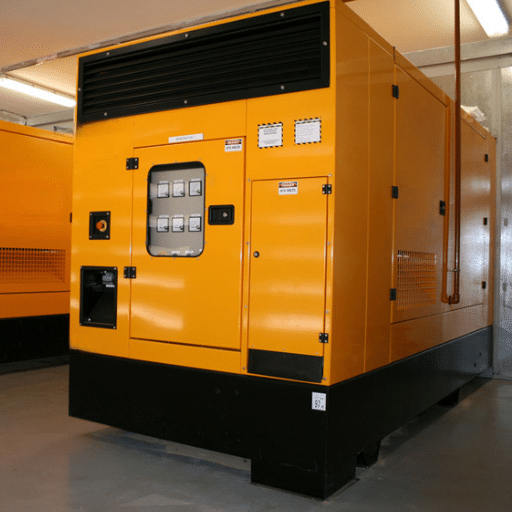
The prime mover is the engine that drives the generator to produce electrical power.
Diesel Engines:
- Most common for emergency power applications
- High reliability and fast starting
- Long lifespan with proper maintenance
- Fuel storage stability (can store for years)
- NFPA 110 prefers diesel for life safety applications
Natural Gas Engines:
- Cleaner emissions than diesel
- Unlimited fuel supply (if pipeline available)
- No fuel storage tanks required
- Longer starting time than diesel
- May not meet 10-second emergency requirements
Dual-Fuel Engines:
- Can operate on diesel or natural gas
- Natural gas as primary, diesel for starting
- Compromise between reliability and emissions
- Higher initial cost but operational flexibility
Bi-Fuel (Diesel with Natural Gas Assist):
- Diesel always required for starting
- Natural gas supplements during operation
- Reduced diesel fuel storage requirements
- Emerging technology for emissions compliance
Generator Set Sizing:
| Application Type | Typical Range | Common Configurations |
|---|---|---|
| Small commercial | 50-200 kW | Single generator |
| Healthcare | 500-3,000 kW | Multiple paralleled |
| Data center | 1,000-10,000+ kW | N+1 or 2N redundancy |
| Industrial | 200-5,000 kW | Single or multiple |
Automatic Transfer Switches (ATS)
The ATS is the critical device that automatically transfers load between normal and emergency power sources.
ATS Types:
Open Transition (Break-Before-Make):
- Load disconnected from both sources during transfer
- Standard for most applications
- 2-5 cycle interruption typical
- Prevents utility backfeed
Closed Transition (Make-Before-Break):
- Brief paralleling of sources during transfer
- No power interruption to load
- Requires utility approval for backfeed
- Used for critical computer/medical loads
Delayed Transition:
- Adjustable delay before connecting to emergency source
- Allows motor loads to coast down
- Reduces inrush currents
- Common for large motor loads
Soft Load Transfer:
- Gradual load transfer using electronic controls
- Minimal voltage/frequency disturbance
- Used with UPS systems
- Premium cost option
ATS Sizing Considerations:
- Current rating (amperes)
- Voltage rating
- Short-circuit withstand rating
- Number of poles (3-pole vs 4-pole)
- Bypass isolation capability
Emergency Power Distribution Equipment
Switchgear and Switchboards:
- Emergency power distribution panels
- Must be located in spaces with emergency lighting
- Separate from normal power distribution
- Identified with permanent labels
Panelboards:
- Branch circuit distribution
- Emergency circuits only (Article 700)
- Separate panels for each branch (healthcare)
- Color-coded or labeled identification
Circuit Protection:
- Selective coordination required
- Circuit breakers or fuses sized for generator capacity
- Ground fault protection considerations
- Surge protective devices (SPDs)
Selective Coordination:
Selective coordination ensures that only the circuit breaker closest to a fault opens, maintaining power to other circuits. This is required by the NEC for healthcare and other critical facilities.
Achieving coordination requires:
- Time-current curve analysis
- Proper breaker sizing and settings
- Series-rated combinations where applicable
- Documentation for inspection
Uninterruptible Power Supply (UPS) Systems
UPS systems bridge the gap between utility failure and generator startup.
UPS Topologies:
Standby (Offline) UPS:
- Load normally on utility
- Transfers to battery on outage
- 4-10 millisecond transfer time
- Suitable for less critical loads
Line-Interactive UPS:
- Load normally on conditioned utility
- Battery always connected
- Better voltage regulation
- Moderate protection level
Double-Conversion (Online) UPS:
- Load always on inverter
- Zero transfer time
- Complete isolation from utility
- Best protection, highest cost
UPS Sizing:
- VA rating (apparent power)
- Watt rating (real power)
- Runtime requirements
- Battery type (VRLA, lithium-ion)
Generator Compatibility:
UPS systems and generators must be compatible:
- Input current distortion (THD)
- Generator sizing for UPS charging
- Soft-start charging controls
- Harmonic filtering
Control and Monitoring Systems
Modern emergency power systems include sophisticated controls for reliable operation.
Generator Controllers:
- Engine starting and monitoring
- Automatic transfer control
- Alarm annunciation
- Data logging
- Remote communication capability
Building Management System (BMS) Integration:
- Status monitoring
- Alarm notification
- Remote control capability
- Trend logging
- Integration with other building systems
Remote Monitoring:
- Cellular or Ethernet connectivity
- Cloud-based monitoring platforms
- Mobile app access
- Predictive maintenance alerts
- Compliance documentation automation
Fuel Storage and Delivery Systems
Diesel Fuel Storage:
Tank Types:
- Above-ground tanks (most common)
- Underground tanks (space limited)
- Sub-base tanks (under generator)
- Day tanks (for immediate supply)
Tank Sizing:
- Minimum 2 hours for emergency systems (NFPA 110)
- Healthcare: Typically 48-96 hours
- Critical facilities: 72+ hours common
- Tank sizing formula: Generator fuel consumption × required hours × 1.10 safety factor
Fuel Quality Management:
- Fuel polishing systems
- Water separation
- Algae and bacterial treatment
- Periodic testing and treatment
Natural Gas Supply:
- Dedicated service meter
- Pressure regulators
- Automatic shutoff valves
- Seismic gas shutoff (where required)
System Design and Engineering

Load Analysis and Classification
Proper load analysis is the foundation of emergency power system design.
Load Classification Process:
- Inventory all electrical loads
- Classify by criticality:
- Life safety (emergency branch)
- Critical operations (standby branch)
- Important but not required (optional)
- Determine pickup sequence
- Calculate starting requirements
- Apply diversity factors
Load Categories:
| Load Type | Emergency | Standby | Optional |
|---|---|---|---|
| Exit lighting | ✓ | ||
| Fire alarm | ✓ | ||
| Nurse call | ✓ | ||
| Elevators | ✓* | ||
| HVAC | ✓ | ||
| Data equipment | ✓ | ||
| General lighting | ✓ |
*Emergency power for elevators varies by code jurisdiction
Generator Sizing Methodology
Proper generator sizing requires several calculation steps:
Step 1: Calculate Running kW
Sum all loads that will operate simultaneously:
- Lighting loads
- HVAC loads
- Pump loads
- Medical equipment
- Data processing equipment
Step 2: Calculate Starting kW
Motor loads require 5-7 times running current during startup:
- Identify all motor loads
- Determine starting method (DOL, soft starter, VFD)
- Calculate voltage dip limitations
- Sequence motor starting if needed
Step 3: Apply Diversity Factors
Not all loads operate at full capacity simultaneously:
- Lighting: 90-100%
- Receptacles: 50-70%
- HVAC: 70-85%
- Motors: 80-90%
Step 4: Include Future Growth
Add 20-25% for future expansion
Example Sizing Calculation:
| Load Category | Running kW | Starting kW |
|---|---|---|
| Emergency lighting | 25 | 25 |
| Fire pumps | 75 | 450 |
| HVAC (select) | 150 | 225 |
| Elevators (2) | 100 | 400 |
| Medical equipment | 200 | 200 |
| Subtotal | 550 | 1,300 |
| Diversity (0.85) | 468 | |
| Future growth (1.20) | 562 | |
| Recommended size | 600-750 kW |
Voltage Drop and Distribution Design
Emergency power distribution must maintain acceptable voltage at all loads.
Voltage Drop Calculations:
- Maximum 3% drop on feeders
- Maximum 5% total (feeder + branch)
- Use larger conductors than minimum code requires
- Consider generator voltage regulation capability
Conductor Sizing:
- Size for ampacity and voltage drop
- Emergency circuits may require larger conductors
- Consider temperature rating of terminals
- Aluminum vs copper cost/benefit analysis
Selective Coordination Requirements
Selective coordination ensures fault isolation without unnecessary outages.
Coordination Study Requirements:
- Time-current curves for all protective devices
- Fault current calculations
- Device setting recommendations
- Documentation for AHJ approval
Healthcare Requirements:
- Complete selective coordination required
- No upstream devices should trip for downstream faults
- Must be documented for inspection
- May require fuse systems for optimal coordination
Grounding and Bonding
Proper grounding is critical for safety and equipment protection.
Grounding System Types:
Solidly Grounded:
- Neutral connected directly to ground
- Standard for most systems
- Allows fault detection
- Simplifies protection
High-Resistance Grounded:
- Neutral grounded through a resistor
- Limits ground fault current
- Continued operation with single ground fault
- Requires ground fault detection
Ungrounded:
- No intentional ground connection
- Rare in modern installations
- Requires insulation monitoring
Emergency System Grounding:
- Must be bonded to normal system ground
- Ground fault protection coordination
- Isolated ground receptacles for sensitive equipment
- Grounding electrode system requirements
Single-Line Diagram Development
A complete single-line diagram is essential for design and construction.
Required Information:
- Normal power sources (utility, multiple services)
- Generator(s) with ratings
- Automatic transfer switches
- Distribution equipment
- Major loads
- Protective device ratings
- Cable and conduit sizes
- Grounding connections
Diagram Standards:
- IEEE or company standard symbols
- Clear labeling of all equipment
- Ratings and settings shown
- Revision control for changes
Application-Specific Requirements

Healthcare Facilities (Life Safety and Critical Branch)
Healthcare has the most stringent emergency power requirements.
NFPA 99 Category Classifications:
Category 1 (Critical Care):
- Operating rooms
- Intensive care units
- Emergency departments
- Full essential electrical system required
- Highest reliability standards
Category 2 (General Care):
- Patient rooms
- Diagnostic areas
- Limited essential electrical system
- Selective loads only
Category 3 (Basic Care):
- Clinic settings
- Minimal emergency power required
Category 4 (Support):
- Administrative areas
- No patient care function
Testing Requirements:
- Monthly: 30-minute loaded test
- Quarterly: 90-minute test with transfer
- Annual: 4-hour load bank test
- 36-month: Full system test with load transfer
Data Centers (Tier Levels and Redundancy)
Data centers use industry standards rather than strict codes.
Uptime Institute Tier Classifications:
Tier I – Basic:
- Single path for power and cooling
- No redundancy
- 99.671% availability target
- 28.8 hours annual downtime
Tier II – Redundant Components:
- Single path with redundant components
- 99.741% availability target
- 22.0 hours annual downtime
Tier III – Concurrently Maintainable:
- Multiple power and cooling paths
- One active, one passive
- 99.982% availability target
- 1.6 hours annual downtime
Tier IV – Fault Tolerant:
- Multiple active power and cooling paths
- 99.995% availability target
- 0.4 hours annual downtime
Generator Configurations:
- N+1: Number required plus one spare
- 2N: Complete duplicate system
- 2(N+1): Duplicate N+1 systems
- Distributed redundancy: Multiple smaller units
Commercial Buildings (Emergency Lighting and Egress)
Commercial buildings focus on life safety systems.
Typical Emergency Loads:
- Exit signs (1-2 watts per sign)
- Emergency lighting (1-2 foot-candles minimum)
- Fire alarm and detection
- Elevator emergency operation
- Smoke control systems
Design Considerations:
- Battery vs generator backup for lighting
- Emergency lighting inverter systems
- Photoluminescent egress marking
- Load shedding for non-emergency loads
Industrial Facilities (Process Safety)
Industrial emergency power often relates to process safety.
Common Industrial Emergency Loads:
- Safety instrumented systems
- Emergency shutdown systems
- Fire suppression pumps
- Toxic gas detection
- Communication systems
- Critical cooling systems
Special Considerations:
- Hazardous area classification
- Explosion-proof equipment
- Corrosion-resistant components
- Extreme temperature operation
Transportation (Airports, Tunnels, Rail)
Transportation facilities have unique requirements.
Airports:
- FAA regulations for lighting
- Terminal building requirements
- Baggage handling systems
- Security systems
- Air traffic control (federal standards)
Tunnels:
- Ventilation systems
- Lighting and communications
- Fire suppression
- Emergency egress
- Often 96-hour fuel requirement
Rail:
- Signaling systems
- Station lighting
- Communications
- Grade crossing protection
Water and Wastewater Treatment
EPA mandates emergency power for public health protection.
Water Treatment Requirements:
- Pumping stations
- Treatment processes
- Chlorination systems
- Laboratory monitoring
Wastewater Treatment:
- Prevent raw sewage discharge
- Maintain treatment processes
- Odor control systems
- Effluent monitoring
Runtime Requirements:
- Typically 48-96 hours
- Critical for public health
- May be legally required standby rather than emergency
Commissioning and Installation

Site Preparation and Environmental Considerations
Proper site preparation ensures reliable long-term operation.
Generator Room Requirements:
- Adequate ventilation for cooling
- Minimum clearances for maintenance
- Seismic restraint (where required)
- Noise control measures
- Fire suppression systems
Outdoor Installations:
- Weatherproof enclosures
- Foundation design for weight
- Snow and ice considerations
- Security fencing
- Vandalism protection
Environmental Factors:
- Ambient temperature extremes
- Altitude derating
- Humidity and corrosion
- Dust and contamination
- Flood elevation requirements
Generator Set Installation Requirements
Foundation:
- Concrete pad sized for weight and vibration
- Vibration isolation pads or springs
- Seismic anchoring (if required)
- Leveling and alignment
Cooling System:
- Radiator airflow requirements
- Remote radiator installations
- Ventilation louvers and controls
- Winterization (block heaters)
Exhaust System:
- Critical silencer placement
- Exhaust pipe insulation
- Rain caps or flappers
- Emissions compliance (catalytic converters, SCR)
Fuel System:
- Tank installation and testing
- Fuel piping and leak detection
- Day tank systems
- Fuel transfer pumps
ATS Installation and Wiring
Location:
- Near normal and emergency sources
- Accessible for maintenance
- Protected from environmental hazards
- Proper working clearances
Wiring:
- Separate raceways for emergency circuits
- Conductor sizing for voltage drop
- Control wiring separation
- Grounding and bonding
Testing:
- Continuity testing
- Insulation resistance testing
- Functional testing
- Transfer timing verification
Acceptance Testing Procedures
NFPA 110 requires comprehensive acceptance testing.
Pre-Testing Requirements:
- Installation completion verification
- Fuel system testing
- Cooling system verification
- Control system checkout
Functional Testing:
- Starting reliability (5 consecutive starts)
- Load transfer testing
- Voltage and frequency stability
- Cooling system performance
- Safety shutdown verification
Documentation:
- Test results recorded
- Deficiencies corrected
- As-built drawings updated
- O&M manuals provided
- Training completed
Commissioning Documentation
Complete documentation ensures proper maintenance and operation.
Required Documentation:
- Single-line diagrams
- Equipment schedules
- Testing records
- Operation and maintenance manuals
- Training records
- Warranty information
- Spare parts lists
Training Requirements:
- Operations personnel training
- Maintenance procedures
- Emergency procedures
- Troubleshooting guidance
Testing and Maintenance Requirements
NFPA 110 Testing Schedules (Monthly, Quarterly, Annual)
NFPA 110 establishes minimum testing frequencies.
Monthly Testing (Level 1 Systems):
- Start generator
- Run minimum 30 minutes
- Verify automatic transfer operation
- Log results
- Correct deficiencies
Quarterly Testing:
- Full load transfer test
- 90-minute minimum run time
- Verify all system functions
- Test under actual building load or load bank
Annual Testing:
- Complete system verification
- 4-hour full load test
- Fuel consumption measurement
- Cooling system verification
- Control system verification
36-Month Testing:
- Full system test
- Load bank test at full rating
- Governor response testing
- Voltage regulator testing
- Complete system inspection
Load Bank Testing Requirements
Load bank testing verifies generator capability.
Why Load Bank Testing:
- Verifies full load capability
- Burns off carbon deposits
- Tests cooling system
- Validates fuel consumption
- Identifies developing problems
Types of Load Banks:
- Resistive (most common)
- Reactive (inductive/capacitive)
- Resistive/reactive combined
Testing Procedure:
- Connect load bank
- Apply 25% load, check parameters
- Apply 50% load, check parameters
- Apply 75% load, check parameters
- Apply 100% load, maintain for duration
- Record all data
- Gradually reduce load
- Cool down period
Preventive Maintenance Programs
Regular maintenance ensures system reliability.
Daily Inspections:
- Visual check for leaks
- Fuel level check
- Coolant level check
- Oil level check
- Control panel check
Weekly Inspections:
- Battery condition check
- Block heater operation
- Exercise generator (if not automatic)
Monthly Maintenance:
- Full system test
- Air filter inspection
- Fuel filter check
- Belt tension check
- Lubrication
Annual Maintenance:
- Oil and filter change
- Fuel filter replacement
- Air filter replacement
- Coolant testing/replacement
- Valve adjustment (if required)
- Complete system inspection
Record Keeping and Compliance Documentation
Documentation is required for code compliance.
Required Records:
- Testing dates and results
- Maintenance performed
- Repairs made
- Fuel deliveries
- Oil analysis results
- Inspection reports
Retention Period:
- Minimum 3 years
- Healthcare: May require longer
- Some jurisdictions require 5+ years
Digital Records:
- Electronic monitoring systems
- Cloud-based record keeping
- Automated compliance reporting
- Trend analysis capabilities
Common Maintenance Issues and Solutions
Starting Problems:
- Weak batteries (most common)
- Fuel system issues
- Cold weather starting
- Control system faults
Running Problems:
- Overheating (cooling issues)
- Low oil pressure
- High exhaust temperature
- Voltage instability
Transfer Problems:
- ATS control issues
- Sensing problems
- Mechanical binding
- Contact wear
Fuel System Issues:
- Fuel degradation
- Water contamination
- Algae growth
- Clogged filters
Fuel System Design and Management

Fuel Storage Tank Requirements
Proper fuel storage is critical for system reliability.
Tank Sizing:
- Minimum 2 hours for emergency systems
- Healthcare: 48-96 hours typical
- Calculate: Fuel consumption × hours × 1.10 safety factor
Tank Types:
Above-Ground Tanks:
- Double-wall construction (most common)
- Leak detection systems
- Secondary containment
- Easier inspection and maintenance
Underground Tanks:
- Required in some jurisdictions
- Cathodic protection required
- Leak detection mandatory
- Higher installation cost
Sub-Base Tanks:
- Integrated under generator
- Day tank function
- Limited capacity
- Common for smaller generators
Tank Materials:
- Steel (most common)
- Fiberglass (corrosion resistant)
- Concrete (large capacity)
Fuel Supply Sizing and Calculations
Fuel Consumption Factors:
- Engine efficiency
- Load factor
- Altitude derating
- Ambient temperature
Typical Fuel Consumption:
| Generator Size | Full Load (gph) | 75% Load (gph) | 50% Load (gph) |
|---|---|---|---|
| 100 kW | 7.5 | 5.6 | 4.0 |
| 500 kW | 35 | 26 | 18 |
| 1,000 kW | 70 | 52 | 36 |
| 2,000 kW | 140 | 105 | 72 |
Day Tank Sizing:
- Minimum 1-hour supply
- Typically 2-4 hours
- Pump sizing for refill rate
- High/low level alarms
Fuel Quality Management
Fuel Degradation Issues:
- Oxidation over time
- Water contamination
- Microbial growth
- Sediment accumulation
Fuel Quality Maintenance:
Fuel Polishing:
- Continuous filtration
- Water separation
- Particle removal
- Extends fuel life
Fuel Treatment:
- Biocides for microbial control
- Stabilizers for storage
- Cetane improvers
- Cold flow improvers
Testing Program:
- Annual fuel sampling
- Water content testing
- Microbial testing
- Cetane number verification
Fuel Polishing and Filtration
Fuel polishing systems maintain fuel quality.
System Components:
- Pump
- Water separator
- Fine filter (10 micron typical)
- Coalescer
- Monitoring equipment
Operating Modes:
- Continuous circulation
- Periodic polishing
- On-demand operation
Benefits:
- Extends fuel life
- Prevents filter clogging
- Removes water
- Reduces maintenance
Alternative Fuel Considerations (Natural Gas, Bi-Fuel)
Natural Gas Advantages:
- Unlimited storage (pipeline)
- Clean burning
- No fuel degradation
- Lower emissions
Natural Gas Disadvantages:
- Supply reliability concerns
- Pressure requirements
- Longer starting time
- Pipeline dependency
Bi-Fuel Systems:
- Diesel starting with gas operation
- 70-90% gas substitution possible
- Reduced diesel storage needs
- Emissions benefits
Dual-Fuel Systems:
- Can operate on either fuel
- Operator selectable
- Maximum flexibility
- Higher initial cost
The Cost Analysis and ROI
Initial Capital Costs by System Size
Generator Set Costs:
| Size Range | Cost Range ($/kW) | Typical Total |
|---|---|---|
| 100-200 kW | 400−400−600 | 40K−40K−120K |
| 500-750 kW | 350−350−500 | 175K−175K−375K |
| 1,000-1,500 kW | 300−300−450 | 300K−300K−675K |
| 2,000-3,000 kW | 250−250−400 | 500K−500K−1.2M |
ATS Costs:
- 100-400A: 5,000−5,000−15,000
- 600-1,000A: 15,000−15,000−40,000
- 1,200-3,000A: 40,000−40,000−100,000+
Additional Equipment:
- Fuel tanks: 20,000−20,000−200,000
- Switchgear: 50,000−50,000−500,000
- UPS systems: 200−200−500/kVA
- Installation: 30-50% of equipment cost
Installation Cost Factors
Factors Affecting Installation Cost:
- Generator size and weight
- Location (indoor vs outdoor)
- Existing infrastructure
- Code requirements
- Geographic location
Typical Installation Costs:
- Simple outdoor installation: 20-30% of equipment
- Complex indoor installation: 40-60% of equipment
- Retrofit projects: 50-100%+ of equipment
Operating and Maintenance Costs
Annual Operating Costs:
| Cost Category | Typical Range | Notes |
|---|---|---|
| Maintenance | 0.02−0.02−0.05/kW | Contract or in-house |
| Testing fuel | 0.01−0.01−0.03/kW | Diesel consumption |
| Repairs | 0.01−0.01−0.04/kW | Age dependent |
| Insurance | Varies | Property coverage |
Maintenance Contract Costs:
- Basic: 0.02−0.02−0.03/kW/year
- Comprehensive: 0.04−0.04−0.06/kW/year
Cost of Outage vs. System Cost (Business Case)
Outage Cost Analysis:
| Facility Type | Cost per Hour | Annual Risk |
|---|---|---|
| Office building | 5,000−5,000−25,000 | Moderate |
| Retail | 10,000−10,000−50,000 | Moderate |
| Manufacturing | 50,000−50,000−500,000+ | High |
| Data center | 100,000−100,000−1,000,000+ | Very High |
| Hospital | 1,000−1,000−10,000/minute | Critical |
Conclusion
A successful emergency power system necessitates the comprehension of a given code, load analysis, equipment specification, appropriate equipment selection and a long-term maintenance strategy. And when you cater to all these four needs, wherever there is a power failure, you will not worry or experience any other problems about it.
Key considerations for your emergency power system project:
Understand Code Requirements: Grasping all standards is inevitable as far as the design of emergency power systems is concerned. These standards are strict and are there for a good cause. Work with competent professionals who are well-versed on NFPA 110, Articles 700-708 of the NEC, and the various specific local codes that are applicable in the design.
Size for Real-World Conditions: The calculation of the size of generator should be focused to powering motor, on harmonic issues added by electronic equipment, and also on any possible expansion. Errors in the calculation of the required size are normal, but they may be the most expensive offense and longest in some cases.
Plan for the Long Term: It is over and above your emergency power system will stay in your structure for up to 20-30 year period or more. When undertaking your design assessment, you need to take into account the costs of the apparatus, service and the specific code which will be enforced over the period of concern.
Integration Matters: A separate point is that due to the growing importance of emergency power systems today, in addition to feeder requirements, interconnection envelopes are now an issue when working with normal emergency power systems. It is important to note that all these aspects should be fulfilled at design time rather than after that.
Upgrading the emergency power system of the regional hospital in Austin, Texas in 2021, their engineering team give all attention to notice how bright and how big the color generator should be. But after teaming up with a professional power system engineer, they realized that additional care had to be taken to incorporate systematic coordination, arranged for fuel for prolonged outages, and injected the building management system.
The structure, including the provision of 72-hour storage of fuel, the coordinated protection and the monitoring of the wear Using bombing states, where any maintenance takes place in the close proximity or even further will have to wait for such maintenance to be offered on weekends and public holidays were equally correct as demonstrated during the 2023 ice storm atlanta enabled them to continue full operations while many surrounding institutions experienced extended periods of non-functionality.
Your emergency power plant is the power that keeps the lights on in your most critical operations. Only a well-specified, designed and commissioned system is reliable to attain results when most needed.