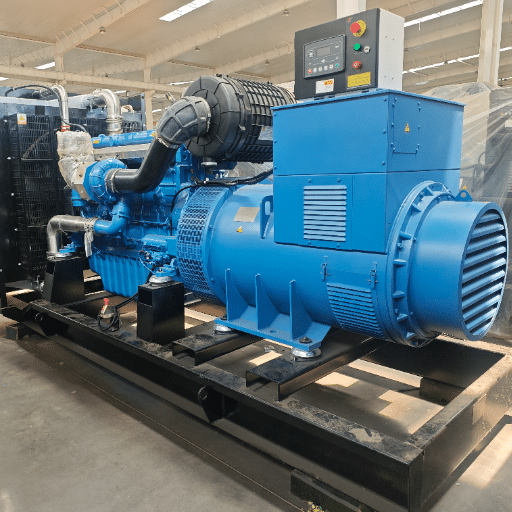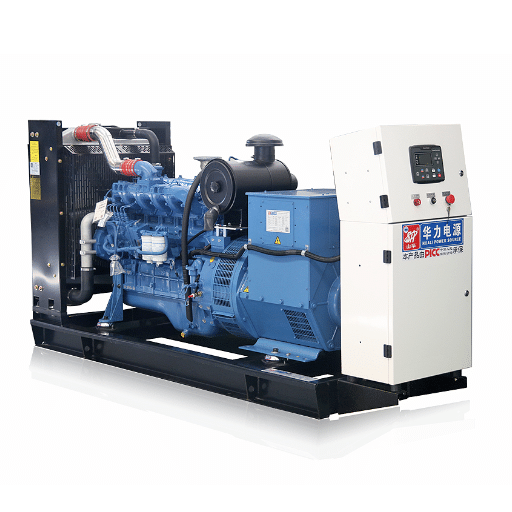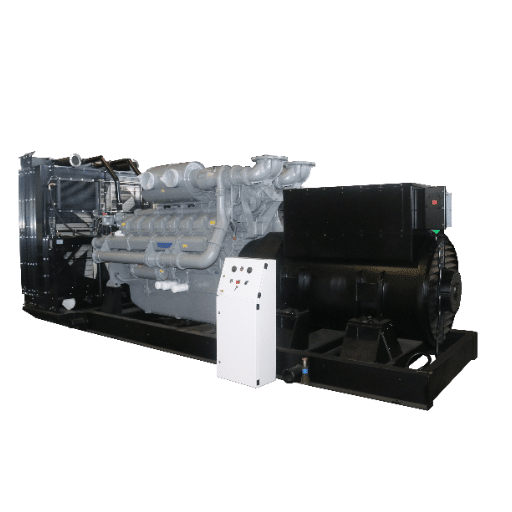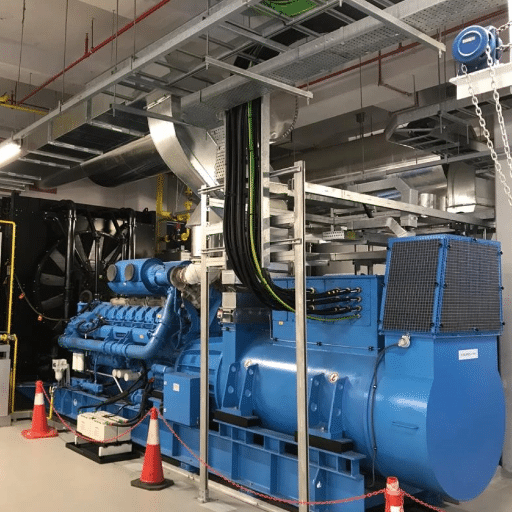



The correct backup power systems for industrial operations need an industrial UPS to deliver immediate protection and a diesel or natural gas generator to provide uninterrupted power supply and an automatic transfer switch to enable automatic power switching between systems. Most factories need all three layers, not just a generator sitting unused in the yard.
The automotive stamping line PLC system experienced a shutdown at 2:15 PM on a Tuesday because of a voltage drop. The plant suffered a financial loss of $153,000 because the backup power system took four minutes to activate after the initial power outage, which resulted in the loss of scrapped parts and idle workers and delayed shipments. The generator was present at the location. The generator required testing because it had not undergone testing for eight months.
Power disruptions result in financial losses for manufacturing plants because you oversee production and facilities and procurement operations. The company needs you to establish a formalized process which will help you determine the appropriate backup power system for your business needs because existing methods do not exist. The guide establishes that structured framework. The guide will teach you how to calculate downtime expenses and design a three-tier backup system and navigate NFPA 110 compliance requirements and select between diesel and natural gas and hybrid fuel options. The guide enables you to determine system specifications with the same level of certainty which you use to assess production line machinery.
Key Takeaways
- Most factories need three layers of backup: UPS for instant protection, generator for sustained power, and ATS for seamless switching
- Manufacturing downtime ranges from 25,000perhouringeneralplantsto25,000perhouringeneralplantsto2.3 million per hour in automotive facilities
- NFPA 110 requires monthly generator testing at 30% load for 30 minutes and annual fuel quality analysis
- Every 1spentonpreventivemaintenancesaves1spentonpreventivemaintenancesaves4 to $10 in unplanned downtime costs
- For factories with 70%+ utilization over 12+ months, owning often delivers lower total cost of ownership than leasing
Need help calculating your exact backup power requirements? Our engineering team provides free project assessments for manufacturing facilities worldwide.
Why Factory Backup Power Is Non-Negotiable in 2026

Power cuts appear not to be a unique occurrence, as 61% of manufacturers have experienced unplanned downtime in the past year. Of these, 48% claimed six to ten incidents per week. This has increased in its dollar-constraining effects after the year 2020 due to more value chain optimization and leaner supply chains, yet with relatively higher labor, integration, and automatic production systems installed. The present burden is dramatically disparate by sector. Automobile assembly-worst goten worst, losing an average of 2.3 million per hour stopped. This is the same with Pharmaceutical batch operations. It may be as much as 1-5 million per hour, if any, depending on when you return to resetting the cleanroom Nevertheless; that doesn’t preclude a wide variety of industries from receiving desperate attention too; the cost is millioinly Therefore, an incredible 2000 decreased revenue due to unplanned downtime, around $2,500 to 2,000 per hour.
Estimates show that in 2025, manufacturing downtime in the UK and EU together is anticipated to cost over £80 billion. Annually at Fortune 500 companies, unplanned downtime costs at least $1.4 trillion, basically 11% of their total revenues.
Grid instability in the main manufacturing markets is also increasing. Quick industrialization in the Asia-Pacific region, aging infrastructure in North America, and all sorts of extreme weather conditions worldwide all contribute to increasingly frequent outages. For factories running Just-in-Time supply chains, the smallest interruption cascades into orders not being delivered on time, penalty clauses, and customer service issues.
The urgency of attention from the backup power market power is met by the fastness. With a comprehensive worth of [19.5to20billionin2025],the market’s projected growth will make it attain 33 billion(/span>) by 2034 and grow annually by about 6.5 percent. Manufacturing already amasses the largest chunk of end-user segments, leaving aside data centers, healthcare, and telecom.
Outside Bangkok, Priya used to manage a food processing plant that delivered frozen seafood to supermarkets across Southeast Asia. One time when an outage-claimed by the monsoon-stressed enough to give a six-hour break-Priya’s facility ended up losing three cold-chain rooms filled with seafood valued at $340,000. Although the backup generator had kicked in, the load could not be transferred due to the corroded control relay in the automatic transfer switch; elements of the module had rusted with the climatic moisture. That was the day when Priya came to learn that the backup power system was only as strong as its weakest element.
Understanding the Three-Tier Backup Power Architecture
A common misconception is that a single diesel generator constitutes a complete backup power system. It does not. Industrial facilities need a layered architecture that addresses different failure modes and time horizons.
Tier 1: Industrial UPS (Uninterruptible Power Supply)
Industrial UPS models provide direct and no-switching-time protection for arduous control modules, PLCs, SCADA systems, robotics, safety inlocks, et al. Once the utility power fails, the ultra-speed UPS, within tens of milliseconds, begins converting the stored energy from the battery into electrical power. With the guarantee from UPS, an instantaneous energy dip can potentially distort the programmable logic, de-emphasize calibration parameters, or trigger hours-long emergency shutdown and shutdown recovery.
Industrial UPS for a three-phase are usually available in a range of ratings from 10kVA to massivemegawatts. The manufacturing industry usually favours double-converter online topology for the fact that it continuously conditions power, ensuring that nointerruption to power happens.
Tier 2: Battery Energy Storage (BESS)
Battery systems bridge the gap between UPS runtime and generator startup. A modern lithium iron phosphate (LiFePO4) BESS can provide 15 to 60 minutes of ride-through time, allowing the generator to start, stabilize, and assume load. BESS also enables peak shaving and demand response, reducing electricity costs during normal operation.
Tier 3: Diesel or Natural Gas Generator
The generator provides sustained power for hours or days. Diesel units remain dominant with approximately 73% market share in industrial backup due to energy density, storage safety, and instant starting capability. Natural gas generators are cleaner and connect directly to pipeline fuel but depend on utility gas supply during regional outages.
Tier 4: ATS and Distribution Infrastructure
The automatic transfer switch monitors grid voltage and initiates the transfer to backup power when thresholds are breached. Without a properly maintained ATS, the generator can run perfectly while the factory remains dark.
Our diesel generator solutions are engineered for industrial backup applications with fast-start capability and stable voltage regulation to protect sensitive manufacturing controls.
How to Size a Backup Power System for Your Factory

Sizing backup power for a factory is more complex than adding up equipment nameplates. You must distinguish critical loads from deferrable loads, account for motor starting surge, and apply environmental derating.
Follow this five-step method.
Step 1: Inventory Critical Loads
Separate equipment into two categories. Critical loads must stay online during an outage: safety systems, PLCs, refrigeration, emergency lighting, and fire suppression. Deferrable loads can stop without catastrophic consequence: non-essential HVAC, break-room power, decorative lighting, and non-production equipment.
Step 2: Calculate Running kW and Starting Surge
Record the rated power for each critical device in kilowatts. For three-phase motors, the starting surge can reach three to seven times running current depending on the starting method. A 75 kW compressor with direct-on-line starting may pull 450 kW for two seconds. If your generator cannot deliver that surge, the motor stalls and the breaker trips.
Add the highest single starting surge to the sum of all other running loads.
Step 3: Apply Safety Margin and Power Factor
Add a 20% margin for measurement uncertainty and future expansion. Then convert kilowatts to kilovolt-amperes using the standard industrial power factor of 0.8. If your peak load including surge and margin is 400 kW, you need a 500 kVA generator.
Step 4: Adjust for Environmental Derating
When diesel engines are from 1,000 meters of altitude, they usually lose 3 percent of their rated capacity once for every 300 meters above that altitude; high ambient temperatures bring another 2 to 3 percent losses. In other words, a 500 kVA machine on sea level becomes a 425 kVA machine when serving at 2,500 meters at temperatures above 40 and hot.
Step 5: Use Load Sequencing to Reduce Size
A motor need not necessarily start with the others. They can start sequentially using soft starters or variable frequency drives, thus staggering the surge starting current in flow and allowing use of a smaller, less expensive generator set. One automotive factory manager cut the generator’s size down to 750 kVA from the projected 1,000 kVA, saving $40,000 in capital but with no compromise in reliability.
Quick reference by factory type
| Factory Type | Typical Critical Load | Recommended Generator Size | UPS Size |
|---|---|---|---|
| Light assembly / electronics | 50–150 kW | 80–200 kVA | 20–50 kVA |
| Food processing / cold chain | 100–300 kW | 150–400 kVA | 30–80 kVA |
| Automotive / heavy stamping | 300–800 kW | 400–1,000 kVA | 50–150 kVA |
| Pharmaceutical / cleanroom | 200–500 kW | 300–650 kVA | 40–100 kVA |
| Steel / chemicals / continuous | 500–2,000+ kW | 650–2,500+ kVA | 100–300 kVA |
For detailed sizing methodology for natural gas generators, see our guide to sizing natural gas generators for industrial applications.
Diesel vs. Natural Gas vs. Hybrid: Choosing the Right Fuel Strategy
The fuel choice for factory backup power affects emissions compliance, maintenance intervals, storage requirements, and total cost of ownership.
These diesel-driven machines boast the highest potential energy yield of all generators. Besides that, diesel fuel can be stored for years with due treatment. Presently, industrial diesel generators abide by the EPA Tier 4 Final and EU Stage V emissions standards to the most strings around its pipework. In practice, most of the factories, which are far from the pipeline gas supply, have to use the diesel cycle.
Natural-gas-powered generators tend to have cleaner particulate emissions than diesel-powered ones since they are connected directly to pipelines. Therefore, enough gas will be available to offset most issues. They are, on a regular basis, operational within areas with historic systems of gas distribution that assure reliability. The downside is a greater reliance on pipeline supply when area gas supplies are near bankruptcy.
The hybrid systems pool in solar arrays, battery storage, and a generator into an integrated microgrid. Under normal operating conditions, solar and battery work toward reducing grid power consumption. The battery kicks in upon the start of a generator, in cases when grid power is lost. For factories that experience outages frequently, and have roof size or at land size to spare, using hybrid systems can cut the cost of fuel in between a span of ten years at least 20 % to 40 %.
Fuel storage compliance is important for all types of fuels. Flammable liquid storage is governed by NFPA 30. Diesel day tanks should have one hour of operating fuel at full load. Main tanks must have secondary containment and should undergo fuel quality testing every year in accordance with ASTM D975-24. Fuel degradation is the most common cause of generator failure in emergencies.
Our dual-fuel industrial generators provide flexible fuel strategy for factories that need both diesel reliability and natural gas compliance options.
NFPA 110 and Factory Compliance: What Plant Managers Must Know

NFPA 110 governs the complete Emergency Power Supply System, not just the generator. For manufacturing facilities, compliance is typically Level 2, meaning failure is less critical to human life but still economically significant. However, if your process involves hazardous materials where failure could cause injury, the Authority Having Jurisdiction may mandate Level 1.
Key requirements for factory backup systems:
Generator sets must be listed to UL 2200. Automatic transfer switches must be listed to UL 1008. Fuel tanks must meet UL 142 or UL 2085. Indoor installations require proper ventilation and combustion air. Level 1 systems require two-hour fire-rated separation; Level 2 typically requires one-hour.
Testing schedule:
- Weekly: Visual inspection of fluid levels, battery condition, leaks
- Monthly: Generator load test for at least 30 minutes at 30% of nameplate load or higher
- Monthly: ATS electrical operation test
- Annual: Fuel quality test per ASTM D975-24
- Annual: Circuit breaker exercise
- Every 36 months: Triennial load test for Level 1 systems
The monthly 30min-30% load test is the most commonly skipped requirement. Running a generator without any load or under-loaded batteries causes wet stacking, carbon build-up, and premature wear on the generator engine. A generator that starts but will not carry its rated load is a liability and not an asset.
Documentation is key. NFPA 110 mandates the development of a written EPSS plan that includes procedures, personnel, spare parts, and safety precautions. Permanent records must reflect date and time for all tests performed along with engine running hours, voltage, amperage per phase, frequency, oil pressure, coolant temperature, and any deficiency that had been corrected. Retaining edited documentation for 36 months is now the norm in most jurisdictions.
Maintenance: The Hidden Risk in Factory Backup Systems
The most expensive generator failure is the one that happens during an actual outage. David, a facilities director at a semiconductor packaging plant in Malaysia, learned this the hard way. His facility had a 1,500 kVA diesel generator that started faithfully every week during automatic exercise. When a grid failure caused a four-hour outage, the generator started, ran for 90 minutes, and then stalled. Contaminated fuel, degraded over 18 months of storage without polishing, had clogged the injectors. The facility lost $3.2 million in scrapped wafers, missed delivery penalties, and emergency air freight.
David’s generator was not broken. It was neglected. Fuel quality is the single most overlooked maintenance item in factory backup systems.
A disciplined maintenance program includes:
- Weekly visual inspection: Check oil and coolant levels, battery terminals, fuel gauge, leaks, and enclosure condition
- Monthly load test: Run at 30% or higher for 30 minutes minimum. Log voltage, frequency, oil pressure, and coolant temperature
- Quarterly battery test: Conductance or impedance testing for valve-regulated lead-acid batteries; verification of charge voltage for lithium systems
- Annual fuel analysis: Test for water, sediment, microbial contamination, and cetane rating. Polish or replace degraded fuel
- Annual ATS test: Verify transfer time and contactor condition under load
- Triennial endurance test: For Level 1 systems, run at rated load for the assigned Class duration or four hours, whichever is less
Remote monitoring systems can automate much of this logging. Modern digital controllers transmit fault alerts, runtime hours, and performance data to off-site managers via GSM or Ethernet. Early warning of low coolant, battery degradation, or failed start attempts allows corrective action before an outage occurs.
Total Cost of Ownership: CAPEX vs. Leasing vs. Power-as-a-Service
The purchase price of a generator is often the smallest cost in a backup power system’s lifecycle. Over ten years, operating costs typically exceed capital costs by three to five times.
CAPEX ownership makes sense for factories with stable long-term operations, in-house maintenance staff, and multi-year facility leases or ownership. You build equity, control configuration, and depreciate the asset. A well-maintained industrial generator retains 40 to 60 percent of its value after five years.
Leasing converts capital expense to operating expense. The lessor typically handles installation, routine maintenance, and removal at term end. This improves cash flow and reduces balance-sheet impact. Leasing suits facilities with uncertain long-term occupancy or rapidly changing power requirements.
Power-as-a-Service is an emerging model where the provider owns, operates, and maintains the backup system. The factory pays a monthly subscription for guaranteed availability. The provider bears the risk of failure, maintenance, and fuel management. For factories without in-house technical staff, this can be the most reliable option.
Regardless of the aforesaid type of ownership model, make an allocation in the budget for the following lifecycle costs: fuel consumption at partial and full load, scheduled maintenance, oil and filter changes, battery replacement every four to seven years, fuel polishing or replacement, and major overhaul at 10,000 to 15,000 hours of runtime.
Our complete range of industrial power solutions includes configurations optimized for both standby and continuous-duty manufacturing applications.
Key Features to Specify When Sourcing Factory Backup Power

Once you know the size, fuel strategy, and ownership model, the final specification determines whether your backup system survives the next decade or becomes a maintenance burden.
Engine brand and parts availability. Cummins, Perkins, Deutz, and Yuchai dominate industrial backup because their parts networks cover most countries. Confirm local stock and authorized service coverage before you commit.
Alternator quality and voltage regulation. A Stamford or Leroy-Somer alternator with automatic voltage regulation maintains output within plus or minus one percent under load swing. This stability protects PLCs, VFDs, and precision manufacturing equipment from damage.
Cooling system rated for ambient conditions. Verify the radiator is rated for your facility’s maximum ambient temperature and installed elevation, not just the engine’s standard sea-level test condition.
Control panel and remote monitoring. Modern digital controllers display real-time parameters and transmit alerts for fault conditions, low fuel, or failed starts. Remote access allows off-site managers to verify readiness without visiting the generator room.
Fuel tank capacity and extended runtime. A generator burning 100 liters per hour needs a 2,400-liter tank to run 24 hours without refueling. Integral day tanks, external bulk tanks, and automatic transfer pumps extend autonomy and reduce manual intervention.
Enclosure durability. Look for IP23 or higher ingress protection, powder-coated steel for corrosion resistance, and lockable access doors. Lockable fuel caps and control panels protect against theft and tampering.
After-sales support and spare parts commitment. A backup power system is only as good as the support behind it. Confirm warranty terms, guaranteed response time for critical spare parts, and availability of factory-trained technicians in your region.
Conclusion
The protection of an ample facility from the situation of an assured blackout is no meant to be disputed as a fact. Rather, it is a structured engineering and financial decision. It starts with an MBA quantifying the company’s downtime cost per hour. Well, he/she can formulate a three-tier layered backup architecture around crash protection, bridged power, and sustainable runtime. Now determine the system capacity based on real load data, surge calculation, and environmental derating. Select a fuel scenario that balances emissions compliance against storage and infrastructure availability. Put together the right maintenance regimen-from disciplined testing through step-by-step fuel supply and replacement. Based on the company’s cash-flow pattern, discern the most suitable choice among various ownership models.
Plant managers who follow this framework avoid the catastrophic losses that plague under-prepared facilities. They treat backup power as production infrastructure, not an afterthought.
If you are evaluating backup power solutions for factory operations, contact our engineering team for a detailed site assessment and sizing analysis. We provide complete industrial generator solutions from 50 kVA to 3,000 kVA, with custom configurations, global certification, and full lifecycle support. Let us help you keep your production line running and your balance sheet protected.