
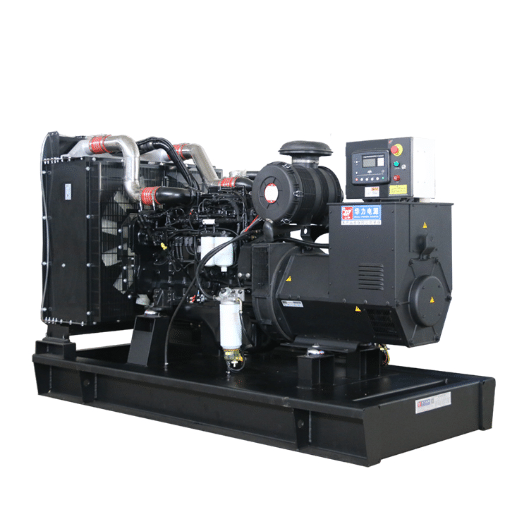
Designating at least 20-30% above the total running load of the generator set to the PRP rating when grid power is not available, and working as per local requirements and codes for noise levels and emissions is otherwise an effective method. Should there be any oversight in any of these three areas, the result would be a breaker trip, fines, or squandering of capital.
What if the generator is there at your site losing days from your venture in absolute silence? Not through consuming fuel but through causing downtimes, reworks, and possibly the penalties that come weeks after the generator’s delivery. Most project managers know that they lose money due to interruptions in power. Very few have a structured plan to size, select, and procure a proper model even before the foundation is laid.
This book bridges that gap. It gives you a practical load-calculation method applicable to residential construction, commercial towers, and massive infrastructural projects. You will learn the mechanics of different generator types, especially in terms of which type fits the environment, ways to dance around OSHA noise limits or EPA emissions regulations, and when rental makes more sense than purchase. By the end of it, you should be able to specify a generator with confidence, as you would do for structural steel or HVAC.
Key Takeaways
- Size your generator 20-30% above total running load after converting kW to kVA using a 0.8 power factor
- Most off-grid construction sites need a prime-rated unit, not a standby-rated one, to protect engine life and warranty coverage
- OSHA’s noise action level is 85 dBA; EPA Tier 4 Final and EU Stage V emissions rules determine whether you need a sound-attenuated enclosure
- Parallel generator configurations provide redundancy for large sites and let you service one unit without stopping work
- For projects with continuous utilization above 70% over 12+ months, purchase often delivers lower total cost of ownership than rental
Why Diesel Generators Dominate Construction Site Power

By fuel type, diesel holds over 61.7% of the totality of the global market in construction generators. This is not accidental. Diesel fuel has an energy density that is far higher than gasoline or natural gas; in other words, on average, many Kilowatt-hours/Liter of stored energy are packed inside. For hurdle-filled projects in hinterland areas with minimal fuel delivery options, such density leads to good running hours and fewer logistic nightmares.
In addition, reliability in difficult environments becomes a key factor. Sites as construction expose equipment to dust, vibration, and temperature swings. Diesel engines may only work at reduced compression ratios and still can tolerate highly contaminated air compared to spark ignition alternatives. On the other hand, when properly maintained, even a small industrial diesel generator will stand to offer some 10,000-15,000 hours of service life before a major overhaul should be considered. In comparison, gas generators tend to already require rebuilds.
The global diesel-fired construction generator sets market is projected at USD 6.9 billion in 2025, growing at an 8.7 percent CAGR through 2034. Prime and continuous power applications dominate with 78.7 percent of that demand. In other words, the construction industry votes with its wallet, and it votes for diesel when the grid is absent.
Cost-performance also favors diesel at scale. While gas generators can offer lower upfront cost for small residential units, the fuel efficiency gap widens as load increases. A 500 kVA diesel unit consuming 110 liters per hour at full load typically beats a comparable gas unit by 15 to 25 percent on fuel cost over a 2000-hour year. Over the many years of an infrastructure project, this difference provides additional site amenity or other contingency reinforcement.
How to Calculate the Right Generator Size for Your Construction Site
Choosing the size poorly is undoubtedly the most costly blunder a project manager can bring about. If too small, then the plant jerk-starts towards morning with those compressors and welders, tripping the breakers. Too big, and an underloaded engine is likely to humidify the crankcase and even moral about carbon buildup and premature wear. The correct size is in an extremely thin band: total load plus starting surge plus a safety margin.
Follow this five-step method.
Step 1: Inventory Every Load
Walk the site and list every device that will draw power from the generator. Common construction loads include:
- Hand power tools and battery chargers
- Arc welders and MIG welders
- Air compressors
- Concrete mixers and batch plants
- Tower cranes and hoists
- Site office HVAC, lighting, and IT equipment
- Dewatering pumps
Record the rated power for each device in kilowatts (kW). If the nameplate only shows amps and volts, multiply amps by volts and divide by 1,000 to get kW.
Step 2: Add Starting Surge
Electric motors need two to three times their running current to start. A 15 kW compressor may pull 40 kW for the first two seconds. If your generator cannot deliver that surge, the motor stalls and the breaker trips.
Add the highest single starting surge in your inventory to the sum of all other running loads. Do not add every starting surge simultaneously. Assume staged startup, but plan for the worst-case single event.
Step 3: Apply a Safety Margin
Construction sites evolve. For example, you introduce a second welder in month three, or you find yourself changing the tower crane to a larger model. Allow for a 20 to 30 percent buffer on top of the estimated peak load. Such a margin will also account for derating due to altitude and temperature explanation, as further discussed in Step 5.
Step 4: Convert kW to kVA
Generators are rated in kilovolt-amperes (kVA), not kilowatts. Divide your peak kW figure by the standard power factor of 0.8 to get kVA. If your peak load including surge and margin is 80 kW, you need a 100 kVA generator.
Quick reference by project type
| Project Type | Typical Load Range | Recommended Generator Size |
|---|---|---|
| Small residential / renovation | 10-20 kW | 15-30 kVA |
| Commercial building construction | 60-120 kW | 80-150 kVA |
| Heavy infrastructure (bridges, highways) | 200-400 kW | 250-500 kVA |
| Remote mining / mega-projects | 500+ kW | 625 kVA+ or parallel units |
Step 5: Adjust for Altitude and Temperature
Diesel engines dwindle in operation as altitude grows and air density declines. An average rule is a decrease in rating by 3-4 percent for every 300 meters above 1000 meters. High temperatures can result in additional losses from 2 to 3 percent if the air around the generator is greater than 40 degrees Celsius. A 100 kva unit at sea level will effectively supply only 85 kVA at 2500 m into the tropics. Downsize suitably.
This lesson was lived by Marcus, a subcontractor in Texas. He had a 75 kVA unit ordered, intending to shape an expected running load of 60 kW working on a commercial retail build. Every morning at 6:30 AM, he would trip the main breaker with the startup surge for the air compressor and welder, forcing his crew to wait for 45 minutes while he manually reset and staged the equipment. An electrician diagnosed the trip reason after three weeks of aggravation: Marcus sized solely based on the running load requirement while not considering the 2.5x hit at surge and also not providing a proper 25 percent allowable margin on construction wiggle room. Upgrading to a 125 kVA, rated for prime duty, ended the tripping of the main at startup and returned his morning chores to normal.
Want to see how this works in practice? Explore our complete diesel generator range with load-specific configurations for construction environments.
Types of Diesel Generators for Construction Applications

Not every construction site needs the same package. The enclosure, mobility, and mounting method directly affect compliance, logistics, and total cost.
Open-Type Generators
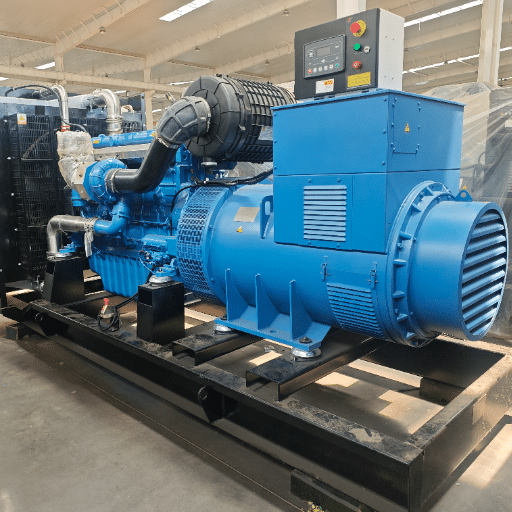
Open units expose the engine and alternator to ambient air. They cost less, allow easy maintenance access, and cool efficiently in hot climates. The trade-off is noise. Open generators produce 75 to 85 dB at 7 meters, which exceeds OSHA’s 85 dBA action level within minutes of exposure. Use open types only on remote rural sites with no adjacent residential or commercial properties.
Silent and Sound-Attenuated Generators
A silent diesel generator uses an acoustic enclosure with baffled air intakes, exhaust silencers, and vibration isolation. Noise levels are lowered to 65 to 75 dB at 7 meters. For activities in cities, hospital expansions, or school renovations, this is often a “must” in order to be in compliance with local noise ordinances and save hearing in relative reality. The enclosure serves to provide housing to protect the engine from dust and rain, hence increasing the lifespan of the filter.
Trailer-Mounted and Mobile Generators
Trailer-mounted units attach to standard tow hitches and move between work fronts without cranes or flatbeds. They suit road construction, pipeline projects, and multi-phase developments where the power center shifts every few months. Mobility comes with a weight and cost premium, but it eliminates the rental crane fees associated with relocating skid-mounted units.
Containerized Generators
For large infrastructure projects requiring 500 kVA to 3,000 kVA, containerized generators package the engine, alternator, fuel tanks, and switchgear inside a modified shipping container. They ship by standard container vessel, stack on site, and withstand extreme weather. Containerized units also simplify parallel installation because cable routing and busbar connections are pre-engineered at the factory.
Light-Tower Integrated Units
Some construction applications need both power and lighting. Integrated light-tower generators serve dual duty, reducing the total equipment count on site. They are popular for roadwork, tunnel construction, and night-shift operations where separate lighting towers would add rental and transport costs.
Prime Power vs. Standby: Choosing the Right Rating

Generator ratings matter more than most buyers realize. A standby-rated unit is designed for emergency backup during grid outages. It can run at full load for short durations with long rest periods. A prime-rated unit is designed for continuous operation when no grid exists. It can run indefinitely at variable load up to its rated capacity.
Most construction sites have no grid connection at all. They need prime power. Specifying a standby-rated generator for prime duty voids the engine warranty and accelerates wear. The piston rings, bearings, and cooling system in a prime-rated engine are built for sustained load cycles. The price difference is typically 10 to 15 percent, but the lifespan difference can be years.
If your site has unreliable grid power and you need backup only during outages, a standby rating is acceptable. For every other scenario, insist on prime power or continuous power rating. Your supplier should document this in the technical datasheet and warranty terms.
Noise, Emissions, and Safety Compliance
A generator that violates OSHA noise limits or EPA emissions rules can shut down a project faster than a power outage. Compliance is not optional, and it starts at specification.
Noise Exposure Limits
OSHA 29 CFR 1926.52 includes an action level of 85 dBA TWA and a PEL of 90 dBA TWA for construction workers. Diesel generators usually create 65-85+ dBA of sound, the varying noise levels being determined by generator size, loading, and degree of sound enclosure. If fully loaded, an open 200 kVA generator exerts an exposure of 88 dBA on nearby workers, thus triggering mandatory safety training, protection gear, and hearing conservation programs. Sound-attenuated containers follow OSHA requirements and are less of a headache when put into practice.
Emissions Standards
In the United States, EPA Tier 4 Final regulations limit particulate matter and NOx from non-road diesel engines. In Europe, EU Stage V applies similar limits. Many developing markets are adopting China IV or equivalent standards. Non-compliant generators face fines, permit revocation, and import restrictions. Always request the emissions certificate and verify it matches the destination country’s regulatory framework.
Fuel Storage and Electrical Safety
NFPA 30 regulates the storage of flammable liquids. Larger diesel tanks must be installed with drain storage, fire separation resistant to fire, and patented safety oil spill kits. Electrical equipment, such as electrical cables and wires, are particularly vulnerable in such conditions. For instance, the National Electric Code (NEC) and many local codes dictate that grounding electrodes be installed. If generators are in operation next to enclosed trenches, tunnels, or a building under construction with limited ventilation, the provision of carbon monoxide detectors becomes necessary.
Single Unit vs. Parallel Operation for Large Sites
The simplest and most cost-effective alternative for power plants of 250 kVA and less is to use a single generator. Whenever it’s about redundancy, for example, higher security and capacity, it is better to run a parallel system.
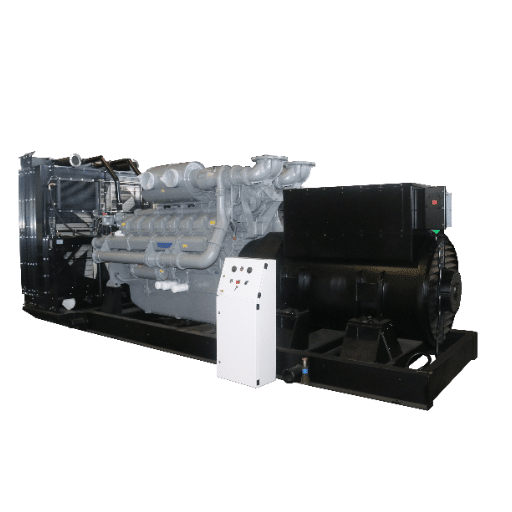
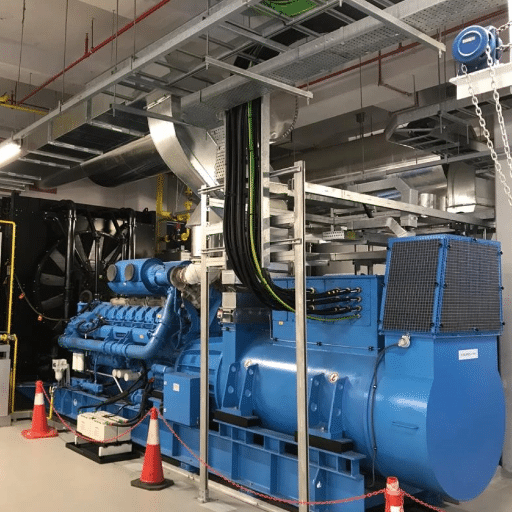
More than one generator needs to have a busbar in order to parallel. Thus, all the generators connect to the busbar. They will set their own frequency and phase policies and accept whatever voltage has been supplied to them by the busbar. Comparing delivers their generator voltage to the rest of the busbar and effectively balances the load among the generators. So when one alternator fails or needs to leave the system for maintenance, the other unit will take up the load for it.
Elena, project manager in Dubai, was responsible for a 200-unit residential complex without grid connection. She made use of the load inventory method,made an allowance of 25 percent, and specificallyy advised against a single 500-kVA unit in favour of two 250-kVA parallel units. When unit A was 500 hours from servicing, unit B took on 80 percent of the load, and concrete pours, and tower crane operations went on unhindered. The project ended on time with the parallel controller logging every event for maintenance records.
Synchronised systems can add complexity. You need a synchronised controller, complementary governor response, and relaying protection. Inevitably, the capital cost is, indeed, higher–15 to 20 percent would do–than for a single large-capacity unit of the same capacity. That premium is paid back in uptime and possible routing advantage to multi-year infrastructure contractors.
Rental vs. Purchase: A Decision Framework for Contractors

The rental vs. purchase debate usually starts with upfront cost, but it should end with total cost of ownership (TCO) and operational flexibility.
When Rental Makes Sense
Rent when the project duration is under twelve months, power requirements are uncertain, or your team lacks maintenance capacity. Rental agreements typically include delivery, setup, routine service, and removal. You convert a capital expense into an operating expense, which improves short-term cash flow. For emergency response, disaster recovery, or seasonal work, rental is almost always the right call.
When Purchase Makes Sense
Purchase when you have a multi-year project pipeline, utilization exceeds 70 percent, or you operate in remote regions where rental logistics are expensive. Ownership gives you full control over configuration, fuel system integration, and maintenance scheduling. You also build equity. A well-maintained heavy-duty diesel generator retains 40 to 60 percent of its value after five years.
The Hybrid Approach
Many mid-size contractors own a core fleet covering their most common load range and rent surge capacity for peak phases. This balances capital efficiency with flexibility. A contractor running continuous roadwork might own three 150 kVA trailer-mounted units and rent two 400 kVA containerized units only during bridge-deck pouring phases.
A mid-size contractor in Malaysia ran the numbers on a 24-month highway project. Rental quotes for a 300 kVA prime-rated unit averaged 3,200permonthincludingservice.Over24months,thattotaled3,200permonthincludingservice.Over24months,thattotaled76,800. Purchase plus scheduled maintenance and fuel system installation came to 58,000.Atprojectcompletion,hesoldtheunitfor58,000.Atprojectcompletion,hesoldtheunitfor34,000. Owning saved over $20,000 compared to rental, and he had full control over uptime during the monsoon season when rental delivery windows stretched to two weeks.
Key Features to Specify When Sourcing a Construction Generator
Once you know the size, rating, and procurement model, the final specification determines whether your generator survives the project or becomes a maintenance liability.
Engine brand and parts availability. Cummins, Perkins, Deutz, Yuchai, and others still define the construction sector insofar as parts networks almost span the earth. So, before you close the deal, make sure you ask your supplier to tell you about local stock and get assurance about authorized service coverage.
Alternator quality and voltage regulation. A Stamford or Leroy-Somer alternator with AVR maintains voltage within +/- 1 percent under load swing. This stability protects welders, CNC cutting equipment, and site office servers from damage.
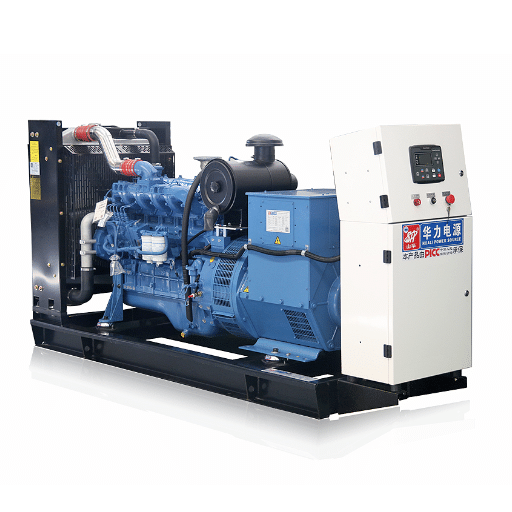
Cooling system rated for ambient conditions. Air-cooled units work in temperate climates. Water-cooled units with radiators handle hot, dusty environments better. Verify the radiator is rated for your site’s maximum ambient temperature, not just the engine’s standard test condition.
Control panel and remote monitoring. Voltage, frequency, oil pressure, and coolant temperature would be various data displayed live on modern digital controllers. GSM or Wi-Fi would make possible all remote monitoring of managers who could also issue maintenance orders for any downtime impunity.
Fuel tank capacity and extended run-time options. A generator uses 480 liters within 6 hours and needs a 2,000-liter capacity to run continuously for 24 hours. With below-grade integral day tanks, external bulk tanks, and automatic fuel transfer systems increased autonomy with less intervention.
Enclosure durability. Look for IP23 or higher ingress protection, powder-coated steel to resist corrosion, and lockable access doors. Construction sites attract theft; lockable fuel caps and control panels protect your investment.
After-sales support and spare parts commitment. A customized generator set is only as good as the support behind it. Confirm warranty terms, response time for critical spare parts, and availability of factory-trained technicians in your region. The cheapest unit with no local support often becomes the most expensive unit over its lifecycle.
Conclusion
Selecting the right Diesel generator for a construction site’s power is not a guessing game. It is an engineered decision taking into account all possible factors. Begin with an exhaustive inventory of the loads. Convert kilowatts to kVA. Apply from 20%-30% as margin. Adjust at altitudes and temperatures. Select a prime power rating for off-grid sites. Ensure that the enclosure type is electable to the site’s specific noise and environmental constraints. With all those clear parameters in place, decide whether the machine should be rented or procured.
By following these guidelines, contractors save themselves from experiences such as blowing breakers, getting fines for being out of compliance, and budget overruns-on account of generators being sized incorrectly in the projects. Such contractors seriously consider the selection of the generator as much as structural concrete and steel reinforcement do.
If you are planning your next construction project and need a reliable power solution, contact our engineering team for a detailed sizing assessment. We provide complete diesel generator solutions from 20 kVA to 3,000 kVA, with custom configurations, global certification, and full lifecycle support. Let us help you keep your site powered and your schedule intact.