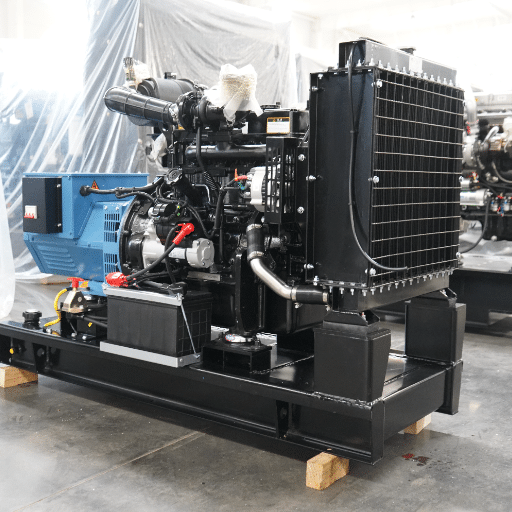



A natural gas generator installation requires proper site preparation, permits, fuel system design, electrical integration, and commissioning before the unit can deliver reliable power. The duration of commercial projects requires 8 to 16 weeks because their process includes permit application through to final startup while all stages require thorough examination of both code compliance and engineering specifications.
What happens when one phase goes wrong? A data center in Texas installed a 1 MW natural gas generator with gas pipe sized for a 500 kW unit to save $800 on piping costs. The fuel pressure at 80% load dropped below the minimum nameplate requirement. The generator shed load and shut down during a critical test. The solution required upsizing the gas pipe and moving the regulator to a position near the meter. The “savings” on pipe cost less than one hour of data center downtime would have cost the facility.
This guide explains how to install a natural gas generator the right way. We wrote it from the perspective of a generator manufacturer that has shipped and supported natural gas generator set installations across industrial, commercial, and critical infrastructure projects worldwide. Every section includes actionable steps, real-world warnings, and the code requirements that protect your investment. For in-depth technical details regarding natural gas generator specifications, (please refer to our natural gas generator guide.)
Key Takeaways
- A successful natural gas generator installation requires proper site prep, permits, fuel system design, electrical connections, and commissioning.
- The concrete pad must be 6-12 inches thick and extend 6-12 inches beyond the generator skid on all sides.
- Fuel pipe sizing is critical: pressure drop from no-load to full-load must not exceed 2 inches water column.
- All new gas lines must be pigged (cleaned) before operation to prevent regulator failure and engine damage.
- NFPA 37, NFPA 54, and NEC govern installation codes for engines, fuel gas, and electrical systems.
- Installation costs range from 15,000forsmallcommercialunitsto15,000forsmallcommercialunitsto300,000 or more for industrial projects.
- Load bank testing at 100% capacity for 2-4 hours and automatic transfer tests are required for commissioning.
- Manufacturer warranty begins on the commissioning date, not the purchase date.
Why Proper Natural Gas Generator Installation Matters

The installation of natural gas generators requires expertise in handling high voltage systems and pressurized fuel gas and hot exhaust systems and rotating machinery components. Proper installation of each element prevents safety risks and performance problems which emerge during system operation.
The correct installation of equipment serves as the basis for warranty protection. The majority of generator manufacturers will cancel warranties when unlicensed individuals conduct electrical or fuel gas operations. The warranty period starts from the commissioning date instead of the purchase date which results in improper startup procedures that can either delay or void your warranty.
Safety remains an essential requirement which cannot be compromised. The handling of pressurized natural gas requires operators to maintain airtight seals and ensure appropriate systems for air circulation. The system must direct exhaust gases which exceed 1,000 degrees Fahrenheit away from areas that contain flammable materials. The electrical conductors transmit dangerous electrical current that needs to be secured through proper bonding and grounding techniques and overcurrent protection systems.
Shortcuts taken during installation will result in decreased performance. The field data from the industry demonstrates that fuel pressure problems cause about 40% of natural gas generator startup failures. The engine faces fuel starvation at full load because undersized gas piping and faulty regulator placement and contaminated fuel lines all create pressure droop. The electrical system faces protection faults when operators make mistakes through reversing current transformer polarity or using insufficiently sized ATS load cables.
Life and property protection needs to be ensured through proper code compliance. The Authority Having Jurisdiction (AHJ) conducts generator installation inspections to verify compliance with NFPA 37 (stationary combustion engines), NFPA 54 (national fuel gas code), NFPA 110 (emergency and standby power systems), and the National Electrical Code (NEC). Failed inspections will cause project delays while also creating potential disputes over insurance coverage which can arise after an incident.
Pre-Installation Planning and Permitting
Successful natural gas generator installation begins weeks before equipment arrives on site. Planning errors discovered during construction cost 10 times more to correct than errors caught on paper.
Load Assessment and Generator Sizing Confirmation
Verify that your generator size matches the calculated load demand. Review the load schedule against the generator nameplate rating, including starting kVA requirements for motors and transformers. Confirm that site conditions match manufacturer specifications for altitude, ambient temperature, and humidity. If you have not completed load sizing yet, read our guide on how to size a natural gas generator before proceeding.
Document the application type: standby, prime, or continuous. Standby installations require faster startup and transfer times. Prime and continuous installations demand heavier fuel systems, cooling systems, and maintenance access.
Permits and Regulatory Approvals
Most jurisdictions require multiple permits for natural gas generator installation:
- Electrical permit: Covers ATS installation, load conductors, grounding, and utility interconnection.
- Gas or mechanical permit: Covers fuel pipe installation, regulator placement, and gas meter modifications.
- Building permit: Covers concrete pad, enclosure, and structural anchoring.
- Environmental or air quality permit: Required for large industrial units or installations in non-attainment areas.
Submit permit applications early. Electrical and gas permits typically take 2-4 weeks. Environmental permits for large industrial generators can take 8-12 weeks or longer. The 2026 EPA permitting reforms allow non-emissions construction activities to begin before final air permits are issued, which accelerates timelines for commercial and industrial projects.
Utility Coordination
Contact the gas utility to verify meter capacity and delivery pressure. Natural gas generators consume significant fuel volume. A 500 kW unit at full load burns approximately 5,000 cubic feet per hour. The existing meter and regulator may not deliver enough volume at the pressure the generator requires.
Coordinate with the electric utility for interconnection approval if the generator will operate in parallel with the grid or export power. Many utilities require separate interconnection studies for distributed generation.
Site Preparation for Natural Gas Generator Installation

Site preparation creates the physical foundation for decades of reliable operation. Cutting corners during this phase creates problems that are expensive and disruptive to fix later.
Location and Clearance Requirements
NFPA 37 requires minimum clearances between the generator and building openings. Most jurisdictions enforce:
- 5 feet from windows, doors, and ventilation intakes
- 3-5 feet maintenance clearance on all sides of the unit
- 10 feet from property lines in some zoning districts
- Proximity to the gas meter and electrical service panel to minimize pipe and cable runs
Check local noise ordinances before finalizing location. Natural gas generators produce 75-85 dB at 1 meter without enclosures. Sound-attenuated enclosures reduce this to 65-75 dB, but some jurisdictions impose stricter limits.
Foundation and Concrete Pad
The concrete pad supports the full weight of the generator, fuel tank (if included), and dynamic loads from engine vibration. Specifications vary by unit size:
| Generator Size | Pad Thickness | Minimum Extension Beyond Skid |
|---|---|---|
| 30-100 kW | 6 inches | 6 inches |
| 100-500 kW | 8 inches | 8 inches |
| 500-1,000 kW | 10 inches | 10 inches |
| 1,000+ kW | 12 inches | 12 inches |
The pad must be level within 1/4 inch and sloped for drainage away from the unit. Reinforced concrete with 3,000 PSI minimum compressive strength is standard. Concrete pad costs range from 500forsmallcommercialunitsto500forsmallcommercialunitsto5,000 for large industrial installations.
Seismic and Wind Anchoring
The 2026 International Building Code (IBC) and ASCE 7 require seismic and wind anchoring for generator installations in rated zones. Standard vibration isolators reduce noise and vibration transmission but do not restrain the unit during seismic events.
A California hospital installed natural gas generators that used standard vibration isolators without any seismic restraints. During a 2025 earthquake, one unit moved 18 inches from its pad because the flex fuel connection sheared and automated gas shutoff system activated. The facility lost backup power until the fuel line was repaired. The fix required retrofitting certified seismic anchoring systems per 2026 IBC requirements. Seismic anchoring is essential for life safety because it functions as critical infrastructure.
Certified anchoring systems include bolted base plates, structural steel frames, or cable restraints which engineers design according to specific seismic zone requirements and unit weight specifications. Always verify that your anchoring system is rated for both the static weight and the dynamic seismic forces at your location.
Natural Gas Fuel System Installation
The fuel system is the most critical and most frequently misunderstood part of natural gas generator installation. Natural gas at the correct pressure and cleanliness is as important as electricity to generator operation.
Pipe Sizing and Design
Fuel pipe sizing must account for BTU demand, pipe length, number of fittings, and pressure drop. Undersized pipe causes pressure droop that prevents the generator from reaching full load.
Rule of thumb: Pressure drop from no-load to full-load must not exceed 2 inches water column (w.c.). Most natural gas generators require 11 inches w.c. or 14 inches w.c. at the engine fuel inlet, depending on the model.
Use manufacturer-specific pipe sizing tools or consult a gas engineer for long runs with multiple fittings. Do not guess. A 500 kW unit running on an 1.5-inch pipe over 100 feet with several elbows will see significant pressure loss that a 2-inch pipe would avoid.
Regulator Placement and Configuration
The fuel regulator reduces utility gas pressure to the level the generator engine requires. Proper placement ensures stable pressure delivery:
- Install the regulator 8-10 feet from the generator fuel inlet.
- Maintain 10 pipe diameters of straight run upstream and downstream of the regulator.
- Use an individual regulator per generator. Do not share one regulator between multiple units.
- Size the regulator for 120-150% of the generator’s full-load fuel consumption to allow margin.
Pipe Cleaning and Contamination Control
A 500 kW natural gas generator installation proceeded without pigging the new gas lines. The first startup showed that debris had blocked the regulator seat which resulted in pressure creep. The engine oversped and tripped on over-frequency. The installation team had to disassemble the entire fuel train system to clean all parts and they needed to re-pig the pipelines and install a dirt trap upstream of the regulator. The delay cost three days of commissioning time and pushed back the facility’s insurance certification.
Never skip pipe pigging. All new gas lines must be pigged (cleaned internally) before connection to the generator. Install a dirt trap or screen upstream of the regulator to catch any remaining debris. Use a flex pipe connection at the generator fuel inlet to isolate engine vibration from the rigid fuel piping.
Pressure Settings and Testing
Set the regulator no-load pressure to the manufacturer’s specification: typically 11 inches w.c. for 7-11 inch units, or 14 inches w.c. for 11-14 inch units. Start the generator and verify that full-load pressure droop stays within 2 inches w.c.
Perform leak testing on all fuel connections using approved gas leak detection solution or electronic leak detection. Document test results for the AHJ inspection and warranty file.
Remote Fuel Shutoff
NFPA 37 requires a remote manual fuel shutoff valve for indoor installations and recommends one for outdoor installations near buildings. The valve must be clearly labeled and accessible during an emergency. Locate it outside any enclosure so operators can reach it without opening doors.
Electrical Installation

Electrical installation connects the generator to the facility power system and control network. Mistakes here prevent automatic operation and create safety hazards.
Automatic Transfer Switch (ATS)
The ATS monitors utility power and automatically transfers the load to the generator when utility power fails. Proper ATS installation requires:
- Placement near the main electrical panel, typically within 25 feet to minimize load cable runs.
- Load cable sized for the full generator ampacity. A 2,500 amp breaker may require 600 MCM copper conductors.
- Current transformer (CT) installation with proper polarity. Reversed CT polarity causes the ATS to read load incorrectly and can prevent transfer.
- Proper working space per NEC Article 110.26: minimum 3 feet clear workspace in front of the ATS.
Control and Communication Wiring
The generator control panel communicates with the ATS and building management systems through low-voltage wiring:
- 2-wire start circuit: The ATS sends a start signal to the generator controller.
- 3-wire position indication: The ATS reports its position (utility, generator, test) back to the generator.
- RS-485 or Ethernet remote monitoring: Run in separate conduit from power conductors to avoid electrical interference.
Auxiliary Power Circuits
Natural gas generators require continuous auxiliary power for engine support systems:
- Block heater circuit: 120V or 240V circuit that maintains engine coolant temperature for fast startup.
- Battery charger circuit: 5 amp, 120V minimum battery charger to maintain starting batteries.
- Space heater and coolant heater circuits: Required in cold climates to prevent freezing and ensure starting reliability.
Grounding and Bonding
NEC Article 250 requires proper grounding of the generator and ATS. Install a generator ground electrode (ground rod) bonded to the equipment grounding conductor. The neutral bonding configuration depends on the transfer switch type: solidly grounded neutral for three-pole switches, switched neutral for four-pole switches. Incorrect neutral bonding causes ground fault detection errors and safety hazards.
Battery Installation
Most natural gas generators use 12VDC or 24VDC starting batteries. The manufacturer-supplied tray should be used for battery installation together with its appropriate hold-downs. The negative cable should be connected last while the negative terminal needs to have a maintenance lockout removal protocol label attached.
Exhaust and Ventilation System
The engine emits exhaust gases that reach temperatures above 1,000 degrees Fahrenheit which need to be directed through proper systems that will protect both the generator and the building.
Exhaust piping needs to have proper support systems together with expansion joints which allow for thermal expansion. All hot surfaces that exist within 18 inches of combustible materials need insulation or installation of factory-approved heat shields.
Cooling air requirements depend on unit size and enclosure type. A typical enclosed generator requires intake and exhaust louvers sized for the radiator airflow plus ventilation for alternator cooling. The system experiences overheating problems together with decreased power production because of undersized louvers.
The generator needs dedicated supports for mounting its emissions catalyst which it uses to meet EPA regulations. The catalyst must not be suspended from existing silencer supports because those supports lack the capacity to handle extra weight.
Generator Set Placement and Mounting
With the pad complete and utilities routed, position the generator on the foundation. Verify level within manufacturer tolerance, typically 1/4 inch across the skid length. Install vibration isolators between the skid and pad if specified.
Align exhaust outlet with the building exhaust penetration. Verify cooling air intake and discharge paths are clear. Attach enclosure panels and sound attenuation materials per manufacturer instructions.
Natural Gas Generator Installation Cost Breakdown

Understanding costs by phase helps with budgeting and prevents surprises. For a detailed breakdown of equipment-only pricing, see our analysis of commercial natural gas generator cost before adding installation expenses.
Cost by Generator Size
| Size Category | Generator kW | Total Installation Cost |
|---|---|---|
| Small commercial | 30-100 kW | 15,000−15,000−85,000 |
| Medium commercial | 100-500 kW | 85,000−85,000−300,000 |
| Industrial | 500+ kW | $300,000+ (custom) |
Cost by Installation Phase
- Equipment and delivery: 40-60% of total project cost
- Concrete pad and site preparation: 500−500−5,000
- Electrical and ATS installation: 15-25% of total cost
- Fuel system and gas connection: 10-15% of total cost
- Permits and inspections: 1,000−1,000−5,000
- Commissioning and load bank testing: 3,000−3,000−15,000
A contractor in Florida saved $12,000 on a medium commercial installation by completing site prep and concrete work during the permit waiting period rather than sequencing it after permits were issued. Proper scheduling reduces total project duration and labor costs.
Commissioning and Testing
Commissioning proves that the installation performs as designed and starts the warranty clock. Do not skip or shorten this phase.
Pre-Startup Inspection
Verify mechanical, electrical, and fuel system integrity before first start:
- All bolts torqued to specification
- Oil and coolant levels correct
- Electrical connections tight and properly phased
- Fuel system leak-free and pressure set correctly
- Exhaust system secure and clearances adequate
- Cooling air paths unobstructed
Initial Startup
Purge the fuel system of air before starting. Program the control system for the application: standby voltage and frequency setpoints, exercise schedule, and alarm thresholds. Verify the air-fuel ratio (AFR) controller readings are within specification.
Load Bank Testing
Run the generator at 100% rated load for 2-4 hours using a resistive load bank. Monitor voltage regulation, frequency stability, coolant temperature, oil pressure, and exhaust temperature. Document all readings in the commissioning report. Load bank testing validates that the generator can deliver nameplate capacity and identifies issues before the unit supports critical loads.
Automatic Transfer Test
Simulate a utility outage by opening the utility breaker. The generator must start within 10 seconds while the ATS needs to transition to emergency power within the designated time. The system needs to transfer back to utility power without interruptions when electricity supply resumes. The system requires testing of safety shutdowns which include overcrank, overspeed, low oil pressure, and high coolant temperature.
Emissions Verification
For catalyst-equipped engines, verify NOx, CO, and HC emissions using a portable analyzer. Compare readings against EPA Tier 4 or local air quality permit limits. Document baseline emissions for future comparison.
Documentation and Training
Complete the commissioning report with all test data, inspection checklists, and as-built drawings. The manufacturer needs to receive the warranty registration for the project. Warranty begins on the commissioning date, not the purchase date, so delayed commissioning delays warranty coverage.
Train facility operators on startup, shutdown, transfer testing, and emergency procedures. Provide them with the operator manual, maintenance schedule, and emergency contact information.
Natural Gas Generator Installation Checklist

Use this checklist to track progress through each phase.
Pre-Installation
- Load assessment and generator sizing confirmed
- Electrical permit obtained
- Gas or mechanical permit obtained
- Building permit obtained (if required)
- Environmental permit obtained (if required)
- Gas utility capacity verified
- Electric utility interconnection approved (if applicable)
Site Preparation
- Location meets NFPA 37 clearance requirements
- Concrete pad poured and cured
- Pad level within 1/4 inch
- Seismic or wind anchoring installed (if required)
- Trenches dug for electrical and gas routing
Mechanical Installation
- Generator positioned and leveled on pad
- Vibration isolators installed
- Exhaust system routed and supported
- Cooling air intake and discharge clear
- Enclosure panels attached
Electrical Installation
- ATS installed with proper working clearance
- Load cables sized and connected
- CTs installed with correct polarity
- Control wiring terminated
- Grounding and bonding completed
- Auxiliary circuits (heater, charger) powered
- Batteries installed and connected
Fuel System Installation
- Gas pipe sized and installed
- Regulator placed 8-10 feet from generator
- Straight run requirements met
- Pipe pigging completed
- Dirt trap installed upstream of regulator
- Flex connection at generator inlet
- Pressure set to specification
- Leak test passed and documented
- Remote fuel shutoff installed and labeled
Commissioning
- Pre-startup inspection completed
- Initial startup successful
- Load bank test passed (2-4 hours at 100%)
- Automatic transfer test passed
- Emissions verified (if required)
- Commissioning report completed
- Operator training conducted
- Warranty registered
Common Natural Gas Generator Installation Mistakes
Learning from others’ errors saves time, money, and frustration.
Undersized gas pipe. The most common and most expensive mistake. Pressure droop at full load causes shutdowns and load shedding. Size pipe for full-load demand plus future expansion.
Skipping pipe pigging. New construction debris destroys regulators and fuel valves. Pig every new gas line. The 30 minutes spent cleaning saves days of troubleshooting.
Improper ATS sizing or CT polarity. An undersized ATS overheats. Reversed CT polarity prevents automatic transfer. Both mistakes are easy to catch during pre-startup inspection.
Inadequate ventilation. Blocked cooling air causes overheating and derating. Size louvers for full radiator airflow plus margin.
Missing remote fuel shutoff. NFPA 37 requires remote shutoff for indoor installations. Missing this triggers inspection failures and creates safety risks.
No vibration isolation. Unisolated generators transmit vibration into building structure, damaging adjacent equipment and creating noise complaints.
Delayed permit applications. Permit delays push back the entire project. Submit electrical and gas permits before ordering equipment.
When to Bring in an Expert
Some natural gas generator installations require specialized expertise beyond standard contractor capabilities.
Projects over 500 kW typically involve complex fuel systems, larger electrical infrastructure, and stricter code requirements. An experienced generator installation contractor reduces risk.
Multi-generator paralleling installations require synchronizing controls, load sharing systems, and protective relaying that standard electrical contractors may not have experience with.
Non-attainment area emissions permitting involves air quality modeling, catalyst selection, and ongoing compliance monitoring. Environmental consultants navigate these requirements efficiently.
Complex fuel systems with multiple regulators need gas engineering to ensure stable pressure delivery under all load conditions.
Before contacting an expert, prepare a site plan, single-line electrical diagram, load schedule, and gas utility data sheet. These documents allow the expert to assess your project quickly and provide accurate guidance.
Conclusion
Natural gas generator installation is a multi-phase project that needs to meet all requirements from building codes and engineering specifications and testing procedures. The specifications define all project requirements from concrete pad thickness to fuel pipe diameter to commissioning load bank test which ensures operational reliability during utility outages.
The key principles are simple: size the fuel system for full load, clean the gas lines before startup, ground and bond everything correctly, and prove performance with load testing before the unit supports critical loads. When you cut corners during installation work you create lower system reliability which results in bigger problems during system outages.
Our engineering team provides complete project support for natural gas generator installation projects which we handle from sizing processes to final commissioning stages. We manufacture natural gas generator sets which operate between 20 kW and 2,000 kW and we offer installation instructions, technical papers, and commissioning assistance to projects around the world.
For post-installation care, follow our natural gas generator maintenance guide to protect your investment. If you are still evaluating fuel options, read our diesel vs gas generator comparison to confirm that natural gas is the right choice for your application.