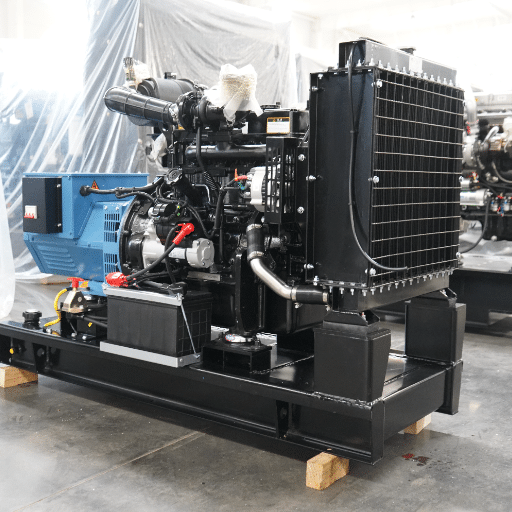



In terms of the price for commercial natural gas generators, they can range from $15,000 for small 20 kW systemst o over $750,000 for over 500 kW industrial systems. As a general rule, the total installed cost tends to average from $800 to $1,00 per kW as equipment options and the cost of site groundwork and ancillary systems and almost 15 to 25 percent added for such costs.
The quotation that appears cheaper is likely to incur substantial substitutions. Chen Wei, the facilities manager of a textile plant , Vietnam, received a quote of around $45,000 in 2024 for a 150kW natural gas generator. He had briefly estimated $50,000 for the generator, but paid $87,000 finally. Costs for gas pipeline extension, concrete foundations, and electrical tie-ins did not get covered by the equipment quote, and, because he had been so focused on generator unit pricing, his project budget went over by 74 percent.
It is about every industrial buyer that makes the same mistake. Very often they examine quotations for equipment without discerning the whole commercial nature of the cost, whether to use a generator, as in the example. It is the aim of the present guide to go into the details of major cost components, since this will provide the manufacturer with a rationale for allowing margins at each stage.
We would consider the imperatives for equipment cost based on the power capability of the system; we shall also concern ourselves with the installation-type costs for the customer-financed equipment, meaning adequate information for a buyer. Are there separate classifications and costs for fuel as well as ancillary care outlets? Only then do we ponder the hidden costs such projects hold over the buyer, alongside a near-real scenario on how they can establish costs.
Key Takeaways
- Commercial natural gas generator equipment costs range from 15,000(20kW)to15,000(20kW)to750,000+ (500+ kW), with natural gas units typically 10-30% less expensive than diesel equivalents
- Total installed cost averages 800−800−1,000 per kW when equipment, installation, gas connection, and electrical integration are combined
- Operating costs run 0.08−0.08−0.15 per kWh, with maintenance every 250-500 hours and a typical equipment lifespan of 15-30 years
- Natural gas generators break even against diesel within 3-5 years for facilities running 2,000+ hours annually, but diesel wins for standby-only applications
- Hidden costs include utility meter upgrades, sound attenuation enclosures, cold weather protection, and remote monitoring systems
For in-depth technical details regarding natural gas generator specifications, (please refer to our natural gas generator guide.)
What Drives Commercial Natural Gas Generator Cost

Several variables determine the final price of a natural gas generator system. Understanding these factors helps buyers evaluate quotes accurately and avoid budget surprises.
Equipment Specifications and Power Rating
Power output is the single largest cost driver. According to estimates, a 50 kW unit costs roughly 16,000to16,000to25,000, and a 500 kW unit costs over $200,000. The price is influenced by the engine brand, alternator quality, and control system complexity. A more sophisticated control system, digital control paneling, quiet/out-of-town operation control, remote monitoring capability, and an automatic transfer switch always cost a fraction more than the most basic models. These features help reduce constant operational costs.
Brand, Origin, and Manufacturing Source
Origin of manufacturing has a significant impact on pricing. Therefore, supply of established firms from the North America and Europe such as Cummins, Caterpillar, and Kohler commands a premium due to brand recognition and a well-developed service network. Chinese producers offer very competitive prices for the same technical specification. It is important for buyers to concentrate on manufacturers who are an established name, ISO9001, and CE certified to source equipment at a reduction in expected expenses. This range is usually about 20 to 40 % of the overall cost with little or no loss in quality.
Shandong Huali Electromechanical Co. Ltd goes global in the building of power generation units of 5 kW to 3,000 kW for its world-wide distributors and OEM customers. All our complete-driven generator sets are run and tested twice in our factory for 4 hours.
Certification and Compliance Requirements
It is a standard consumer demand to satisfy the certifications in most cases at any price. US-specified generators need to be compatible with the EPA Tier 4 Final due to the lining of their combustion generators with emission control devices. For European markets, the projects of CE staking involve some additional testing and documentation. ISO9001 certifies systematic production control measures and methods to the standard. A buyer is required to ensure the applicable certifications within his/her area and shoehorn their impact into his/her way of project budget.
Customization and Configuration
Every project cannot be incorporated in a brochure type of approach. Enclosures extending service life under extreme weather configurations, special voltage arrangements, containerized deployment, derating in high-altitude operating conditions etc., all imply additional cost. A typical customization ranges from 10 to 25 percent in escalation in the base price depending on complexity, especially in OEM consultation and large projects without which operation cannot be sustained.
Natural Gas Generator Cost by Power Output
Equipment pricing varies significantly by kilowatt rating. The table below summarizes current market ranges based on 2025-2026 dealer and manufacturer data.
| Power Output | Equipment Cost Range | Typical Applications |
|---|---|---|
| 20-50 kW | 15,000−15,000−25,000 | Small offices, retail, restaurants |
| 60-100 kW | 30,000−30,000−60,000 | Clinics, grocery stores, light manufacturing |
| 100-200 kW | 45,000−45,000−90,000 | Mid-size factories, commercial buildings |
| 200-500 kW | 90,000−90,000−240,000 | Hospitals, data centers, heavy industry |
| 500+ kW | 175,000−175,000−750,000+ | Large industrial plants, critical infrastructure |
Small Commercial Systems (20-100 kW)
Small-scale commercial natural gas generators will be useful for retail spaces, office spaces, restaurants, and small healthcare facilities. Smaller-sized Generac or Ford machines of 50 kW typically cost between $16,000 to $25,000. The highest-priced 100 kW Triton or Generac system with all possible enclosures and controls may cost from $30,000 to $60,000. Those units mostly are provided with basic sound attenuation and standard control systems.
Mid-Range Commercial Systems (100-500 kW)
Mid-range systems power manufacturing lines, commercial buildings, and medium-sized data centers. A 200 kW Cummins natural gas generator with sound-attenuated enclosure costs approximately 73,000to73,000to90,000. A 500 kW industrial unit from a premium brand can reach $300,000 or more with full controls and enclosures.
For buyers evaluating options in this range, our (diesel generator specifications)provide comparable data for alternative fuel configurations.
Large Industrial Systems (500+ kW)
Large industrial natural gas generators serve critical infrastructure including hospitals, data centers, and heavy manufacturing. Equipment costs start around 175,000andcanexceed175,000andcanexceed500,000 for specialized high-capacity units. These systems include advanced control systems, extensive sound attenuation, and integration with building management systems.
Used vs. New Equipment
Used commercial natural gas generators offer significant savings. Low-hour standby units typically cost 40-70 percent of comparable new pricing. A used 50 kW unit may sell for 16,000versus16,000versus20,000-$25,000 new. Reputable dealers inspect and load-test used equipment. For budget-conscious buyers with non-critical applications, used equipment is a viable option.
Installation and Infrastructure Costs

Installation typically represents 40-60 percent of the total project cost. Equipment price alone does not tell the full story.
Site Preparation and Foundation
Every commercial generator requires a stable foundation. A concrete pad for a small commercial unit costs 3,000to3,000to8,000. Large industrial installations require reinforced foundations costing 8,000to8,000to25,000 or more. Soil conditions, seismic requirements, and site accessibility affect foundation complexity.
Natural Gas Connection and Pressure Regulation
Natural gas generators require adequate pipeline pressure and flow capacity. If the facility already has gas service, connection costs range from 5,000to5,000to15,000. This includes piping from the gas main, pressure regulators, and meter upgrades. For facilities without existing gas infrastructure, extending a pipeline can exceed the generator equipment cost.
Maria Santos, a project manager at a construction firm in Brazil, learned this lesson during a 2024 hospital project. The generator equipment cost 120,000.Extendingthemunicipalgaslinetothesiteadded120,000.Extendingthemunicipalgaslinetothesiteadded95,000. The total project cost nearly doubled her initial estimate.
Electrical Integration and Transfer Switch
The automatic transfer switch (ATS) is a critical and costly component. A 125 kW class ATS costs 8,000to8,000to15,000. A 1,000 kW class ATS ranges from 35,000to35,000to60,000. Electrical panel work, conduit, and wiring add 5,000to5,000to12,000. Integration with existing electrical systems becomes more complex in older facilities.
Permits, Inspections, and Compliance
Permitting costs vary by jurisdiction. Most commercial installations require electrical permits, gas line permits, and fire safety inspections. Total permitting costs range from 500to500to5,000. Environmental permits may be required for large installations in regulated areas.
Operating Costs: Fuel, Maintenance, and Lifecycle
The purchase price is only the beginning. Operating costs determine the true economic impact over the generator’s service life.
Fuel Consumption and Cost per kWh
Talking about a bigger generator consuming around 70-80 fuel cubic feet per hour is natural; a 100 kW generator running at 75% load, on average, takes around 900 to 1,200 cubic feet per hour. With standard gas rates lying between 10 and 15, fuel prices include the grand total of 9to9to18. Generally, the cost-effectiveness would vary between 0.08, depending, of course, on the local cost imposed by the utility and how inefficient the machine might be.
Scheduled Maintenance Costs
Natural gas generators require maintenance every 250 to 500 operating hours or semi-annually for standby units. Annual maintenance costs range from 2,000to2,000to4,000 for small commercial units and 5,000to5,000to10,000 for medium commercial systems. Service includes oil and filter changes, spark plug replacement, coolant checks, battery maintenance, and gas line inspections.
For ongoing care after installation, follow our natural gas generator maintenance guide.
Major Overhaul and Replacement Timeline
Natural gas generators typically last 15 to 30 years with proper maintenance. Major overhauls occur at 12,000 to 30,000 operating hours depending on conditions and service quality. Overhaul costs range from 30-50 percent of the original equipment price. Planning for this expense in advance prevents budget disruption.
Total Cost of Ownership Framework
Total cost of ownership (TCO) includes equipment, installation, fuel, maintenance, overhauls, and eventual replacement. A manufacturing plant in Poland conducted a detailed TCO analysis during a 2023 expansion. The project team initially favored natural gas due to lower projected fuel costs. After calculating pipeline extension fees, gas pressure booster equipment, and maintenance contracts, the 15-year TCO for diesel came in 18 percent lower. The plant chose diesel and installed on-site fuel storage for 72 hours of continuous runtime.
The break-even point between natural gas and diesel depends heavily on annual operating hours. Frequent operation favors natural gas. Occasional or standby operation favors diesel.
Natural Gas vs Diesel Generator Cost Comparison

Fuel type is one of the most important cost variables. Understanding the comparison helps buyers choose the right technology for their budget and operational needs.
Upfront Equipment Cost
Natural gas generators are generally 10 to 30 percent less expensive than equivalent diesel units. The savings come primarily from eliminating on-site fuel storage tanks, which diesel requires. A diesel fuel storage and polishing system can add 15,000to15,000to50,000 to a project. Natural gas connects directly to utility pipelines.
For a detailed comparison of fuel technologies, (see our natural gas generator vs diesel)
Installation Complexity
Diesel installations are simpler for remote sites. They require only fuel tanks and delivery logistics. Natural gas installations can be cost-competitive when pipeline infrastructure already exists. Extending a gas line to a remote industrial site often makes natural gas impractical regardless of fuel cost advantages.
Fuel Cost Over Time
Diesel fuel prices track crude oil markets and can fluctuate significantly. Delivery logistics add cost for remote sites. Natural gas utility rates are generally more stable and lower on a per-kilowatt-hour basis. For a facility running a generator 2,000 hours per year, natural gas fuel savings often offset higher installation costs within three to five years.
Break-Even Analysis by Operating Hours
The annual operating hour threshold determines which fuel type delivers lower total cost. Facilities running 50 to 200 hours annually typically see lower total cost with diesel due to its lower upfront investment. Facilities running 1,000+ hours annually usually achieve lower total cost with natural gas through fuel savings.
Hidden Costs Buyers Often Overlook
Several expenses rarely appear in initial quotes but significantly affect project budgets.
Utility Meter and Pipeline Upgrades
Commercial natural gas generators often require utility meter upgrades to handle increased gas flow. The existing meter may not accommodate the generator’s fuel demand. Meter upgrades cost 2,000to2,000to8,000 depending on capacity and local utility fees. Pipeline pressure may also require booster equipment for large installations.
Sound Attenuation and Enclosure Requirements
Natural gas generators operate at 58 to 69 dB(A) at 23 feet. Diesel generators produce 75 to 90 dB(A). While natural gas is quieter, many jurisdictions impose noise restrictions that require sound-attenuated enclosures. Enclosures add 4,000to4,000to15,000 depending on size and attenuation level.
Cold Weather Protection
Whenever gas pressure decreases or moisture in regulators freezes, natural gas engines may have trouble starting in cold weather. Heated rooms and pressure alarms may be required for cold-weather installations. Installing such safety features may increase project costs for an additional 3,000to3,000to10,000.
Remote Monitoring and Control Systems
Advanced remote monitoring system starts from 1,500to1,500 to3,000 up to more depending on the requirements. The advanced systems are mostly cellular and require cloud dashboards to connect, and their cost could creep up to 5,000-5,000-12,000.
To help with the management of power systems, customers of Shandong Huali Electromechanical can carry out Smart Control and Remote Monitoring right from their desktop. Out‐fitted with, among other attributes, real‐time monitoring and automatic operation, the digital control panel also does fault detection.
Want to understand how generator sizing affects your brand selection? Read our guide on how to size a natural gas generator to match power requirements before comparing brands.
How to Budget for Your Natural Gas Generator Project

A structured budgeting approach prevents cost overruns and ensures adequate funding.
The 800−800−1,000 per kW Rule
Commercial generators indicate a thumb rule. On average, the total installed cost should be about $800 to 1000 per kW. Hence, a 100kW system should be budgeted with approximately $80,000 to 100,000. The thousand kw system costs approximately $400,000 to $500,000. This includes equipment complete with installation, connections for gas and the electrical power, and basic commissioning.
Load Analysis Before Sizing
In many cases, oversizing wastes energy and capital. Undersizing results in potential failures during peak periods. A professional load analysis helps to understand the required capacity, taking into account inrush currents of motors and HVAC systems. Many consultants suggest a safety factor of 10-25 percent for the future.
Requesting Manufacturer Quotes
When requesting quotes, specify application type, duty cycle, environmental conditions, required certifications, and customization needs. Comparing quotes with identical specifications prevents misleading price differences. Ask about lead times, warranty terms, spare parts availability, and after-sales support.
Planning for Contingency
Unexpected costs are common in generator projects. Soil conditions requiring additional foundation work, electrical code upgrades, and permit delays all add expense. A 15-20 percent contingency fund protects the project budget from these surprises.
Market Context and Industry Trends
Understanding market dynamics helps buyers time their purchases and negotiate from a position of knowledge.
The global natural gas generator market was valued at approximately 10.96billionin2025andisprojectedtoreach10.96billionin2025andisprojectedtoreach31.63 billion by 2034, growing at a compound annual growth rate of 12.5 percent according to Fortune Business Insights. This growth is driven by data center expansion, stricter diesel emissions regulations, and increasing demand for clean backup power.
Indo-Pacific holds the largest market shares with around 32% for a rapid industrialization and infrastructure investment, although North America still marks itself as a very significant player with its shale gas infrastructure in place and favorable utility rates.
As growth persists in market cases, industrial buyers automatically face the potential risk of heightened vendor competition,” causing the vendors to offer favourable pricing, especially for high volume buying and long-term supply contracts.
Conclusion
Commercial natural gas generator prices come as part of a larger construction cost. This includes purchasing or renting a generator, material for installation, fuel system integration, electrician’s work, permits, and contingencies. Installed costs often range from 800to800to1,000 per KW across most market segments.
The choice of natural-gas generator vs diesel one, in consideration of the number of running hours, availability of fuel infrastructure, and project priority, will depend on the operating costs of continuous use and low emissions for natural-gas generators. Diesel is favored due to easier installation at a site far from fuel stations.
For a deeper technical breakdown of commercial and industrial natural gas generator installation standards and process protocols, see our natural gas generator installation guide.
Key takeaways for industrial buyers:
- Evaluate total cost of ownership, not just equipment price
- Use the 800−800−1,000 per kW rule for initial budgeting
- Account for hidden costs including meter upgrades, enclosures, and cold weather protection
- Match generator technology to your annual operating hours and load profile
- Request detailed manufacturer quotes with identical specifications for accurate comparison
- Include a 15-20 percent contingency fund in your project budget
If you are planning an industrial power project and need guidance on natural gas generator selection and budgeting, our engineering team is available to review your requirements. We provide customized recommendations based on load analysis, site conditions, and operational goals. Contact us to discuss your project and receive a tailored power solution.