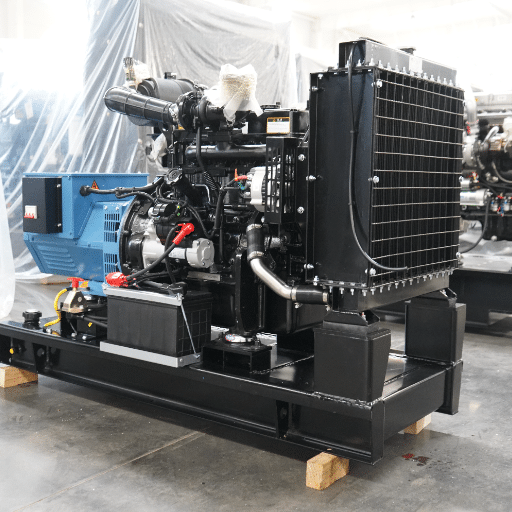


01
Introduction to Generator Cooling Systems

Cooling fans keep generators safe with alternative methods such as air-cooling systems. Air-cooled systems entail the application of fans so cold air circulates in the generator. Liquid cooling systems utilize water coolants or other special substances flowing through various heat exchangers attached to pipes the generator is constructed with. Due to the existence of heat dissipation means such as cooling systems when the generator gets overheated the internal components will be shielded and system will continue operating without loss of efficiency and the side effects of overheating will be contained. Either the use of an air-cooled or a liquid-cooled generator would depend on the size of the generator, the power it is designed to produce, and the uses of the generator.
Importance of Cooling Systems in Generators
Incorporating the design and development of cooling technologies in the lifecycle of any generator is very important. The cooling requirements and some of the environmental conditions as relative to the application have to complement each other. In heavy-duty working environments for example plants or computer server rooms, their generators have a high calorific value whose unchecked release can compromise the efficiency of the facility or cause potential loss of revenue. Studies and other advances in heat abatement practices have consequently engendered further interest in efficient construction that focuses on reducing energy use together with maintaining temperature.
Liquid-cooled solutions, for instance, are considered more superior to air-cooled systems due to their better thermal management capabilities. Among the two, liquid cooling technology especially outstands, in regards to the case of advanced generators. Changing materials and new cooling technologies, such as the usage of nanoparticle-dispersed liquids in the heat arrests, have been of great help in improving heat dissipation in those components leading to better performance and increased useful life of the generator. A well-conceived and functional thermal management system guarantees immediate as well as secondary economic gains of the application.
How Cooling Systems Prevent Overheating
People who are working on engines and other sorts of machinery are faced with the engineers problems of the overheating. These include the implementation of sophisticated heat transfer processes and removal of heat in the form of effective heat dissipation systems. It is common practice nowadays to cool systems using either coolant or air, with components like exchangers, absorbers, and radiators being used to whisk away additional heat from the hottest zones. Thanks to some new materials inclusive of thermoconductive composites and graphene solutions, however, the ability of the systems to absorb and redistribute the generated heat has substantially changed for the better.
Moreover, today’s cooling devices come with advanced sensors and systems in order to ensure the necessary volume and the accuracy of coolant is flown and the efficiency and performance of your car engine is sustained. The cooling technologies for enterprise machine rooms and industrial processes can involve cooling towers and evaporative coolers in order to address high thermal removal rates and avoid component deterioration. As an additional measure, the most recent cooling fan technology packed with efficiency analysis ensures that the cooling systems will run with the requested load of contemporary machinery and will also be stable and reliable.
Overview of High-Power Generator Sets
A branch of electrical engineering that specializes in designing high-power generator units is crucial across most if not all sectors – industry manufacturing, healthcare, data storage, building and more. The systems are usually set to produce constant power, that is aimed at producing same power over and over under heavy load which mostly ranges from hundreds of kilowatts (kW) to several megawatts (MW). This range has in most cases been over fuel combustion enhancing technologies regardless of whether they use diesel, gas or any other engines fuel systems.
Interestingly, another important feature of such power plants is the presence of powerful alternators, created for controlling voltage changes and alleviating too deep drops or too high gains in the load voltage upon the engines. As for control systems, a special one should be mentioned because modern plants are controlled, so to speak, from the computer but not the people in the console. To add to that, in modern systems, load is managed with the help of special control technology systems backs using automation. Ministandalone power sources are enhanced with self-operation.
There are more modern technologies, such as the Tier 4 engine, which help in following stringent environmental regulations enabling them to be totally eco-friendly without any emissions at all. Performance will not be hampered despite emissionless engines. High-power generator sets have a high chance of including modular design, which will ensure that servicing and upgrading them is a painless process, as they can be customized for the specific location. In particular, their ability to provide both prime and backup power supply and is essential in ensuring continuous operations in such fields as healthcare, IT or telcoms, where the issue of reliability of power cannot be compromised.
02
Types of Cooling Systems for Generators

- 01
Air Cooling
This system applies the surroundings air as an aide to the generator in dissipating from the heat. They believe the main source of cooling the generator especially for the small ones because it is simple and cheap. However, this method is not so effective in the high temperatures conditions or the bigger size generators. - 02
Liquid Cooling
Liquid Cooling includes use of water, glycol or a combination of both in their radiator cooling which absorbs and dissipates heat from the engine. The cooling systems are often used in generators which are larger and higher capacity due to the fact that they effectively support constant temperatures. - 03
Oil Cooling
Oil Cooling is yet another function whereby the generator’s internal metal parts of which become hot under engine load. This includes the most used practice of providing additional cooling to parts of the generator. - 04
Radiator Cooling
Radiator inclusive systems utilize liquid cooling which is more of a combination of chillers, as there is a continuous circulation of air and coolants to maintain the temperature. This is more useful in industrial applications because they can easily upscale and one is sure of the working of this system as designed. - 05
Hydrogen Cooling (for large-scale generators)
For high-capacity generators, hydrogen is always the best way to go when it comes to heat exchangers because it has thermal conductivity, great energy properties and enabling it to be used as a lubricant that might increase the wear and tear of the generator.
Air-Cooled Systems
Air cooled systems direct forced cooled to components. The heat transfer occurs from the heat sink to the circulating air. Air cooled systems incorporate features such as air ducts, heat exchangers, and fans since they are in use to provide an adequate flow of air around the hot components. They are highly used due to their ease of implementation, low cost, maintenance, and other issues compared to water-cooled systems.
Modern progress in air cooling technologies has helped in the direction of development, design, and equipment. For instance, the fans of the axial kind with a high output are now endowed with aerodynamic modifications to help generate the airflow and reduce energy requirements. Also, the use of computational fluid dynamics (CFD), is becoming imperative to direct air in designs of air-cooled systems in order to cool the heat tube uniformly under different load conditions. As for the air cooling rather than the liquid cooling, it is more beneficial in cases when the liquid is scarce or infrastructure does not there to accommodate the water cooling systems. This makes the air cooled thermal management an important facility in the markets of telecom/data centers and aircraft.
Liquid-Cooled Systems
Working through the liquid, liquid cooling systems use water or some specific coolant to remove heat from various surfaces. When compared with air-cooled systems, liquid-cooled systems are likely to show a better performance with regards to the heat removal process, since the thermal conductivity of such liquids is higher. Usually, it is required to pump the cooler over and over again through the heat generating components, bringing the heat up the surfaces, before being returned to the radiator only after getting cool. These new age cooling systems feature very thin conduit dimensions called ‘microchannel’ or zero buoyancy cooling techniques that provide additional enhancement based on convective heat transfer and minimized thermal resistance.
The principal merit of liquid cooling is the system’s stability in maintaining an operator-friendly work temperature within its work region even at higher power dissipation levels. This is why liquid cooling is the preferred infrastructure in a phase where high performance computing and hyperscaling data centers are the order of the day. According to available benchmarks, liquid cooling has been shown to cut down on as much as 40% of energy consumption in cooling as compared to air-cooled configurations which contributes to reducing operational expenses and in turn energy utilization rates. Also, contemporary solutions that employ liquid cooling come in versions with leak detection mechanisms and anti-corrosion materials that cater to end-users who seek to use the system for longer periods of time.
Compare Types of Cooling Systems
/ Comparison
| Parameter | Air-Cooled Systems | Liquid-Cooled Systems | Hybrid Cooling Systems |
|---|---|---|---|
| Cooling Medium | Ambient Air | Liquid (e.g., water, glycol) | Combination of air and liquid cooling |
| Efficiency | Moderate | High | Very High |
| Suitable for Large Units | No | Yes | Yes |
| Maintenance Requirements | Low | Moderate | High |
| Initial Cost | Low | High | Very High |
| Operational Cost | Low | Moderate | Moderate to High |
| Noise Levels | High | Moderate | Moderate to Low |
| Heat Dissipation Capacity | Limited | Excellent | Superior |
| Environmental Impact | Low to Moderate | Moderate | Moderate to High |
| Reliability Over Time | High (in standard environments) | Very High | High |
* Scroll horizontally on smaller screens to view full table
03
Key Components of Generator Cooling Systems

- ▸
Coolant (Air, Water, or Oil)
The coolant medium is necessary for diffusing and transporting the heat away from the generator. As simple as it may sound, air cooling is generally the technology used with the smaller power generator sets, whereas the liquid cooling such as water, oil and the heat pipe methods are employed for the larger capacity generators where heat dissipation is relatively higher. - ▸
Heat Exchangers or Radiators
All these devices perform the purpose of transferring heat from coolant to the atmosphere. Thus, the radiators are normally located in water-based cooling systems to enable removal of the heat through the air that flows over the radiator’s surface. - ▸
Fans and Pumps
The air is driven by its fans for the air cooling unit. On the other hand, pumps are employed in the water or oil cooling system for ensuring liquid coolant is continually seated in the system. Uniform distribution of coolant and retention of its effectiveness depend on the proper functioning of the mechanisms. - ▸
Temperature Sensors
These sensors measure coolant temperature and provide a link to a computer. Measurements obtained from these devices are essential for shutting off the generator before it is damaged. - ▸
Expansion Tanks
In liquid cooling systems, one of the components that controls the system is the expansion tank. Its function is truly simple because it compensates for the expansion of the coolant itself.
Heat Exchangers
Generators are integral devices in the system of supporting cooling. An indispensable part is installed in the generator cooling system. A condenser and whatnot would be essential that the last of useful components be filled. This is because they all allow for the transfer of heat from the condensate to a different medium that is in contact with it. In the majority of designs, these different media are air and/or water, responding to which the thermal conditions of a generator working understands equilibrium. Mainly, air-to-air and air-to-water types are different. They differ in the systems they are applied in and temperature conditions obtainable.
Technological development has made it possible to apply heat exchangers that are made of light materials like aluminum and stainless steel due to their resistance to heat, conductivity, and corrosion effects. For instance, light weighted plate heat exchangers have the additional benefit of having a plate surface area that is appropriate for the heat exchanger in the compact systems where the heat exchanger is required to work very efficiently. Most of these systems also have in-line filters to ensure no particles accumulate in the exchanger core and therefore allow it to run for longer periods with better performance.
Recent data emphasizes that strategies that use heat exchangers and variable flow control technology adjust the coolant flow rates of the unit in relation to the thermal load of the energy source. Thus, this not only save on energy but also on the wear and tear of the cooler in the cold power. Such developments serve the purpose of ensuring that heat exchangers continue to play a crucial role in maintaining the functionality and efficiency of the cooling system of the generator.
Radiators and Their Role in Cooling
The radiator, as a mandatory auxiliary systems supporting the various heat exchange applications, primarily two great heat sources, namely the engine and the industrial machinery including other mechanical machinery. The radiator achieves this best with the circulation of coolants through hot areas and with the use of significant insulating and serene environment factors. There are present two cooling mechanisms of heat transfer into a radiator, convection and conduction. Improvement of heat transfer properties of a radiator is unachievable without working on air flow and heat transfer surfaces. New generations of cooling systems are the solution to these problems.
In an effort to improve radiator technology, many researchers have proposed fitting it with active cooling systems. They include: electric fans or variable speed pumps managing airflow and coolant flow in respect to the heat transfer at the moment. According to Computational Fluid Dynamics (CFD) simulations, practical air and coolant flow optimization may have thermal efficiency improvement reaching 30% which as a result improves the system’s operation. Additionally, this upgrading cooling equipment does not just lead to decrease of heat transfer, it also cuts expenses and prolongs working time of the equipment in various sectors.
Pumps and Circulatory Systems
Modern circulatory systems are often tasked with the Herculean job of guiding the liquids they contain through the complex web of pipes, conduits, and valves seamlessly. Such systems differ from common domestic water systems especially where included in large industrial plants, chemical processing plants, oil rigs, desalination and water treatment facilities or instruments within the HVAC systems and medicine. Progress in the pump industry has produced designs, like ‘variable speed pump systems’ which control flow rates and enable significant energy savings.
Going by the latest learned facts from the industry, it can be presumed that energy-efficient pumping operations can help in saving around 20-50% of energy subject to the system and operating conditions. It is also a fact that certain being development stages in materials science resulted to making the pumps more abrasion-resistant with the help of resistant alloys and coatings which helped to overcome corrosion in difficult working environments. All of these advances put the focus back on pumps and how important they are in making both operational as well as environmental area sustainable.
04
Common Maintenance Challenges in Cooling Systems

- 01
Clogging and Fouling
Coolant systems, in particular, are often subject to issues related to sediment or other solid deposits within pipes and heat exchangers that can clog up the system. These deposits tend to complicate the effective transfer of heat and unless such deposits are cleaned out, the functioning of the entire system can be affected. - 02
Corrosion
In case metals are exposed to water, this can cause corrosive agents to weaken the metal structures and cause leakage or reduce the functional proficiency of a system. It is crucial to apply the practices of using effective corrosion inhibitors as well as regular monitoring and control of the system’s chemical balance. - 03
Leakage
Seal efficiency can be decreased due to age and such problems may be frequent. As a result, frequently, the coolant is lost from the system, thus leading to the increased costs for running the system. There preventive activities include regular checks for the seals and their timely replacement. - 04
Pump Wear and Tear
One of the more serious problems encountered during the prolonged operation under different regimes is the degradation of the pumping equipment, which leads to reduced performance and flow rate. To address this issue, it is necessary to practice predictive maintenance, and also to select the materials that are wear-resistant and do not subject to corrosion. - 05
Scaling
There is a high instance of mineral buildup in the cooling towers as well as the piping system which reduces the rate of heat transfer. Besides, the obstruction of the normal flow is caused by the scale that the solutions and inhibitors would be able to curb effectively.
Identifying Overheating Issues
The deficiency of generator cooling systems’ ability to dissipate heat is another severe reason for concern as it may lead to significant delays in operations. Shortcomings such as low levels of coolant due to leaking or poor maintenance as issue of coolant, and the accumulation of dust inside components like the radiators or heat exchangers that prevent adequate heat dissipation are also common problems associated with overheating. Localized hotspots within a system can also be created as the coolant flow can be disordered by failure of a thermostat or the water pumps.
Meticulous installations, modern diagnostics instruments, and advanced monitoring tools play an important role in maintaining the correct operating surface and medium temperature. Usually aimed at trespassing in temperature field, the newest thermal imaging methods and automated monitoring systems for diagnostic purposes are of great benefit since problems can be detected even if hospitals are carrying out normal functions. It should be noted that thermal and excessive heating are effectively controlled by ensuring generator load limits are not exceeded. Scheduled activities such as revitalizing varieties, equipment cleaning or checking status of machinery parts, help in lowering the exorbitant expenses caused by high temperatures thus evaporating overheating dangers.
Regular Maintenance Practices
When it comes to the optimal operational and maintenance practices for generator cooling systems, it’s necessary to employ an ordered methodology to help secure good performance metrics, prolong the duration of the system and ward off risks of failure. Regular monitoring checks the coolant quantity and fluid condition of the system. Also, the condition and quantity change of the working fluid should be appraised due to critically high concentration of certain components, improper ph, or with various additional components being present such as sediment and rust which will impede the system operations over time. It is obligatory to meet the specs of certain coolant mixtures from the manufacturer to support full performance, and ensure that the key system components, like radiators and heat exchangers, do not rust.
Yet another essential activity is regularly checking and protecting radiator, hoses, gaskets, and other cooling system elements condition. It should be emphasized that hoses and gaskets in cooling system are normally subject to replacement with time. Filters in the cooling should be renewed every couple of months to prevent silt from settling down which can degrade heat exchange. What’s more, working the cooling fan or how air flows through the radiator is very important because decrease in airflow can result in the engine excessively heating up at high-load conditions.
It is advisable to have the cooling system washed routinely in order to avoid any corrosion, sediment formation or any other products being built up which may hamper the flow. Further methods of testing should be conducted where assets such as Thermographic Imaging can monitor the situation and pressuring tactics can be used to penetrate the hidden barriers in order to prevent further escalation before reaching critical failures. All of these practices, as well as the introduction of useful advanced diagnostics equipment and compliance with instructions provided by the manufacturer, are aimed at increasing the reliability of the operation of generator cooling systems in general.
Importance of Monitoring System Performance
The system of cooling for generators must be efficient. This is because if the cooling system fails, there are bound to be dangerous effects, operations will become unstable and there may even be overheating that could occur eventually. The presence of flow meters, temperature transmitters and manometers in the cooling system helps in tracking abnormal states like coolant flowrate decrease or increase in temperature and pressure, which will serve as alarm for wear and tear, for disintegration of fluid, and for clogging of the piping and other apparatus. Technological progress in sensing offers in-built real-time mode for both capturing and analyzing the data, which allows precise calculations of parameters that are essential in processes such as heat transfer efficiency and pH of the coolant.
Furthermore, taking advantage of functionalities that harness valuable informational content towards the integration with historical performance data can significantly increase the possibility of predicting breakdowns, which results in reducing downtimes and operational expenses. In this way, maintaining these systems in a proper way will lead to longer lasting kits and affordable equipment meeting all relevant regulations and codes to ensure smooth operations in changing modes, albeit in such a context.
05
Ensuring Optimal Performance in Generators

It is important practice to maintain the generator on a regular basis so that calibration services is done and the equipment serviced. It is recommended that checking the fuel and oil levels, replacing the air cleaner where it seems worn and checking the vibration levels or hearing the noise during its operation initialization are among the basic precautions. It is recommended to also perform load testing of the generator in fixed period of time to ensure that it is unlikely that the generator will not start when it is genuinely needed. The appropriate structure of maintenance practices and process and the exchange of necessary components at the right time spreads the life of the equipment preventing surprises in the process. In addition to regular inspections the attitude of domination also increases the chance of productive operation when it is necessary.
Recap of Cooling System Functions
The reasonably engineered cooling is very important for the stability of most machine elements and engines, as they work efficiently by controlling the temperature of the system so as to cool them. This system works by cooling the hot heat stacks during hot generating activities; the heat energy as released by most machines performing industrial work which can only be used with radiators or external heat exchangers. This is achieved through applied Convective and Conductive Heat transferring principles so that an ambient heat is set within a particular range and time frame in the working environment.
An advanced cooling device protected from leaking of coolant and reduction in energy efficiency by installing the latest technologies. Systems such as those that are temperature controlled or have fans that are electronically driven and many more that are becoming readily available when needed. Maintaining and taking care of the system properly that include checking the coolant and oils levels doing it in every few minutes and also inspecting the hoses and others components of the system. Such systems emphasize the need of a cooling system that is efficient to ensure the serviceability and durability of equipment even in the harshest of the operating environments.
Future Trends in Generator Cooling Technologies
In recent years, improved methods in cooling have continued to emerge including enhanced concepts as has the generation cooling technologies. Among the newest trends are advanced ways of thermal management: liquid immersion cooling when operating generators. That is when the cooling of critical components of system is done through the use of non-conductive cooling fluids offering more effective heat dissipation and less power consumption than the conventional air or closed-loop liquid cooling and systems.
One important change in electronics each year is the shift from simple arrangements of parts individually connected by cords, communication and data exchange encompassed by the Internet of Things (IoT). Where all the equipment around the system is provided with an additional function of communication with the network, for example collecting data from different sources of information. This form of IT has been shown to move energy efficiently and mitigate waste because it operates appliances based on regenerative heat management.
The prospects of cooling generator fans—or not—depend on yet another aspect – functioning. Advances and acceptance of re-engineered refrigerants and other artificial coolants tend to zero down in terms of global impact on the environment with regards to global-warming effect, i.e., global warming potential (GWP). This is because surplus generated heat is now being leveraged by the use of heat recovery systems to heat further something else or for secondary purposes, thereby increasing efficiency levels and reducing pollution levels in the system.
06
Reference Sources
- [1]
Cooling Techniques in Direct-Drive Generators for Wind Power Application
Read more on MDPI → - [2]
A Pole Pair Segment of Oil-Cooling Air-Core Stator for a 2 MW Direct-Drive High Temperature Superconducting Wind Power Generator
Read more on Springer →
07
Frequently Asked Questions
How do diesel generators’ cooling systems prevent overheating in power systems?
While in operation, cooling equipment of a diesel generating set works on the principle of coolant internal circulation in the engine and off-load operation when it comes to discharging heat. Effective two criteria pulling of the over-vent system, cooling ribs, and water pump take care of the additional unwanted heat inside the generator. On generator, maintenance checks for water and controlling the water temperature or checking to ensure the water cooling efficiency is upheld in the event of power blackouts. According to the operating instructions provided by the manufacturer it is important that an engine is operated at the recommended temperature regimes, as it may significantly affect its basic design.
Why do generators need regular checks of coolant levels and coolant leaks in industrial generators?
Having inadequate coolant levels or unseen leaks of coolant can be a catalyst for engine failure because the present cooling mechanism within the larger generators tend to be get hot. The worth impelled in case there is any failure would be more as the machine would not be able to yield as much voltage as it was designed effectively. It is essential to constantly maintain the cooling system from time to time so as to check the inclusion of coolant fluids if they are at the required levels or otherwise pour the recommended quantity of antifreeze: there is a schedule that will detail the antifreeze and other cooling system maintenance requirements.
How does the cooling system work in diesel generators to dissipate the heat from the generator?
The cooling system works by gathering and conducting the heat from the engine, and any other places where it is produced, to the coolant and then through the radiator, transferring the heat to the surrounding air. The components like, but not limited to, the water pump, the thermostat, the radiator, and the cooling fins, work together to help in the escalation of heat transfer and the preservation of the maximum operating temperature. Appropriate ventilation and purging of the dust or dirt inside the fins or the radiators demonstrates impeding or interfering with the system’s performance. Here in the power systems exposed to dust or dirt, it is operational.
What should operators inspect to avoid cooling system issues?
Perform checks on the level of the coolant, the pipes and their fixings, the radiator’s fins, and the impeller pump for wear, leaks or dissolutions that may have been caused to reduce the effectiveness of cooling. Keep tabs on whether the coolant is still serviceable by visually verifying its color and by watching the engine temperature gauge to avoid damaging the generator due to heat. Also, whenever possible, make sure that there is a good space around the generating set most importantly in the intakes of air in addition to the hands-on removal of any form of obstructing materials.