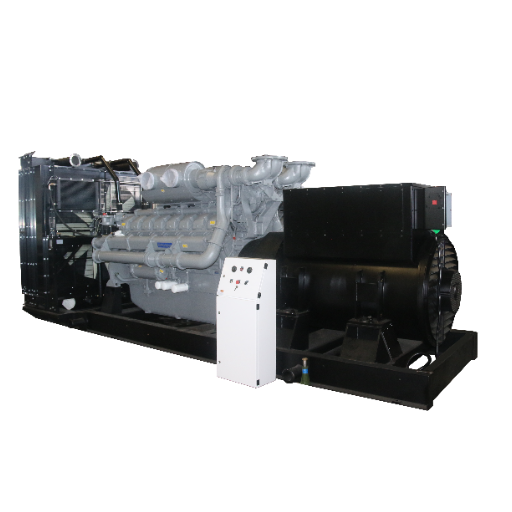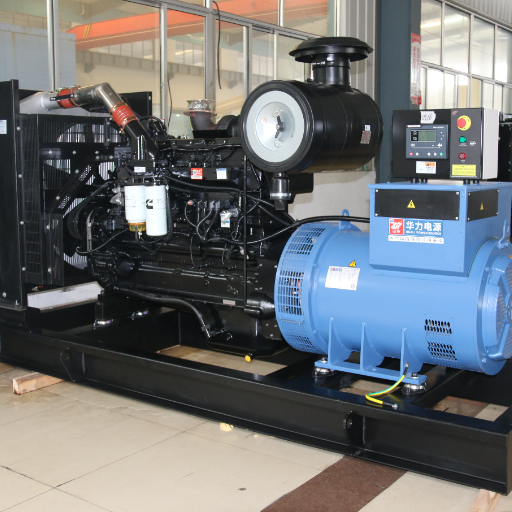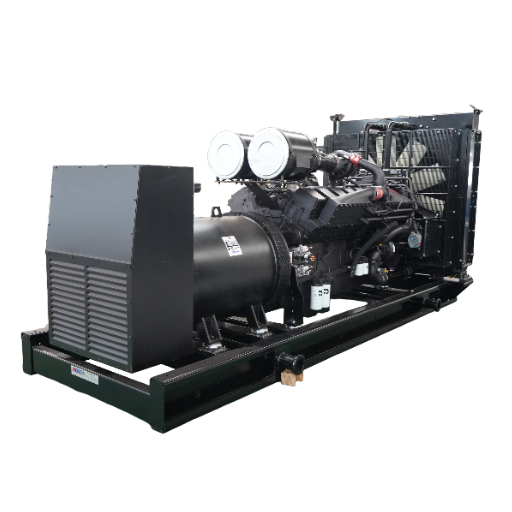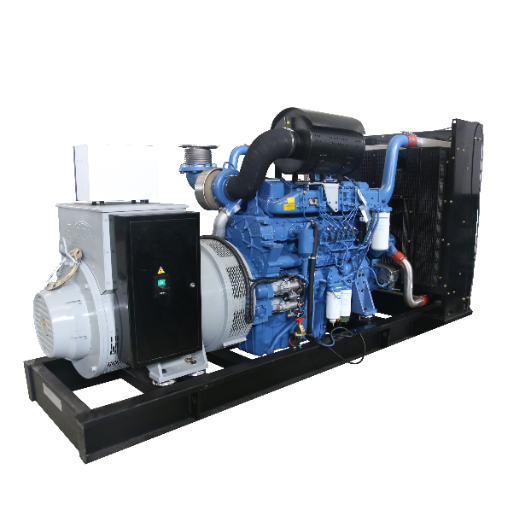


Generator engine specifications tell you how much power the engine can produce, for how long, and under what conditions. The most important number to understand is the power rating: a “500 kW” engine rated for standby duty runs at only about 450 kW in continuous prime service, because standby power carries strict limits on operating hours and load.
That gap between the headline number and real-world output is where buyers lose money. Two suppliers can quote engines that look identical on paper and behave completely differently on site. The difference is buried in the specification sheet, in a set of terms that read like code: PRP, ESP, kWm, kWe, bore × stroke, g/kWh. If you want a plain-language walkthrough of every field on that sheet, our guide to reading a generator set specification breaks each term down before we dig into the engine numbers here.
This guide translates that code and shows you how to read a diesel engine data sheet. You’ll learn what each engine specification means, how the numbers relate to each other, and how to check whether a quoted engine is honestly sized for your job. As a manufacturer that builds gensets around Cummins, Perkins, Weichai, and Yuchai engines, we’ll finish with the load-profile questions we ask our own customers before confirming a specification.
Key Takeaways
- Prime power plus roughly 10% equals standby power. An engine quoted at 500 kW standby only delivers about 450 kW in continuous prime service.
- Standby rating (ESP) allows no overload and roughly 200 hours of operation per year. Prime rating (PRP) allows unlimited hours but only a 10% overload for one hour in twelve.
- The engine’s mechanical kW (kWm) is higher than the electrical kW (kWe) you actually get, because the cooling fan and alternator consume power.
- Displacement is the honest size check: engine volume (bore, stroke, cylinder count) scales directly with power, so a “big kW” claim with a small displacement should raise a flag.
- Fuel consumption in g/kWh, not L/h, is the number that predicts your running cost at partial load.
What Are Generator Engine Specifications and Why Do They Matter

The engine is the mechanical heart of a generator set. It burns fuel to spin a crankshaft, and the alternator converts that rotation into electricity. Diesel engine specifications describe the mechanical side: how much power the engine makes, at what speed, from what physical size, and using how much fuel.
Buyers often fixate on the alternator’s electrical numbers and skim the engine sheet. That’s a mistake. The engine determines the genset’s true output, its fuel bill, and its service life. If the engine is under-specified, no alternator can fix it.
There are two broad families of specifications to understand. The first covers output: power ratings, speed, and the kW/kVA relationship. The second covers physical and operational character: displacement, aspiration, compression ratio, governor, fuel consumption, and cooling. Let’s take them in order.
Selecting the right engine starts with the right generator range. Our diesel generator range spans 5 kW to 3000 kW, with engine options matched to your load profile.
Power Ratings: Prime, Standby, and Continuous (ISO 8528)
This is the section that saves buyers the most money. The same engine carries different power ratings depending on how you run it, defined under the ISO 8528 standard.
| Rating | Use case | Annual hours | Overload allowed | Typical limit |
|---|---|---|---|---|
| Standby (ESP) | Emergency backup during outages | ~200 h/yr | No | ≤80% average load |
| Prime (PRP) | Main power, variable load | Unlimited | 10% for 1 h in 12 | ~500 h/yr at 100% |
| Continuous (COP) | Main power, steady load | Unlimited | No | Near-constant load |
| Limited-time (LTP) | Fixed, time-limited duty | Capped by agreement | No | Application-defined |
The “Prime + 10% = Standby” Rule
Here’s the rule of thumb that clears up most confusion: prime power plus roughly 10% equals standby power. A manufacturer rates the same engine at 450 kW prime and 500 kW standby because standby duty is less punishing over time. The engine can briefly produce more when it only has to do so occasionally.If the ESP, PRP, and COP distinctions still feel blurry, our deeper comparison of standby vs prime vs continuous generator ratings explains exactly which duty cycle each one is built for.
This has a practical consequence. If you run a mine, a factory, or a remote site where the generator is the primary power source, you must size on the prime rating, not the standby number. An engine sold to you on its standby figure will be permanently overloaded in prime service.
Mini-story: A plant manager in Accra ordered a “400 kW” genset for a food-processing line that ran 14 hours a day, six days a week. The supplier had quoted the standby rating. In prime duty the engine could only sustain about 360 kW, and it ran hot, drank fuel, and needed a major overhaul within 18 months.
The correct engine, sized on the prime figure, would have cost about 9% more upfront and lasted twice as long.
Why Buying on the Standby Number Leaves You Underpowered

Standby ratings assume the engine sits idle most of the year and only answers the call during outages, with a light average load. Push a standby-rated engine into daily prime service and three things happen: it overheats, it wears out early, and the manufacturer’s warranty assumptions no longer apply.
kW vs kVA, kWm vs kWe, and Gross vs Net
Once you know the rating type, you still have to sort out which “kW” the sheet is talking about.
Power Factor and kW vs kVA
The alternator produces apparent power (kVA), while the engine produces real power (kW). The relationship is the power factor, typically 0.8:
- kW = kVA × power factor
- A 500 kVA genset at 0.8 power factor delivers 400 kW
The engine is sized to the kW figure because that’s the mechanical work it actually does. When you see a mismatch between an engine’s kW and an alternator’s kVA, the power factor is the missing link.
Engine kW (kWm) vs Electrical kW (kWe)
Here’s a source of quiet surprise for many buyers: the engine’s mechanical kW is higher than the electrical kW you actually get. The difference is losses. The cooling fan consumes power, and the alternator is only 92–96% efficient. So an engine rated at 100 kWm might deliver only 88–92 kWe at the terminals.That efficiency figure comes straight from the alternator data, so it pays to read our guide to generator alternator specifications alongside the engine sheet to see where those losses come from.
Gross vs Net Engine Output
Related but distinct: gross engine output is measured without the cooling fan; net output includes it. Data sheets sometimes quote gross figures because they look better. When comparing two engines, make sure both numbers are on the same basis, net output with the fan installed is the honest one.
How Engine Size Is Specified: Displacement, Bore, and Stroke
Generator engine size and power both trace back to physical geometry. Three numbers describe an engine’s size: bore (cylinder diameter), stroke (piston travel), and cylinder count.
Bore × Stroke and Total Displacement
Displacement is the total swept volume of all cylinders, and it’s directly derived from those three numbers:
Displacement = number of cylinders × (π/4) × bore² × stroke
A few real examples show how this scales:
| Engine | Cylinders | Bore × Stroke | Displacement | Power |
|---|---|---|---|---|
| FPT NEF45TM3 | 4 | 104 × 132 mm | 4.5 L | 111 kW |
| Cummins 6BT5.9 | 6 | 102 × 120 mm | 5.9 L | 92 kW |
| Scania DC9-72A | 5 | 130 × 140 mm | 9.3 L | 241 kW |
| MAN D2862 | 12 (V) | 157 × 128 mm | 24.2 L | 880–1117 kW |
| MTU 16V4000 | 16 (V90) | 170 × 210 mm | 76.3 L | 1950 kW |
How Displacement and RPM Determine Power
Two rules follow from that table. First, bigger displacement means more power: the 76-litre MTU V16 produces nearly 20 times the power of the 4.5-litre FPT four-cylinder. Second, speed multiplies output: the same engine makes more power at higher RPM.
The MAN D2862 illustrates the speed effect clearly: 880 kW at 1500 rpm (50 Hz), but 1117 kW at 1800 rpm (60 Hz), as detailed in Modern Power Systems’ coverage of the new MAN engine generation. Same engine, 27% more power, simply because it spins faster. This is exactly the 50 Hz vs 60 Hz relationship we covered separately.
Displacement is your honesty check. If a supplier quotes a kW figure that doesn’t match the engine’s stated displacement, ask questions.
Aspiration, Compression Ratio, and Governor

Naturally Aspirated vs Turbocharged vs Intercooled
How the engine breathes determines its power density:
- Naturally aspirated engines draw air in at atmospheric pressure. Simple and cheap, but they lose power at altitude.
- Turbocharged engines use exhaust gas to spin a compressor that forces more air in, increasing output from the same displacement.
- Turbocharged and intercooled engines cool the compressed air before it enters the cylinder, boosting density further. Most modern industrial gensets are turbocharged and intercooled.
Turbocharging is why modern engines make far more power per litre than older designs. It also partly compensates for altitude, which matters for high-elevation sites.
Compression Ratio
The compression ratio is the volume of the cylinder at bottom-dead-centre divided by the volume at top-dead-centre. Diesel engines run high ratios, typically 14:1 to 22:1, which is why they are more efficient than petrol engines. A higher ratio generally means better fuel efficiency, but it demands stronger components.
Governor Class and Speed Stability
The governor holds the engine at a steady speed as load changes. Speed stability matters because frequency is directly tied to RPM. A better governor means tighter frequency control. Data sheets list governor class (often ISO 8528-5 or ISO 3046-based), with higher classes delivering less speed droop under load changes.
Fuel Consumption and Operating Cost
Fuel is the largest lifetime cost of a diesel genset, so this section deserves real attention.
Reading L/h and g/kWh at Load Points
Data sheets usually list fuel consumption at 100%, 75%, and 50% load, in two units:
- L/h (litres per hour): absolute burn rate at a given load
- g/kWh (grams per kilowatt-hour): specific consumption, or fuel per unit of work
Here’s why the second number matters. A larger engine running lightly loaded can burn more L/h than a smaller engine running efficiently, but its g/kWh figure tells you the real efficiency. Lower g/kWh means more work per litre of fuel.To turn these data-sheet figures into an actual budget, it helps to see burn rates laid out by engine size and load level, so our generator fuel consumption chart maps typical L/h across common kW ratings and load points, making it far easier to predict your true running cost before you commit.
Which Number Drives Your Running Cost
If your genset runs at a steady 80% load, size it so that 80% lands near the engine’s most efficient band, typically 70–85% of rated power. Running a big engine at 30% load wastes fuel and causes wet-stacking in diesel engines, a condition where unburned fuel and carbon build up in the exhaust. Match the engine to your actual load, not your worst-case peak.
Thinking about lifetime running cost? Our industrial generator systems above 1000 kW are configured with fuel-efficient engines and matched to your actual duty cycle, not a padded worst case.
Cooling, Derating, and Reference Conditions
Radiator and Cooling Capacity
The engine rejects roughly a third of its fuel energy as heat, so the cooling system matters. Data sheets list radiator cooling air flow and coolant capacity. Undersized cooling shows up as overheating under sustained load, a common failure in cheap gensets.
Derating for Altitude and Ambient Temperature
Engine ratings are quoted at standard reference conditions, typically 25°C air inlet temperature and 100 m altitude. When the site differs, the engine must be derated:
- Altitude: thinner air reduces oxygen, so output falls with elevation. Above about 1000 m, derating becomes significant, typically several percent per 1000 m.
- Temperature: hotter intake air is less dense, reducing output. Above 40°C, most engines derate noticeably.
- Humidity has a smaller, secondary effect.
For export buyers, this is critical. An engine that produces 500 kW at sea level in a temperate test bay may only manage 430 kW at a 2000 m mining site in summer. A reputable manufacturer asks for your site altitude and temperature before quoting and adjusts the rating accordingly.
Engine Brands: Cummins, Perkins, Volvo, MTU, Weichai, Yuchai
Choosing between Cummins vs Perkins vs Volvo, or weighing MTU, Weichai, and Yuchai, comes down to parts availability, service reach, and cost. Here’s a practical read:
- Cummins (USA): mission-critical standby work, data centers, hospitals. Global service network, proven under step loads, higher parts cost.
- Perkins (UK, part of Caterpillar): cost-efficient standby and construction. Trusted fuel economy and lifecycle cost, modular for easy servicing.
- Volvo Penta (Sweden): quiet, low-vibration continuous duty, strong cold-weather performance, good emission technology.
- MTU (Germany): high-output, high-horsepower prime and continuous applications.
- Weichai and Yuchai (China): strong cost-performance ratio, wide availability, increasingly common in export markets as a value alternative to Western brands.
The right brand follows your load profile, your service reach, and your budget, not a brand’s marketing. Mission-critical sites justify Cummins or MTU. A cost-driven distributor fleet might do better with Weichai or Yuchai. A remote continuous-duty site might favor Volvo Penta’s durability. For a fuller side-by-side of the major brands, Etac Power’s engine brand comparison covers Cummins, Perkins, MTU, and Volvo in detail.
Mini-story: A distributor in Manila standardized its rental fleet on a premium Western engine brand because customers recognized the name. The engines were excellent, but lead times on spares ran four to six weeks, and a single seized injector idled a generator during typhoon season when demand peaked. They switched to a brand with local parts support and cut downtime by more than half, at a lower unit cost. The spec that mattered most wasn’t on the data sheet: it was service reach.
How to Verify an Engine Quote: A Six-Point Checklist

Before you sign off on a specification, confirm each of these:
- Rating code: Is it standby, prime, or continuous? Ask for the ISO 8528 code, not just kW.
- Basis of power: kWm or kWe, gross or net? Both suppliers should quote the same basis.
- Power factor: Is the alternator kVA matched to the engine kW at 0.8?
- Displacement: Does the quoted kW match the stated bore, stroke, and cylinder count?
- Fuel consumption: What is the g/kWh at your expected load point, not just at 100%?
- Site conditions: Has the rating been derated for your altitude and ambient temperature?
Frequently Asked Questions
What is the difference between prime and standby power?
Prime power (PRP) is the rating for running a generator as the main power source with unlimited hours per year. Standby power (ESP) is for emergency backup only, limited to roughly 200 hours per year with no overload allowed. Prime plus about 10% equals standby.
Why is the engine kW higher than the generator’s electrical kW?
The engine’s mechanical output (kWm) is higher than the electrical output (kWe) because the cooling fan and the alternator both consume power. The alternator is only 92–96% efficient, so 100 kW of mechanical power becomes roughly 88–92 kW of electrical power.
What does displacement tell me about a generator engine?
Displacement is the total swept volume of all cylinders, calculated from bore, stroke, and cylinder count. It scales directly with power: bigger displacement means more power. It’s a useful honesty check, because a kW figure that doesn’t match the stated displacement should be questioned.
What is derating and why does it matter?
Derating is the reduction in rated power when operating above standard reference conditions, typically 25°C and 100 m altitude. Thin air at altitude and hot intake air both reduce oxygen, so the engine produces less power. A 500 kW engine at sea level may only deliver 430 kW at 2000 m.
How do I calculate the fuel cost for a generator engine?
Start with the engine’s specific fuel consumption in g/kWh at your expected load, then convert to litres per hour using fuel density, and multiply by your operating hours and fuel price. Lower g/kWh means more work per litre, so compare engines on specific consumption, not just L/h at full load.
Conclusion
Generator engine specifications are the difference between a genset that runs for a decade and one that’s worn out in eighteen months. The numbers matter, but only if you read them correctly: a power rating is meaningless without its ISO 8528 code, an engine kW isn’t the electrical kW you receive, and a “big” kW claim doesn’t survive a displacement check.
Five things to remember before your next purchase: confirm the rating type, align the kW basis, match displacement to power, check g/kWh at your real load, and derate for your site conditions. These checks take an afternoon and routinely save more than the cost of the generator itself.
Shandong Huali manufactures diesel generator sets around Cummins, Perkins, Weichai, and Yuchai engines, from 5 kW portable units to 3000 kW industrial systems, backed by ISO9001, CE, and CCC-certified manufacturing. Send us your load profile, operating hours, and site altitude, and our engineering team will confirm the correct engine specification before production begins.