


A generator control panel does four things: it starts and stops the engine, monitors running parameters, protects the genset from faults, and coordinates with a transfer switch to restore power when the mains fails. These generator control panel functions decide whether a blackout ends in seconds or stretches into hours. Get them wrong and the machine you paid for sits silent during the one outage that mattered.
Every year buyers treat the control panel as an afterthought. They obsess over engine brand and alternator kVA, then accept whatever panel ships as standard. The panel is where a cheap genset and a reliable one diverge most, and it’s also the part you touch every single day. When the mains drops at 3 a.m., the panel, not the engine, decides whether the lights come back.
This guide walks through the generator control panel functions in plain terms. You’ll learn what the panel actually does, the difference between a control panel, an ATS, and an AMF panel, which faults shut the machine down versus which merely warn, and what to specify on a purchase order before you buy. As a manufacturer that configures gensets with DSE, ComAp, and SmartGen controllers, we’ll finish with the questions we ask our own customers before confirming a panel.
Key Takeaways
- A generator control panel does four jobs: start/stop, monitor, protect, and coordinate with the transfer switch. The controller is the “brain”; the panel is the physical interface you touch.
- ATS and AMF are not the same. An ATS transfers the load but doesn’t start the engine; an AMF panel detects the failure, starts the genset, and transfers, all without anyone on site.
- Some faults shut the generator down (low oil pressure, overspeed, high coolant temperature); others only warn (low fuel, maintenance reminder). Knowing which is which saves panic and money.
- Controller brand is an application decision: SmartGen for value, DSE for reliability and ease of use, ComAp for synchronizing and complex systems.
- Remote monitoring (Modbus, RS485, SNMP, 4G/cloud) is now a buying trigger for fleets and unattended sites, not a luxury.
What Is a Generator Control Panel and What Are Its Functions?

A generator control panel is the interface that starts, monitors, and protects a generator set. It reads engine sensors for oil pressure, coolant temperature, and speed, and it reads electrical parameters such as voltage, current, and frequency. When any value moves outside safe limits, the panel raises an alarm or shuts the genset down.
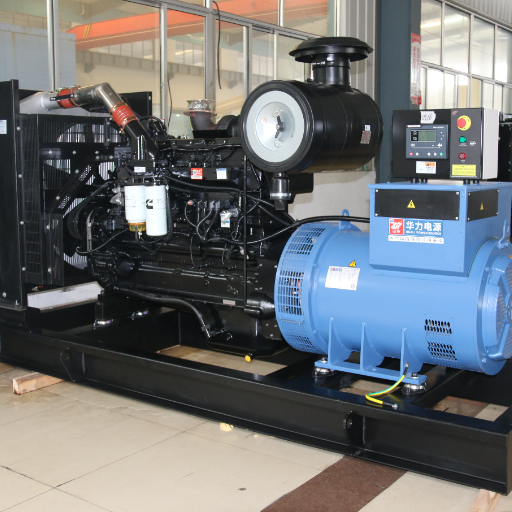
Think of the panel as having two layers. The controller is the electronic brain: a microprocessor that reads sensor inputs and runs the start, stop, and protection logic. The physical panel is what an operator sees and touches: the display, the key switch, the pushbuttons, the indicator lamps, and the circuit breaker.
This split matters when you compare quotes. Two gensets can look identical in a photo and behave completely differently on site, because one carries a robust controller with proper protection setpoints and the other carries a stripped-down module that only starts and stops the engine. The panel is only one line on the datasheet, so if you want to read the whole document with confidence, our guide on how to read a generator set specification walks through every field alongside the control panel. For a deeper look at how panels fit into a genset, Jubaili Bros’ guide to generator control panels covers the programming side well.
Generator Control Panel Components
The main generator control panel components are the display, key switch, start/stop pushbuttons, indicator lamps, the controller module, and the circuit breaker. Together they give an operator everything needed to start, read, and protect the genset.
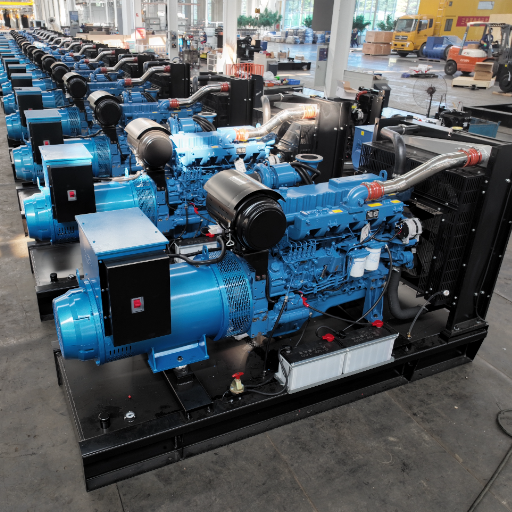
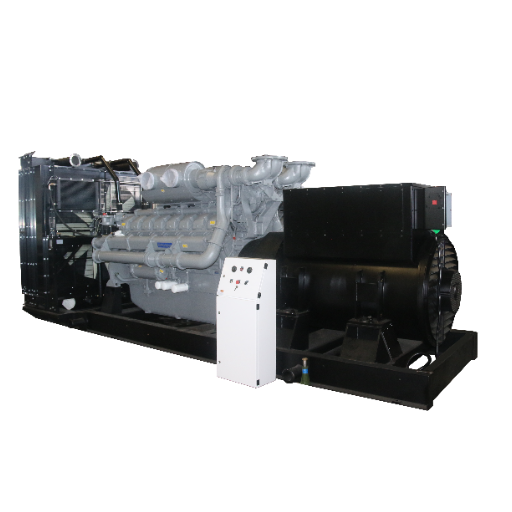
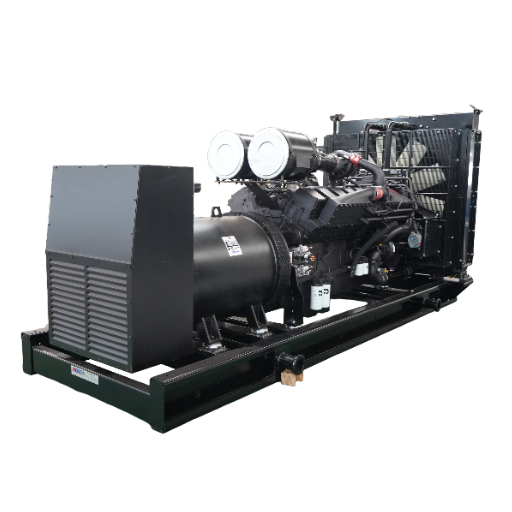
Specifying a control panel starts with the right genset. Our diesel generator range spans 5 kW to 3000 kW, with panel and controller options matched to how you actually run the set.
Core Generator Control Panel Functions
Strip away the brand names and every panel performs the same four jobs. Understanding them in order is how you read any spec sheet.
Start, Stop, and Sequencing
The panel controls the engine’s entire run cycle, not just the on switch:
- Manual mode starts and stops the engine by key or pushbutton.
- Auto mode hands control to the generator auto start controller, which waits for a remote start signal, typically from a transfer switch, then starts automatically.
- Sequencing handles the details around starting: cranking, fuel priming, warm-up delay, and a post-run cool-down before shutdown.
The cool-down is easy to overlook but genuinely important. After a heavy run, the engine should idle briefly to let the turbocharger slow and the oil circulate before the panel stops it. A controller that skips cool-down shortens turbo and bearing life.
Monitoring and Display
The panel is your window into what the genset is doing right now. It displays two families of data:
- Engine parameters: oil pressure, coolant temperature, engine speed (RPM), battery voltage, fuel level, and run hours.
- Electrical parameters: voltage, current, frequency, power (kW), apparent power (kVA), and power factor.
Frequency monitoring ties directly to engine speed. A 50 Hz genset runs at 1500 RPM, and the panel watches both to confirm they stay in step. We covered that relationship in detail in our 50 Hz vs 60 Hz generator guide, and the voltage side lives in our generator alternator specifications guide.
Protection and Alarms
This is where the panel earns its keep. It continuously compares live values against setpoints and acts before a small problem becomes a seized engine. Generator control panel alarms fall into two tiers: warnings, which alert but keep running, and shutdowns, which stop the engine to prevent damage. We break that hierarchy down in the section below.
ATS vs AMF vs GCP: Which Panel Does What

This is the single most common point of confusion in the whole topic, and it causes real failures. Three terms get thrown around as if they were the same thing, but they do different jobs.
| Panel | What it does | Starts the generator? |
|---|---|---|
| GCP (generator control panel) | Starts, stops, and protects the engine | Yes, on command |
| ATS (automatic transfer switch) | Transfers the load between mains and genset | No, it assumes the genset is already running |
| AMF (auto mains failure) panel | Detects failure, starts, protects, and transfers | Yes, fully automatic |
The Generator Control Panel (GCP)
The GCP is the generator’s own panel. It manages the engine, reads the sensors, and enforces the protection setpoints. It can start and stop the engine automatically, but only when it receives an external signal to do so.
The ATS: Transfer Without Start
An automatic transfer switch detects that mains power has failed and switches the load over to the generator, then switches back when the mains returns. The critical detail most buyers miss: an ATS doesn’t start the generator itself. It expects the generator to already be running, or it sends a dry contact signal to the GCP to request a start.
Mini-story: Maria runs a 24-hour clinic in Cebu and specified an “automatic” generator for her backup power. During a typhoon the mains failed, and the clinic sat dark for forty minutes until a nurse drove in and pressed the start button.
Her panel was an ATS: it could transfer the load, but nothing had started the engine. What she needed was an AMF panel, which handles the whole job.
The AMF Panel: The Whole Automatic Loop
An AMF (auto mains failure) panel closes the loop. It detects the mains failure, sends the start signal, waits for stable voltage and frequency, transfers the load, then returns to mains and cools the engine down when power is restored. No one has to be on site.
The one-sentence rule: AMF = GCP + ATS combined into one automatic sequence. If your site is unattended or the generator is the sole backup, you need AMF. If a person is always present to press a button, a simple ATS may be enough. For a clean plain-English explanation of the same distinction, Pinnacle Generators’ AMF vs ATS guide is a useful cross-check.
The Auto Mains Failure Start Sequence
When the grid fails, a properly configured AMF system runs a timed sequence. The timings are adjustable, which is why two systems can feel very different even with the same hardware.
- Main failure detection. The panel monitors incoming voltage and confirms the failure, typically triggering at 80 to 85 percent of nominal voltage with a 0.5 to 3 second delay. The delay prevents nuisance starts from a momentary flicker.
- Start command. The panel signals the generator to crank and start.
- Stabilization. The panel waits until voltage and frequency are stable, usually 90 to 95 percent of nominal, before connecting the load.
- Load transfer. The ATS opens the main contactor and closes the generator contactor.
- Restoration and cool-down. When the mains return and hold stable, the panel transfers back and runs the engine unloaded for a cool-down period, commonly around five minutes, before stopping.
The three timers you will see on a data sheet are the start delay, the transfer delay, and the cool-down delay. If a quote doesn’t list them, ask. Getting these wrong causes generators to start on every tiny brownout or to connect the load before the engine is ready.
Protection Functions: Which Faults Stop the Generator

Not every alarm is an emergency. Understanding the difference between a warning and a shutdown is how you avoid both panic and neglect.
| Fault | Type | What the panel does |
|---|---|---|
| Low oil pressure | Shutdown | Stops the engine immediately |
| High coolant temperature | Shutdown | Stops the engine immediately |
| Overspeed | Shutdown | Stops the engine immediately |
| Over/under voltage | Shutdown or warning | Usually trips after a short delay |
| Overload / overcurrent | Shutdown or warning | Depends on severity and setpoint |
| Low fuel level | Warning | Alerts; engine keeps running |
| Battery voltage low | Warning | Alerts; check before next start |
| Maintenance due | Warning | Reminder to service |
Shutdown Faults
Three conditions will stop a diesel engine to prevent catastrophic damage, and the panel enforces all three. Low oil pressure below roughly 8 psi means the bearings are about to run dry. High coolant temperature means the engine is overheating. Overspeed, often detected as output frequency climbing past about 65 to 70 Hz, means the governor has lost control and the rotating parts are at risk.
These are the same physical parameters we discussed in our generator engine specifications guide, where low oil pressure and coolant temperature sit at the top of the protection list.
Warning Faults
Warnings tell you something needs attention but don’t require an immediate stop. Low fuel, low battery, and a maintenance reminder all fall here. The engine keeps running because stopping it would be worse than the condition itself.
Electrical Protection
On the electrical side, the panel guards against overvoltage, undervoltage, overload, overcurrent, and in parallel systems, reverse power. These are usually set with a short time delay so a brief surge doesn’t trip the machine, but a sustained fault does.
Managing multiple generators or large critical loads? Our industrial generator systems above 1000 kW are configured with paralleling and load-sharing controllers for exactly this kind of duty.
Diesel Generator Controller Brands: DSE, ComAp, SmartGen
The controller is the brain inside the panel, and the brand you specify shapes what the genset can do.
What a Controller Actually Controls
Beyond start and stop, a modern controller manages the fuel relay, the generator breaker, the ATS, the governor and AVR interfaces, and a bank of configurable inputs and outputs. It also stores the event log and handles communications. The difference between brands is mostly in advanced features and target applications.
Choosing by Application
| Brand | Origin | Sweet spot | Typical use |
|---|---|---|---|
| SmartGen | China | Broad, cost-effective | Value gensets, rental fleets, telecom |
| DSE (Deep Sea Electronics) | UK | Reliability, ease of use | Standby and AMF sets, general industry |
| ComAp | Czech | Advanced sync and parallel | Paralleling, load sharing, gas/CHP |
For a straightforward standby set, SmartGen or DSE both do the job well. For synchronizing several generators or running a gas or combined-heat-and-power plant, ComAp is the usual choice. The sizing rule of thumb: small sets (10 to 100 kVA) typically run SmartGen or DSE entry modules, medium sets (100 to 500 kVA) run DSE 7320 or ComAp InteliLite, and large or parallel systems run DSE 8610 or ComAp InteliGen.
Mini-story: Karim runs a 120-unit rental fleet in Dubai and standardized on a premium controller because customers recognized the name. When three units faulted at once during a heatwave, he learned the local distributor kept no spares for that brand.
He moved to a controller with local parts support and cut his average downtime from two days to six hours. The spec that mattered most was not on the data sheet: it was service reach.
Remote Monitoring and Data Logging
The panel is also a data recorder. Every modern controller logs run hours, event history, and fault codes, and many support remote access.
The communications stack matters more as sites get bigger and more dispersed:
- Modbus and RS485 let the panel talk to a local building management system or SCADA.
- SNMP connects it to an IT network for data-center monitoring.
- Ethernet and 4G/cloud push data to a remote dashboard, with SMS or email alerts on faults.
For a buyer with one generator in a factory, a local display may be enough. For a fleet or a chain of unattended sites, remote monitoring pays for itself the first time it prevents a truck roll.
Mini-story: Fatima manages operations for a telecom operator with 400 sites across West Africa. Her engineers used to drive hours to read fault codes by hand.She added cloud-connected controllers, and in the first year site visits fell by 60 percent because the panel now sent the fault code to a central dashboard before anyone got in a truck.
What to Specify on a Generator Control Panel Purchase Order

When you request a quote, don’t leave the panel as “standard.” Write down these six decisions, and you will get a machine that behaves the way you expect.
- Operating modes. Do you need manual, auto, and remote? Most buyers want all three.
- AMF or ATS. Will the generator have to start itself during an outage? If yes, specify AMF.
- Controller brand and model. SmartGen, DSE, or ComAp, tied to your application and local parts support.
- Protection setpoints. Confirm the shutdown values for oil pressure, temperature, overspeed, and the voltage/frequency windows.
- Remote monitoring. Do you need Modbus, RS485, SNMP, or cloud access? Specify the protocol.
- Display and language. Confirm the panel shows the parameters and language your operators need.
Specifying these six things up front is cheap. Discovering during the first blackout that your “automatic” panel never started the engine is not.If you are turning these decisions into a formal procurement document, our guide to writing a generator set specification for tender shows how to phrase the panel and controller requirements so suppliers cannot substitute a cheaper module.
Frequently Asked Questions
What are the main functions of a generator control panel?
A generator control panel starts and stops the engine, monitors engine and electrical parameters, protects the genset from damaging faults, and coordinates with a transfer switch to restore power during an outage. The controller runs the logic; the panel provides the interface.
What is the difference between an ATS and an AMF panel?
An ATS transfers the load between the mains and the generator but doesn’t start the generator itself. An AMF panel detects the mains failure, starts the generator, waits for stable output, transfers the load, and shuts down after cool-down, all automatically. AMF combines a control panel and an ATS into one sequence.
Which faults shut down a diesel generator?
Low oil pressure, high coolant temperature, and overspeed shut the engine down to prevent damage. Overvoltage, undervoltage, and overload usually trip after a short delay. Low fuel, low battery, and maintenance reminders are warnings that keep the engine running.
What generator controller brand should I choose?
It depends on application. SmartGen is a broad, cost-effective option. DSE is known for reliability and ease of use. ComAp is the choice for synchronizing, paralleling, and gas or combined-heat-and-power systems. Local parts support is as important as the brand itself.
Does my generator need remote monitoring?
If you run one generator in a factory with staff on site, a local display may be enough. For fleets, telecom towers, or unattended sites, remote monitoring via Modbus, SNMP, or 4G/cloud sends fault codes to a dashboard and typically pays for itself by cutting site visits.
Conclusion
Generator control panel functions come down to four verbs: start, monitor, protect, and transfer. The panel decides whether a blackout ends in seconds or hours, and the difference between a good one and a bad one is rarely visible in a photo. It lives in the controller, the protection setpoints, and the transfer logic.
Before your next purchase, remember three things. First, an ATS doesn’t start your generator; only AMF closes the full loop. Second, know which faults stop the machine and which only warn. Third, specify the controller, protection setpoints, and remote monitoring on the purchase order rather than accepting “standard.”
Shandong Huali configures diesel generator sets with DSE, ComAp, and SmartGen controllers, from 5 kW portable units to 3000 kW industrial systems, backed by ISO9001, CE, and CCC certified manufacturing. Tell us your application, whether the site is attended, and how you want to monitor the set, and our engineering team will confirm the right control panel before production begins.