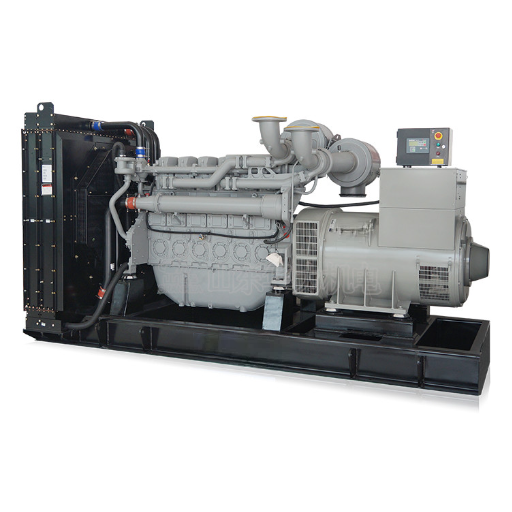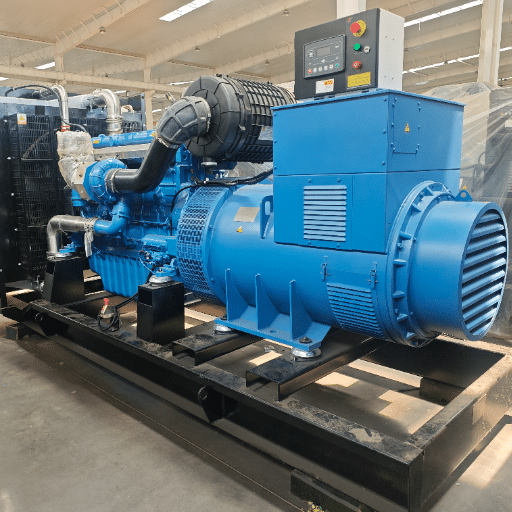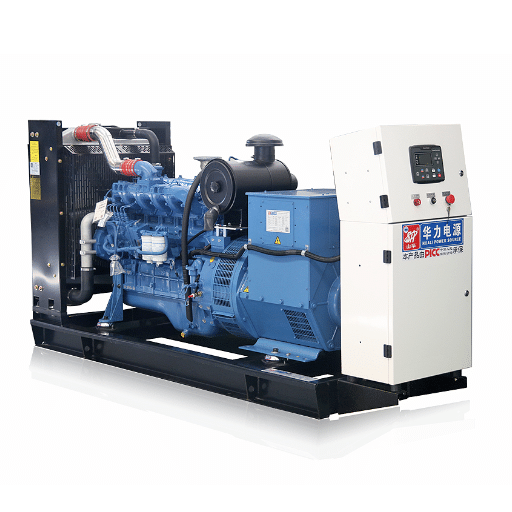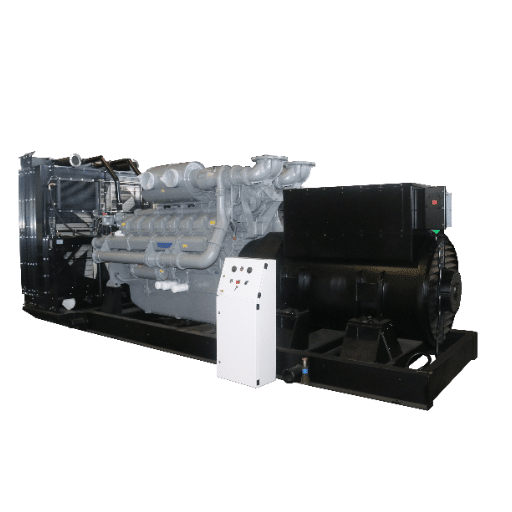


To maintain a genset, you need to check fluid levels and look for leaks weekly, run it under load monthly, change the oil and filters every 250 to 500 running hours, service the fuel system and battery on schedule, and perform a full load test once a year. Follow that routine and a quality industrial genset will deliver 15,000 to 30,000 operating hours of reliable service.
Here is a number worth remembering: battery failure is the single most common reason a standby genset fails to start. Not engine wear. Not bad fuel. A neglected battery that cost a few dollars a month to maintain. Most genset failures trace back to skipped basics, which means most failures are preventable.
If you own or operate a generator set, you already know maintenance matters. The harder question is what to actually do, how often, and what you can safely handle yourself. This guide walks you through exactly how to maintain a genset, from daily visual checks to annual load testing, with specific intervals you can put on a calendar today.
Key Takeaways
- Maintain a genset on a layered schedule: weekly visual checks, monthly loaded exercise runs, oil and filter service every 250 to 500 running hours, and an annual load bank test.
- Standby units follow calendar-based intervals. Prime and continuous power units follow running hours. Use whichever limit comes first.
- Never exercise a diesel genset below 30% load for extended periods. Light-load running causes wet stacking, a buildup of unburned fuel that damages the engine.
- A healthy 12V starting battery reads 12.6 to 12.8 volts at rest. Batteries cause more no-start failures than any other component.
- Untreated diesel fuel degrades within 6 to 12 months. Test stored fuel annually for water, sediment, and microbial growth.
How to Maintain a Genset: Quick Steps

Here is the complete maintenance routine at a glance. Each step is explained in detail below.
- Prepare safely. Shut the genset down, let the engine cool, and disconnect the battery before servicing.
- Perform daily and weekly checks. Inspect for leaks, check oil, coolant, and fuel levels, and run a short weekly exercise.
- Follow the service schedule. Change oil and filters every 250 to 500 hours or annually, whichever comes first.
- Maintain the fuel system. Drain the water separator, replace fuel filters, and test stored fuel every year.
- Care for the battery. Clean terminals, verify charge voltage, and replace batteries on lifecycle, not on failure.
- Keep cooling and air intake clean. Check coolant, blow out radiator fins, and inspect belts and hoses.
- Exercise and load-test. Run at 30% load or more monthly and load bank test annually.
- Keep records. Log every task with date, running hours, and findings. Call a certified technician for work beyond operator level.
Want the detailed task-by-task version? Our generator maintenance checklist breaks every task down by frequency for your maintenance log.
Why Genset Maintenance Matters
A genset exists for one moment: when the grid fails and your operation depends on it. Maintenance is what makes that moment boring instead of catastrophic.
The economics are straightforward. A well-maintained industrial diesel genset routinely delivers 15,000 to 30,000 hours of service life, often 15 to 25 years for standby units. A neglected one can fail within a few thousand hours, or worse, fail to start at all during the one outage that matters. Preventive maintenance costs a fraction of emergency repair, and far less than a single hour of unplanned downtime in a hospital, data center, or production line.
When David took over facility operations at a mid-sized commercial building in 2024, the previous manager had treated the 250 kW standby genset as install-and-forget equipment. Eighteen months later, a storm knocked out grid power on a Friday night. The genset cranked twice and went silent. The cause was a sulfated battery that had not been load tested in two years, plus fuel that had sat untreated for 30 months. The emergency weekend callout, replacement battery, fuel polishing, and lost weekend trade cost the business roughly nine times what a year of scheduled maintenance would have cost.
What Happens When You Skip Maintenance

Every skipped task has a predictable failure mode:
- Skipped oil changes lead to sludge, accelerated bearing wear, and eventual engine seizure.
- Skipping loaded exercise runs causes wet stacking: unburned fuel and carbon buildup that coats injectors, fouls valves, and reduces output capacity.
- Neglected batteries sulfate and lose cranking capacity, the leading cause of no-start failures.
- Stale fuel grows microbial contamination that clogs filters and injectors, often at the worst possible time.
- Dirty air filters starve the engine of air, raising exhaust temperatures and fuel consumption.
None of these failures are random. They are scheduled outcomes of skipped maintenance.
Step 1: Start with Safety and Preparation
Every genset maintenance routine starts before you touch the machine.
Always shut the genset down and let the engine cool before servicing. Hot coolant and oil cause serious burns, and a unit in automatic mode can start without warning. For any work beyond visual inspection, disconnect the battery’s negative terminal first. Lock out the automatic transfer switch if your procedures require it.
Use manufacturer-approved parts and the fluids specified in your operation and maintenance manual. The wrong oil viscosity or coolant chemistry quietly shortens engine life. Keep the manual accessible and note your model’s specific intervals, because engine manufacturer guidance always overrides generic schedules.
Step 2: Perform Daily and Weekly Checks
Routine visual checks catch small problems while they are still cheap to fix. For standby units, do a weekly walk-around. For prime power units on a jobsite, do it at the start of every shift.
- Walk around the unit and look for oil, fuel, and coolant leaks at hoses, gaskets, and the oil pan.
- Check engine oil, coolant, and fuel levels. Check oil with the engine off and cooled.
- Drain the fuel and water separator.
- Check the battery charge indicator and confirm the control panel shows no active alarms.
- Run a short weekly exercise of 15 to 30 minutes. Listen for abnormal noise or vibration and watch the exhaust for unusual smoke.
New Genset Break-In
A new genset needs extra attention in its first weeks. Change the engine oil and filter after roughly the first 30 running hours to remove break-in wear metals. Inspect belt tension and hose clamps after the first few loaded runs, because components settle during early operation. These early checks also catch shipping damage or assembly issues while they are still warranty matters.
Step 3: Follow the Service Schedule
Genset maintenance runs on two clocks: running hours and calendar time. Standby units that rarely run follow calendar intervals. Prime and continuous power units follow running hours. In both cases, service at whichever limit comes first.
| Frequency | Key Tasks |
|---|---|
| Daily / each use | Visual leak check, fluid levels, drain water separator |
| Weekly | Exercise run 15-30 minutes, battery and panel check, listen for abnormal noise |
| Monthly | Run under 30%+ load for 30 minutes, check battery charger output, inspect belts and hoses, clean intake screens |
| Every 250-500 hours (or annually) | Change engine oil and oil filter, inspect air filter, check hose clamps and fastener torque |
| Every 500 hours | Replace fuel filter, test coolant concentration, inspect exhaust system |
| Every 1,000 hours (or annually) | Replace air filter elements, test fuel quality, full load bank test, inspect electrical connections and ATS under load |
| Every 2,000 hours (or 2 years) | Injector service, coolant replacement, turbocharger inspection |
For a deeper look at why these intervals differ by application, see our guide on choosing the right diesel generator set, which covers duty ratings and operating profiles.
Adjusting Intervals for Harsh Environments
Published intervals assume normal conditions. Dust, humidity, salt air, and extreme temperatures all shorten them.
Priya manages power for a construction firm running three prime-power gensets on dusty infrastructure sites. Her first year, she followed the standard 1,000-hour air filter interval. By month eight, one unit was showing high exhaust temperatures and elevated fuel consumption. The air filter was packed with fine dust after only 600 hours. She moved air filter inspections to weekly and replacements to a restriction-indicator basis, and the fuel penalty disappeared. The lesson: in harsh environments, inspect often and let the equipment tell you when to replace.
Step 4: Maintain the Fuel System
Fuel problems are slow, invisible, and devastating. Untreated diesel begins degrading within 6 to 12 months, accumulating water from condensation, sediment, and microbial growth (the “diesel bug”).
Drain the fuel and water separator regularly, weekly in humid climates. Replace fuel filters every 500 running hours or per your manual. Keep day tanks topped up to limit condensation, and test stored fuel annually for water, sediment, and microbial contamination. If your genset stores large fuel volumes, schedule periodic fuel polishing to filter and condition the fuel in place.
A regional cold-storage warehouse learned this the hard way during a 2025 ice storm. Their standby genset started perfectly, then lost power 40 minutes into the outage. Microbial sludge from two-year-old fuel had clogged the filters under sustained flow. Since then, they test fuel every spring and polish the tank every two years. The genset has not missed a beat since.
Step 5: Care for the Battery and Electrical System

Batteries are the number one cause of genset start failures, and the cheapest component in the entire system. That combination makes battery care the highest-value task in your routine.
Keep terminals clean and free of corrosion. A mixture of baking soda and water with a wire brush handles buildup. Verify charge voltage monthly: a healthy 12V starting battery reads 12.6 to 12.8 volts at rest. Check the battery charger output at the same time, because a failed charger kills a battery quietly over months. Replace batteries on a fixed lifecycle, typically every 24 to 36 months in standby service, rather than waiting for a failure that will inevitably happen during an outage.
While you are there, inspect wiring and connections for looseness or heat damage, and verify the control panel logs and alarms are functioning.
Dealing with a genset that will not start? Our generator troubleshooting guide walks through the most common causes and fixes, starting with the battery.
Step 6: Keep Cooling and Air Intake Clean
Overheating is a leading cause of genset shutdowns, and most overheating starts with blocked airflow.
Check the coolant level monthly with the engine cool, never hot. Test coolant concentration annually to confirm freeze and corrosion protection. Blow out radiator fins, intake screens, and ventilation openings with compressed air, working from the inside out. Dust, chaff, and debris restrict airflow long before you can see the problem from outside.
Inspect drive belts and coolant hoses every six months for cracks, glazing, softness, and correct tension. A ten-dollar belt inspected on schedule prevents a five-figure overheating repair.
Step 7: Exercise and Load-Test the Genset
A genset that sits idle deteriorates faster than one that runs. Regular exercise keeps seals lubricated, drives moisture out of the oil, and proves the unit will perform when needed.
Run the genset under at least 30% of rated load for 30 minutes every month. This is not optional for diesel units. Sustained light-load running causes wet stacking, where unburned fuel and carbon accumulate in the exhaust and combustion chambers, permanently reducing capacity.
Once a year, perform a load bank test at or near full rated capacity to burn off accumulated deposits and validate full output. Facilities covered by NFPA 110, such as hospitals and emergency systems, have mandatory exercise and testing intervals. Verify your automatic transfer switch operation under load at the same time.
Step 8: Keep Records and Know When to Call a Professional
A maintenance log is not paperwork for its own sake. Record the date, running hours, tasks performed, and findings for every service. Logs support warranty claims, prove compliance during inspections, increase resale value, and reveal slow-developing problems through trends in oil pressure, coolant temperature, and fuel consumption.
Common Mistakes That Shorten Genset Life

- Running too light, too often. Chronic under-loading causes wet stacking. Exercise at 30% load minimum.
- Ignoring alarms. A control panel warning is the cheapest diagnostic you will ever get.
- Using the wrong oil or coolant. Fluid specifications exist to protect internal clearances and materials.
- Skipping fuel testing. Stored diesel degrades whether the genset runs or not.
- Stretching battery life. Replace on lifecycle, not on failure.
Operator-level tasks include visual checks, fluid top-ups, filter changes, battery care, and exercise runs. Injector service, alternator testing, valve adjustments, and engine overhaul work belong to a certified technician, and attempting them yourself can void warranty coverage.
If your team needs support building a maintenance plan, sourcing genuine spare parts, or troubleshooting a persistent issue, talk to our engineering team for practical guidance.
Frequently Asked Questions
How often should a genset be serviced?
A genset needs weekly visual checks, a monthly loaded exercise run, and oil and filter service every 250 to 500 running hours or at least once per year, whichever comes first. Standby units follow calendar-based intervals, while prime power units follow running hours.
What maintenance does a genset need?
Core genset maintenance covers six areas: lubrication (oil and filter changes), the fuel system (filters, water separation, fuel testing), the cooling system (coolant level and radiator cleanliness), the battery and electrical system, air intake filters, and regular loaded exercise runs to prevent wet stacking.
How long can a genset sit unused?
A genset can sit unused for months, but fuel, battery, and seals degrade regardless of runtime. Exercise the unit monthly, keep the battery on a working charger, and treat or test fuel that will sit longer than six months. For storage beyond 12 months, follow your manual’s long-term shutdown procedure.
Can I maintain a genset myself?
Yes, routine tasks like visual inspections, fluid checks, filter changes, battery care, and exercise runs are operator-level work. Internal engine work, injector service, and alternator testing require a certified technician. Always follow your manufacturer’s manual, because self-performed major repairs can void warranty coverage.
How do I know if my genset battery is bad?
Measure voltage at rest: a healthy 12V battery reads 12.6 to 12.8 volts. Readings below 12.4V indicate a discharged or failing battery. Slow cranking, corroded terminals, and a battery older than three years in standby service are all signs replacement is due.
Conclusion
Learning how to maintain a genset comes down to a simple discipline: check weekly, exercise monthly under load, service fluids and filters on schedule, care for the battery, and load-test annually. None of it is complicated, but all of it is compounding. The operations that never lose power during an outage are not lucky. They are scheduled.
At Shandong Huali, we build our diesel generator sets around this reality. ISO9001-certified quality control reduces early-life failures, DSE digital controls give you real-time monitoring and alarm visibility, and our spare parts inventory and technical team support your maintenance program for the full life of the equipment. A generator is a long-term asset, and we support it like one.
Ready to put your maintenance plan on solid ground? Contact Shandong Huali for maintenance guidance, genuine spare parts, or a generator set engineered for long service life.