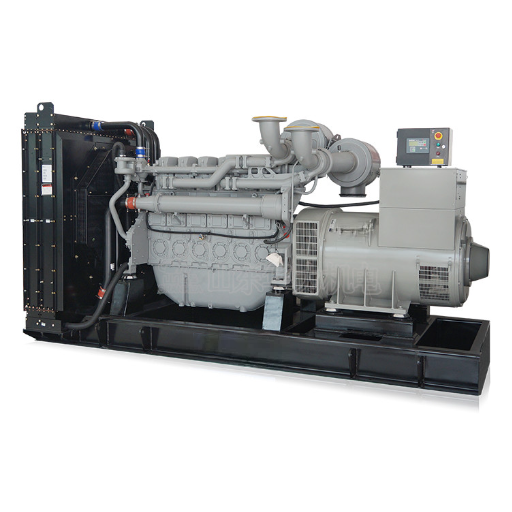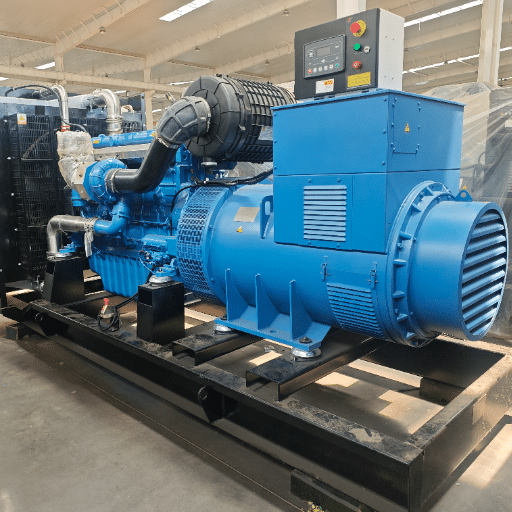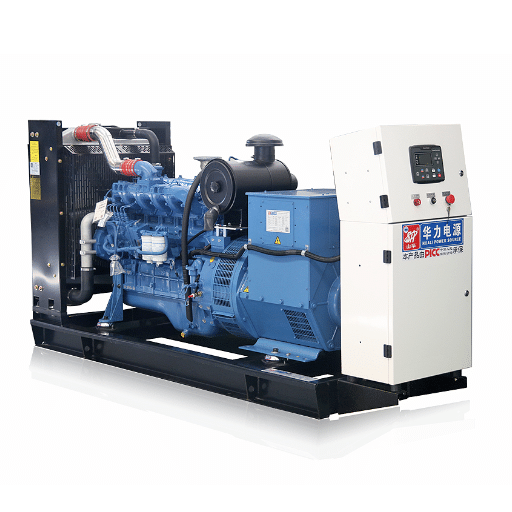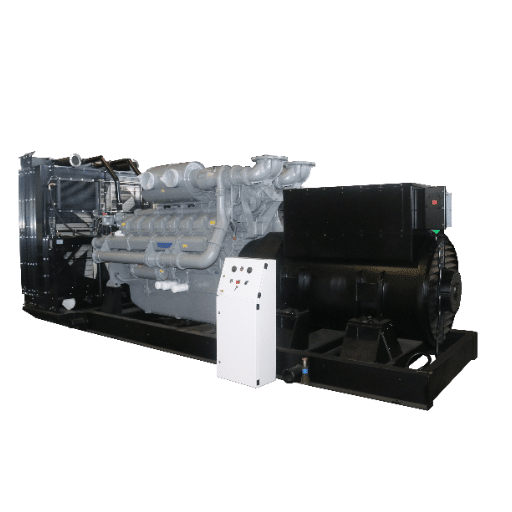



Generator sets used for data center backup must be sized at 110% to 120% of the facility’s total load and configured with N+1 or 2N redundancy based on the Uptime tier; they must also be capable of assuming full load within 15 seconds. Diesel generator sets with power ratings between 1 and 3 megawatts (MW) remain the industry standard, while containerized configurations dominate new projects.
The stakes behind those numbers keep rising. According to Gartner’s June 2026 forecast, global data center power demand will grow 27% this year to 132 GW, reaching 290 GW by 2030. AI-optimized servers alone will account for 31% of data center electricity consumption in 2026, and AI racks draw 80 to 120 kW each, compared to 10 to 15 kW for traditional racks. Every one of those megawatts needs backup.
If you specify or buy power systems for data centers, you already know a genset failure is not an inconvenience; it is a breach of SLA, a lost customer, or a headline. This guide covers the redundancy math, the performance requirements that actually matter, a complete worked sizing example, and the fuel decisions that future-proof your facility. It is written by a manufacturer that engineers containerized power solutions for mission-critical projects worldwide.
Key Takeaways
- Size data center generator sets at 110 to 120 percent of total facility load, not just IT load; cooling and UPS losses add 35 to 50 percent on top.
- Tier III facilities need N+1 redundancy (one spare unit); Tier IV needs 2N (a fully independent second system).
- NFPA 110 requires full-load acceptance within 15 seconds; step-load response within ±5% voltage and frequency is what separates data-center-grade gensets from standard industrial units.
- Standby-rated generators are not legal substitutes for continuous duty; Tier IV and long-outage designs need prime, COP, or DCC (Data Center Continuous) ratings.
- Diesel holds 72 to 81 percent of the data center generator market, but HVO-ready and natural gas units are the fastest-growing choices for new builds.
Why Data Center Power Demand Is Surging in 2026

The data center generator market tells the story. Mordor Intelligence values it at roughly USD 7.9 billion in 2026, while other analysts place it as high as USD 10.3 billion, with growth rates between 4.5 and 8.4 percent depending on scope.
Two segments matter for buyers. Units below 1 MW hold the largest share, driven by edge data centers. Units above 2 MW are the fastest-growing segment, driven by AI training clusters where rack densities have jumped from 10 to 15 kW to 80 to 120 kW.
The practical consequence: whether you run a 500 kW edge site or a 20 MW hyperscale hall, your generator for data center duty is now a strategic asset, not a compliance checkbox. For less critical facilities with similar logic, see our guide to generator sets for commercial buildings.
Data Center Backup Generator Requirements by Uptime Tier
The Uptime Institute Tier system defines how much backup your backup needs.
| Tier | Configuration | Uptime | Generator implication |
|---|---|---|---|
| Tier I | N (no redundancy) | 99.671% | Single genset; any failure means downtime |
| Tier II | N with redundant components | 99.741% | Single genset with redundant parts |
| Tier III | N+1, concurrently maintainable | 99.982% | One extra genset beyond the required count |
| Tier IV | 2N, fault tolerant | 99.995% | Two fully independent generator systems |
How many generators does that actually mean?
Work through a real case. A colocation facility needs 4 MW of backup capacity to carry its full load. In N+1 (Tier III), it might install three 2 MW units: two carry the load, one is the spare, and any single unit can be maintained without dropping capacity.
In 2N (Tier IV), the same facility builds two independent 4 MW systems, typically four 2 MW units split across separate rooms, fuel systems, and switchgear. Either side alone carries everything.
A colocation operator in Singapore learned the cost of confusing these in 2024. Their facility was marketed as Tier III, but the genset farm was sized N with no spare. When one unit failed during a scheduled maintenance window on another, a 22-minute utility sag forced an emergency load shed. Two enterprise tenants invoked SLA penalties totaling over $180,000, and the operator added a third unit within six months.
Performance Requirements for Data Center Generator Sets

Standard industrial gensets and data-center-grade gensets look similar on a datasheet. The differences show up in the first 15 seconds of an outage.
- Start time: cold start in 10 seconds or less, hot start in 5 seconds or less
- Full-load transfer: 15 seconds maximum from utility failure, per NFPA 110
- Step-load acceptance: the unit must accept a 100% block load with voltage and frequency deviation held within ±5%
- Start reliability: 99% or better start success rate, with annual downtime below 0.5%
- Transient response: the governor and AVR must ride through UPS and cooling loads without tripping IT equipment
That last point catches many buyers. When a genset takes the full facility load in one step, engine speed dips before the governor corrects. If voltage or frequency swings outside IT equipment tolerances, servers reboot anyway, and your 15-second transfer still counts as an outage. Transient performance is the true dividing line for mission-critical duty, which is why NFPA 110 sets strict start-time and transfer requirements for emergency power systems.
Standby vs. Prime vs. Continuous vs. DCC Ratings
Generator ratings define how long a unit can run at rated load. Choosing the wrong rating voids warranties and fails audits.
| Rating | What it allows | Data center fit |
|---|---|---|
| Standby (ESP) | ~500 hours/year max, variable load | Tier I/II, short outages only |
| Prime (PRP) | Unlimited hours, variable load, 10% overload 1 in 12 hours | Most Tier III sites |
| Continuous (COP) | 100% rated load, unlimited hours | Long-outage and grid-weak regions |
| DCC (Data Center Continuous) | 100% load continuously, sized per data center duty per ISO 8528-1 | Tier IV and AI-era builds |
The DCC rating deserves attention because it is new to many buyers. It was created specifically for data center duty, where units may run at full load for days during grid events. A DCC-rated generator set for data center use avoids the oversizing penalty of COP ratings while remaining legal for extended runtime.
One enterprise operator in Texas discovered rating risk during a 2025 winter grid failure. Their standby-rated 2 MW units ran 61 hours straight, well beyond rating. Two engines suffered bearing damage, the manufacturer declined warranty coverage, and the replacement parts took nine weeks. Their retrofit specification now requires DCC-rated units.
Data Center Generator Sizing: How to Size a Generator Set for Data Center Duty

Size a data center generator at 110 to 120 percent of the total facility load. Calculate facility load by multiplying IT load by your design PUE, then add UPS losses and life-safety loads. Never size from IT load alone.
Worked example: 2 MW IT load
- IT load: 2,000 kW of server and network equipment.
- Apply PUE: at a design PUE of 1.35, total facility draw reaches 2,700 kW, because cooling and power distribution add 700 kW.
- Add UPS and life-safety: UPS inefficiency and emergency systems add roughly 100 kW, bringing the requirement to 2,800 kW.
- Add margin: 15 percent for growth and module degradation gives about 3,220 kW.
- Configure redundancy: N+1 with 2 MW units means three units. Two share the load; one stands ready.
Mind the non-linear loads
UPS systems are non-linear loads that distort current and challenge alternator sizing. Specify alternators with capacity headroom and verify the manufacturer’s non-linear load data. A power factor of 0.9 is a safer planning assumption than 0.8 for modern UPS fleets.
Edge vs. hyperscale configurations
Below 1 MW, a single prime-rated unit with an ATS covers most edge sites, though N+1 with two smaller units often costs less than one large unit with spares. Above 2 MW, paralleled containerized units are the norm because they scale with phased data center build-outs. Our 1,001 kW and up generator sets cover this hyperscale band.
Fuel Strategy: Diesel, Gas, and the HVO Transition
Diesel powers 72 to 81 percent of data center generators today for good reasons: fastest start, highest energy density, and total independence from utility gas networks. Plan fuel storage for 24 to 72 hours of full-load operation, with contracts for emergency refueling during extended events. Our industrial diesel generator range shows the engine platforms these systems are built on.
Natural gas is the fastest-growing alternative because it cuts emissions and eliminates fuel storage logistics. Its weaknesses remain slower load acceptance and dependence on the gas grid during disasters.
The pragmatic 2026 middle path is HVO-ready diesel units. Hydrotreated vegetable oil runs in standard diesel engines, cuts net carbon significantly, and lets you switch fuels later without replacing hardware. For new facilities in emission-regulated markets, specifying HVO readiness costs little and preserves options. Pair the choice with EPA Tier 4 or EU Stage V compliance where your jurisdiction requires it.
Choosing a Manufacturer for Data Center Projects

Data center projects punish weak suppliers harder than any other application. Evaluate manufacturers on evidence, not brochures.
- Witnessed transient testing: demand load-acceptance test data on your actual configuration, not a similar model
- Containerized engineering: ask for thermal and noise calculations for the enclosure, since containers run hotter than open installations
- Integration documentation: paralleling controls, UPS compatibility data, and ATS coordination drawings
- References: at least two operating data center projects you can call
- After-sales: 24/7 support commitment and spare parts stock for your specific engine
Our guide to verifying a generator set supplier provides the full audit framework, and our article on custom generator set engineering explains how containerized and environment-specific builds work.
Shandong Huali provides power solutions for data centers, manufacturing containerized and silent generator sets up to 3,000 kW with Cummins and Weichai engine options, genuine Stamford alternators, and national-standard load-bank testing on every unit. We support data center projects from redundancy design through commissioning. Ongoing reliability then depends on disciplined load-bank testing and maintenance, which your operations team should schedule from day one.
Frequently Asked Questions
What size generator set does a data center need?
Data centers typically size generators at 110 to 120 percent of total facility load, which is IT load multiplied by PUE plus UPS and life-safety loads. A 2 MW IT load at PUE 1.35 usually requires around 3.2 MW of installed generator capacity, split across redundant units.
How many generators does a Tier III data center need?
Tier III requires N+1: one more generator than the number needed to carry the full load. If two units are needed, install three. This allows any single unit to be maintained or to fail without interrupting power to the facility.
How long should data center generator fuel last?
Most designs specify 24 to 72 hours of full-load runtime from on-site fuel. Tier IV facilities and grid-weak regions typically target the upper end, backed by guaranteed refueling contracts for extended events.
Is diesel or natural gas better for data centers?
Diesel remains the default because it starts faster and stores energy on site. Natural gas cuts emissions but responds slower and depends on the gas network. HVO-ready diesel units offer a practical transition path for sustainability targets without replacing hardware later.
What is a DCC generator rating?
DCC stands for Data Center Continuous, an ISO 8528-1 rating created for data center duty. It allows 100% rated load operation for unlimited hours, making it suitable for Tier IV facilities and long grid outages where standby ratings would be exceeded.
Conclusion
Specifying a generator set for data center backup in 2026 comes down to five disciplines:
- Size at 110 to 120 percent of facility load, calculated from IT load times PUE, never from IT load alone
- Match redundancy to your Tier: N+1 for Tier III, fully independent 2N systems for Tier IV
- Demand transient performance proof, because ±5% step-load response is what keeps servers alive during transfer
- Choose ratings for real duty: prime, COP, or DCC for anything beyond short outages
- Future-proof fuel decisions with HVO-ready engines and compliant emission packages
Data center backup power demand is riding the 27% growth in facility power demand this year, and AI is rewriting rack densities across the industry. Facilities that treat backup power as engineered infrastructure, rather than a procurement line item, are the ones that survive the next grid event without a headline.
Planning a data center power project? Request a consultation with our engineering team for a redundancy design, sizing review, and quotation built around your facility.