
Generator controller parts begin with the module itself, then keep going. The list runs through the display, the wiring harness, and the sensors and current transformers that feed it. It also includes any expansion or communications modules, and the configuration file that tells the module how to run the set. The module is the brain. Everything around it is how the brain sees the engine and acts on it.
Consider a cold store outside Lagos. The 400 kW set had carried the site through two grid failures that month, then refused to start on the third. The maintenance team ordered a replacement controller before anyone opened the panel. The real fault was a magnetic pickup lead chafed against the bell housing, so the controller never saw engine speed. The new module arrived, the set still would not start, and the old module was serviceable.
The controller gets condemned first because it is the visible electronics, while the harness, sensor or supply that failed it gets checked last.
This article separates the parts you can reuse from the parts you must re-create. It sets out when repair, replacement or upgrade is the right call, and explains why the configuration file, more often than the hardware, decides how long the job takes. If you already have a failed controller and a photo of its label, send both to our engineers before you order a replacement. A model number alone is rarely enough to match a variant.
Key Takeaways
– Generator controller parts include the module, display, harness, sensors, current transformers, expansion modules, communications and the configuration file.
– The three families most industrial buyers meet are Deep Sea (DSE), ComAp and SmartGen; model suffixes decide whether RS485, CAN or cloud features exist at all.
– Check supply, fuses, harness plugs and the magnetic pickup before condemning a controller.
– A replacement module is not plug-and-play across brands, and even a same-brand successor may reject the old configuration file.
– Record the model, firmware, wiring and parameters before removal; that record is what keeps a one-day job from becoming a three-day one.
What Counts as Generator Controller Parts?
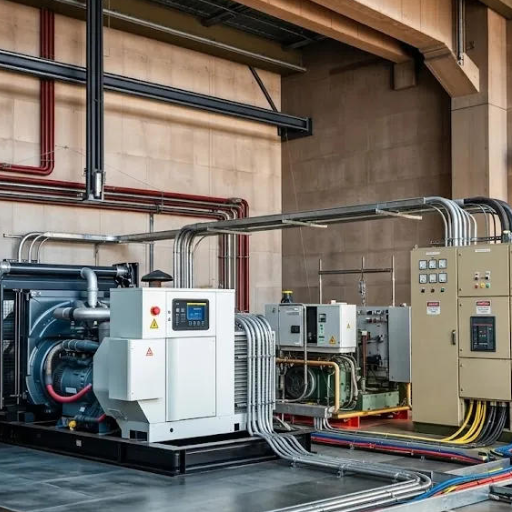
Generator controller parts are the components that let one electronic module start, stop, protect and sequence a generating set. The head unit runs the logic. The parts around it carry power, signals and commands.
| Part group | What it does | Examples | Reusable on replacement? |
|---|---|---|---|
| Controller head unit | Runs start/stop, protection and sequencing logic | DSE7320 MKII, ComAp InteliLite 4 MRS 16, SmartGen HGM6120N | No, unless the same model and firmware |
| Display or HMI | Shows parameters, alarms and menus | Integrated LCD, DSE2520 remote display, ComAp InteliVision | Sometimes, if the new module supports it |
| Wiring harness | Carries DC power, sensor, AC sensing, CT, CAN and relay signals | Engine harness, AC and CT harness, remote display cable | Only if connector-compatible; cross-brand usually means a new harness |
| Sensors and CTs | Feed speed, oil pressure, coolant temperature, fuel level and current | Magnetic pickup, pressure and temperature senders, 5 A CTs | Often, if ratings and curves match |
| I/O expansion | Adds inputs, outputs, RTD/TC or analogue channels | DSE2130, DSE2133, DSE2157; ComAp EM-BIO8-EFCP, I-IO8/8 | Sometimes; check bus type and addressing |
| Communications | Connects to a PC, PLC, SCADA, cloud platform or SMS gateway | RS485 Modbus, CAN/J1939, Ethernet, 4G, SNMP | Depends on the new module’s ports |
| Configuration and firmware | Defines setpoints, timers, sensor curves, I/O mapping and comms settings | DSE Configuration Suite, ComAp InteliConfig, SmartGen PC software | No, it must be migrated or rebuilt |
Two boundaries keep the list honest. The automatic voltage regulator belongs to the alternator, not the controller, so voltage faults are a separate diagnosis; our alternator specifications guide covers that side. And the controller is not the whole panel: the enclosure, breaker, lamps and changeover logic have their own failure modes, which our generator control panel functions guide explains. For the wider assembly picture, the generator parts guide covers engine, alternator, cooling, fuel and control as five systems.
The Three Controller Families You Will Meet
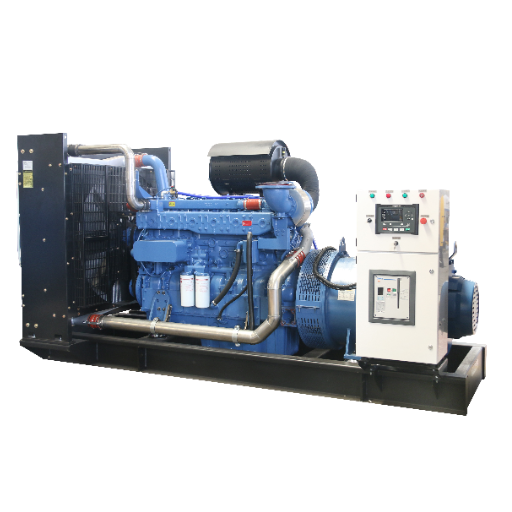
Buyers often ask what a deep sea controller is. The answer is a genset control module made by Deep Sea Electronics in the United Kingdom. It starts and stops the engine, monitors operating parameters, protects the set and drives the changeover between mains and generator. That description fits ComAp and SmartGen too, which is why genset controller parts from the three families are compared on fit and support rather than on basic function.
| Family | Typical models | Best fit | Watch-outs |
|---|---|---|---|
| Deep Sea Electronics (DSE) | DSE4520, DSE7320 MKII, DSE8610 MKII | Industrial standby and prime power; clear PC configuration; wide service network | Configuration is model-specific; expansion runs over DSENet; clone units circulate |
| ComAp | InteliLite 4 MRS 16, InteliGen 200 | Complex single-set and paralleling systems; PLC logic; remote monitoring | Plug-in modules add cost; archives depend on firmware version |
| SmartGen | HGM6120N, HGM7220N, HGM9510 | Value-focused single sets and small paralleling; SMS and cloud options | Variant suffixes change RS485 and CAN availability; documentation depth varies by model |
The hardware differences are real but narrower than the marketing suggests. The DSE7320 MKII is an auto mains failure module with a four-line display and IP65 protection with its gasket. It runs on 8 to 35 VDC and has USB, RS232, RS485 and DSENet ports, Modbus RTU, and configuration through DSE Configuration Suite. It measures 245 by 184 mm overall with a 220 by 160 mm cutout.
The ComAp InteliLite 4 MRS 16 is a single gen-set controller with USB, USB host, CAN and RS485 onboard, Modbus RTU and TCP, J1939, SNMP, 350 history records and two plug-in module slots. Its cutout is 185 by 130 mm, so it does not drop into a DSE7320 aperture without panel work.
SmartGen’s HGM6120N manual shows the same pattern at the value end: 132 by 64 pixel display, 5 programmable digital inputs, 6 relay outputs and 3 analogue sensor inputs, with a 186 by 141 mm cutout. The suffix matters. The N variant has no RS485, the NC variant adds it, and CAN variants add a J1939 interface. The HGM7220N adds GPS and SMS alarms, and the HGM9510 is the paralleling model for multi-set sites.
Datakom, DEIF and Woodward also appear in industrial plants, and the replacement mechanics below apply to them too.
Repair, Replace, or Upgrade?
Work in diagnostic order before you price anything: DC supply, fuses, battery polarity, harness plugs, sensor signals, then the controller. A generator control module replacement should be the last conclusion, not the first, and a blank display with a healthy supply usually points at power rather than the board.
| Situation | First action | Likely outcome |
|---|---|---|
| Blank display, no boot | Check DC supply, fuses, battery polarity and harness plugs | Repair the supply or wiring, not the controller |
| Cranks but will not run | Check the magnetic pickup signal and the RPM reading on the display | Replace the sensor or repair the lead |
| One input or output has failed | Move the function to a spare channel if the configuration allows | Repair or replace the module, depending on board access |
| Water ingress, corrosion or lightning damage | Isolate and inspect the board | Replace; board-level repair is rarely economic |
| Obsolete model, no spares, no communications | Check whether a same-brand successor accepts the configuration | Upgrade rather than repair |
| Still under warranty | Follow the OEM warranty route | Do not open the enclosure |
A generator controller upgrade is often the right call rather than a repair, but that is an engineering judgment, not a statistic. Three forces push the decision: spares scarcity for discontinued models, communications requirements the old board cannot meet, and the labour cost of board-level repair against the price of a current module.
A plant in Surabaya kept a twelve-year-old controller alive through three board repairs. The set was reliable, the technicians knew the panel, and each repair cost less than a replacement. Then an input module specific to that firmware revision failed, no spare existed, and the same-brand successor would not accept the old configuration. The replacement itself took half a day. Rebuilding the parameters took the rest of the week, because nobody had exported the file while the old controller still powered up.
Why the Configuration File Decides the Job
The configuration holds the setpoints, timers, sensor curves, I/O mapping, alarm limits and communications settings. It is specific to the controller model and, in practice, to the firmware revision running on it. It is also the one item on the list of generator controller parts that cannot be ordered from a catalogue.
Woodward documents the clearest example. The easYgen-3000XT was designed as a physical drop-in for the easYgen-3000, with the same housing, cutout, display and terminals apart from some re-wiring. Yet Woodward’s support note states that old easYgen-3000 WSET configuration files cannot be taken over into the new control. Loading one produces an error writing the configuration parameter, and the settings have to be re-entered. The hardware drops in. The configuration does not.
ComAp’s GenConfig documentation makes a similar point at the archive level. A backup opened under a different firmware version or branch may restore I/O configuration incorrectly, and cross-version imports go through a wizard into a default archive that needs manual checks. The safe path is to clone a like-for-like controller, not to assume a newer one will inherit the file.
Kohler’s service documentation adds the case that catches sites out. If the old controller is dead, the configuration cannot be extracted at all. Runtime hours, calibration values, communications addresses and factory data have to be recorded by hand, from nameplates, commissioning records and whatever the display showed before it failed.
Cross-brand swaps are harder again. A supplier cross-reference may pair a DSE4520 with a SmartGen HGM6120 or a DSE7320 with an HGM7220 by function, but connector layouts, terminal numbering and I/O mapping differ. Treat those tables as functional equivalents for a redesign, never as a wiring instruction.
So record before you remove:
- Controller model, part number, firmware and serial number, photographed on the label.
- Every connector and terminal, photographed before anything is unplugged.
- CT ratio, sensor types and ranges.
- Communications settings: protocol, address, baud rate.
- Start and stop timers, alarm setpoints and exercise schedule.
- The event log, exported if the controller still powers up.
If no backup exists, the rebuild starts from the engine data plate and the commissioning file. Engine make, model and serial decide the speed and sensor configuration, which is why our engine parts and serial guide is the right companion when the controller label is missing or unreadable.
How to Replace Generator Controller Parts
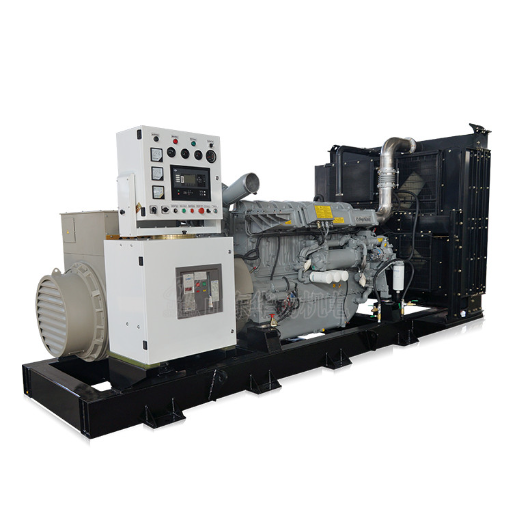
This is a generator controller replacement, so treat it as a qualified technician’s job. Isolate the mains, the generator breaker and the battery, lock out, and verify dead before opening the panel. Local electrical codes and the OEM instructions take precedence over any checklist, including this one.
- Record the identity. Model, part number, firmware and serial, plus photographs of the label and the terminal layout.
- Save what you can. Export the configuration and event log. If export is unavailable, photograph each parameter screen.
- Isolate and prove dead. Mains, generator breaker, battery, then wait for the module to discharge.
- Label and disconnect the harness. Short the CT secondary before opening a CT circuit. Never open-circuit a current transformer while the primary is energised.
- Mount the new module. Check the cutout, clearance behind the panel, gasket and IP rating.
- Reconnect to the OEM drawing. Verify DC polarity, fuse rating, CAN termination and the magnetic pickup shield.
- Load and test. Program the configuration and firmware, calibrate the sensors, then test manual start, auto start, changeover, alarms and a load run. Record the results.
Two details cause repeat visits. CAN networks need exactly two 120 ohm terminators, which read about 60 ohms across CAN high and CAN low with power off. And a magnetic pickup lead should be shielded twisted pair, with the shield grounded at the controller end only.
After the swap, the set needs its normal service cadence, not a special one. Our generator service schedule covers the intervals that keep a newly configured controller and the engine it governs in step.
Ordering the Right Generator Controller Parts
Send the supplier enough information to match the variant, not just the family:
- Controller model, part number and firmware, from the label.
- Genset nameplate and engine make, model and serial.
- Photographs of the wiring and terminal layout.
- Input and output count and type: digital, analogue, RTD or thermocouple, relay.
- Communications requirement: RS485 Modbus, CAN/J1939, Ethernet, 4G or SNMP.
- CT ratio and sensor types.
- Changeover type, and whether the controller must drive it.
- Whether the site needs a pre-programmed spare held on the shelf.
Ask two commercial questions as well. Will the supplier load the configuration, or only supply the module? And is the harness included, or reused?
Ordering generator controller parts is a matching exercise, not a catalogue lookup. A rental fleet in the Middle East learned the second question the hard way. The workshop had standardised on one family, one laptop and one cable. A mixed-brand unit came back, and the second software package, second cable and cross-trained technician cost more than the controller they replaced.
Genuine modules through authorised channels matter here, because controller clones exist and a clone will not accept vendor firmware or configuration tools cleanly. The wider genuine, OEM-equivalent and will-fit argument is in our genuine versus aftermarket parts guide.
Send the controller label, the nameplate and a wiring photo together. Our engineers will identify the family and variant before a quote is written.
Frequently Asked Questions
What are generator controller parts?
The controller module, its display, the wiring harness, the sensors and current transformers, any I/O or communications modules, and the configuration file. The module runs the logic; the rest is how it senses the engine and acts on it. Matching generator controller parts starts with the label.
What is the difference between a generator controller and a control panel?
The controller is the electronic module that runs start, stop, protection and changeover logic. The panel is the enclosure, display, keys, lamps and breaker around it. A panel contains a controller, but the two terms are not interchangeable.
Can I replace a generator controller with a different brand?
Rarely as a plug-and-play swap. Connectors, terminal numbering and configuration differ, so expect a new or re-pinned harness and full parameter re-entry.
Do I need to reprogram a replacement controller?
Yes. Configuration is model and firmware specific, and even a same-brand successor may reject the old file. Export the configuration before removal if the old module still powers up.
What should I record before removing a controller?
Model, part number, firmware, serial, wiring photos, CT ratio, sensor types, communications settings, timers and alarm setpoints. If the module is dead, record what the nameplate and commissioning file show.
How do I know whether to repair or replace a controller?
Check supply, fuses, harness and sensors first. Water damage, lightning damage or obsolete spares point to replacement. A loose plug, failed sensor or blown fuse points to repair.
Conclusion
Generator controller parts are a system, not a box. The module, display, harness, sensors, current transformers, expansion modules and communications all have to agree, and the configuration file is what makes them agree in the right sequence.
Three rules survive every quote. Diagnose the supply and the sensors before condemning the controller. Record the configuration before you remove anything, because the file is the part that cannot be bought. Order by model, firmware and serial, not by family name.
ShanHua builds generator sets from 8 kVA to 4000 kVA and configures DSE, ComAp and SmartGen controllers on them, with installation, commissioning and training support for the maintenance team that inherits the panel. When a controller fails, the fastest route to the right part starts with a photograph of the label.