
Diesel generator fuel system parts run in a fixed order: tank, supply line, water separator, lift pump, primary filter, secondary filter, injection pump, high-pressure lines, injectors and return line, with a shutoff solenoid controlling the flow. The first six are the low-pressure side. The pump, the lines and the injectors are the high-pressure side, and they are the expensive half.
Consider a quarry in Ghana. The genset would crank, fire for two seconds, then die. The team replaced the fuel filter, then the lift pump, then the filter again. The fault was a perished suction hose drawing air under vacuum.
That pattern is why this guide follows the path rather than a parts list: circuit order, the job each diesel generator fuel system part does, the failure signature it leaves, and the test that separates them. If you are holding a parts quote you cannot match to your engine, send the nameplate photo and the quote to our engineers before you order.
Key Takeaways
– The circuit has two halves: a low-pressure side that fails first and cheaply, and a high-pressure side that fails late and expensively.
– Air ingress and water account for most low-pressure failures, and both look like a fuel pump problem.
– A micron rating without a beta ratio describes one particle size at an unstated efficiency, so it is not a specification.
– Caterpillar specifies a 4 micron(c) secondary filter and a 10 to 15 micron primary filter; filters, separators and lift pumps are replaced on site, while pumps and injectors are bench tested first as long-lead items.
What Counts as Diesel Generator Fuel System Parts
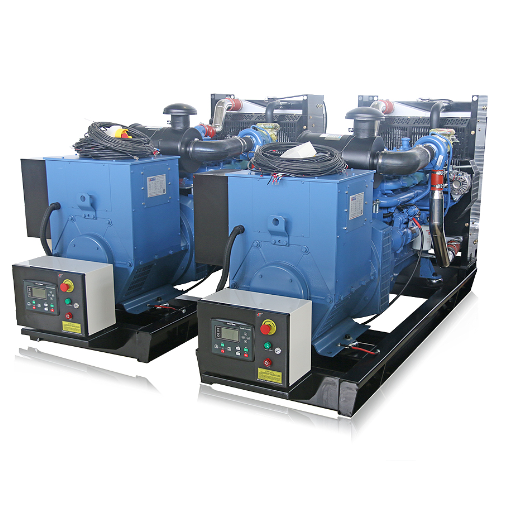
Diesel generator fuel system parts are the components that store, move, clean, pressurise and inject fuel, from the tank outlet to the injector nozzle. Ten of them do the work, and each has a job, a position on the pressure side, and a default action when it fails.
| Part | Job | Side | Default action |
|---|---|---|---|
| Tank, vent and level sensor | Store fuel; admit air as fuel leaves; report level | Low | Service only |
| Supply and return lines | Carry fuel to the engine and back | Both | Replace if cracked or seeping |
| Water separator | Remove free water and coarse particles | Low | Replace element on schedule |
| Lift or transfer pump | Push fuel from tank to injection pump | Low | Replace |
| Primary filter | Coarse filtration ahead of the fine stage | Low | Replace element on schedule |
| Secondary filter | Fine filtration before the injection pump | Low | Replace element on schedule |
| Injection pump | Pressurise and meter fuel, cylinder by cylinder | High | Bench test, then rebuild or replace |
| High-pressure lines | Carry metered fuel to each injector as a matched set | High | Replace as a set |
| Injectors | Atomise fuel into the combustion chamber | High | Bench test, then rebuild or replace |
| Fuel shutoff solenoid | Hold fuel on while running, cut it to stop | Control | Test, then replace |
Tank sizing, pipe sizing and code compliance belong to our fuel system installation guide. Contamination treatment belongs to fuel system maintenance. The whole-set view sits in the generator parts guide.
The Low-Pressure Side: From Tank to Secondary Filter
The low-pressure side has one job: deliver clean, water-free, air-free fuel to the injection pump at a steady low pressure. In the standard arrangement described in OEM Update’s fuel system explainer, the lift pump draws through the primary filter, then pushes through the secondary filter into the injection pump.
The lift pump is usually a diaphragm unit driven by a cam lobe. Its only function is to deliver adequate flow, and that flow is far larger than the engine burns, because the surplus circulates to cool and lubricate the pump.
That detail explains the first failure signature. When the low-pressure side loses flow, the engine rarely stops cleanly. It loses power, hunts, or starts and dies.
Air is the classic fault. Air enters on the suction side, where the pump is pulling a vacuum. A cracked hose, a loose clamp, a hardened O-ring or a badly seated filter housing draws air in without leaking fuel out, which is why a visual inspection finds nothing.
The symptom is a set that cranks well and won’t fire. The Caterpillar operation and maintenance manual for its generator engines is direct: after a filter change, or after a set has stood for weeks, prime the system before cranking, because air will be in the housing.
Water is the second signature. A separator sits ahead of the lift pump so free water settles before it reaches anything precision-made. Caterpillar tells operators to drain water and sediment from the tank weekly, at oil changes and at refuelling.
One workshop habit comes straight from the OEM and is commonly broken. Caterpillar states that fuel filters must not be pre-filled before installation, because unfiltered fuel defeats the filter and accelerates wear. Many technicians pre-fill from habit. The habit is the problem.
Video: CarCraft, “Engine diesel (part2) the fuel circuit.” A third-party engine animation, not a ShanHua presentation. It shows the circuit order, which is the point.
Filtration: Micron Ratings and Beta Ratios
A fuel filter micron rating is a claim about one particle size, and it says nothing about how many of those particles get through. Filters are rated three ways, and only one is comparable between brands.
A nominal rating states a percentage at a particle size, such as 50% retention at 10 microns. An absolute rating comes from a single-pass test and is normally quoted at 98.7% retention.
A multipass beta rating, standardised under ISO 16889, counts particles upstream and downstream and reports the ratio. Beta is the only one that tells you what proportion of particles at a stated size the element actually stops. ALCO’s bulletin on micron rating sets out all three, and its conclusion is blunt: the micron rating by itself means nothing.
| Beta ratio | Particles passing | Efficiency |
|---|---|---|
| β2 | 1 in 2 | 50% |
| β10 | 1 in 10 | 90% |
| β20 | 1 in 20 | 95% |
| β75 | 1 in 75 | 98.7% |
| β100 | 1 in 100 | 99% |
| β200 | 1 in 200 | 99.5% |
| β1000 | 1 in 1000 | 99.9% |
| β2000 | 1 in 2000 | 99.95% |
Donaldson puts it plainly in its guide to beta ratings: when someone asks for a 5-micron filter, the next question should be at what beta ratio. A 5-micron element at β1000 and one at β2 carry the same label and behave nothing alike.
The engine maker’s number is the specification. Caterpillar requires a 4 micron(c) secondary fuel filter on its diesel engines with unit-injected fuel systems, to maximise fuel system life and prevent premature wear from abrasive particles. Where a primary filter and water separator are fitted, it specifies 10 to 15 micron media at that stage. The two numbers form a system: coarse, then fine.
Cummins approaches the problem from the fuel side. Its brochure The Impact of Fuel Quality specifies a minimum cleanliness of ISO 4406 code 18/16/13, where the figures count particles per millilitre larger than 4, 6 and 14 microns. The same document reports samples containing as many as 2,500 particles at 4 microns or larger per millilitre, which it translates to 2.3 billion particles in a tankful.
A tighter filter is not automatically better. Donaldson states that a tighter, more efficient filter than needed can shorten element life, increase pressure drop, or even strip additives from the fluid.
Four questions settle a filter purchase:
- What particle size is the rating quoted at, and is it nominal, absolute or beta?
- What is the beta ratio at that size?
- Does the element meet the engine maker’s specification for primary and secondary stages?
- What is the differential pressure at full flow when the element is new?
A cold-store operator in Surabaya learned this the hard way. He read that finer is safer and fitted 2-micron elements in place of the maker’s specification.
Restriction rose, the differential pressure switch tripped every few hundred hours, and the team replaced elements at three times the specified rate. The engine was never at risk. The maintenance budget and the outage schedule were.
To prove what your fuel supplier is actually delivering, see the fuel test report guide.
The High-Pressure Side: Diesel Generator Fuel Injection Pump and Injectors
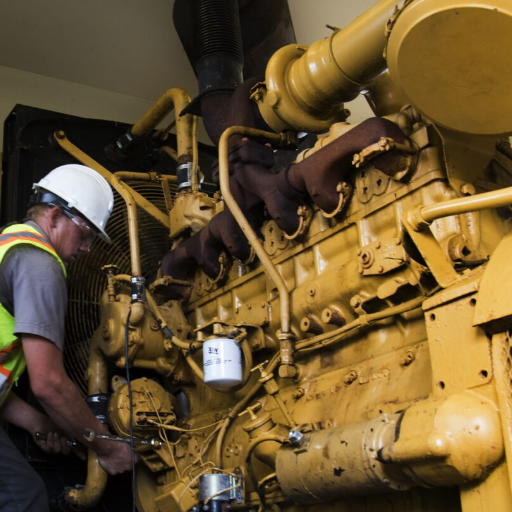
Here diesel generator fuel system parts do their most precise work. Fuel is metered to a fraction of a cubic millimetre, timed to the crankshaft, and pushed through a nozzle orifice measured in microns.
Caterpillar’s manual describes injection pressures reaching 209 MPa, or 30,000 psi, and higher. At that pressure, the clearances that make metering possible are the clearances that wear. Heavy Duty Trucking made the same point in its report on fuel filtration: dirt or moisture erodes the machined holes in the injectors and wears the pump clearances, and the damage surfaces later as lost power, higher fuel use and worse emissions.
Injection pumps come in three architectures. An inline pump has one plunger and barrel per cylinder. A rotary pump uses a single pumping chamber and distributes in sequence.
A common-rail system separates pressure generation from injection: a high-pressure pump feeds a shared rail, and the ECU opens each injector electronically. A fourth arrangement, the unit injector, pressurises fuel inside each injector and removes the pump and lines from the high-pressure side.
For a generator buyer, the difference is the repair route. Mechanical pumps are rebuilt by specialists on a test bench. Common-rail pumps and injectors need electronic and hydraulic test equipment, and a pump replaced without an injector inspection usually comes back.
High-pressure lines are a matched set. They carry equal volumes so each cylinder receives the same quantity at the same moment. Replacing one line in isolation is acceptable; mixing lines of different internal volume or reworking a line by bending is not.
Injectors are the part most often replaced on suspicion. A worn diesel generator fuel injector nozzle erodes its holes and distorts the spray. Four symptoms point at one:
- White smoke that does not clear when the engine warms.
- A miss that follows a single cylinder.
- Hard starting when the engine is already warm.
- Rising oil level, from fuel dilution.
None of those proves an injector. A bench test does: opening pressure, spray pattern, flow and leak-off, measured against the maker’s specification.
Safety on this side is not optional. Caterpillar’s manual gives three rules.
Do not check high-pressure lines with the engine or starter running. Wait ten minutes after the engine stops before any service on those lines, because that is how long the pressure takes to purge. And check for leaks with a board or cardboard, never a hand, because fluid under pressure can penetrate skin and a pinhole leak can cause severe injury requiring immediate medical treatment.
The return line carries surplus fuel back to the tank and cools the pump on the way. Caterpillar requires every valve in it to be open during operation, because a blocked return raises pressure and can fail the filter housing. A return valve closed for maintenance and never reopened is a quiet, expensive fault.
For engine-specific part numbers, supersessions and serial lookups, the diesel engine parts guide covers the brand systems behind the pump and injector references.
Shutdown and Control Parts
Most industrial generator engines are energise-to-run: the fuel shutoff solenoid must be powered for the engine to keep running. Cut the power and a spring closes the fuel valve. That design makes the solenoid a control part as much as a fuel part, and it produces the most misdiagnosed symptoms in the circuit.
On many engines the solenoid has two windings. A heavy pull-in winding retracts the plunger during cranking, and a light hold winding keeps it retracted while running; controllers typically drop the pull circuit about a second after start. When the hold winding or its circuit fails, the engine cranks, fires, and dies the moment the key returns to run. Technicians replace filters and lift pumps for this symptom while the fault sits in a coil or a relay.
Test before replacing. Confirm battery voltage at the solenoid in the run position, check both windings for continuity, then push the plunger in by hand with power on and see whether it holds. If it will not, the hold circuit is the fault.
On electronic engines those functions move into the controller: a rack actuator on some platforms, and on common rail a rail pressure sensor, an inlet metering valve or suction control valve, and a relief valve. Diagnose them with the controller’s own fault codes, and never substitute a generic solenoid for a metering valve.
Failure Signatures for Diesel Generator Fuel System Parts
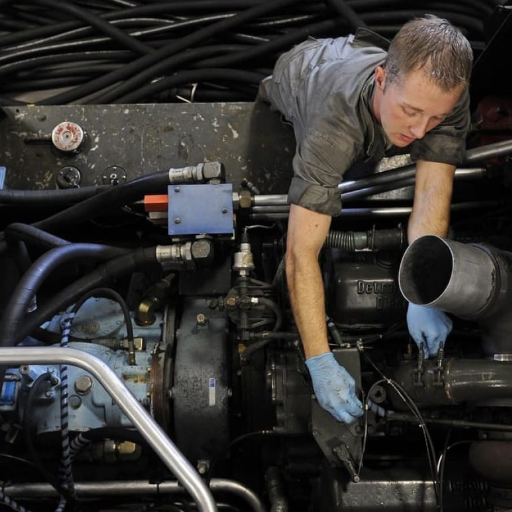
Read the symptom the operator reports, then the part it usually points to, then the test that separates them. This is a shortlist, not a diagnosis.
| Symptom | Most likely parts | Test |
|---|---|---|
| Cranks, will not fire | Air ingress, shutoff solenoid, lift pump | Bleed at the housing and pump; check solenoid voltage in run |
| Fires, then dies within seconds | Solenoid hold winding or its circuit | Hold-plunger test with power on |
| Starts and stalls under load | Blocked filter, blocked tank vent, weak lift pump | Differential pressure across the filter; vent check |
| Hunts or surges | Air ingress, governor or actuator fault | Bleed, then check actuator response |
| White smoke, miss on one cylinder | Injector nozzle wear or dribble | Injector bench test |
| Black smoke under load | Over-fuelling, injector dribble, pump timing | Injector test, timing check |
| Power loss, rising fuel use | Worn injectors, pump calibration drift, restriction | Bench test injectors and pump |
| Fuel level in the oil rising | Injector copper seal or pump shaft seal | Oil analysis for fuel dilution |
Two rules for using it. A symptom that moves after a bleed is an air problem. A symptom that returns within hours of a filter change is a restriction problem, and the answer is upstream of the filter.
What to Stock and What to Order First
Stocking diesel generator fuel system parts follows failure economics. Consumables that fail often and cost little belong on the shelf. Parts that fail rarely and cost a lot belong in a planned order.
Keep separator and filter elements for the next two services, plus lift-pump seals if your pump is serviceable. Keep a spare shutoff solenoid for any critical set: it is cheap and produces the most alarming symptom. The generator maintenance kit covers the rest by interval.
Order pumps and injectors only against a bench test result, and order early. Both are built or remanufactured to order on many platforms, and neither should go in behind a dirty tank. A new pump fed by a contaminated system fails again, and the second failure gets blamed on the part.
Three fields make a fuel-system order safe: the engine serial number or a nameplate photograph, the current part number after any supersession, and the quantity per engine rather than per set. Filters and injectors are often ordered short because a set has more than one filter housing.
Diesel Generator Fuel System Parts: FAQ
What are the parts of a diesel generator fuel system?
The tank and lines, a water separator, a lift pump, a secondary filter, the injection pump, the high-pressure lines, the injectors, the return line and a shutoff solenoid. The first six are the low-pressure side; the pump, lines and injectors are the high-pressure side.
Why does my diesel generator crank but not start after a filter change?
Air in the low-pressure circuit. Prime and bleed at the filter housing and the injection pump before cranking again. A filter fitted dry or pre-filled with unfiltered fuel makes this worse.
How often should diesel generator fuel filters be replaced?
Follow the engine maker’s interval for that model, and treat it as a maximum rather than a target. Poor fuel shortens it; a clean supply lets you run to the maker’s figure.
Is a 2-micron fuel filter better?
Not automatically. Match the maker’s specification and ask for the beta ratio at the rated size. A tighter element than the engine was designed for can shorten element life and raise restriction without protecting anything extra.
Can I clean and reuse a diesel fuel filter?
No. The element is a consumable, and cleaning does not restore the media. A filter that’s passed water is spent whatever it looks like.
How do I know if the injection pump or injectors are failing?
Look for power loss under load, white or black smoke, a miss on one cylinder, hard starting when warm, or fuel dilution in the oil. Confirm on a bench before replacing; both are long-lead items.
Conclusion
Diesel generator fuel system parts form a chain with two cheap links protecting two expensive ones. Separators, lift pumps and filters fail first, cost little and can be replaced on site. Pumps and injectors fail last, cost a great deal, and need a bench test before anyone commits to a repair.
The routine follows from that. Drain the separator, prime after every filter change, specify filters by the maker’s rating and beta ratio rather than a micron label, and test the solenoid before touching the fuel supply. When a high-pressure symptom appears, measure it on a bench instead of replacing parts in hope.
A hospital in Cebu lost a standby set during a grid failure because the shutoff solenoid hold winding had failed months earlier and nobody tested it. The filters were new and the engine cranked perfectly. One test would have found it.
Send us the nameplate, the filter part numbers and the symptom. Our engineers will map the diesel generator fuel system parts on your engine and tell you which one to test first.