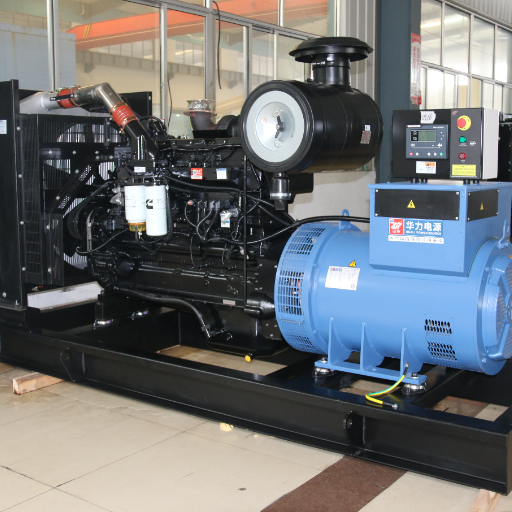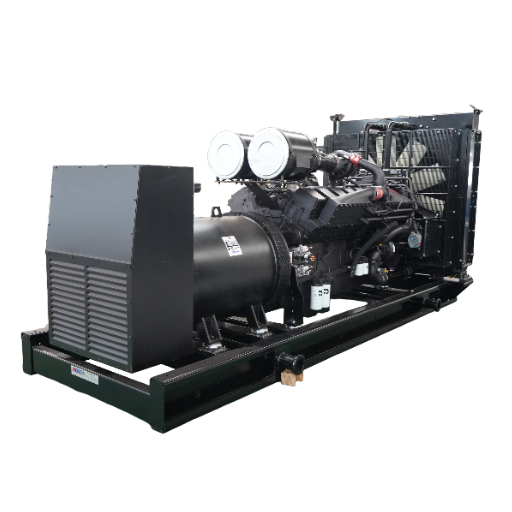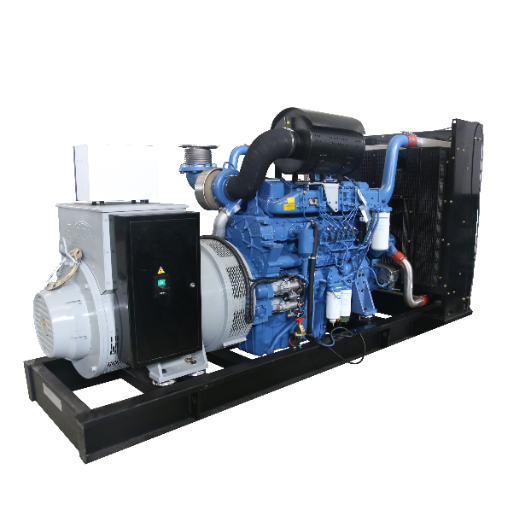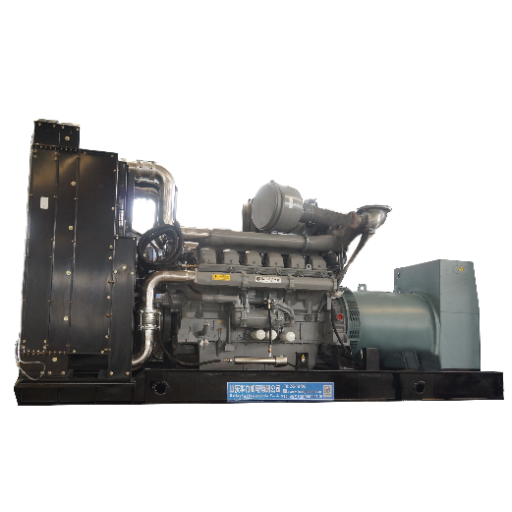


Suppliers of high-quality diesel generators catering to industrial buyers typically possess certified manufacturing capabilities, OEM authorizations, transparent testing procedures, and reliable delivery capabilities. Lead times vary significantly in 2026: units available from distributor stock require only 2 to 6 weeks, whereas data-center-grade units from major Western OEMs can take 52 to 110 weeks or longer. In terms of pricing, a Chinese-made 500kW silent generator has an FOB price of approximately $3,500, while a high-end 1MW Tier 4 Final-compliant unit exceeds $400,000.
When Marcus, a procurement manager for a West African mining contractor, needed four 1 MW prime-power gensets, he focused only on the lowest FOB quote. The supplier claimed Cummins authorization but couldn’t produce a valid letter. The load-bank test report was a generic template. Six months later, two alternators failed in the field. Spare parts took 11 weeks. The mine lost more than the original purchase price in downtime.
This guide gives you the decision framework Marcus didn’t have. You’ll learn how to evaluate diesel generator suppliers by type, compare 2026 pricing, and navigate lead times. You’ll also see how to require the right certifications and calculate true landed cost beyond the quoted unit price.
If you are just starting your search and want a broad view of the market first, our overview of every diesel generator for sale shows how new, used, and rental options compare before you narrow down a supplier.
Key Takeaways
- Diesel generator suppliers fall into four categories: manufacturers, OEM/ODM partners, authorized distributors, and trading companies. Each has different pricing, lead-time, and risk profiles.
- 2026 lead times range from 2–6 weeks for distributor stock to 52–110+ weeks for large Western OEM units.
- Factory-direct 500 kW Chinese silent sets start near 3,500FOB∗∗,whileTier−4Final500kWunitsinNorthAmericarun∗∗3,500FOB∗∗,whileTier−4Final500kWunitsinNorthAmericarun∗∗120,000–$180,000 installed.
- Always verify ISO 9001, ISO 8528, CE, EPA Tier, and engine OEM authorization based on your market.
- True landed cost includes freight, duties, inland transport, commissioning, fuel system, and documentation, not just the FOB price.
What Does a Diesel Generator Supplier Do?

A diesel generator supplier sources, assembles, or delivers gensets to end users, distributors, EPC contractors, and industrial buyers. Some suppliers own factories. Others hold inventory. Some simply broker orders.
A true diesel generator manufacturer controls engine inbound inspection, base-frame fabrication, engine-alternator coupling, electrical assembly, load-bank testing, and canopy finishing. An OEM/ODM partner builds gensets under your specifications or brand. An authorized distributor buys stock from a factory and resells with local support. A trading company sources from factories but adds little technical control.
The supplier type you choose determines price, lead time, customization scope, and after-sales risk. For buyers who need consistent quality and scalable supply, a verified manufacturer-direct relationship usually delivers the best long-term value.
Types of Diesel Generator Suppliers
Most suppliers fit into one of four tiers. Understanding the difference protects you from mismatched expectations.
Tier 1: International Premium Brands
These are global engine and genset OEMs with established dealer networks.
- Caterpillar, heavy-duty industrial and mining gensets
- Cummins, integrated power systems, strong data-center presence
- MTU / Rehlko (formerly Kohler), large-frame industrial and mission-critical sets
Tier 1 suppliers offer global parts availability and strong resale value. They also carry the longest lead times and highest prices. In 2026, large data-center gensets from these brands are often quoted at 40–100+ weeks.
Tier 2: High-Value Chinese Manufacturers
These manufacturers partner with Tier 1 engine brands and produce cost-competitive gensets with strong customization.
- Weichai Power, vertically integrated engine production
- BAIFA POWER, industrial diesel/gas sets, 8 kW–3,200 kW
- MECCA POWER, OEM-focused, critical-infrastructure positioning
- LETON POWER, fast-delivery 1–3 MW data-center and industrial sets
- Shandong Huali Electromechanical Co., Ltd, diesel/gas generators, transformers, electromechanical solutions
Tier 2 suppliers typically offer 18–30 week total delivery for standard units and significant cost savings. The key is factory verification.
Tier 3: Regional Assemblers and Niche Players
Local players in Southeast Asia, Africa, the Middle East, and Latin America often assemble SKD kits or serve specific voltage/frequency markets. They can be cost-effective for small orders but may lack engineering depth and spare-parts inventory.
Authorized Distributors and Local Integrators
Distributors hold inventory and provide local warranty, commissioning, and maintenance. They add margin, often 10–25%, but reduce logistics and service risk. They are the right choice when speed and local support matter more than lowest unit cost.When distributor or surplus stock is your fastest route to power, our guide to the used diesel generator for sale walks through the inspection and history checks that separate a genuine bargain from a costly liability.
Diesel Generator Pricing by Capacity (2026)

Pricing depends on engine brand, alternator, enclosure type, emissions tier, control system, and certification. The ranges below show indicative factory-direct and market benchmarks.To compare offers fairly across very different sizes, it helps to look at cost on a per-kilowatt basis, and our guide to diesel generator price per kW explains why that figure falls as capacity rises until brand and emissions premiums push it back up.
Small Commercial Generators (10–100 kW)
| Capacity | Price Range (USD) | Notes |
|---|---|---|
| 10–30 kW | 2,000–2,000–8,000 | Single-phase or three-phase, open or silent |
| 50 kW | 5,000–5,000–15,000 | Common for small commercial backup |
| 100 kW | 10,000–10,000–30,000 | Hospital, retail, and small industrial standby |
If your project centers on offices, retail, hotels, or other light commercial sites, our dedicated guide to the commercial diesel generator for sale explains how to balance space, noise, and code requirements for these buildings.
Industrial Generators (100–500 kW)
| Capacity | Price Range (USD) | Notes |
|---|---|---|
| 200 kW | 25,000–25,000–60,000 | Standby or prime, open/silent |
| 300 kW | 40,000–40,000–90,000 | Common for factories and construction |
| 500 kW | 55,000–55,000–180,000 | Chinese silent FOB ~3,500–3,500–5,000; Tier-4 Final 120K–120K–180K |
For factories, mines, and other heavy-duty sites, our guide to the industrial diesel generator for sale covers the configurations, ratings, and testing that matter most for continuous and standby duty.
Heavy Industrial and Megawatt-Class (500 kW – 3 MW)
| Capacity | Price Range (USD) | Notes |
|---|---|---|
| 1 MW (1,000 kW) | 125,000–125,000–400,000 | General range; premium brands at upper end |
| 2 MW | 250,000–250,000–600,000 | Data-center standby or prime power |
| 3 MW | 400,000–400,000–900,000+ | Containerized or specialized installations |
At the megawatt level, supplier capability matters even more than price, so our guide to choosing a 1000kw diesel generator supplier explains how to evaluate paralleling capability, cooling, and after-sales support at this scale.
Several factors move price within these ranges. Premium engines such as Cummins, Perkins, or MTU add cost. Sound-attenuated canopies add 12–18%. ATS, paralleling controls, remote monitoring, and extended fuel tanks add more. EPA Tier 4 Final / EU Stage V aftertreatment can increase cost by 20–40% compared to non-emission-regulated units.
2026 Lead Times and Supply-Chain Reality
Lead times are one of the biggest challenges in diesel generator procurement today. Demand from data centers, AI clusters, hospitals, mining, and utilities has collided with limited engine allocation and component constraints.
| Procurement Channel | 2026 Lead Time Range |
|---|---|
| In-stock distributor / surplus inventory | 2 – 6 weeks |
| Certified Chinese OEM / GOEM standard | 18 – 30 weeks total |
| Certified Chinese OEM custom / large | 22 – 36 weeks |
| Western OEM standard industrial | 28 – 52 weeks |
| Western OEM large / data-center class | 52 – 110+ weeks |
According to SecondWatt, the average U. S. data-center equipment lead time in 2026 is about 42 weeks, 83% above the 2019 baseline. Caterpillar reported a Q1 2026 backlog of roughly $63 billion. Cummins data-center generator allocation is reported sold out through 2028.
For buyers, this means early procurement is no longer optional. Standard designs with common engine and alternator configurations secure slots faster than highly customized units. Chinese OEMs with vertical integration and stocked frames can compress total delivery to 18–30 weeks for many industrial ratings.
When Priya, a distributor in Southeast Asia, needed 20 standby sets for a hospital chain, she split her order. She placed the bulk with a verified Chinese OEM for cost and delivery stability. She used a local authorized distributor for urgent spares and warranty handling. The hybrid approach kept her project on schedule and protected her margins.
How to Choose a Diesel Generator Supplier

Selecting the right supplier is not just about price. A reliable partner protects your project from delay, non-conformance, and hidden cost.
Verify Manufacturer vs. Trading Company
Ask for the factory name, address, business license, and production license. A true manufacturer can provide factory audit access, production-line photos, and in-house test-lab documentation. A trading company often avoids these topics or redirects to a vague “partner factory.”
Check Engine OEM Authorization
If the supplier claims Cummins, Perkins, Deutz, or Weichai engines, request the engine manufacturer’s authorization letter. Verify it directly with the engine OEM or its regional dealer. Watch for vague language like “Cummins-type” or “OEM-equivalent.”
Review Certifications and Standards
Confirm the supplier holds the standards your market requires:
- ISO 9001, quality management (verify generator manufacturing is in scope)
- ISO 8528, genset power rating methodology
- CE, European market access
- EPA Tier certification, U. S. market
- UL 2200 / NFPA 110, North American safety and emergency-power standards
- GB/T 2820-2009, Chinese genset standard
Assess Production Capacity and Backlog
Ask about annual output, current order backlog, and engine allocation. A manufacturer with stable engine supply and stocked frames will deliver more reliably than one that purchases components per order.
Evaluate Factory Acceptance Testing (FAT)
A qualified supplier should offer witnessed FAT with a load bank. Minimum standard: sustained 80% load for 60+ minutes, voltage regulation within ±1%, frequency stability within ±0.5%, and a report tied to your unit serial number.
Compare Warranty and After-Sales Service
A strong warranty covers defects in materials and workmanship. After-sales support matters just as much. Ask about spare parts availability, local authorized technicians, response time, and operator training.
Factory Audit and Quality Verification Checklist

A factory audit is the most reliable way to confirm that a supplier is a real manufacturer with controlled processes. If travel isn’t practical, arrange a third-party audit through SGS, Bureau Veritas, or TÜV, or request a live video tour.
Documents to Request Before Ordering
- ISO 9001 certificate with generator manufacturing in scope
- Business license matching manufacturing profile
- Engine-manufacturer OEM authorization letter
- Export records and two verifiable reference projects in your region
- CE / EPA / ISO 8528 / regional compliance certificates
- FAT report template and sample routine test report
Seven Physical Floor-Inspection Checks
- Base-frame fabrication area, CNC, welding, and inspection tools
- Indoor engine storage, model segregation and serial authentication
- Mechanical coupling station, laser or dial-indicator alignment tools
- Electrical assembly benches, torque tools and control-panel programming
- Load-bank testing station, non-negotiable for quality assurance
- Canopy production line, bending, welding, powder coating
- Finished-goods staging, shipping labels, packing, and documentation
Red Flags: Trading Company vs. Real Factory
| Real Factory | Trading Company / Workshop |
|---|---|
| CNC equipment with recent cut marks | Clean, unused, or rented equipment |
| Engines stored indoors | Engines outdoors or absent |
| Permanent load bank with ventilation | Portable rental load bank or none |
| Active canopy welding and painting | Canopies bought from subcontractors |
| Uniformed technicians with name badges | Temporary workers or sales staff posing |
| Written work instructions at stations | No documentation |
| Test reports with serial numbers and signatures | Generic blank templates |
Supplier-Direct vs. Distributor vs. B2B Marketplace
Each sourcing channel has a place. The best choice depends on your order size, technical requirements, delivery urgency, and risk tolerance.
| Channel | Best For | Main Risk | Main Benefit |
|---|---|---|---|
| Manufacturer-direct | Bulk orders, custom specs, OEM/private label, long-term supply | Requires more due diligence | Lowest unit cost, full technical control |
| Authorized distributor | Urgent needs, local support, warranty handling | Higher price, limited customization | Faster access, service infrastructure |
| B2B marketplace | Initial supplier discovery, price benchmarking | Unvetted suppliers, trading companies | Wide selection, visible pricing |
A B2B marketplace such as Made-in-China or Alibaba is useful for identifying candidates, but it shouldn’t be the final step. Treat marketplace quotes as starting points. Then verify the supplier, request documentation, and calculate true landed cost. Before you commit to any listing on these platforms, our guide to buying diesel generators for sale online explains how to vet sellers, confirm documentation, and avoid the hidden costs that FOB quotes leave out.
True landed cost includes:
- Unit FOB or EXW price
- Ocean or air freight
- Insurance and port charges
- Import duties, VAT/GST, and customs fees
- Inland transport to site
- Unloading, installation, and commissioning
- ATS, fuel tank, exhaust, and civil works
- Spare parts, tools, and first fill of oil/coolant/fuel
- Documentation translation and notarization
A procurement manager in South Asia learned this the hard way. He selected the lowest FOB quote for a 500 kW silent set. After freight, duties, inland transport, and missing ATS documentation, the true landed cost exceeded the next-highest bid by 16%. Factory verification and a complete BOM would have prevented the problem.
OEM and Private-Label Wholesale Programs
For distributors and brand owners, OEM diesel generator manufacturing offers a way to build a product line without building a factory. A qualified manufacturer produces gensets to your specifications, applies your branding, and provides technical documentation under your name.
Typical OEM services include:
- Custom nameplates and labeling
- Branded packaging and manuals
- Project-specific voltage, frequency, and control settings
- Special paint colors or enclosure designs
- Localized documentation in your language
Minimum order quantities vary by manufacturer and genset type. For common distribution ratings, MOQs may start at one unit for standard configurations. Private-label branding and custom engineering usually require larger volumes, often 5–10 units or more per rating. A long-term partnership agreement can lock in pricing, capacity, and priority scheduling.
Our OEM and private-label capabilities support distributors and brand owners with flexible manufacturing, engineering support, and consistent quality systems.
Common Mistakes When Buying from Diesel Generator Suppliers

Avoiding common errors saves money, time, and project risk.
- Confusing standby and prime ratings, A standby-rated set used for continuous duty will fail prematurely and may void the warranty.
- Undersizing the generator, Ignoring motor inrush current or reactive power causes overloads and voltage instability.
- Selecting purely on lowest price, the cheapest quote often hides weaker materials, missing tests, or thin documentation.
- Ignoring site conditions, Altitude, temperature, noise limits, and space constraints can derate output or block installation.
- Skipping commissioning and load-bank testing, Hidden faults emerge only under real load.
- Neglecting fuel storage and fuel quality, Contaminated fuel is a leading cause of unscheduled downtime.
- Overlooking after-sales support, Confirm parts availability, local technicians, and response times before purchase.
- Accepting unverifiable certifications, Verify certificates through issuing bodies, not just PDF scans.
Industrial diesel generator solutions from Shandong Huali cover prime and standby applications with engineering support, load-bank testing, and global delivery.
FAQ: Diesel Generator Suppliers
What is a diesel generator supplier?
A diesel generator supplier sources, assembles, or delivers gensets to industrial, commercial, and distributor buyers. Suppliers range from manufacturers and OEM partners to authorized distributors and trading companies.
How much does a 500 kW diesel generator cost in 2026?
A 500 kW silent diesel generator from a Chinese factory-direct supplier can start near 3,500–3,500–5,000 FOB. A Tier-4 Final 500 kW unit in North America typically costs 120,000–120,000–180,000 installed. Prices vary with engine brand, alternator, enclosure, emissions tier, and controls.
How long does it take to get a diesel generator in 2026?
In-stock distributor units can arrive in 2–6 weeks. Certified Chinese OEMs typically deliver in 18–30 weeks. Western OEM large industrial or data-center gensets can take 52–110+ weeks.
What certifications should a diesel generator supplier have?
At minimum, look for ISO 9001 and ISO 8528. Market-specific requirements include CE (Europe), EPA Tier certification (U. S.), UL 2200 / NFPA 110 (North America), and GB/T 2820-2009 (China).
Is it safe to buy diesel generators from a Chinese supplier?
Yes, if you verify the factory. Confirm business registration, request a factory audit or third-party inspection, review engine OEM authorization, check FAT capability, and ask for reference projects in similar markets.
What is the difference between a diesel generator manufacturer and a distributor?
A manufacturer owns production lines and controls design, assembly, testing, and quality. A distributor buys inventory and resells with local support and warranty handling. Manufacturers offer lower unit cost and more customization; distributors offer speed and service.
Can diesel generators be customized for my project?
Yes. Manufacturers can customize voltage, frequency, control systems, enclosure type, fuel tank size, ATS integration, remote monitoring, paint color, and branding. Customization affects price and lead time.
What is the typical MOQ for diesel generator orders?
Standard commercial and industrial ratings may have no MOQ or a one-unit minimum. Private-label OEM programs and custom designs usually require larger volumes, often 5–10 units or more per rating.
Conclusion
Choosing the right diesel generator supplier in 2026 requires more than comparing quotes. The best suppliers combine verified production capability, genuine engine OEM relationships, the right market certifications, transparent testing, and reliable delivery. Lead times and engine allocations are tight, so early planning and factory verification matter more than ever.
Focus on total landed cost, life-cycle reliability, and long-term support. Don’t choose based only on the lowest FOB price. A qualified supplier can become a stable partner for your project pipeline, your distributor network, or your private-label brand.
If you need help selecting the right diesel generator supplier for your project, contact our engineering team for a technical consultation and competitive wholesale quote.