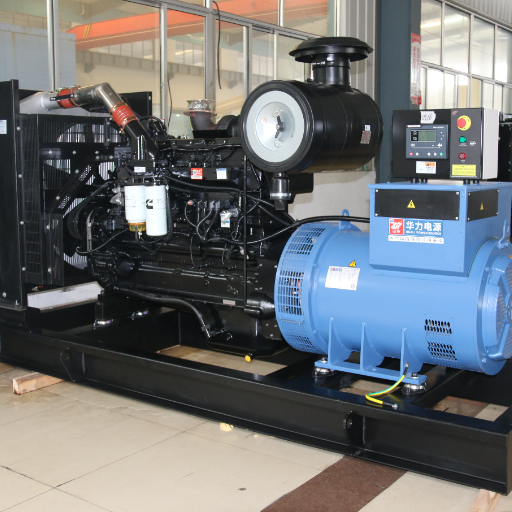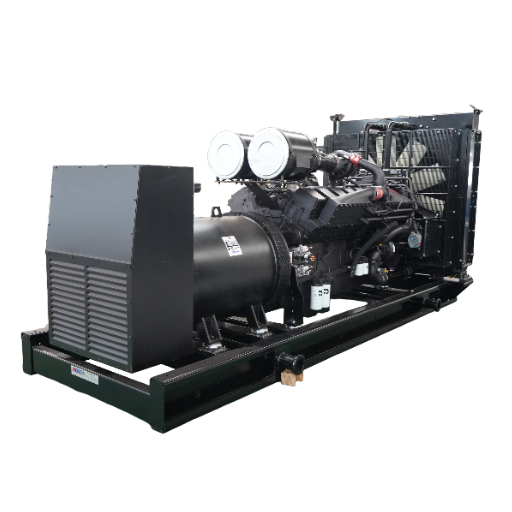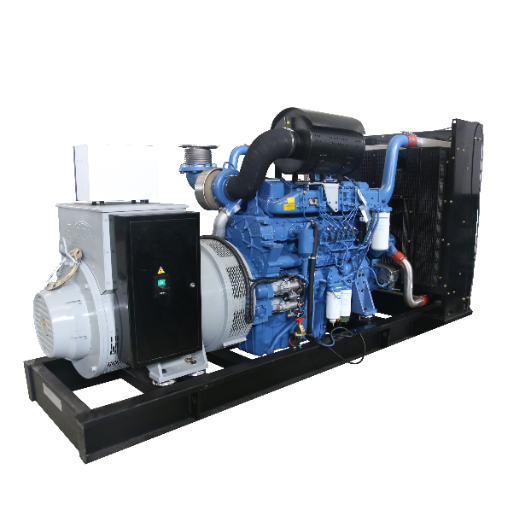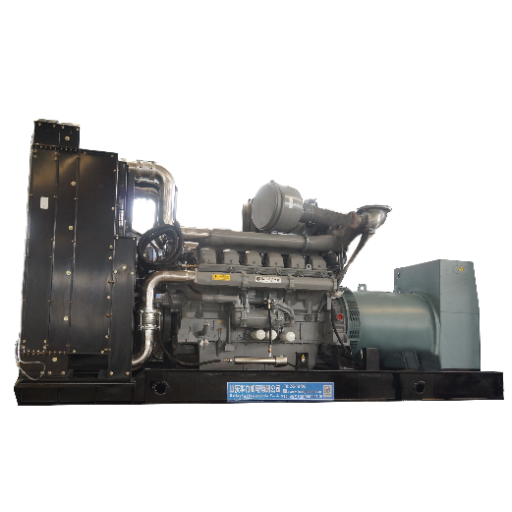

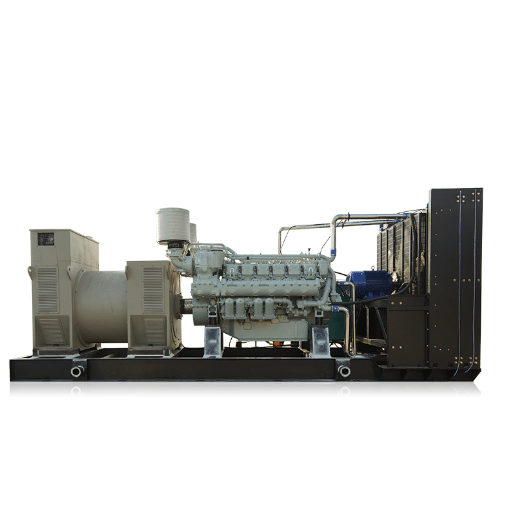
In 2026, the price range for diesel generators will be from approximately $65 per kilowatt for large industrial units to $500 or more for small commercial units. Most buyers will see equipment priced between $80 and $300 per kilowatt, depending on the power rating, engine brand, housing type, and duty cycle.
What causes such a large price range? The same 500 kW audio system might cost $104 per kW directly from the manufacturer, but as much as $350 per kW if installed by a local dealer. The price difference isn’t just due to markups; it also reflects factors such as engine origin, alternator brand, emissions rating, soundproofing, shipping costs, customs duties, and the scope of local installation services. Buyers who understand these factors can compare prices fairly and avoid exceeding their budget later.
This guide breaks down diesel generator price per kW by power range, brand, configuration, and duty cycle. You will also see how installation, operating costs, and total cost of ownership change the real number you pay over ten years.
Key Takeaways
- Diesel generator price per kW typically falls between 65 and 65 and 500, with industrial-sized units offering the lowest per-kW cost.
- Equipment-only FOB China prices often run 30-50% below premium Western brand retail prices for comparable kW ratings.
- Silent canopy adds 15-25% over open skid pricing; containerized enclosures add 20-35%.
- EPA Tier 4 Final emissions compliance can raise upfront cost by 40-50% compared with Tier 3 equivalents.
- Installation and balance-of-plant usually add 25-50% on top of equipment cost.
- Fuel represents 60-75% of ten-year total cost of ownership for standby units, and even more for prime power.
What Is Diesel Generator Price per kW?

The price per kilowatt of a diesel generator set refers to the total cost of the generator set divided by its rated power (kilowatts). For example, if a 500 kW generator set costs 100,000, then the price per kilowatt is 100,000, or 200 per kilowatt. Some buyers refer to it as the cost per kilowatt of a diesel generator set, but the meaning is the same. This metric helps purchasing teams quickly compare units of different specifications and configurations.
The figure can be calculated three ways:
- Equipment-only price per kW: The factory or FOB price before freight, taxes, or installation.
- Landed price per kW: Equipment plus shipping, insurance, duties, and customs clearance.
- Installed price per kW: Equipment plus foundation, electrical connection, fuel system, ATS, and commissioning.
Each version answers a different question. Equipment-only price per kW is useful for comparing suppliers. Installed price per kW is what actually appears in your capital budget, whether you are buying an industrial diesel generator for a factory or a commercial diesel generator for a building.If your project sits on a factory floor or another heavy-duty industrial site, our dedicated guide to the industrial diesel generator for sale covers the configurations, ratings, and testing that shape installed cost for continuous and standby duty.
The metric also reveals economies of scale. Smaller generators carry higher per-kW costs because the engine, alternator, controller, and enclosure are spread over fewer kilowatts. As output rises, fixed costs are diluted, so price per kW falls. This is why a 1,500 kW unit can cost one-third per kW of a 20 kW unit even though both use diesel engine technology.
Diesel Generator Price per kW in 2026
By Power Range (Equipment Only)
The table below shows typical equipment-only diesel generator price per kW ranges for new units in 2026. Prices assume standard open-skid configuration with a Chinese or mid-tier engine and Stamford or equivalent alternator. Industrial buyers should treat this as a baseline for industrial diesel generator price per kW before adding enclosures and installation.
| Power Range | Typical Price per kW | Example Package Cost |
|---|---|---|
| 10–20 kW | 350–350–500 | 5,000–5,000–8,000 |
| 50–100 kW | 150–150–300 | 12,000–12,000–25,000 |
| 100–250 kW | 100–100–220 | 18,000–18,000–45,000 |
| 250–500 kW | 80–80–170 | 28,000–28,000–70,000 |
| 500–1000 kW | 80–80–150 | 50,000–50,000–130,000 |
| 1000+ kW | 65–65–120 | 80,000–80,000–250,000+ |
At the 1000+ kW tier, supplier capability matters as much as the per-kW figure, so our guide to choosing a 1000kw diesel generator supplier explains how to evaluate paralleling capability, cooling, and after-sales support at this megawatt scale.
These prices range widely because engine brand, generator, controller, and hood options all significantly impact the price. A 500 kW open skid-mounted generator set equipped with a Weichai engine and a domestically produced generator might cost close to $80 per kilowatt. The same generator set equipped with a Cummins engine, Stanford generator, DeepSea controller, and a soundproof hood could cost over $80 per kilowatt. With a Cummins engine, Stanford generator, DeepSea controller, and soundproof hood, the price could even exceed $170 per kilowatt.
Maria’s Story: A procurement manager for a hotel group in Southeast Asia needed a 500 kW standby diesel generator for a new resort. She started by reviewing a 500 kW diesel generator price guide to benchmark quotes. One local dealer quoted a Cummins package at 175,000installed(175,000installed(350 per kW). A Shandong factory-direct supplier quoted a comparable Perkins-powered silent genset at 52,000FOB(52,000FOB(104 per kW). After adding freight, duties, local installation, and commissioning, Maria’s landed total was 92,000(92,000(184 per kW). She saved $83,000 against the dealer quote while meeting the same technical specification.
By Configuration
Enclosure type changes the price per kW even when the engine and alternator stay the same.
- Open skid: Base price. Best for indoor engine rooms or protected environments.
- Silent canopy: Adds 15-25% over open skid. Reduces noise to 65-75 dB at 7 meters. Common for hospitals, hotels, and commercial buildings. This premium is the main reason silent diesel generator price per kW runs higher than open skid pricing.
- Containerized: Adds 20-35% over open skid. Includes integrated fuel tank, lighting, and plug-and-play logistics. Popular for data centers, telecom, and remote sites.
- Weatherproof: Mid-range option for outdoor use without full sound attenuation.
Because hotels, offices, and retail sites so often need that quieter silent canopy to meet noise limits, our dedicated guide to the commercial diesel generator for sale explains how to balance space, noise, and code requirements when specifying a unit for these buildings.
By Engine Brand
Engine origin is one of the strongest drivers of diesel generator price per kW. Buyers choose between value-focused Chinese engines and premium global brands.
| Engine Brand | Typical Price per kW | Notes |
|---|---|---|
| Chinese engines (Yuchai, Weichai, SDEC) | 65–65–150 | Strong value, widely supported parts in Asia, Africa, and Latin America |
| Perkins | 100–100–350 | Global service network, good balance of cost and reliability |
| Cummins | 140–140–400 | Extensive North American and global dealer network |
| Caterpillar | 150–150–450 | Premium durability, strong resale value |
| Kohler | 180–180–750 | High-end residential and commercial focus |
| MTU / Volvo Penta | Premium tier | Mission-critical and data center applications |
Premium brands cost more per kW because of deeper engineering margins, stricter emissions compliance, longer warranties, and denser service networks. For many industrial and commercial projects, Chinese engines or Perkins-powered packages deliver the right balance of performance and cost.
What Affects Diesel Generator Price per kW?

Several technical and commercial factors determine where a quote falls within the price ranges above.
Power rating and economies of scale. Larger generators have lower per-kW fixed costs. A 20 kW set and a 1,000 kW set may share similar control systems, but the controller cost is spread over 50 times more output in the larger unit.
Engine brand and origin. As shown in the brand table, a Cummins or Caterpillar badge adds significant cost. Chinese engines from Yuchai, Weichai, and SDEC offer lower upfront pricing while meeting mainstream performance requirements.
Alternator brand. Stamford and Leroy-Somer alternators command a premium over generic alternatives. They are often worth it for voltage stability, warranty, and global parts availability.
Controller and automation. A basic controller handles start, stop, and alarms. Advanced controllers such as Deep Sea or ComAp add remote monitoring, automatic transfer switch integration, and predictive maintenance alerts.
Enclosure and noise level. Silent canopy, containerized housing, and custom weatherproofing all raise the price per kW. The quieter the unit, the more acoustic material and engineering it requires.
Emissions tier. EPA Tier 4 Final and CARB-compliant generators include diesel exhaust fluid systems, diesel particulate filters, and selective catalytic reduction. These units typically cost 40-50% more upfront than Tier 3 equivalents but may be required in regulated markets.
Fuel tank and accessories. Sub-base tanks, day tanks, external fuel systems, ATS, and load banks add to the package price. These are often excluded from the base per-kW quote.
Quantity and supply channel. Buying multiple units or ordering directly from the manufacturer can reduce per-kW cost. Factory-direct FOB China prices are commonly 30-50% lower than premium Western brand retail prices.
Regional market. Tariffs, freight, import duties, and currency exchange move the landed price per kW significantly between countries.
Standby vs. Prime vs. Continuous: Price per kW Differences

Duty cycle is frequently overlooked when comparing diesel generator price per kW. The same engine model can be rated for three different service levels, and the price changes with each.
- Standby rated: Designed for emergency use with limited run hours. Lowest upfront cost per kW. Cannot be used for regular utility replacement.
- Prime rated: Built for continuous variable load with no utility backup. Heavier-duty components, larger cooling capacity, and higher cost per kW.
- Continuous rated: Engineered for stable, non-varying load 24/7. Premium engineering and the highest cost per kW.
A standby unit with a capacity of 500 kW might be quoted at $80 per kW. The operating price of a primary unit of the same brand with a rated capacity of 500 kW might also be $80 per kW. However, due to a more robust crankshaft, a larger cooling system, and different warranty terms, the operating price of a primary unit of the same brand with a rated capacity of 500 kW could range from $110 to $140 per kW. Specifying the wrong duty cycle can lead to premature failure and warranty voiding.
Installation Cost per kW
Installation turns equipment price into total project cost. For many commercial projects, installation and balance-of-plant add 25-50% over the equipment-only price per kW.
| Installation Element | Typical Cost per kW |
|---|---|
| Foundation or concrete pad | 5–5–50 |
| Electrical connection and ATS | 20–20–75 |
| Fuel system and day tank | 10–10–40 |
| Exhaust piping and ventilation | 5–5–25 |
| Commissioning and load testing | 5–5–20 |
The total installed premium depends on site complexity. A simple outdoor pad with a pre-existing fuel line is at the low end. A rooftop installation in a dense urban building with long cable runs and custom exhaust is at the high end.
Operating Cost per kW
Fuel dominates operating cost. A modern diesel generator consumes roughly 0.25 to 0.40 liters of fuel per kWh depending on load factor and engine efficiency. At 1.00perliter,thattranslatesto1.00perliter,thattranslatesto0.25-$0.40 per kWh.
For a 500 kW standby unit running 100 hours per year at 75% load, annual fuel consumption might be:
- 500 kW × 0.30 L/kWh × 100 hours × 0.75 = 11,250 liters
- At 1.00perliter:1.00perliter:11,250 per year
- On a per-kW basis: $22.50 per kW per year
Maintenance adds another 5−5−15 per kW per year for standby units and 20−20−40 per kW per year for prime units. A structured generator maintenance checklist helps control these costs. Tier 4 Final owners also budget for diesel exhaust fluid and periodic diesel particulate filter cleaning or replacement.
Load factor matters. A lightly loaded generator runs less efficiently per kWh. Running a 500 kW unit at 30% load increases fuel consumption per kWh and can cause wet stacking in diesel engines.
Total Cost of Ownership per kW
TCO, or diesel generator total cost of ownership, shifts the conversation from purchase price to lifetime cost. Over ten years, the picture often looks like this for a 500 kW standby unit:
| Cost Category | Typical 10-Year Cost per kW |
|---|---|
| Equipment | 80–80–170 |
| Installation | 25–25–85 |
| Fuel (100 hours/year) | 200–200–300 |
| Maintenance | 50–50–150 |
| Total | 355–355–705 |
For prime power applications with 4,000-8,000 run hours per year, fuel alone can push ten-year TCO above $1,500 per kW. This is why fuel efficiency and load profile should be part of the initial specification, not afterthoughts.
Chen’s Story: Mr. Chen runs a remote quarry in Central Africa, where the power grid is unreliable. He initially purchased two 400-kilowatt generators for 110 yuan per kilowatt, thinking it was a good deal at the time. Two years later, he discovered that these two generators consumed 0.38 liters of fuel per kilowatt-hour, while a more efficient generator consumed only 0.28 liters per kilowatt-hour. Based on 6,000 hours of operation per year, the inefficient generator consumed an extra 120,000 liters of diesel fuel annually. Now, before comparing the price per kilowatt of diesel generators, Mr. Chen first calculates the fuel consumption per kilowatt-hour.
Factory-Direct vs. Dealer Pricing per kW

Buyers usually source diesel generators through two channels: factory-direct manufacturers or local dealers. Each has a different price per kW profile. If you are still deciding where to buy, our overview of diesel generator suppliers compares manufacturers, distributors, and trading companies so you can match the right channel to your project.
Factory-direct pricing, often FOB China, offers lower equipment-only cost. The buyer handles shipping, customs, inland transport, and local installation. This channel makes sense for:
- Large projects with in-house procurement teams
- Buyers in regions with established freight and import experience
- Distributors and OEM partners buying multiple units
- Projects where local brand markup is disproportionately high
Local dealer pricing includes equipment, local support, warranty administration, commissioning, and spare parts availability. This channel makes sense for:
- Single-unit buyers who need turnkey installation
- Buyers in regulated markets requiring EPA or local certification
- Facilities where fast service response is critical
- First-time buyers who need guidance on specification and installation
Neither channel is universally better. The right choice depends on project size, technical capability, and risk tolerance. A factory-direct price per kW of 100canbecome100canbecome180 per kW after landing and installation, while a dealer quote of $250 per kW may include full local warranty and support.If a tight budget pushes you toward a lower-cost option, our guide to the used diesel generator for sale walks through the inspection and history checks that separate a genuine bargain from a costly liability.
Ready to compare factory-direct pricing for your project? Request a diesel generator quote and receive a per-kW breakdown matched to your power requirement.
How to Get an Accurate Price per kW Quote
An accurate quote requires more than a kW number. Buyers should prepare the following information:
- Rated kW or kVA and required voltage, frequency, and phase
- Duty cycle: standby, prime, or continuous
- Engine brand preference or acceptable alternatives
- Alternator brand and voltage regulation requirements
- Enclosure type: open skid, silent canopy, containerized, or weatherproof
- Fuel tank capacity and whether ATS is included
- Emissions tier required for the destination market
- Delivery terms: EXW, FOB, CIF, or DDP
- Installation scope: equipment only, supervision, or turnkey
- Quantity and any customization such as color, logo, or control system integration
The more precise the specification, the more accurate the diesel generator price per kW. Vague requests lead to quotes that omit freight, duties, installation, or critical accessories.If you plan to source through an online B2B marketplace, our guide to Diesel Generators for Sale Online: 2026 Buyer’s Guide explains how to vet sellers, confirm documentation, and avoid the hidden costs that FOB listings leave out.
Elena’s Story: Elena, a facilities director for a regional hospital in Latin America, asked three suppliers for a 300 kW generator quote. One returned 95perkW.Anotherreturned95perkW.Anotherreturned140 per kW. The difference was not markup. The first quote was FOB China for an open skid with a basic controller. The second was CIF with a silent canopy, ATS, sub-base tank, and local commissioning. By mapping both quotes to the same scope, Elena found the real gap was only 12%, not 47%. Clear specification saved her from a costly procurement mistake.
Frequently Asked Questions
What is the average diesel generator price per kW?
For new equipment in 2026, the average diesel generator price per kW is roughly 100−100−250 for commercial and industrial units. Small units under 50 kW average higher, while large units above 1,000 kW average lower.
Why does price per kW decrease as power rating increases?
Larger generators spread fixed costs such as the engine block, control system, enclosure, and alternator over more kilowatts. The engine itself becomes more efficient per kW at larger displacements. This creates economies of scale that reduce per-kW cost.
Is a silent diesel generator worth the higher price per kW?
For hospitals, hotels, residential areas, and commercial buildings, yes. Silent canopy reduces noise to 65-75 dB at 7 meters, which helps with regulatory compliance and neighbor relations. For industrial sites with existing noise, an open skid may be sufficient.
How much does installation add to diesel generator price per kW?
Installation typically adds 25-50% to the equipment-only price per kW. Foundation, electrical connection, ATS, fuel system, and commissioning are the major components.
What is the cheapest diesel generator brand per kW?
Chinese engine brands such as Yuchai, Weichai, and SDEC generally offer the lowest diesel generator price per kW. They are suitable for many industrial, commercial, and export projects where premium dealer networks are not required.
Does EPA Tier 4 Final affect price per kW?
Yes. Tier 4 Final compliant generators cost 40-50% more upfront than Tier 3 equivalents because of exhaust aftertreatment, diesel exhaust fluid systems, and additional sensors. They are required in some North American and European markets.
Should I buy factory-direct or from a local dealer?
Buy factory-direct if you have import experience, need multiple units, or want lower equipment cost. Buy from a local dealer if you need turnkey installation, local warranty support, and fast service response. Compare both on a landed and installed price per kW basis.
What is the 10-year total cost of ownership per kW?
For standby units, ten-year TCO typically ranges from 550to550to750 per kW. For prime power units, it can exceed $1,500 per kW because fuel dominates the calculation.
Can I get a diesel generator price per kW quote without installation?
Yes. Most suppliers provide equipment-only FOB or CIF pricing. Just make sure the quote states what is included, such as engine, alternator, controller, fuel tank, and exhaust, so you can compare accurately.
How do I choose the right duty cycle for price per kW comparison?
Match the duty cycle to your actual use. Standby for emergency backup, prime for regular off-grid use, and continuous for stable 24/7 loads. Using a standby-rated unit for prime power will increase wear and may void the warranty.
Conclusion
Diesel generator price per kW is a useful comparison metric, but only when you know what is included in the number. A 100perkWFOBquoteanda100perkWFOBquoteanda300 per kW installed quote are not competing offers until they are normalized for engine brand, alternator, enclosure, emissions tier, freight, and installation scope.
For most commercial and industrial buyers, the sweet spot sits between 80 and 80 and 250 per kW for equipment and 150 to 150 to 400 per kW installed. Chinese engines and factory-direct sourcing lower the upfront number. Premium brands, silent enclosures, and Tier 4 compliance raise it. Over ten years, fuel and maintenance often dwarf the purchase price, so fuel efficiency and duty cycle matter as much as the initial quote.
If you are comparing diesel generator prices for a project, start with a clear specification. Then request a per-kW breakdown that separates equipment, landed, and installed costs. This approach protects your budget and ensures the unit you buy matches the work it will do.
Looking for a transparent diesel generator price per kW quote? Browse our diesel generator solutions or contact our engineering team for a factory-direct estimate tailored to your power needs.