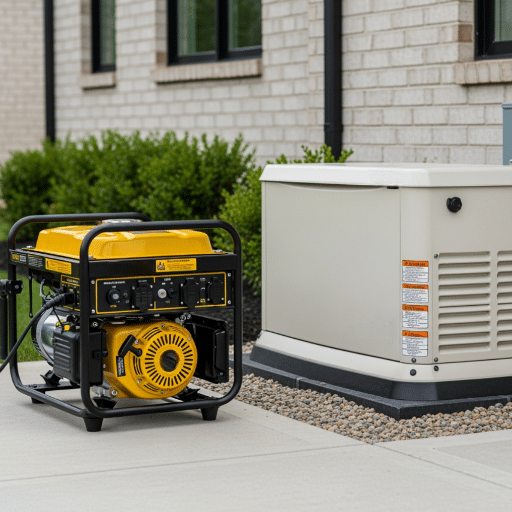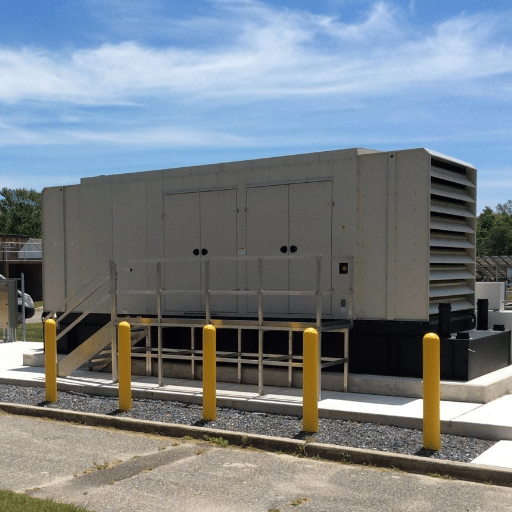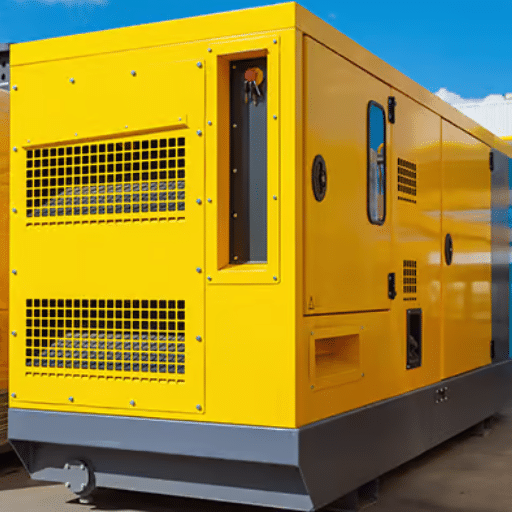

For a steam generator that is being used as intended, failure of the heat removal system typically results in a shutdown over a time frame somewhere in the region of seconds or fractions of a few seconds. This, however, does not account for the fact that the heat transfer portion from the generator can remain poor leading to frequently overheating, which degrades the performance as well as causes the engine to fail prematurely in operations.
With the installation of the 2000kW power plant at the Detailed Data Systems office in Phoenix, Arizona, the engineering team paid commendable attention to use the brand of engine and alternator they had used before. The cooling system was left minimally taken care of, i.e., the standard radiator from the generator manufacturer. The first heat wave of that summer, when the environmental temperature was as high as 118°F (48°C), the above mentioned generators had also surpassed their coolant capacity and the protective controls of the machinery started, downshifting the units when testing under a stage of critical load. It was then realized that the type of engine auxiliary cooling systems on the market were intended for not exceeding 43°C or 110°F ambient temperatures. Using a budget for high temperature cooling costs $85,000 and delayed the project by 6 weeks.
You are aware that for the generator to be dependable, its engine should remain within acceptable operating temperatures regardless of the conditions. This manual provides guidance on engineering documentation for configuration, structuring, and setting up the cooling system for power units of high capacity. You will focus on how to perform the heat transfer calculations, what different systems of cooling are there, how appropriate sizing is done and what the critical installation checks are that guarantee no failures irrespective of the outside ambient weather.
Understanding Generator Cooling Requirements

Why High-Output Generators Need Specialized Cooling
High voltage generators embody the radiant heat they deposit and must be provided with a means aimed at relieving the machine’s temperature to its predefined value. Conversion of diesel engines is inefficient since up to 35%-45% of the energy content is only transformed into useful mechanical energy whilst the remainder is lost through exhaustion, radiation and cooling of engine.
For a 1,000 kW generator operating at full load:
- Fuel input: approximately 2,800 kW equivalent
- Electrical output: 1,000 kW
- Heat rejection to coolant: 1,200-1,400 kW
- Exhaust heat: 600-800 kW
The rating of heat rejection should be 1,200-1,400 kW, which requires a solution that is able to cool down effectively the airstream, or another suitable medium. On the contrary the absence of a suitable cooling unit soon leads to overheating of the coolant, reduced engine life due to wear and tear and in some cases, protective shutdown of the plant due to the lack of cooling functioning.
Heat Load Calculations for Generator Sets
Accurate heat rejection data is essential for proper cooling system sizing. Engine manufacturers provide heat rejection specifications at rated conditions:
Standard Heat Rejection Rates:
| Generator Size | Engine Heat to Coolant (kW) | Total Heat Rejection (kW) |
|---|---|---|
| 500 kW | 550-650 | 900-1,100 |
| 1,000 kW | 1,100-1,300 | 1,800-2,200 |
| 2,000 kW | 2,200-2,600 | 3,600-4,400 |
| 3,000 kW | 3,300-3,900 | 5,400-6,600 |
The parameter quantities above are based on the design assumptions of ambient temperature of 110°F (43°C) and sea level operation. However, the actual requirements will change with engine configuration, fuel and the operating conditions.
Operating Temperature Ranges and Limits
Diesel generator engines operate within specific temperature windows for optimal performance and longevity:
Normal Operating Range:
- Coolant temperature: 180-200°F (82-93°C)
- Oil temperature: 190-220°F (88-104°C)
- Aftercooler temperature: 110-130°F (43-54°C)
Alarm and Shutdown Thresholds:
- High coolant temperature warning: 210-215°F (99-102°C)
- High coolant temperature shutdown: 220-230°F (104-110°C)
- Low coolant temperature alarm: 140-160°F (60-71°C)
These temperatures are important as they ensure optimization of combustion processes, wear rates and proper lubrication of the components of the engine to more acceptable limits.
Environmental Factors Affecting Cooling Design
Ambient conditions significantly impact cooling system performance:
Temperature:
With the ambient temperature above the design level for the radiator, the cooling power will lose up to about 2%. The typical radiator models are designed for that purpose which assumes a maximum of 110°F (43°C). However, the cooling capacity will be seventy percent if you use it in areas with a temperature of 120°F (49°C).
Altitude:
Air density decreases with altitude, reducing heat transfer effectiveness. Standard derate factors:
- 1% per 1,000 feet above 1,000 feet elevation
- 10% derate at 10,000 feet
- 20% derate at 20,000 feet
Humidity:
The use of high moisture content in the air slightly compromises air cooled heat exchanger effectiveness; however, in most of the generator cooling systems, it is generally not a big concern.
Contamination:
Types of Generator Cooling Systems

Air-Cooled Systems (Small to Medium Applications)
Air-cooled generators use ambient air blown directly over engine fins to dissipate heat. These systems are limited to smaller applications:
Typical Capacity Range: 2 kW to 50 kW
Advantages:
- No coolant to freeze, boil over, or leak
- Simpler maintenance requirements
- Lighter weight than liquid-cooled alternatives
- No radiator or coolant system to maintain
Limitations:
- Limited to small capacity generators
- Higher noise levels from cooling airflow
- Reduced efficiency in high ambient temperatures
- Cannot support turbocharged engines effectively
Radiator-cooled generators are widely used in portable settings, dwellings needing backup, and such facilities that are located in the bush in the absence of possibility to overrate capacity.
Liquid-Cooled Systems (Industrial Standard)
The industry average considering generator sets that use gasoline or diesel fuels having power rating in excess of 50 kilowatts, is the use of liquid cooling. A cooling fluid is pressurized from a vessel into the power unit, which is the engine, to lower temperature, and then it goes to the air cooled jacket to release the same temperature to the atmosphere.
System Components:
- Engine coolant passages
- Water pump (engine-driven or electric)
- Radiator or heat exchanger
- Cooling fan (engine-driven or electric)
- Thermostat
- Expansion tank
- Hoses and piping
Coolant Types:
- Ethylene glycol-based antifreeze (standard)
- Propylene glycol (food-grade or environmentally sensitive applications)
- Distilled water (emergency only, freezing risk)
With liquid cooling, it is easier to regulate the temperature, run larger engines, and promote away from the unit the hot air, for example, for higher output applications even more power.
Closed-Loop vs Open-Loop Cooling
Closed-Loop Systems:
The same coolant circulates continuously between engine and heat exchanger. This is the standard for nearly all standby and prime power generators.
Advantages:
- Controlled coolant quality
- Freeze protection with antifreeze
- Corrosion inhibition
- No water consumption
Open-Loop Systems:
Water flows through the engine once and is discharged. Rare in modern generators due to water consumption and discharge regulations.
Applications:
- Marine generators using seawater
- Some continuous-duty industrial installations
- Emergency cooling backup systems
Hybrid and Advanced Cooling Technologies
Split Cooling Systems:
Separate cooling circuits for engine jacket water and aftercooler/intercooler. Allows optimization of each circuit:
- Jacket water: 180-200°F (82-93°C)
- Aftercooler: 110-130°F (43-54°C)
Adiabatic Cooling:
Water mist pre-cooling of intake air before the radiator. Can reduce required radiator size by 20-30% in hot, dry climates.
Variable Speed Fans:
Adjustable fans come in handy as they change their sounds along with the coolant temperature, which leaves a fluctuation of 30-50% in part-load system parasitic efficiency consumption.
Radiator Cooling Systems for Generators

Engine-Mounted Radiator Configurations
Generators up to 1,500 kW are most frequently supplied with cooling modules that are installed on the machine frame via a corresponding foundation, the radiator is being mounted directly on the engine and is driven by its own propulsion by the Permanent Magnet Motor.
Configuration Types:
Pusher Fans:
The fan is situated at the back of the cooler and directs air to the engine. This is a typical phenomenon for a diesel engine generator.
Puller Fans:
The radiator is placed in front of the fan to absorb air across the core. Such radiator placement is applicable as a radiator system is organized in a way that it promotes better air circulation.
Advantages of Engine-Mounted Systems:
- Simple, integrated design
- No external piping required
- Engine-driven fan requires no electrical power
- Compact footprint
Limitations:
- Radiator size constrained by generator footprint
- Fan noise concentrated at generator location
- Limited capacity for very large generators
- Airflow restrictions in enclosed spaces
Remote Radiator Systems
Remote radiator systems separate the heat rejection equipment from the generator set, connecting via piping.
When to Specify Remote Radiators:
- Generator installations in enclosed spaces
- Large capacity generators (1,500 kW+)
- Noise-sensitive applications
- Limited clearance around generator
- Multiple generators sharing one cooling system
System Configuration:
- Engine-mounted heat exchanger or cooling plate
- Coolant pumps (usually redundant)
- Remote radiator (vertical or horizontal)
- Expansion tank and makeup system
- Piping and valves
Pump Requirements:
Remote systems require electric coolant pumps to overcome piping friction losses. Typical requirements:
- Flow rate: 100-150 GPM per 1,000 kW
- Head pressure: 50-150 feet depending on distance and elevation
- Redundancy: Dual pumps with automatic switchover
Cost Impact:
Remote radiator systems add 30,000−30,000−100,000+ to generator installation costs depending on capacity, distance, and configuration.
Vertical vs Horizontal Radiator Design
Vertical Radiators:
- Airflow: Vertical (bottom to top or top to bottom)
- Footprint: Smaller horizontal footprint
- Height: Requires vertical clearance
- Applications: Outdoor installations, rooftop mounting
- Common capacities: 500 kW to 5,000+ kW
Horizontal Radiators:
- Airflow: Horizontal (side discharge)
- Footprint: Larger horizontal footprint
- Height: Lower overall height
- Applications: Indoor installations, space-constrained sites
- Common capacities: 1,000 kW to 10,000+ kW
Selection Criteria:
| Factor | Vertical | Horizontal |
|---|---|---|
| Space constraint | Height available | Floor space available |
| Installation | Outdoor preferred | Indoor suitable |
| Natural convection | Better | Poor |
| Maintenance access | May require platforms | Generally easier |
| Aesthetics | Less visible | More visible |
Radiator Core Materials and Efficiency
Radiator core construction affects heat transfer efficiency, durability, and cost:
Copper-Brass Construction:
- Excellent heat transfer
- Proven durability
- Higher cost
- Heavier weight
- Repairable
Aluminum Construction:
- Good heat transfer
- Lower cost
- Lighter weight
- Susceptible to corrosion in some environments
- Less repairable
Fin Designs:
- Plain fins: Standard efficiency, easier cleaning
- Louvered fins: Higher efficiency, more prone to fouling
- Serrated fins: Maximum efficiency, highest maintenance
Tube Configurations:
- Single-pass: Simple, lower pressure drop
- Multi-pass: Higher heat transfer, higher pressure drop
Fan Types and Control Systems
Engine-Driven Fans:
- Direct mechanical drive from engine
- Speed proportional to engine RPM
- Simple, reliable
- No electrical power required
- Higher noise levels
- Limited speed control
Electric Fans:
- Independent electric motors
- Variable speed control
- Lower noise potential
- Requires electrical power
- More complex control systems
- Better for remote radiator applications
Fan Control Strategies:
- Thermostatic control: Fan engages at set temperature
- Variable speed: Fan speed modulates with temperature
- On-off cycling: Simple temperature-based switching
- EC (Electronically Commutated) motors: Highest efficiency, precise control
Heat Exchanger Cooling Solutions

Shell and Tube Heat Exchangers
Under the hood, shell and tube heat exchangers encase multiple pipes inside a circle-shaped framework. One of the pipes carries liquids, the other lets liquids flow in and out from circulating tube.
Applications:
- Large industrial generators (2,000 kW+)
- Marine generators using seawater cooling
- Installations with existing cooling water systems
- Combined heat and power (CHP) systems
Advantages:
- Handles high pressures and temperatures
- Easy to clean and maintain
- Durable construction
- Can use various cooling media (water, glycol, seawater)
Disadvantages:
- Larger physical size
- Higher cost than plate exchangers
- Lower heat transfer efficiency
Plate Heat Exchangers
They may also consist of several layers of thin plates connected one back to another making it easier for the circulation of the fluid. Such plate heat exchangers are very efficient, yet they take up less space.
Applications:
- Medium to large generators (1,000 kW to 5,000 kW)
- Installations with cooling tower systems
- District cooling connections
- Space-constrained applications
Advantages:
- High heat transfer efficiency
- Compact size
- Lower cost than shell and tube
- Easy to expand capacity by adding plates
Disadvantages:
- Lower pressure ratings
- Gaskets require periodic replacement
- More susceptible to fouling
- Limited temperature ranges
Heat Exchanger vs Radiator: Selection Criteria
| Factor | Radiator | Heat Exchanger |
|---|---|---|
| Initial cost | Lower | Higher |
| Installation complexity | Lower | Higher (requires secondary coolant) |
| Operating cost | Higher (fan power) | Lower (if using existing cooling) |
| Noise | Higher | Lower |
| Space requirements | Larger footprint | Smaller footprint |
| Maintenance | Cleaning | Gasket replacement, cleaning |
| Reliability | Simpler | More components |
Choose Radiators When:
- Standalone installation
- Simplicity is priority
- Maintenance simplicity valued
- Air-cooled heat rejection acceptable
Choose Heat Exchangers When:
- Connecting to existing cooling infrastructure
- Noise reduction is critical
- Space is constrained
- Higher efficiency desired
Cooling Tower Integration
Large generator installations may connect to facility cooling towers rather than dedicated radiators.
System Configuration:
- Generator heat exchanger
- Coolant circulation pumps
- Cooling tower connection
- Water treatment system
- Expansion tank
Advantages:
- Utilizes existing cooling infrastructure
- Lower generator package cost
- Reduced noise at generator location
- Centralized maintenance
Considerations:
- Dependency on cooling tower availability
- Water treatment requirements
- Potential for Legionella growth (requires management)
- Winter operation protection needed
Cooling System Components and Design
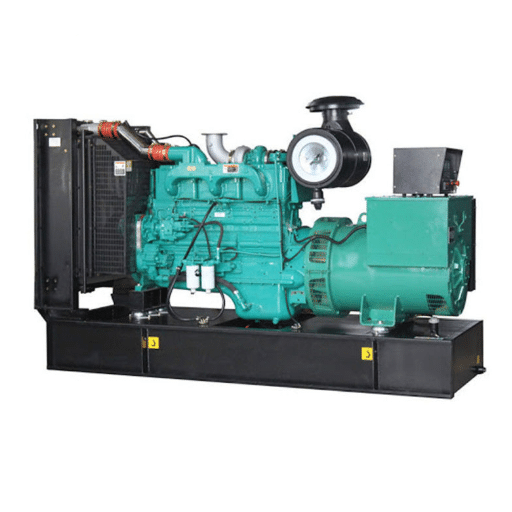
Coolant Pumps and Flow Rates
Adequate coolant flow is essential for effective heat removal and temperature uniformity.
Flow Rate Requirements:
Typical design flow rates are 1.0-1.5 GPM per kW of engine heat rejection. For a generator rejecting 1,200 kW to coolant:
- Minimum flow: 1,200 GPM
- Recommended flow: 1,500-1,800 GPM
Pump Types:
- Centrifugal pumps: Standard for most applications
- Positive displacement pumps: High-pressure applications
- Engine-driven pumps: Standard on engine-mounted radiators
- Electric pumps: Remote radiator and specialized systems
Redundancy:
It has become customary in critical installations to offer bifurcated systems with an automatic power reversal. In the event one of the provided power sources becomes unworkable, the backup carries the weight of the load to ensure sufficient performance prior to the repair.
Thermostats and Temperature Controls
Thermostats regulate coolant flow to maintain optimal engine temperature.
Thermostat Types:
- Wax element thermostats: Standard, reliable, gradual opening
- Electronic thermostats: Precise control, remote monitoring capability
- Modulating thermostats: Variable flow control
Typical Settings:
- Start to open: 180°F (82°C)
- Fully open: 200°F (93°C)
- Temperature band: 10-20°F (5-10°C)
Control Systems:
Modern generator controllers monitor coolant temperature and can:
- Log temperature data
- Generate alarms at setpoints
- Initiate protective shutdowns
- Adjust fan speed (if equipped)
Expansion Tanks and Pressure Management
Expansion tanks accommodate coolant volume changes and maintain system pressure.
Functions:
- Accepts coolant expansion when heated
- Maintains positive pressure on pump suction
- Provides makeup capacity for minor leaks
- Allows air separation from coolant
Sizing:
Expansion tank volume should be 10-15% of total system coolant volume. For a system containing 200 gallons:
- Minimum expansion tank: 20-30 gallons
Pressure Caps:
To minimize cavitation in pumps, coolant pressure is regulated with the help of the radiator caps set at 7 to 15 psi. Pressure created within the system causes the boiling point of the coolant mixture to be elevated, hence resisting the formation of cavitation in the pumps.
Coolant Types and Specifications
Ethylene Glycol (Standard):
- Concentration: 50/50 with water (standard)
- Freeze protection: -34°F (-37°C) at 50/50 mix
- Boil protection: 265°F (129°C) at 15 psi
- Service life: 2,000-6,000 hours or 2-5 years
Propylene Glycol:
- Less toxic than ethylene glycol
- Food-grade applications
- Slightly lower heat transfer
- Higher cost
Supplemental Coolant Additives (SCAs):
- Corrosion inhibitors
- Cavitation protection
- pH buffers
- Scale inhibitors
Maintenance:
Coolant should be tested annually for:
- Freeze point
- pH level
- SCA concentration
- Contamination
Sizing Generator Cooling Systems

Heat Rejection Calculations
Accurate heat rejection data is the foundation of cooling system design.
Sources of Heat Rejection Data:
- Engine manufacturer technical data sheets
- Generator set specification sheets
- Heat balance diagrams
- Factory test reports
Key Values Needed:
- Engine jacket water heat rejection (kW or BTU/hr)
- Aftercooler heat rejection (if separate circuit)
- Exhaust heat (for heat recovery calculations)
- Oil cooler heat rejection (if separate)
Calculation Example:
For a 1,500 kW generator:
- Engine jacket water: 1,650 kW
- Aftercooler: 320 kW
- Total heat rejection: 1,970 kW
Convert to BTU/hr for radiator sizing (1 kW = 3,412 BTU/hr):
1,970 kW × 3,412 = 6,721,640 BTU/hr
Radiator Sizing Methodology
Radiator manufacturers size equipment based on:
- Heat rejection (BTU/hr or kW)
- Coolant inlet temperature
- Coolant flow rate
- Ambient air temperature
- Altitude
Temperature Approach:
The third and the last dimension must be considered which is the temperature of the external air which enters the cooling system, making it increase by tens of degrees that means the norm (standard) in that case, will be the rise by 15-25°F (8-14°C) at any rate.
Example Calculation:
- Coolant inlet: 200°F (93°C)
- Coolant outlet target: 190°F (88°C)
- Ambient design: 110°F (43°C)
- Approach: 190°F – 110°F = 80°F (44°C)
Safety Margins:
Always include 10-15% safety margin for:
- Radiator fouling over time
- Higher than expected heat rejection
- Extreme ambient conditions
- Future capacity additions
Ambient Temperature Considerations
Design ambient temperature significantly impacts radiator size and cost.
Standard Ratings:
Most of the air aeration bottle producers have functional radiators thought out for a climate with up to 110°F (43°C). Where higher temperatures might make it necessary to bolster the enhancement, ask the provider to increase the rating/copyleft level.
High-Temperature Radiators:
- Rated for 120°F (49°C) ambient
- 15-25% larger core area
- 20-30% cost premium
- Essential for desert climates
Temperature Derate Formula:
If ambient exceeds design:
Required capacity = Base capacity × [1 + (Actual ambient – Design ambient) × 0.02]
Example: 120°F ambient, 110°F design:
1,000 kW × [1 + (120-110) × 0.02] = 1,200 kW equivalent
Altitude Derating Factors
Air density decreases with altitude, reducing radiator effectiveness.
Standard Derate: 1-2% per 1,000 feet above 1,000 feet elevation
Example Derates:
| Altitude | Derate Factor | Effective Capacity |
|---|---|---|
| Sea level | 1.00 | 100% |
| 5,000 ft | 1.08 | 92% |
| 10,000 ft | 1.18 | 85% |
| 15,000 ft | 1.28 | 78% |
For a 2,000 kW generator at 10,000 feet:
Required radiator capacity = 2,000 kW × 1.18 = 2,360 kW equivalent
Installation and Configuration

Clearance Requirements and Airflow
Usage of a radiator also demands proper air flow since only thus will the radiator perform in the desired way. If restrictions are present, the flow will be even less than the optimum which may as well reduce the cooling capacity.
Minimum Clearance Guidelines:
| Direction | Minimum Clearance | Preferred Clearance |
|---|---|---|
| Air inlet (radiator face) | 1.5× radiator height | 2.0× radiator height |
| Air discharge | 1.0× radiator height | 1.5× radiator height |
| Sides | 3 feet (1 m) | 5 feet (1.5 m) |
| Top | 3 feet (1 m) | 5 feet (1.5 m) |
Airflow Management:
- Avoid obstructions in air path
- Prevent discharge air recirculation to inlet
- Consider prevailing wind direction for outdoor installations
- Provide louvers or dampers for winter operation
Ductwork and Ventilation Design
Indoor installations require engineered ventilation systems.
Natural Ventilation:
- Louvers sized for airflow
- High/low vent configuration
- Minimum 1.5× radiator face area for inlet and outlet
Forced Ventilation:
- Supplemental exhaust fans
- Required when natural airflow is insufficient
- Fan capacity should exceed radiator fan by 20%
Ductwork Design:
- Smooth transitions to minimize pressure drop
- Avoid sharp bends near radiator
- Insulate hot ductwork to prevent heat gain
- Provide access for maintenance
Remote Radiator Installation Guidelines
Remote radiator installations require careful engineering.
Piping Considerations:
- Minimize fittings and elbows
- Size pipes for 2-5 feet per second velocity
- Provide isolation valves
- Include drain and vent connections
- Consider thermal expansion
Elevation Effects:
- Static head affects pump requirements
- 1 psi = 2.31 feet of water column
- High points require venting
- Low points require drainage
Pump Installation:
- Locate on suction side of engine
- Provide strainers upstream
- Install vibration isolation
- Specify redundant pumps for critical applications
Noise Control in Cooling Systems
Cooling system noise includes fan aerodynamic noise, mechanical vibration, and air movement.
Noise Sources:
- Fan blade tip speed (primary factor)
- Air turbulence through radiator core
- Mechanical vibration from engine
- Cavitation in pumps
Control Measures:
- Variable speed fans (reduce speed when possible)
- Acoustic enclosures for generators
- Inlet and discharge silencers
- Vibration isolation mounts
- Locate remote radiators away from noise-sensitive areas
Typical Noise Levels:
- Engine-mounted radiator at 50 feet: 85-95 dBA
- Remote radiator at 50 feet: 75-85 dBA
- With acoustic treatment: 65-75 dBA
High-Output Applications (500kW+)
Data Center Generator Cooling
Backup generators in data centers have extremely high requirements on reliability and are also frequently used in extremely hot conditions.
Requirements:
- Redundant cooling systems
- High-temperature radiators (often 120°F+ ambient)
- Remote radiators to reduce indoor heat load
- Integration with facility cooling management
Design Considerations:
- N+1 redundancy for cooling pumps
- Automatic switchover controls
- Temperature monitoring and alarming
- Integration with building management systems
Industrial Plant Backup Power Cooling
Manufacturing facilities often have space constraints and harsh operating environments.
Challenges:
- Limited installation space
- Contaminated air (dust, chemicals)
- High ambient temperatures near industrial processes
- Vibration from nearby equipment
Solutions:
- Remote radiators located in cleaner areas
- Air filtration systems
- Daily radiator cleaning protocols
- Robust mounting and isolation
Marine and Offshore Generator Cooling
Marine applications use seawater cooling, creating unique design requirements.
Seawater Cooling Systems:
- Heat exchangers with seawater on one side
- Sacrificial zinc anodes for corrosion protection
- Strainers to prevent debris ingestion
- Materials resistant to saltwater corrosion
Considerations:
- Biofouling management
- Corrosion protection
- Emergency fresh water backup
- Regulatory compliance (IMO, classification societies)
Extreme Climate Cooling Solutions
Desert Applications:
- High-temperature radiators (120-130°F ambient)
- Adiabatic pre-cooling systems
- Heavy-duty air filtration
- Daily maintenance protocols
Arctic Applications:
- Block heaters for cold starting
- Thermostatically controlled louvers
- Insulated enclosures
- Glycol concentration for extreme cold
Tropical Applications:
- Corrosion-resistant materials
- High humidity protection
- Enhanced air filtration
- Mold and mildew prevention
Cooling System Maintenance

Routine Inspection Schedule
Daily Inspections:
- Visual check for leaks
- Coolant level verification
- Fan operation check
- Temperature monitoring
Weekly Inspections:
- Radiator core inspection for debris
- Belt tension check (engine-driven fans)
- Hose and connection inspection
Monthly Inspections:
- Coolant sample analysis
- Pressure cap testing
- Fan blade inspection
- Vibration check
Annual Inspections:
- Complete coolant replacement
- Radiator core cleaning
- Thermostat testing
- Pump performance verification
Coolant Testing and Replacement
Testing Parameters:
- Freeze protection level
- pH level (should be 8.5-10.5)
- SCA concentration
- Contamination (oil, fuel, debris)
Replacement Intervals:
- Standard coolant: 2 years or 2,000 hours
- Extended life coolant: 5 years or 6,000 hours
- Contaminated coolant: Immediate replacement
Disposal:
- Coolant is hazardous waste
- Follow local regulations for disposal
- Consider recycling services
Cost Analysis and ROI
Initial Equipment Costs
Radiator Costs (Engine-Mounted):
| Generator Size | Standard Radiator | High-Temp Radiator |
|---|---|---|
| 500 kW | 8,000−8,000−12,000 | 12,000−12,000−18,000 |
| 1,000 kW | 15,000−15,000−25,000 | 25,000−25,000−35,000 |
| 2,000 kW | 35,000−35,000−55,000 | 55,000−55,000−75,000 |
Remote Radiator Systems:
| Generator Size | Basic Remote System | Redundant Pump System |
|---|---|---|
| 1,000 kW | 45,000−45,000−65,000 | 65,000−65,000−85,000 |
| 2,000 kW | 85,000−85,000−120,000 | 120,000−120,000−160,000 |
Heat Exchanger Systems:
- Plate exchanger: 15,000−15,000−40,000
- Shell and tube: 25,000−25,000−60,000
- Does not include cooling tower or secondary cooling
Installation Cost Factors
Engine-Mounted Radiator Installation:
- Minimal additional cost
- Included in standard generator installation
- Ductwork if indoor: 5,000−5,000−20,000
Remote Radiator Installation:
- Piping: 50−50−150 per foot (depends on size)
- Pumps and controls: 15,000−15,000−40,000
- Electrical: 10,000−10,000−25,000
- Concrete pads: 5,000−5,000−15,000
Heat Exchanger Installation:
- Similar to remote radiator
- Plus cooling tower connection: varies widely
Total Cost of Ownership
10-Year TCO Example (2,000 kW Generator):
| Component | Engine-Mounted | Remote Radiator |
|---|---|---|
| Initial equipment | $45,000 | $100,000 |
| Installation | $10,000 | $50,000 |
| Operating (10 years) | $25,000 | $15,000 |
| Maintenance (10 years) | $15,000 | $20,000 |
| Total | $95,000 | $185,000 |
While remote radiators cost more initially, they offer:
- Lower noise at generator location
- Reduced indoor heat load
- Better accessibility for maintenance
- Flexibility in generator placement
Selecting the Right Cooling System
Decision Matrix: Radiator vs Heat Exchanger
| Criteria | Weight | Radiator Score | Heat Exchanger Score |
|---|---|---|---|
| Initial cost | 20% | 5 | 3 |
| Operating cost | 15% | 3 | 4 |
| Noise control | 15% | 2 | 5 |
| Space requirements | 15% | 3 | 4 |
| Maintenance ease | 15% | 4 | 3 |
| Reliability | 15% | 5 | 4 |
| Scalability | 5% | 3 | 4 |
| Weighted Score | 3.85 | 3.85 |
Conclusion
In the design and configuration of power generation solutions, the proper choice of cooling practices is equally important as determining the specifications and characteristics of the prime mover. For example, an expansive or an incorrect design of the cooling system could subject an engine to constant overheating incidences, protective shutdowns leading to premature wear and tear of the engine walls.
Key considerations for your cooling system selection:
Understand Your Heat Rejection Requirements: Accurate heat transfer information from the generator provider is a necessary part of the design of the cooling system. Include with engineering withdrawn fouling factors and extra allowance wattages in case of extreme weather and unused capacity.
Consider Total System Integration: The type of cooling system stars affects the design of generator room, ventilation requirements, noise, and ease of maintenance. Think of these things beforehand rather than just harping on the fact during the last minute.
Plan for Your Environment: Standard cooling systems operate safely with up to 110°F ambient temperature values. Where the operating temperature is above this limit, for instance because of high altitude, or the surrounding air is polluted, ascertain that specific equipment is quoted instead of the generic one.
Evaluate Life Cycle Costs: Remote radiators and heat exchangers generally have lower running costs, less noise and more flexibility; however, they may cost more than engine-mounted radiators upfront. You will need a comparison of total ownership cost for ten years to establish this.