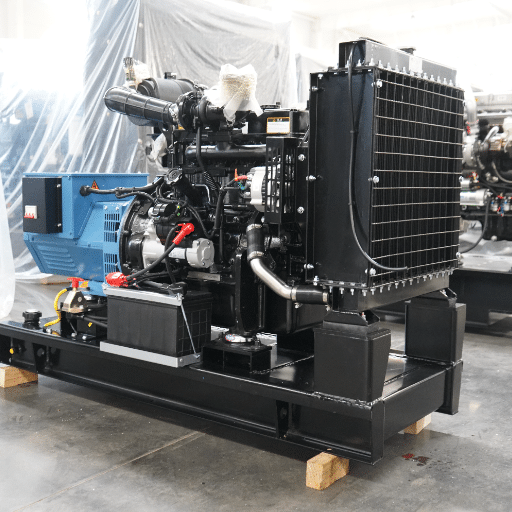


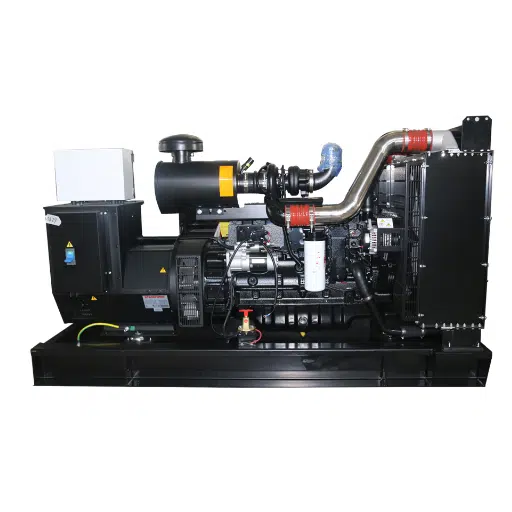
Necessary upkeep of natural gas generators includes professional service annually, owner inspection on a monthly basis, and weekly exercising. Most of these units need oil and filter replacement at every 100-200 hours of operation, spark plug replacement after 500-1,000 hours of operation, and load bank testing at least once a year. The annual cost ranges from a mere $200 up to $600 for residential emergency gens while it starts at $1,000 reaching $3,000 and beyond for commercial and industrial systems.
A single spark plug can cost you $50,000 in downtime. This is no marketing humdrum. That is the actual sight when a natural gas generator fails to start during a power shutdown as a consequence of neglect in its ignition system.
That was Carlos Mendez correct. He learned it the hard way. His 200 kW natural gas generator was idle after it was set up for eight months. That’s because he fell behind on replacing spark plugs after the 500-hour firing because the generator had run only 300 hours. Little did he think of the corrosion that builds up on the spark plug during the long standby period. In July, the grid went down whereby he switched on the generator and the generator only cranked but could not start. Eight hours of productive time on the production line were lost. The 40 sets of spark plugs cost him a whopping $28,000 in lost output, emergency technicians’ fees, and spoiled inventory.
This guide is your holistic solution to the maintenance plan, cost breakdown, and task checklist in the life of natural-gas power installation. With a programmed routine, the operation fits all-you have whether a residential standby unit or up to 1000 kW in an industrial application-and it also ensures that the generator starts up just at the right time.
Key Takeaways
- Service your natural gas generator annually at minimum, or every 100-200 run hours, whichever comes first
- Spark plugs are the number one natural gas specific maintenance item; replace every 500-1,000 hours
- Annual costs range from 200−200−600 (residential) to 1,000−1,000−3,000+ (commercial/industrial)
- Battery failure causes roughly 80% of generator start failures; test annually
- Load bank testing confirms your generator can handle full rated load under real conditions
- Keep a maintenance log for warranty coverage and NFPA 110 compliance
For in-depth technical details regarding natural gas generator specifications, (please refer to our natural gas generator guide.)
Why Natural Gas Generator Maintenance Matters

Standby power systems remain unused 99% of the time. They are intended to work seamlessly during the 1% of the time when the grid fails; this is the sole reason for making such an investment.
Natural gas engines jettison cleaner-burning diesel, leaving this by-product aside-clean fuel; with their advanced combustion systems, it also reduces carbon buildup and fuel degradation issues. Nevertheless, because of their spark ignition system as opposed to compression of diesel, natural gas engines create exclusive maintenance needs, the conditions of spark plugs, ignition coils, fuel pressure regulators, and gas line integrity, among others, which diesel engines do not need to have.
When properly maintained, natural gas generators deliver performance reliably for between 10,000 and 30,000 hours and may live as long as 25 to 30 years. Units that are not maintained, neglected, uniformly break down, usually at inopportune moments. The cost of faulty maintenance is always higher than the cost of regular maintenance. A failed start during a critical outage could mean spoiled product, data loss, or life safety risks in hospitals and nursing homes.
Natural Gas Generator Maintenance Schedule
The most effective approach is a tiered schedule. Tasks cluster by frequency: daily or weekly checks you can perform yourself, monthly inspections, quarterly or bi-annual deeper checks, and annual professional service.
Weekly Checks (Owner/Operator Level)
These tasks take less than ten minutes and prevent most preventable failures.
Visual inspection: Walk around the unit. Look for oil or coolant leaks, debris accumulation, rodent activity, or damaged wiring. Ensure three to five feet of clearance around intake and exhaust vents.
Auto-mode verification: Confirm the unit is set to “Auto” and the control panel shows no active alarms or error codes.
Battery check: Verify the trickle charger maintains a float charge. Inspect terminals for corrosion.
Fuel line inspection: Check natural gas hoses and lines for damage, cracks, or leaks. If you smell gas, shut off the supply and call a professional immediately.
Exercise cycle: Let the generator run for 15 to 30 minutes under load, not just idling. This circulates oil, drives off moisture, and prevents cylinder glazing.
Monthly Checks
These tasks require slightly more attention but still fall within owner-level capability.
- Check engine oil level with the dipstick
- Verify coolant level (only when the engine is cold)
- Inspect battery terminals for corrosion; clean if necessary
- Check the control panel for stored alarms or warnings
- Inspect air filter housing for debris or blockage
- Verify the enclosure ventilation is unobstructed
Quarterly / Bi-Annual Checks
Every three to six months, inspect components that wear gradually.
- Inspect drive belts for wear, cracking, or slack
- Check coolant hoses and connections for leaks or swelling
- Examine the exhaust system for leaks, corrosion, or damage
- Clean or replace the air filter (foam filters can be washed; paper filters must be replaced)
- Check electrical connections, including battery cables and AC wiring
- Verify the coolant heater operates correctly in cold climates
Annual Professional Service
This is the most critical interval. A qualified technician should perform these tasks every year, or every 100 to 200 run hours, whichever comes first.
| Task | Details |
|---|---|
| Oil and oil filter change | Fresh oil is critical for cooling and lubrication in natural gas engines |
| Air filter replacement | Prevents contamination and ensures proper fuel-air mixture |
| Fuel filter replacement | Protects regulators and injectors from debris |
| Spark plug replacement | Critical for NG spark-ignited engines; intervals vary by model |
| Ignition coil and wire inspection | Corrosion here causes misfires and hard starts |
| Coolant flush and replacement | NG engines run hotter than diesel; coolant quality is vital |
| Battery load test | Roughly 80% of start failures are battery-related |
| Fuel pressure and gas line inspection | Verify regulator function and line integrity |
| Transfer switch function test | Ensures seamless power transfer during outages |
| Control panel diagnostics | Check software, sensors, and safety shutdowns |
| Load bank test | Confirms the generator handles rated kW under real conditions |
| Valve clearance check | Per manufacturer specs; prevents performance loss |
Manufacturer-specific service intervals:
| Manufacturer | Oil/Service Interval |
|---|---|
| Kohler | Annual or every 100 hours |
| Cummins | Annual or every 150 hours |
| Generac | Annual or every 200 hours |
| Briggs & Stratton | Annual or every 200 hours |
Multi-Year Intervals
Every two to three years, plan for deeper maintenance.
- Replace rubber natural gas hoses and inspect hard fuel lines for corrosion
- Perform a full coolant system flush and pressure test (if not done annually)
- Conduct a comprehensive system inspection including alternator performance and vibration analysis
- Update control panel firmware if manufacturer releases improvements
Commercial Generator Maintenance Checklist

For facilities managers and maintenance teams, here is a condensed commercial generator maintenance checklist you can print or share with your service contractor.
Weekly Tasks:
- Verify generator is in Auto mode and no alarms are active
- Walk around the unit for visual inspection (leaks, debris, damage)
- Inspect battery terminals and verify float charge
- Examine natural gas lines and connections for leaks or cracks
- Run 15-30 minute exercise cycle under load
Monthly Tasks:
- Check engine oil level with dipstick
- Verify coolant level (cold engine only)
- Clean battery terminals if corrosion is present
- Review control panel for stored alarms or warnings
- Inspect air filter housing and enclosure ventilation
Annual Professional Service:
- Change oil and oil filter (100-200 hours or annually)
- Replace air filter and fuel filter
- Replace spark plugs (500-1,000 hours)
- Test ignition coils and wires
- Flush and replace coolant
- Perform battery load test
- Verify fuel pressure and regulator function
- Test transfer switch operation
- Conduct load bank test at 30%+ rated load for 30 minutes
- Check valve clearance per manufacturer spec
- Record all service in maintenance log with date and run hours
Keep this checklist at the generator site and in your facility management system. Documented service history protects warranty coverage and simplifies NFPA 110 compliance audits.
Natural Gas vs Diesel Generator Maintenance

Natural gas and diesel generators serve the same purpose, but their maintenance profiles differ significantly. Understanding these differences helps you plan accurately and avoid treating a gas unit like a diesel unit.
Key Differences
| Feature | Natural Gas | Diesel |
|---|---|---|
| Fuel system | Inspect gas lines for leaks; fuel does not degrade | Treat fuel to prevent algae and sludge; replace filters more often |
| Oil changes | Every 100-200 hours or annually | Often more frequent depending on soot load |
| Carbon buildup | Cleaner burning; less carbon | More carbon buildup; requires more frequent cleaning |
| Ignition system | Spark plugs and coils need regular replacement | Compression ignition; no spark plugs |
| Runtime life | 10,000-30,000+ hours before major overhaul | Comparable, but often requires more fuel-side maintenance |
| Cold weather | Requires correct oil viscosity and battery warmers | May need fuel additives and block heaters |
Natural gas engines do not suffer from wet stacking in the same way diesel units do, because they burn cleaner. However, they still need periodic full-load operation to validate cooling system capacity and alternator performance.
Cost Comparison Over Lifespan
Caterpillar offers a wide range of all-in maintenance costs around approximately 0.7 to 1.3 cents per kWh for operating natural gas generator sets of options. Diesel units can sometimes be comparable at peak loads, but with gas-turbine fuel suffering degradation, escalating maintenance costs owing to routine additive application and a higher frequency of filter changes, diesel runtime applications cost higher.
A 500 kW natural gas generator might now run for 500 hours per year, incurring 0.9 cents per kWh, with the rest of its costs. It would cost only approximately $2,250 annually according to maintenance expenditures. The total scheduled maintenance cost over 25 years would be almost $56,000. The same generator, but now totally forgotten, could cost anywhere between $15,000 and more on any one unplanned maintenance job or operational loser event.
For a deeper comparison of fuel types and operating costs, see our diesel vs gas generator comparison.
Critical Maintenance Tasks for Natural Gas Generators
Some maintenance tasks are universal. Others are specific to natural gas engines because of their spark ignition design and fuel delivery system.
Ignition System (Spark Plugs and Coils)
Spark Plug is the most important service part for every mobile direct natural gas engines. Natural gas engines are more or less spark ignition; they are dependent on that in more ways than diesel-powered compression ignition motors. This phenomenon is what makes an engine this way. If a plug gets very dirty or corrode or one of the others goes wrong, the engine will emit a confused cries that can be heard up the hilly engine or will not start up.
Please replace the spark plug for every 500 hours to 1,000 hours according to the type of engine and the environment cooling system. This is a regulation for dry installations; when one is continually going back to a humid area or experiencing a lot of time lying idle, this is likely to be more often. Moreover, when a unit totally fills up the brakes, it corrodes under such conditions.
The ignition coil and wires degrade with use. During an annual service, a technician should check the coil output and watch that the insulation wire does not wear off.
Fuel System and Gas Quality
Natural gas is clean-burning, but fuel quality varies. Moisture content, contaminants, and pressure fluctuations all affect combustion and component life.
Inspect gas pressure regulators annually. Verify fuel lines for leaks, deformation, or corrosion. In applications with wet gas or high moisture content, consider fuel conditioning equipment. One of our mining customers in Bolivia discovered that wet gas was fouling spark plugs every 300 hours. After installing fuel conditioning, intervals extended to 900 hours. That single change cut their annual ignition maintenance by 60%.
Also confirm that the gas utility delivers adequate flow and pressure during peak demand. A pressure drop during generator startup can cause rough running or failure to reach rated output.
Cooling System
Natural gas engines often run hotter than comparable diesel engines. This makes coolant concentration and quality especially important.
Check coolant levels monthly, but only when the engine is cold. During annual service, test coolant pH and supplemental coolant additive (SCA) levels. Flush and replace coolant every two to three years, or more frequently in high-temperature environments.
Inspect belts, hoses, thermostats, and the jacket water heater. A failed hose during a summer outage can destroy an engine in minutes.
Battery and Starting System
Battery failure is the number one cause of generator start failures across all fuel types. Batteries degrade even when the generator is not running. Heat, vibration, and age reduce capacity.
Test battery voltage and specific gravity quarterly. Replace batteries every two to three years as preventive maintenance, not after they fail. Verify the battery charger maintains proper float voltage. Clean terminals and apply anti-corrosion compound annually.
Load Bank Testing
Load bank testing applies a full electrical load to the generator to verify it can produce its rated kW output. This test also helps burn off carbon deposits and validates the cooling system under real conditions.
For natural gas generators, annual load bank testing is recommended for all standby applications. For life-safety systems, NFPA 110 may require it. Test at least 30% of rated load for 30 minutes, or follow your manufacturer specification.
Natural Gas Generator Maintenance Costs

Maintenance costs vary by generator size, application, and whether you use a pay-per-visit model or a comprehensive service contract.
Residential Standby (10-24 kW)
For typical home standby units, expect to pay 200to200to600 per year for a single professional service visit. This includes oil and filter changes, spark plug inspection, battery test, and general inspection. Most homeowners spend around 273annually,withmostfallingbetween273annually,withmostfallingbetween171 and $395.
Some manufacturers offer service contracts that include two visits per year and priority emergency dispatch. These typically cost 400to400to800 annually.
Commercial and Industrial (100+ kW)
Commercial and industrial natural gas generator maintenance costs scale with kW rating and run hours. A common estimating formula is approximately 500infixedcostsplus500infixedcostsplus1.00 per kW annually.
| kW Rating | Estimated Annual Maintenance Cost |
|---|---|
| 100 kW | 600−600−900 |
| 250 kW | 800−800−1,500 |
| 500 kW | 1,000−1,000−2,000 |
| 1,000 kW | 1,500−1,500−3,000+ |
These figures include oil analysis, load bank testing, detailed reporting, and priority dispatch contracts. High-run-hour applications (prime power or peaking) will cost more due to increased consumables.
Factors That Affect Cost
Several variables shift maintenance costs up or down.
Generator size: Larger units require more oil, larger filters, and more labor.
Usage pattern: Standby units cost less than prime power units. A generator running 2,000 hours per year needs four to five times the maintenance of a standby unit.
Contract Type: Bundled annuals used to be inexpensive for daily visits compared to per-call fees.
Environmental Conditions: High altitudes, extreme heats, a dusty environment, or corrosive atmospheres accelerate wear.
Fuel Quality: Wet or Contaminated gas shortens the life of spark plugs and increases ignition system costs.
Sarah Chen, a data center operations manager in Singapore, switched from calendar-based maintenance to condition-based maintenance using oil analysis and remote monitoring. Over two years, she extended oil change intervals by 40% while catching a bearing wear issue early. Total savings: $18,000 in unnecessary services and one prevented catastrophic failure. Her case shows that smarter maintenance beats more frequent maintenance.
For a complete picture of what a natural gas generator costs to own, see our guide to commercial natural gas generator cost.
Common Natural Gas Generator Maintenance Mistakes

Even experienced operators make these errors. Avoid them, and you will save money and frustration.
- Skipping exercise cycles. A generator that never runs develops moisture in the crankcase, corrodes spark plugs, and degrades the battery. Weekly exercise is essential.
- Using the wrong oil viscosity. Natural gas engines need oil formulated for their combustion characteristics. Using standard diesel oil or automotive oil can cause deposits and premature wear.
- Ignoring spark plug intervals. This is the number one natural gas specific mistake. Spark plugs foul from combustion byproducts and atmospheric corrosion during standby.
- Neglecting the battery until failure. Batteries degrade predictably. Test and replace on schedule, not after a failed start.
- Missing fuel pressure changes. A drop in gas utility pressure affects starting and running performance. Monitor pressure at the generator inlet.
- Failing to keep maintenance logs. Warranty claims and code compliance audits require documented service history. Log every inspection, oil change, part replacement, and load test.
- Sizing based on average load instead of peak demand. Your generator must handle the worst-case scenario, not a typical operating day. For guidance on proper sizing, read our article on how to size a natural gas generator.
When to DIY vs When to Call a Technician
Some maintenance tasks are appropriate for facility staff. Others require specialized tools, training, and safety procedures.
Owner-level tasks: Visual inspection, exercise cycles, oil level checks, coolant level checks, battery terminal cleaning, air filter inspection, and control panel alarm review.
Technician-required tasks: Spark plug replacement, valve clearance adjustment, load bank testing, coolant flushing, fuel pressure regulator service, control system software update, alternator performance test, and vibration analysis.
If your facility has NFPA 110 Level 1 life-safety requirements, many maintenance tasks must be performed by a qualified technician with documented credentials.
What to prepare for a service visit:
- Maintenance log showing prior service dates and run hours
- List of any alarms or abnormal operating conditions
- Manufacturer model and serial number
- Description of the application (standby, prime, or peaking)
- Site elevation and typical ambient temperature range
Documentation, Compliance, and Warranty
Proper documentation is not just good practice. It is required for warranty coverage and code compliance.
Maintenance diary: Document every examination, oil change, filter substitution, spark plug change, load test or maintenance. Some information that should be recorded: the date of service, running hours at the time of service, technician name, and description of parts used. For some manufacturers, it is necessary to provide proof of regular servicing when making a warranty claim.
NFPA 110 compliance: The authoritative minimum scenarios are for having tests of emergency power systems every one-month loaded run and an over-all servicing accompanied by load bank tests once in a year for the facilities operating under category Level 1 (life safety) or Level 2 (critical operations). Insurance denial and life safety and code enforcement violations result from failure to document compliance.
Manufacturer’s warranty requirement: Different manufacturers will set different maintenance schedules. While Kohler asks for service after 100 hours/runs annually; Cummins specifies after 150 hours or runs. Generac and Briggs & Stratton require service after 200 hours or runs. The use of unapproved parts and alternatives that lead to periods of skips can void warranties.
Keep your maintenance log in a known location, ideally both physically at the generator site and digitally in your facility management system. If you sell the property or transfer the generator, the maintenance history adds value and proves reliability.
Frequently Asked Questions
How often should you service a natural gas generator?
You should service a natural gas generator annually or every 100 to 200 hours of engine operation, whichever comes first. Residential units are normally serviced after 200 hours of operation, while commercial and industrial units may need it after 100 to 150 hours of operation. Despite the lower operation times, standby generators rarely in use require annual inspection to prevent or mitigate battery damage, spark plug corrosion, and coolant contamination.
What is the average natural gas generator maintenance cost?
Residential natural gas generator maintenance costs 200to200to600 per year. Commercial and industrial units range from 1,000to1,000to3,000+ annually depending on kW rating, run hours, and contract type. A common estimating formula is approximately 500infixedcostsplus500infixedcostsplus1.00 per kW annually.
What are the most common natural gas generator maintenance tasks?
The most common tasks are oil and filter changes, the installation of spark plugs, tests for batteries, check for and replace the air filter, check for the coolant, and carry out maintenance load bank tests. Also, the spark plugs are the key maintenance item that is of natural gas-specific interest because NG engines use the spark ignition as opposed to compression ignition.
Is natural gas generator maintenance cheaper than diesel?
Yes, maintenance of the natural gas generator is usually cheap compared to that of diesel due to the engine’s life. Natural gas engines burn cleaner, result in less carbon buildup, and do away with any removal of degenerated fuel. However, spark plug and ignition system maintenance are unique processes for natural gas units so they need to be represented on the maintenance schedule.
What happens if you skip generator maintenance?
Skipping maintenance leads to battery failure, spark plug corrosion, coolant leaks, and fuel system problems. Roughly 80% of generator start failures are caused by battery issues that preventive maintenance would catch. A single failed start during an outage can cost more than years of routine service.
Can I maintain my natural gas generator myself?
Owners may conduct visual inspections, run the batteries, check the oil level, and clean the battery terminals. Spark plugs, Load bank tests, Coolant flushing, and Fuel regulator services must be performed by a qualified technician. Operating facilities that have NFPA 110 Level 1 life safety requirements should have most operations performed by recordable, credentialed technicians.
Conclusion
The maintenance schedule is such that experts recommend a well-kept natural gas generator should be able to start, run smoothly, and ensure 25 to 30 years of life. Whereas a neglected generator that fails at crucial times ends up costing many times more than preventative services would have.
Do not miss the tiered schedule: weekly visual checks, monthly fluid and battery checks, quarterly component evaluations, and annual professional service. Get the spark plugs swapped as per schedule. Test the battery before it fails. Do a load bank testing to verify real-world capacity. Maintain detailed logs for warranties and regulatory adherence.
The gas generators eliminate the emission problems faced by other diesel sets. Some major parts especially spark ignition systems and fuel delivery components need a special approach; if they are treated with care, the user may derive an appreciable performance from them for decades.
For a deeper technical breakdown of commercial and industrial natural gas generator installation standards and process protocols, see our natural gas generator installation guide.
Ready to build a maintenance program for your natural gas generator? Our engineering team can develop a schedule matched to your kW rating, application, and operating environment. Contact us for maintenance support and get a tailored service plan.