


Last updated:
A generator for mining operations should match the mine’s load, duty, site conditions and fuel supply. Diesel is a candidate where delivery and storage are practical. Gas deserves review where its supply, quality and pressure can support the project. Neither fuel wins simply because the mine is remote.
A running-load total cannot prove that a plant will restart after a trip. Nor does a low fuel price prove a low delivered energy cost. Which whole system can serve the mine? Check normal output, motor starts, service stops and fuel outages.
This guide connects those decisions to the evidence you should request before comparing quotes. It covers remote-site selection rather than detailed power-system design. For company background, read about Shandong Huali.
Keep three outputs in view: a load and duty schedule, a sound fuel plan, and a sizing report for the offered model. Use them to check a generator for mining operations before ranking bids by nameplate kVA.
Match a generator for mining operations to the load and duty
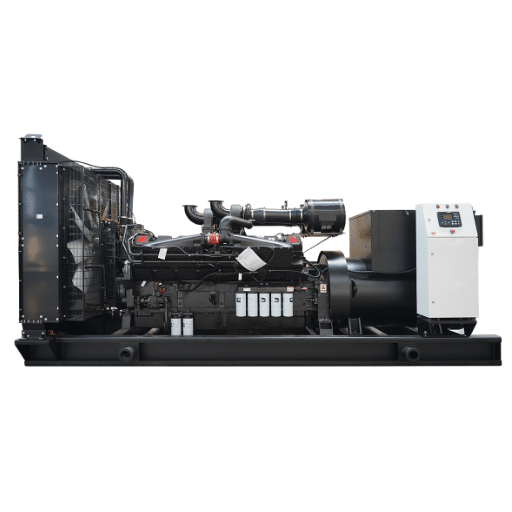
Separate production loads from loads that must stay on
Which circuits must remain powered when production stops? List crushers, mills and conveyors separately from pumps, ventilation, water treatment, communications and camp services. Ask the mine power team to mark which loads must continue, which can wait, and which need a controlled restart.
For each circuit, record measured running kW and kVA. Add power factor, running hours and the start method.
Note what runs at the same time. List drives and other loads with tight power quality limits. Mark each estimate so the supplier can flag what still needs checking.
The load schedule for a generator for mining operations should describe normal output, reduced output and restart loads. A daily average hides brief peaks. Check the shift record and the start log.
Adding every installed motor can overstate the load at one time. Neither this total nor an average can size the plant.
Match the rating to the actual work
Prime, continuous and standby describe different operating duties. Prime ratings address variable loads. Continuous ratings address a sustained load.
Standby ratings address backup use within the maker’s stated limits. Obtain the exact rating terms for the offered model. Check load factor, limits on running hours and any overload allowance.
Don’t select a standby rating for everyday off-grid production without written proof that it suits the duty. Equally, don’t treat the word prime as proof of site protection or local approval. Cummins’ mining power paper covers mine loads and duty. Its old model data is not a current offer.
Illustrative scenario: An exploration camp adds a crusher. The old set still serves the camp. The new motor changes start loads and daytime duty. To choose a larger generator for mining operations, the engineer needs start data. Which camp loads stay on while the crusher starts? A larger nameplate alone doesn’t answer either question.
Record growth by phase, with a list of equipment and dates. Use that plan to check staged capacity. Don’t add a guessed spare-capacity margin. The diesel generator range is a product starting point; check model documents for duty and site limits.
Choose diesel or gas for a generator for mining operations
Screen the fuel system before comparing engines
Being far from the power grid does not tell you which fuels are available. Start with delivery routes, storage permits, supply terms and fuel handling. A generator for mining operations depends on the fuel system as well as the engine.
| Decision input | Diesel route | Gas route |
|---|---|---|
| Supply | Confirm delivery access, seasonal road limits and backup supply | Confirm pipeline access or a sound delivered-gas plan |
| Storage and handling | Define usable storage, fuel deliveries and fuel-quality controls | Define storage or connection equipment and any conditioning required |
| Engine inlet | Obtain the offered engine’s fuel specification | Obtain gas composition, pressure, temperature and flow limits |
| Interruption response | Check usable stock against fuel use at the planned load | Check supply loss, stored reserve and a fallback plan |
| Support | Name who handles fuel treatment and transfer | Name who handles gas and its support equipment |
Treat these as supply checks rather than evidence that one fuel is cheaper. Ask fuel suppliers to state what they can deliver to the mine. Ask the genset supplier to confirm what must reach the engine inlet. Name who handles each step between those points.
A dated remote-mine gas example
On 7 October 2026, Caterpillar announced gas generator selection for a remote Kazakhstan gold mine. West Gold Mining selected two G3500K-series gas sets through Borusan Cat. The site was nearly 300 km from the nearest city. Construction was ongoing. The source reports a gas selection. It does not prove test results, savings or gas supply at another mine.
When choosing a generator for mining operations, check the actual fuel supply. Distance to a city is not distance to a gas connection, and a project announcement is not a performance test.
Plan supply outages and distinguish dual fuel
For a gas proposal, ask how pressure and quality will remain within engine limits across the load range. Include upstream equipment, the power it uses and its service needs in the review. For diesel, check stock quality, transfer arrangements and access during bad weather. Neither route removes the need for a fallback plan.
Choosing dedicated diesel or gas units differs from choosing a dual-fuel package. The dual-fuel generator guide explains that separate topic. Ask for proof that the offered machine can change fuels and what output it can then deliver.
Before seeking quotes for a generator for mining operations, compare your available fuel routes with the suppliers’ written inlet limits. Resolve a missing delivery or storage plan before treating either engine option as workable.
Size a generator for mining operations at actual site conditions

The sizing method in Cummins’ liquid-cooled generator application manual considers running loads, motor starts and site conditions. Use it for technical background. Ask for current load studies for the exact engine, alternator, cooling package and controls offered to your mine.
1. Build the concurrent load schedule
Record the loads in use before each start. List direct-on-line motors, soft starters and variable frequency drives. Don’t use one starting-current multiplier for all motors. Add start data from the equipment supplier. Show the control sequence.
Which restart puts the greatest demand on a generator for mining operations? Starting a pump on a lightly loaded bus differs from starting it with the process plant connected. Check each start step. Set limits for voltage dip, frequency dip and recovery time to suit those loads.
2. Separate kW, kVA and starting demand
kW measures real power used to do work. kVA measures apparent power, the combined voltage and current demand. For a stated power factor, kVA equals kW divided by power factor. This calculation does not account for start loads. It cannot select the engine or alternator.
Illustrative scenario: Assume a balanced load draws 800 kW at a power factor of 0.8. Its apparent power is 1,000 kVA.
This calculation does not select a 1,000 kVA generator for mining operations. It does not show start loads or site heat. Nor does it show what load steps the set can accept.
Model each motor start on the load already running. Avoid counting the starting motor’s normal demand twice. Ask the supplier to show the load steps and assumptions. Must a motor wait to start? Must a load be shed? State those limits.
3. Confirm the delivered site rating
Provide altitude, temperature range and site layout. Request the engine’s available site power, alternator limits and cooling capacity for those conditions. Check restricted airflow and hot air returning to the inlet for the proposed housing or plant room.
Don’t add altitude, heat and dust losses from generic tables. Ask which corrections the supplier has already included and whether any overlap. A site-rating report for a generator for mining operations should state the limiting part and the conditions behind its output figure.
For broader fuel-specific background, see natural gas generator sizing. Gas quality and pressure are site inputs. Don’t borrow them from another plant.
4. Check outages and service
When checking a generator for mining operations in a multi-unit plant, test the agreed essential loads with the largest unit out of service. Define which production loads may stop and how remaining machines will share load. Check the control sequence for a trip and for restoring capacity.
Ask how scheduled service changes available output. A plant needs a plan for spare capacity. Counting sets does not prove it can cover an outage. For each generator for mining operations, the report should link the load case to the site rating. It must state the limits on use.
Compare delivered energy cost and hybrid options

Compare the same scope of supply
Fuel price at a depot is not the cost of usable energy at the mine. Compare a generator for mining operations using the same load profile, site rating and service scope across bids. Request fuel use at the planned load points. Don’t use one litres-per-kWh figure for all loads.
Build a cost worksheet from project quotes and operating assumptions:
| Input | Evidence to request |
|---|---|
| Energy demand | Load bands, hours at each band and planned changes in output |
| Fuel | Model fuel curves, delivered price, quality limits and supply terms |
| Fuel systems | Storage, transfer, gas conditioning or compression where required |
| Installed equipment | Civil works, transport, switchgear, cabling and commissioning scope |
| Service | Parts, labour, travel, planned outages and replacement plans |
| Commercial terms | Finance, contract term, moving the set and end-of-contract duties |
Test the result against changed fuel prices, delayed growth and delivery outages. Keep the assumptions visible. A single energy-cost figure needs both a load profile and a defined contract scope.
Illustrative scenario: Seasonal road access restricts fuel deliveries. Before choosing a generator for mining operations, the buyer checks fuel stock. How long can it serve the loads if output is reduced? A different site might face gas-delivery outages instead. Check both supply routes against planned load and usable stock. Don’t rely on a standard tank-hours claim.
What a gas-backed hybrid example shows
Aggreko’s Granny Smith project history describes a transition to gas generation in 2016. Its 2019 solar and battery addition integrated with 27.3 MW of existing gas generation. A later expansion completed in 2025 included 19 MW of solar and an 11 MW / 11 MWh battery system. Keep these phases separate. They were not one new plant announced in October 2026.
Study solar and storage as part of the whole plant. This case does not prove fuel savings at every mine. Nor does it prove engine capacity can be removed. Ask how a hybrid plant meets demand through low solar output, battery limits and a set outage. Distinguish battery power in MW from stored energy in MWh.
Allocate ownership and service duties
Buying, leasing and buying power under a contract create different duties. Ask who supplies fuel, operates the plant, stocks parts and covers an outage. Define metering, performance boundaries and expansion terms. For a generator for mining operations, a lease may exclude service. A power contract also leaves risks with the buyer; read its scope.
When comparing a generator for mining operations with the industrial generator range, request the offered setup and duty data alongside the commercial scope. Compare those documents before ranking the purchase price.
Specify site protection and service access
Turn site conditions into evidence requests
A generator for mining operations needs a site specification based on its surroundings. Describe dust, heat, cold, altitude and moisture. Add corrosion risks, transport limits and nearby blasting or vibration. Ask how the proposed set will cope with each condition. The answer should point to a drawing, test or model limit.
| Site condition | Question for the offered package |
|---|---|
| Dust | How will engine intake, cooling surfaces and controls be protected and serviced? |
| Heat and altitude | What output and cooling limits apply at the stated site conditions? |
| Cold starts | What starting aids, batteries and fluids does the OEM specify? |
| Water or corrosion | Which part protection and materials suit the stated exposure? |
| Transport and vibration | What lifting, anchoring, mounting and clearance needs apply? |
An ingress-protection rating describes resistance to entry of solids and water. State which part it covers; don’t apply one rating to the whole plant. A control cabinet, alternator and ventilated enclosure have different functions. Ask for the part data sheets. Check airflow and service access too.
Make fuel and cooling checks maintainable
Plan fuel checks for the generator for mining operations. State who will sample fuel, check for water or dirt, and service transfer equipment. For gas, include checks on the supply and conditioning equipment specified for the package. Use the engine maker’s fuel limits rather than a generic quality label.
Show space for filter changes, coolant work and removal of parts on the layout. Check access with doors open and lifting equipment in place. Ask where hot air leaves and whether it can return to the inlet. These questions link the plant to the site-rating review.
The service plan for a generator for mining operations should state tasks, intervals and the conditions that change them. Request the actual manuals and service items list. An engine brand alone cannot tell you when to service it or how long parts will take to arrive.
Put support duties in writing
List the site operator, service provider and parts supplier. Ask where parts are stocked and how long delivery takes. Check travel plans and what staff training covers.
Agree which spares remain on site and who replenishes them. Check whether communications can support any proposed remote monitoring.
Also define who responds when an alarm cannot be diagnosed remotely. Monitoring does not replace a local response plan. A buyer comparing a generator for mining operations needs this service scope alongside the machine spec. The mining application page provides the relevant application and inquiry route.
Check permits and mine-safety needs by jurisdiction

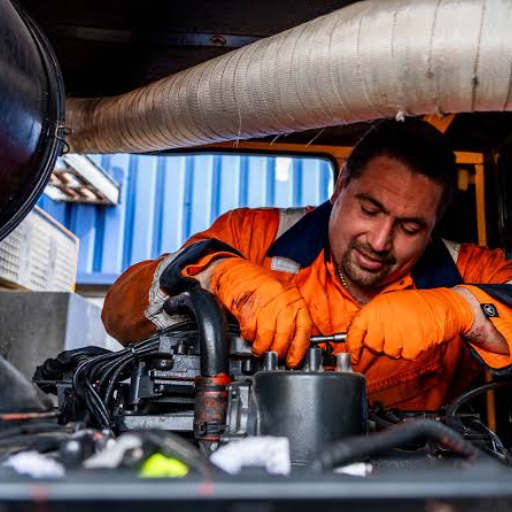
The photo and caption show compliance topics. They do not prove approval of this machine. In the reviewed CARB Tier 5 updates, Tier 5 is still proposed off-road rulemaking. It is not an enacted rule for stationary engines. It does not certify this set.
List the authority and the engine’s actual use
Before ordering a generator for mining operations, state where it will work. Name the country and local authority. State whether it is above or below ground, its fuel and its planned duty.
Ask whether the plant counts as stationary or nonroad. Check how its build date, use and source category affect the rules.
For the United States, EPA’s stationary-engine rules overview explains how the rules depend on engine and source type. A standby rating does not decide legal emergency status. Low running hours alone do not make an engine exempt.
Request the engine certificate and permit basis for the plant. Check what rules apply when it runs. Have a qualified local specialist check them against the planned use. Ask for named documents. A sales label such as globally certified is not enough.
Verify the scope of mine approvals
The MSHA Approval and Certification Center handles approvals for specified mining products. This does not make every generator for mining operations subject to the same approval route.
Where an approval is required, ask for its ID, the exact product covered and any limits on use. Confirm that the proposed setup matches it. A certificate for one part or market does not establish approval of the complete mine power plant elsewhere.
Record who will obtain permits. Agree when drawings must be submitted, before shipment is planned. Check both the permit route and the load study before purchase. Each needs its own review.
Mine generator RFQ checklist and buyer questions
Prepare your request for quote
An RFQ for a generator for mining operations should include the load schedule, restart sequence, running hours, power quality limits, growth phases, site conditions and available fuels. State which loads must stay on during a unit outage. Define how long power may be off and how the plant must restart.
Request a response with these documents. Use the same list for each bid so gaps are clear:
- Exact model and duty-rating definition, with site-rated engine, alternator and cooling data.
- Sizing studies and start-step results tied to the submitted loads.
- Fuel specifications, consumption curves and supporting equipment scope.
- Layout, access, protection and control duties.
- Applicable certificates, installation needs and permit duties.
- Service plan, spares, exclusions and agreed acceptance-test criteria.
For each generator for mining operations, ask the supplier to list gaps and assumptions in one place. If its answer relies on a changed start sequence or excluded load, have the mine engineer check that change before accepting the quote.
Practical buyer questions
Is diesel always the best fuel? No. The better generator for mining operations depends on a workable fuel supply and the full duty and site review. Compare documented options.
Can a standby set supply everyday production? Do not assume so. Obtain the offered model’s rating definition and written suitability for the intended load profile and hours.
Does the largest motor determine capacity? It is one input. Check its start on the loads already running, plus the agreed voltage and frequency response.
Can I use a standard altitude deduction? Use current model-specific site ratings. Check engine, alternator and cooling limits without applying overlapping corrections twice.
Will solar and batteries eliminate the generator? That requires a whole-system study. Assess dispatch, storage limits, restart needs and outages before reducing thermal capacity.
To discuss a generator for mining operations, send your mine power needs. Include the load schedule, site conditions, duty and available fuel data so you can compare scope and assumptions clearly.