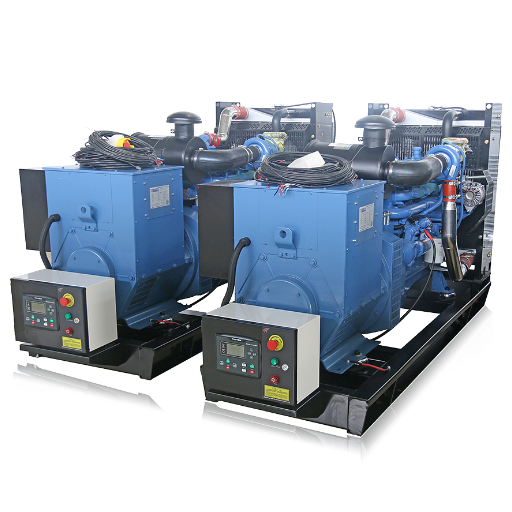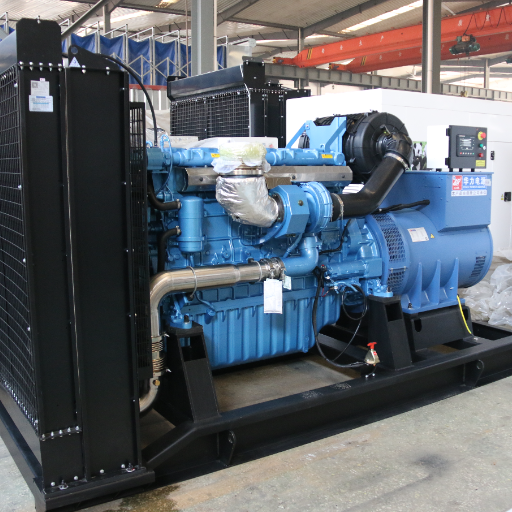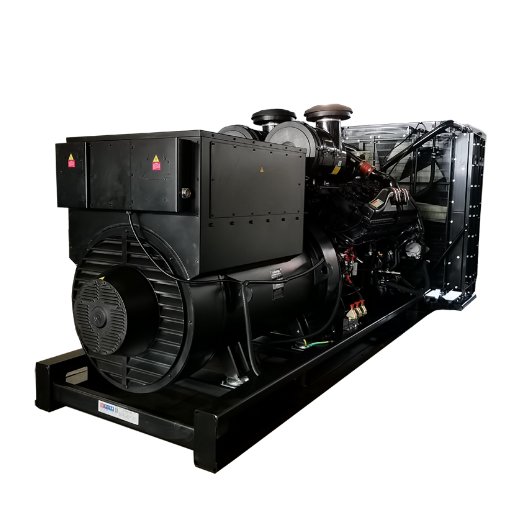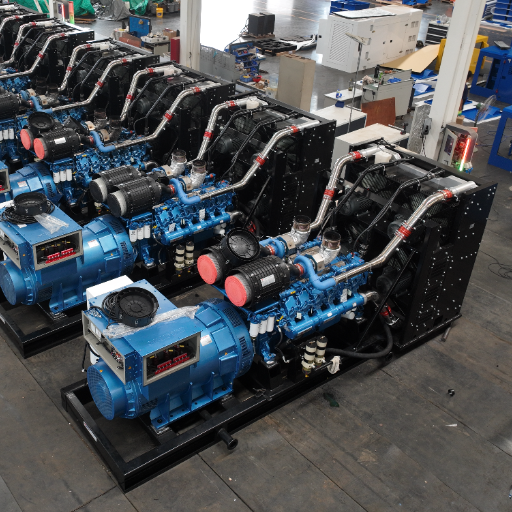


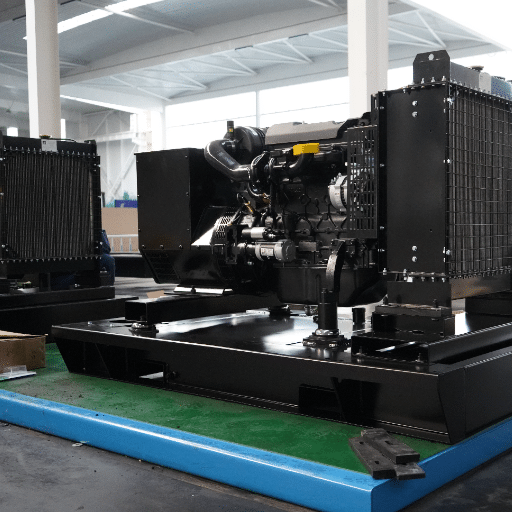
Indoor generator set installation is required when noise control, security, and climate extremes demand protected environments. Outdoor installation is preferred when space is limited, ventilation is abundant, and total project cost must stay low.
What if the wrong installation decision cost your project $40,000 before the generator even started?
That is exactly what happened to a contractor in Dubai last year. He chose an indoor installation for a 500 kW standby unit inside an existing warehouse. The building had no ventilation infrastructure. By the time he added fire-rated ductwork, acoustic treatment, and exhaust routing, the civil works alone exceeded $42,000. An outdoor sound-attenuated enclosure would have cost one-quarter of that.
You probably already know that installation location matters. Every project manager feels the tension between building codes, budget constraints, and operational reliability. This guide solves that tension with engineering criteria, cost data, and compliance requirements you can apply immediately.
You will learn how to evaluate application type, climate, noise ordinances, and NFPA 110 codes. You will see real cost ranges for both approaches. And you will get a decision framework that removes guesswork from the process.
At Shandong Huali, we have delivered generator solutions across 100+ projects in tropical, cold, dusty, and coastal environments. We have seen what works. And we have seen what fails.
For full-process engineering implementation specifications of industrial generator set installation, ( see our generator set installation guide).
Key Takeaways
- Indoor installation requires dedicated generator rooms with engineered ventilation, fire-rated enclosures, and acoustic treatment costing 15,000−15,000−75,000 in civil works.
- Outdoor installation uses weatherproof enclosures on concrete pads, typically costing 5,000−5,000−25,000, with faster installation and easier maintenance access.
- NFPA 110 Level 1 systems require 96-hour fuel supply, 2-hour fire-rated ventilation, and minimum 40°F room temperature for indoor installations.
- Room temperatures above 104°F cause 10-15% generator de-rating per 18°F rise, making ventilation engineering critical for indoor setups.
- Climate is the deciding factor: tropical and dusty environments favor outdoor enclosures; cold and noise-restricted sites often require indoor rooms.
Quick Comparison: Indoor vs Outdoor at a Glance
| Factor | Indoor Installation | Outdoor Installation |
|---|---|---|
| Initial Cost | 15,000−15,000−75,000 (room construction) | 5,000−5,000−25,000 (pad + enclosure) |
| Space Required | Dedicated room (1.5x-2x generator footprint) | Pad footprint + 1m clearance |
| Noise Control | Excellent (room walls + acoustic treatment) | Good with sound-attenuated enclosure |
| Climate Resilience | High (controlled environment) | Moderate (enclosure-dependent) |
| Maintenance Access | Restricted (confined space) | Excellent (open sides, full access) |
| Installation Speed | 4-8 weeks (civil works) | 1-2 weeks (pad curing + placement) |
| NFPA 110 Compliance | Complex (fire-rated ventilation, fuel systems) | Simpler (weatherproofing, security) |
| Flexibility | Low (fixed room, hard to relocate) | High (can relocate or expand) |
This table gives you the headline numbers. The sections below explain the engineering behind each factor.
What Determines Whether a Generator Set Belongs Indoors or Outdoors
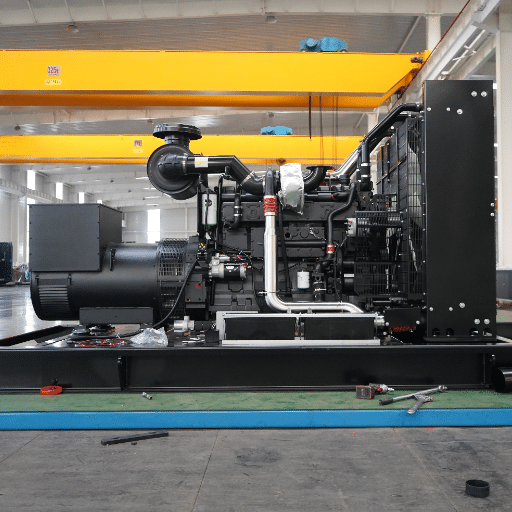
Five factors drive the installation decision. Ignore any one of them, and you risk expensive retrofits later.
Application Type
Standby power systems for hospitals and data centers often require indoor placement. These are Level 1 systems under NFPA 110. They need controlled environments to guarantee 10-second startup. Prime power systems at construction sites or remote mines usually sit outdoors. They run for hours daily, and maintenance access is more important than climate control.
Local Climate and Environmental Conditions
High ambient temperatures, dust, sand, or salt air push installations toward enclosed indoor rooms or heavy-duty outdoor enclosures. Standard weatherproof housings cannot handle corrosive coastal air without upgraded materials.
Noise Ordinances and Zoning Restrictions
A standard open generator produces 85-105 dB at one meter. Many municipalities limit industrial noise to 65 dB at the property line. Indoor rooms with acoustic treatment reliably meet these limits. Outdoor installations need sound-attenuated enclosures, which add cost but solve the problem without building a room.
Available Space and Building Architecture
Some facilities have no interior space for a generator room. Retrofitting an existing building is often more expensive than pouring a pad outside. Other sites have strict aesthetic requirements that make outdoor enclosures unacceptable.
Budget Constraints and Total Cost of Ownership
Indoor installations cost more upfront. But they can reduce long-term maintenance in extreme climates. Outdoor installations save on civil works. Yet they may increase filter replacement and enclosure refurbishment over time.
Ahmed, the engineering manager for a commercial complex in Dubai, faced exactly this trade-off. His building had zero interior space. Local temperatures reached 45°C regularly. He selected an outdoor installation with a tropical-grade, sound-attenuated enclosure and a remote radiator. The total cost was 18,000.Anindoorroomretrofitwouldhaverequiredstructuralmodifications,firesuppression,andductworktotaling18,000.Anindoorroomretrofitwouldhaverequiredstructuralmodifications,firesuppression,andductworktotaling52,000. Ahmed saved $34,000 and met local noise codes at 62 dB at the property line.
Need help evaluating your site conditions? Contact our engineering team for project-specific installation guidance.
Indoor Generator Set Installation: Engineering Requirements
Indoor installation is not just “put the generator inside.” It demands engineered systems for ventilation, exhaust, noise, and fire safety.
Generator Room Design and Layout
The room must accommodate the generator footprint plus maintenance clearance. NFPA 110 requires minimum 3 feet (0.9 m) clearance on all sides. For a 500 kW unit on a 3m x 1.5m skid, the room should measure at least 5.5m x 4m. Ceiling height must allow exhaust routing and radiator discharge.
Floor loading is another consideration. A 1,000 kW generator set can weigh 8,000-12,000 kg. The floor slab must handle this static load plus dynamic vibration. Many projects require a separate inertia base or reinforced slab within the room.
Ventilation and Airflow Engineering
This is where most indoor installations fail. A diesel engine needs three airflow streams: combustion air, radiator cooling air, and room ventilation air.
Combustion air typically requires 100-150 CFM per kW of generator capacity. A 500 kW unit needs 50,000-75,000 CFM of fresh combustion air. Radiator airflow depends on the radiator fan rating. Room ventilation must remove radiated heat from the engine block, alternator, and exhaust piping.
If room temperature exceeds 104°F (40°C), the generator de-rates by 10-15% for every 18°F rise. Above 122°F, de-rating accelerates. Proper ventilation design prevents this performance loss.
For a 1,000 kW installation in a hot climate, the room may need 120,000+ CFM total airflow. This requires large louvers, ductwork, and motor-operated dampers. The supply and discharge openings must be sized to keep pressure drop below the radiator fan capability.
For practical airflow formulas, heat rejection tables by engine model, and remote radiator vs heat exchanger decision frameworks, refer to our guide on generator set ventilation requirements.
NFPA 110 Compliance for Indoor Installations
NFPA 110:2025 classifies emergency power systems as Level 1 (life safety) or Level 2 (less critical). Level 1 systems have stricter requirements.
For indoor Level 1 installations, ventilation air must come directly from outside through a 2-hour fire-rated enclosure. Fire dampers, shutters, or self-closing devices are prohibited in ventilation openings. Motor-operated dampers must be spring-operated to open and motor-closed.
The room must maintain a minimum temperature of 40°F (4°C). In cold climates, this requires auxiliary heating in addition to standard engine block heaters. Exhaust gas temperatures exceed 900°F (482°C), so exhaust routing must be safely directed away from occupied areas and combustible materials.
Fuel systems for Level 1 installations typically require a 96-hour fuel supply at full load. The main tank must have 133% capacity as a safety factor. Day tanks must provide minimum one hour of fuel at full load.
Noise Control and Sound Attenuation
Indoor rooms naturally contain noise. But raw generator noise still transmits through walls, ceilings, and doors. Target dB levels are:
- Industrial areas: 75-85 dB at 1m
- Commercial buildings: 65-75 dB at 1m
- Hospitals and residential: 55-65 dB at 1m
Acoustic treatment includes sound-absorbing wall panels, mass-loaded vinyl barriers, acoustic doors, and ceiling baffles. An indoor room with proper treatment can achieve 55-60 dB at 1m without adding enclosure cost to the generator itself.
Outdoor Generator Set Installation: Engineering Requirements

Outdoor installation shifts the engineering challenge from room construction to enclosure design, foundation work, and climate protection.
Weatherproof Enclosure Selection
The enclosure is the generator’s first line of defense. Factory-supplied enclosures are rated by NEMA or IP codes. Common ratings include:
- NEMA 3R: Rainproof, suitable for normal outdoor conditions
- NEMA 4/4X: Watertight and dust-tight, ideal for harsh environments
- IP23: Basic drip protection for standard outdoor use
- IP44/54: Enhanced protection against dust and water spray
Sound-attenuated enclosures add acoustic lining to reduce noise. A standard open generator at 95 dB can be reduced to 65-75 dB with a quality sound-attenuated enclosure. Factory-supplied enclosures integrate with the generator skid, ensuring proper airflow, door placement, and lifting points. Field-fabricated enclosures often create ventilation and access problems.
Explore our range of weatherproof and sound-attenuated generator enclosures for outdoor installations in any climate.
Remote Radiator and Cooling Systems
Large generators in outdoor installations sometimes use remote radiators. The radiator mounts on the enclosure roof or a nearby wall. Coolant lines run between the engine and radiator. This reduces the generator footprint and improves cooling in high-ambient conditions.
Remote radiators require careful engineering. Coolant lines must handle thermal expansion. Freeze protection is essential in cold climates. And the radiator fan must overcome static pressure from ductwork or louvers.
Foundation and Pad Requirements
Outdoor generators sit on concrete pads. Generator set foundation design requires load calculations for static, dynamic, and seismic forces. The pad must extend 150-200 mm beyond the skid on all sides. Anchor bolts secure the skid to the pad. Vibration isolation pads or spring isolators prevent engine vibration from transmitting into surrounding structures.
For a 500 kW unit, a typical pad measures 3.5m x 2m x 0.3m thick, using C25/C30 concrete with a rebar grid. Pad construction and curing take 7-14 days before generator placement.
Security and Accessibility
Outdoor generators need protection from unauthorized access. Lockable enclosures, perimeter fencing, and security lighting are standard requirements. Maintenance access clearances must match or exceed indoor requirements. Technicians need space to open doors, remove panels, and service filters, belts, and batteries.
Fuel tanks require secondary containment or double-wall construction. Above-ground tanks need weather protection and secure mounting. Underground tanks eliminate visibility but increase installation complexity.
Climate Protection Strategies
Different climates demand different outdoor protection:
Tropical and high-humidity environments require corrosion-resistant enclosures with stainless steel hardware, sealed control panels, and upgraded air filtration. High-ambient cooling packages with oversized radiators maintain rated output above 40°C.
Cold climates need engine block heaters, battery warmers, and insulated enclosures. Louvers must close automatically when the generator stops to retain heat. Coolant must have adequate antifreeze protection.
Dusty, sandy environments demand heavy-duty air filtration. Pre-cleaners and cyclonic filters extend air filter life. Control panels must be sealed to IP54 or better. Enclosure ventilation must prevent dust ingress while maintaining cooling airflow.
Coastal and marine environments need the highest corrosion protection. Stainless steel or aluminum enclosures, powder-coated fasteners, and sealed electrical components prevent salt-air damage.
Cost Analysis: Indoor vs Outdoor Installation

Cost is often the deciding factor. Here are realistic ranges based on current project data.
Civil Works and Construction Costs
Indoor generator room construction includes structural modifications, ventilation ductwork, fire-rated louvers, exhaust routing, acoustic treatment, lighting, and electrical distribution. For a 500-1,000 kW unit, costs typically range from 15,000to15,000to75,000 depending on building type and location.
Outdoor concrete pad and enclosure installation includes site preparation, formwork, concrete, anchor bolts, and enclosure delivery. Costs range from 5,000to5,000to25,000 for the same kW class.
| Cost Component | Indoor | Outdoor |
|---|---|---|
| Room construction / pad | 10,000−10,000−50,000 | 3,000−3,000−12,000 |
| Ventilation system | 5,000−5,000−15,000 | Included in enclosure |
| Acoustic treatment | 3,000−3,000−10,000 | 2,000−2,000−8,000 (enclosure upgrade) |
| Exhaust system | 2,000−2,000−8,000 | 1,000−1,000−5,000 |
| Fire safety | 2,000−2,000−5,000 | Minimal |
| Total Civil Works | 15,000−15,000−75,000 | 5,000−5,000−25,000 |
Equipment and Enclosure Costs
Indoor installations may require additional equipment not needed outdoors: exhaust fans, motor-operated dampers, room heaters, fire suppression systems, and day tanks with pumps. These add 5,000−5,000−20,000.
Outdoor installations require the weatherproof or sound-attenuated enclosure. Factory-supplied sound-attenuated enclosures add 3,000−3,000−15,000 depending on kW rating and noise reduction requirements. Remote radiators add 2,000−2,000−8,000.
Long-term Operational Cost Differences
Outdoor installations offer easier maintenance access. Technicians can service all sides without entering a confined space. This reduces labor time by 20-30% per service visit.
Indoor installations protect the generator from weather, dust, and vandalism. In harsh environments, this protection can extend major overhaul intervals by 15-25%. Climate-controlled rooms also reduce electrical component failures.
The Stockholm Regional Hospital learned this balance the hard way. They initially installed a 750 kW standby generator outdoors in a standard enclosure. Nordic winters at -20°C caused repeated starting failures despite block heaters. After three emergency callouts in one winter, they relocated the unit indoors with a dedicated room, remote radiator, and auxiliary heating. The indoor retrofit cost 38,000.Buttheyeliminatedwinterfailuresandreducedannualmaintenanceby38,000.Buttheyeliminatedwinterfailuresandreducedannualmaintenanceby4,500. The payback period was 8 years, well within the generator’s 20-year lifespan.
See our full breakdown of generator set installation costs for detailed pricing by kW class and region.
Climate and Environmental Decision Matrix
Climate often overrides other factors. Use this framework to match your environment with the right installation approach.
| Climate Type | Recommended Installation | Special Requirements |
|---|---|---|
| Tropical / High Humidity | Outdoor with tropical-grade enclosure | Corrosion protection, oversized cooling, sealed controls |
| Cold / Freezing | Indoor preferred; outdoor with insulated enclosure | Auxiliary heating, automatic louver closure, battery warmers |
| Dusty / Sandy | Outdoor with heavy-duty filtration | Cyclonic pre-cleaners, IP54+ controls, frequent filter service |
| Coastal / Marine | Indoor strongly preferred; outdoor with stainless enclosure | Stainless steel or aluminum housing, sealed electrics, salt-rated fasteners |
| Temperate / Moderate | Either (cost and space decide) | Standard weatherproof enclosure or basic room |
| High Altitude | Indoor with forced ventilation | Derating for altitude, enhanced cooling, combustion air adjustment |
In moderate climates with ample space and low noise requirements, outdoor installation is usually the cost-effective choice. In extreme climates with strict noise codes, indoor installation provides better long-term reliability despite higher upfront cost.
Common Installation Mistakes to Avoid
Even experienced contractors make these errors. Avoiding them saves thousands in retrofits.
Undersizing the ventilation system. This is the most common indoor installation mistake. Contractors size ducts for the radiator fan alone and forget combustion air and heat rejection. The result is overheating, de-rating, and premature engine wear.
Ignoring future maintenance access. A room designed to minimum NFPA 110 clearance may leave technicians unable to remove cylinder heads or pull the alternator. Plan for major overhaul access, not just routine service.
Choosing outdoor without checking noise ordinances. Some municipalities prohibit outdoor generators above 60 dB at the property line. A standard enclosure may not be enough. Verify codes before committing to outdoor placement.
Installing indoors without proper exhaust routing. Exhaust gases exceed 900°F. Improper routing can ignite building materials or expose occupants to dangerous fumes. Insulated exhaust piping and proper termination are mandatory.
Neglecting fuel system compliance. Level 1 installations need 96-hour fuel supply. Day tanks need one-hour minimum capacity. Fuel transfer pumps need backup power. Many projects fail inspection because the fuel system was an afterthought.
How Factory-Designed Enclosures and Skids Simplify the Decision

Factory-designed equipment removes much of the guesswork from both indoor and outdoor installations.
Factory weatherproof enclosures are engineered for specific generator models. Airflow, door placement, lifting points, and maintenance access are all pre-calculated. This eliminates the trial-and-error of field-fabricated housings.
Factory acoustic enclosures reduce noise without requiring extensive room treatment. For indoor installations, a factory sound-attenuated enclosure can reduce room acoustic requirements by 30-40%. For outdoor installations, it eliminates the need for separate buildings in many noise-sensitive areas.
Custom skid designs adapt to different foundation types. Some projects need extended skids for radiator mounting. Others need compact skids for tight indoor rooms. Factory engineering ensures the skid matches both the generator and the installation environment.
Pre-engineered ventilation and cooling packages simplify indoor installations. Factory-designed radiator duct adapters, exhaust flex sections, and control panel extensions ensure everything fits together without field modifications.
At Shandong Huali, we provide complete power solutions from design through installation support. Our engineering team reviews project requirements, recommends indoor or outdoor configuration, and supplies factory drawings for foundations, ventilation, and fuel systems. With 20+ years of experience and 100+ successful global projects, we deliver generator solutions that perform reliably in any environment.
Ready to specify your installation? Request a quote and receive project-specific installation recommendations, foundation drawings, and enclosure specifications from our engineering team.
Conclusion
Indoor vs outdoor generator set installation is not a matter of preference. It is an engineering decision driven by application type, climate, noise codes, and budget.
Indoor installations offer superior noise control, climate protection, and security. They demand higher upfront investment in room construction, ventilation, and fire safety. Outdoor installations deliver lower cost, faster deployment, and easier maintenance access. They require quality enclosures and climate-appropriate protection.
The right choice depends on your specific conditions. A hospital in a cold climate needs indoor installation with NFPA 110 compliance. A construction site in a temperate zone benefits from outdoor placement with a standard enclosure. A commercial building in a tropical city may find the best balance in an outdoor sound-attenuated enclosure with remote cooling.
There is no universal answer. But there is a right answer for your project. Start with the decision matrix in this guide. Verify local codes. Calculate total cost of ownership. And choose the installation approach that delivers reliable performance for your specific environment.
For project-specific indoor vs outdoor generator set installation guidance, including custom enclosure design, foundation drawings, and compliance documentation, contact our engineering team. We support your project from initial consultation through after-sales service.