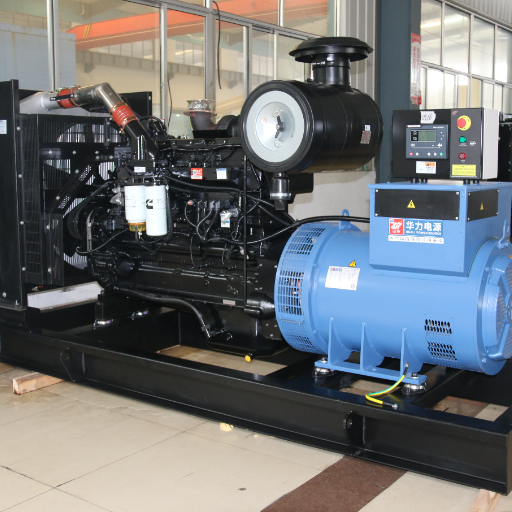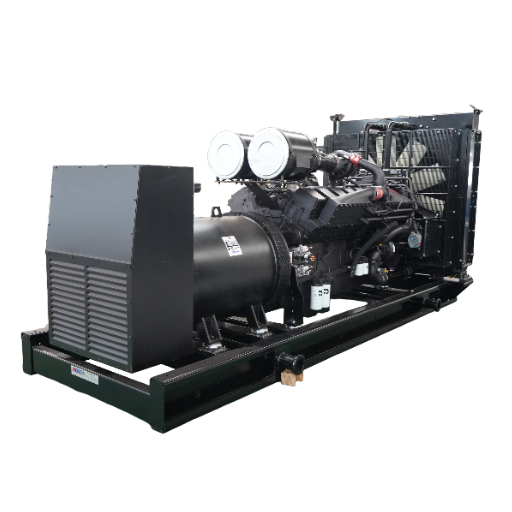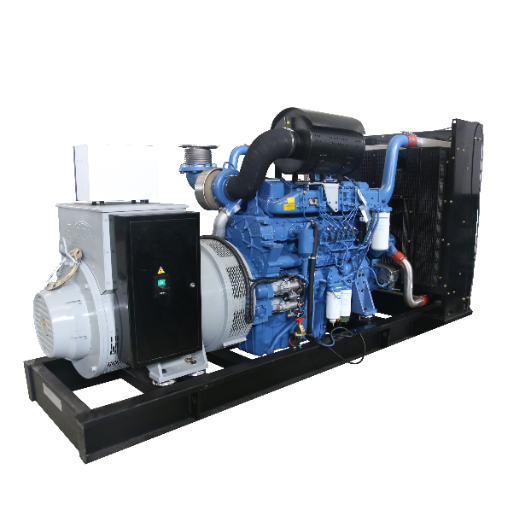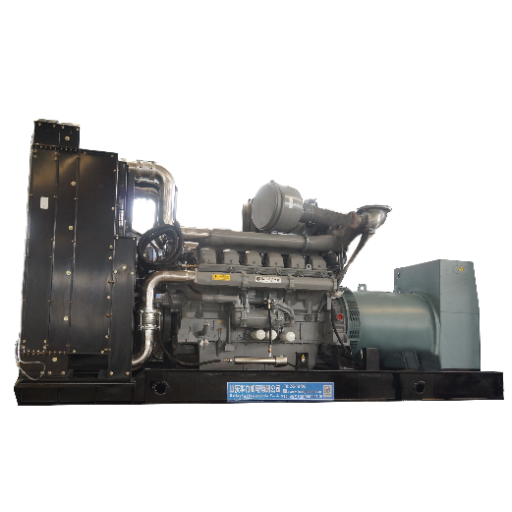



Predictive maintenance for genset uses IoT sensors, edge analytics, and machine learning to monitor generator health in real time and predict failures before they cause downtime. Instead of changing parts on a fixed schedule or waiting for a breakdown, operators use data to act only when the equipment actually needs attention.
A North Sea oil rig used vibration and oil temperature monitoring to predict a generator bearing failure 72 hours in advance. The early warning came from a lube oil cooler blockage that would have caused a catastrophic shutdown. Because the rig had time to plan the repair, it avoided 2,000 barrels of lost production and completed the work during a scheduled maintenance window.
This guide explains how predictive maintenance works for generator sets, which sensors matter, how edge and cloud analytics fit together, and how to build a practical implementation roadmap. It also covers the business case and the common mistakes that cause predictive maintenance programs to fail.
Key Takeaways
- Predictive maintenance for genset combines IoT sensors, edge computing, and machine learning to forecast failures weeks in advance.
- Vibration, temperature, oil quality, pressure, and electrical sensors provide the most actionable data.
- Edge computing is critical for remote gensets where cloud connectivity is unreliable.
- Oil and gas case studies show average ROI of 340% with 8–14 month payback periods.
- A phased rollout starting with 3–5 critical assets delivers faster validation and lower risk than a full fleet deployment.
What Is Predictive Maintenance for Gensets?

Predictive maintenance is a condition-based strategy. It monitors equipment health while the genset runs, compares current behavior to baseline performance, and uses algorithms to detect patterns that indicate developing problems. The goal is to schedule maintenance just before failure, not after it happens and not too early.
Traditional preventive maintenance follows a time or hour-based schedule. It works, but it can lead to unnecessary part replacements and missed intermittent faults. Reactive maintenance waits for failure, which usually means emergency repairs and unplanned downtime. Predictive maintenance sits between the two: it uses data to focus maintenance effort where it is actually needed.
For gensets, this is especially valuable. Many generator sets operate in remote locations, serve critical loads, or run only during emergencies. A failure during an outage is the worst possible time to discover a problem. Predictive maintenance shifts the focus from scheduled activity to condition awareness.
For a broader view of maintenance strategies, see our generator maintenance guide.
How Predictive Maintenance for Gensets Works
A genset predictive maintenance system has four main layers.
Sensing Layer
Sensors mounted on the engine, alternator, fuel system, and controls measure physical and electrical parameters. Common measurements include vibration, temperature, oil condition, pressure, voltage, current, and fuel level. The sensor selection should match the failure modes that are most likely for the specific genset and application.
Communication Layer
Sensor data travels through industrial protocols such as Modbus RTU, MQTT, or OPC UA. For remote sites, cellular LTE or 5G gateways carry data to the cloud. For sites with unreliable connectivity, edge devices buffer data locally and send summaries when the connection returns.
Analytics Layer
Machine learning models analyze incoming data against historical baselines. They can detect anomalies, classify fault types, and estimate remaining useful life. Some systems use simple rule-based thresholds. More advanced systems use Random Forest, support vector machines, or neural networks to improve accuracy.
Action Layer
When the system identifies a developing fault, it generates alerts, creates work orders in a CMMS, and recommends specific maintenance actions. The best systems prioritize alerts so technicians focus on the highest-risk items first.
Key Sensors for Genset Predictive Maintenance

Sensor selection is the foundation of an effective predictive maintenance program. Each sensor type detects different failure modes.
| Sensor Type | What It Detects | Common Faults |
|---|---|---|
| Vibration | Bearing wear, misalignment, imbalance | Mechanical looseness, shaft defects, alternator issues |
| Temperature | Engine, coolant, exhaust, winding temperature | Overheating, coolant loss, alternator insulation degradation |
| Oil quality | Viscosity, contamination, metallic particles | Engine wear, fuel dilution, coolant leaks |
| Pressure | Oil, fuel, coolant, compression pressure | Pump failure, filter clogging, head gasket leaks |
| Electrical | Voltage, current, frequency, power factor | Alternator winding faults, AVR problems, load imbalance |
| Fuel | Level, flow, contamination | Leaks, microbial growth, filter blockage |
| Ultrasonic | Leaks, valve seat wear, partial discharge | Early bearing defects, exhaust leaks |
Vibration Sensors
Vibration monitoring is one of the most mature predictive maintenance technologies. Accelerometers measure movement in the engine block, crankshaft area, alternator bearings, and mounting points. Changes in vibration amplitude or frequency often reveal bearing wear, misalignment, or imbalance long before visible damage appears.
Temperature Sensors
RTDs and thermocouples track coolant temperature, exhaust temperature, oil temperature, and alternator winding temperature. Gradual temperature rises can indicate coolant system degradation, restricted airflow, or increasing friction from worn components.
Oil Quality Sensors
Online oil sensors track viscosity, water content, temperature, and metallic particles. Oil analysis can detect engine wear, fuel dilution, coolant contamination, and oxidation. This information is especially useful for extending oil drain intervals safely.
For details on oil maintenance, see our generator oil change interval guide.
Edge vs. Cloud: Architecture for Remote Gensets
Remote gensets present a special challenge for predictive maintenance. Mines, telecom towers, construction sites, and rural facilities often have limited or intermittent connectivity. Edge computing solves this problem by processing data locally.
Benefits of Edge Computing
- Low latency: Local decisions happen in milliseconds, not seconds.
- Connectivity resilience: Edge devices continue monitoring even when the cloud link is down.
- Bandwidth reduction: Only summaries and alerts travel to the cloud, not high-frequency raw data.
- Cybersecurity improvement: Less proprietary operational data leaves the site.
- Real-time response: Local rules can trigger alarms, load shedding, or standby switching.
Cloud Role
The cloud is still valuable for long-term storage, model training, fleet-level dashboards, and cross-site comparisons. A hybrid architecture is usually the best choice: edge devices handle real-time monitoring and urgent alerts, while the cloud handles analytics, reporting, and model updates.
A logistics company in Guangdong managed a fleet of 40 standby diesel generators across warehouses. After installing remote monitoring on five critical units, the operations team detected rising coolant temperatures and abnormal vibration on one unit two weeks before a scheduled outage. The issue was a failing water pump. Replacing it during planned service cost 1,200.Afailureduringanoutagewouldhaverequiredemergencyrentalpowerat1,200.Afailureduringanoutagewouldhaverequiredemergencyrentalpowerat15,000 per day.
Machine Learning and Analytics in Genset PdM

Machine learning improves predictive maintenance by finding patterns that simple thresholds miss. There are two main approaches.
Anomaly Detection
Anomaly detection models learn the normal operating signature of a genset. When sensor readings deviate from that baseline, the system flags the change. This approach is useful for catching unknown or emerging failure modes.
Failure Classification and Prediction
Classification models are trained on labeled historical data to recognize specific fault types. A study comparing Random Forest, Support Vector Machines, and K-Nearest Neighbors for genset condition classification found that Random Forest achieved the highest accuracy at 98.47%. SVM and KNN performed around 83% but were weaker at detecting actual failure conditions.
Avoiding Alert Fatigue
Static thresholds are a common cause of alert fatigue. They generate false positives when operating conditions change naturally. AI-based anomaly detection adapts to load, ambient temperature, and other variables, which improves technician trust and response rates.
For help interpreting generator problems, see our generator troubleshooting guide.
Step-by-Step Implementation Roadmap
A successful predictive maintenance program is usually built in phases.
Phase 1: Assessment and Failure Mode Analysis (Months 1–3)
Identify the critical gensets, the failure modes that matter most, and the baseline performance metrics. This phase should define success criteria, budget, and integration requirements. Failure Mode and Effects Analysis (FMEA) is the right tool for matching sensors to actual risks.
Phase 2: Pilot on 3–5 Critical Assets (Months 4–6)
Deploy sensors, edge gateways, and analytics on a small number of high-value units. Build the data pipeline, validate sensor placement, and train initial models. The pilot should prove that the system can detect real faults and deliver actionable alerts.
Phase 3: Validation and CMMS Integration (Months 7–12)
Refine the machine learning models based on pilot results. Integrate alerts with the CMMS or maintenance workflow. Train technicians to respond to predictive alerts. Measure downtime reduction, maintenance cost changes, and false positive rates.
Phase 4: Scale and Continuous Improvement (Year 2+)
Expand monitoring to additional gensets. Add digital twin models, prescriptive recommendations, and fleet-level dashboards. Continuously retrain models as operating conditions change.
For guidance on maintenance scheduling, see our generator service schedule.
ROI and Business Case for Genset Predictive Maintenance
The financial case for predictive maintenance is well documented in heavy industry, and the same principles apply to gensets.
Reported Benefits
- Unplanned downtime reduction: up to 70%
- Maintenance cost reduction: 25–60%
- Equipment life extension: 20–40%
- Advance failure warning: 60–90 days
- Payback period: 8–14 months
- Failure prediction accuracy: up to 98.47% with Random Forest models
Translating to Genset Economics
For a facility with a single 1,000 kW standby genset, one unplanned failure during an outage can cost far more than a predictive maintenance system. Emergency rental power, lost production, and regulatory exposure can quickly exceed $50,000. A monitoring system that prevents one major failure per year can pay for itself many times over.
A hospital facilities director in Jiangsu piloted predictive maintenance on two emergency generators. Over 12 months, the data revealed fuel pressure irregularities and elevated exhaust temperatures on one unit. Maintenance replaced injectors and cleaned the fuel system before a failure occurred. The program demonstrated enough value that the director expanded monitoring to all six hospital generators.
For a detailed cost breakdown, see our generator maintenance cost guide.
Common Challenges and How to Avoid Them

Predictive maintenance programs fail more often from implementation mistakes than from technology limitations.
Dashboard Graveyard
Data flows in but no one acts on it. The solution is to connect alerts directly to CMMS work orders and define clear response procedures before deployment.
Alert Fatigue
Too many false positives cause technicians to ignore the system. Use AI-based anomaly detection instead of static thresholds, and prioritize alerts by severity.
Wrong Sensor Selection
Buying sensors without matching them to failure modes wastes budget. Start with FMEA and choose sensors that address the highest-risk failure modes.
Connectivity Gaps
Remote sites often have unreliable networks. Edge computing with local buffering ensures continuous monitoring even when the cloud link drops.
Legacy System Integration
Older PLCs and controllers may not have modern communication protocols. Edge gateways with Modbus, OPC UA, or analog inputs can bridge the gap.
Skills Gap
Predictive maintenance requires data, maintenance, and operational expertise. A phased rollout with staff training reduces risk and builds internal capability.
For best practices on extending equipment life, see our guide on how to extend generator lifespan.
FAQ: Predictive Maintenance for Genset
What is predictive maintenance for a genset?
Predictive maintenance for a genset uses sensors and analytics to monitor generator condition continuously and predict failures before they happen. It allows maintenance to be scheduled based on actual equipment condition rather than fixed intervals.
Which sensors are most important for genset monitoring?
Vibration, temperature, oil quality, pressure, and electrical sensors provide the most actionable information. The exact mix depends on the genset design, duty cycle, and failure history.
How accurate is AI-based genset failure prediction?
Studies report prediction accuracy ranging from 91% to over 98% depending on the algorithm and data quality. Random Forest models have shown particularly strong results for genset condition classification.
How long does it take to implement predictive maintenance?
A pilot on 3–5 critical assets typically takes 6–12 months to validate. Full fleet rollout usually happens in the second year after the pilot proves ROI.
What is the ROI of predictive maintenance for generators?
Industry case studies show ROI of 200–420% with payback periods of 8–14 months. The exact return depends on avoided downtime, reduced maintenance costs, and extended equipment life.
Can predictive maintenance replace preventive maintenance?
No. Predictive maintenance complements preventive maintenance. Routine inspections, oil changes, and load bank testing still matter. Predictive maintenance adds data-driven timing for component replacement and fault detection.
Is edge computing necessary for remote gensets?
Edge computing is highly recommended for remote sites with unreliable connectivity. It allows local monitoring and alerting to continue even when the cloud connection is unavailable.
What is the difference between predictive and prescriptive maintenance?
Predictive maintenance forecasts when a failure is likely. Prescriptive maintenance goes further by recommending the specific action to take, such as which part to replace or how to adjust operation to extend remaining life.
Conclusion
Predictive maintenance for genset transforms generator management from a calendar-driven activity into a data-driven discipline. By combining the right sensors, edge computing, machine learning, and maintenance workflows, operators can reduce unplanned downtime, lower maintenance costs, and extend generator life.
The key to success is starting with a clear understanding of failure modes, validating the approach on a small number of critical assets, and integrating alerts into existing maintenance processes. Technology alone does not deliver value. The value comes from acting on the data.
If you need gensets designed with monitoring readiness, IoT integration support, or a lifecycle maintenance strategy, contact Shandong Huali for engineering support. Our team can help specify generator sets with the sensor mounting points, controller interfaces, and communication capabilities that make predictive maintenance easier to deploy.