


A generator is the electrical device that produces electricity, while a generator set is the complete power unit that includes the engine, alternator, fuel system, cooling system, exhaust, controls, and often an automatic transfer switch. The terms are not interchangeable, and confusing them can lead to costly procurement mistakes.
What if you ordered a “generator” for your factory backup power system and received only the alternator? You would still need to source the engine, fuel tank, cooling, controls, and starting system before the unit could produce a single kilowatt. This scenario happens more often than buyers expect, especially when technical terms are used loosely in purchase orders and specifications.
We agree that clear terminology saves time and money. In this guide, you will learn the exact difference between a generator and a generator set, what each option includes, when to choose one over the other, and how to avoid the most common specification errors.
Key Takeaways
- A generator is the alternator that converts mechanical energy into electricity. It cannot run alone.
- A generator set, or genset, is the complete integrated power unit with engine, alternator, fuel system, cooling, exhaust, controls, and often an ATS.
- Choose a generator only when you are replacing an alternator or building a custom power system with your own supporting components.
- Choose a generator set when you need a ready-to-install backup or prime power solution with single-supplier accountability.
- Confusing the two terms can increase project costs by 15-30% due to missing components, integration delays, and supplier coordination.
What Is a Generator?

A generator is an electrical machine that converts mechanical energy into electrical energy. In industrial power systems, the word “generator” usually refers to the alternator, the component that produces the electricity.
The alternator contains a rotor and a stator. When the rotor spins inside the stator, it creates a magnetic field that induces alternating current (AC). This is the same principle used in power plants, vehicles, and industrial equipment. However, the generator itself does not create the mechanical rotation. It needs an external power source to spin it.
That external power source is usually an engine. The engine could be diesel, natural gas, gasoline, or even a turbine. Without the engine, the generator is just a passive electrical component. It is valuable, but it is not a complete power solution.
When someone says they need to buy a generator, they often mean they need a complete system. Technically, though, buying a generator means buying the alternator only. This distinction becomes critical when writing technical specifications, comparing quotes, and managing project responsibility.
In some cases, buying just the generator makes sense. Original equipment manufacturers (OEMs) may build custom systems and prefer to source the alternator separately. Maintenance teams may need a replacement alternator for an existing generator set. Engineering firms with strong integration capability may design their own enclosures and supporting systems. For most industrial buyers, however, the generator alone is not enough.
What Is a Generator Set?
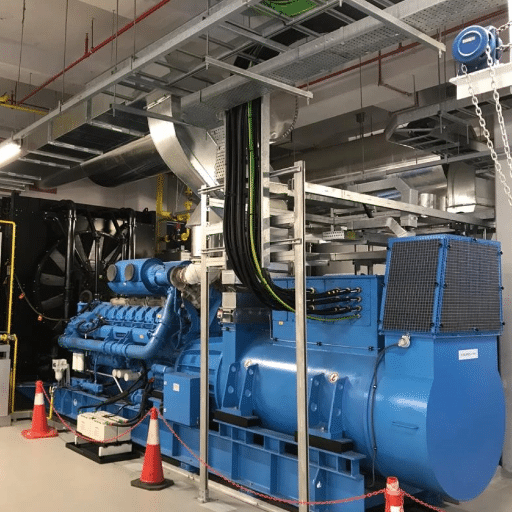
A generator set, commonly called a genset, is a complete and integrated power generation system. It combines the engine and the alternator with all the supporting components needed to produce reliable electricity.
A typical industrial generator set includes:
- Engine: burns fuel to create mechanical rotation
- Alternator: converts mechanical rotation into electricity
- Fuel system and tank: stores and delivers fuel
- Cooling system: prevents engine overheating
- Exhaust system: removes combustion gases
- Control panel: monitors and manages operation
- Battery and starting system: provides initial cranking power
- Automatic transfer switch (ATS): switches load between grid and generator power
Because all these components are designed and tested together, a generator set arrives as a coordinated unit. The supplier is responsible for integration, performance, and often warranty coverage across the entire system.
This matters for buyers because a generator set reduces installation risk. The engine and alternator are matched for power output. The cooling system is sized for the engine. The control panel is programmed for the specific configuration. When all parts come from one supplier, there is one point of contact for support, spare parts, and service.
Last year, a procurement team at a manufacturing facility in Vietnam requested quotes for a “generator” without realizing the technical meaning. One supplier quoted only the alternator. Another quoted a complete diesel generator set. The prices looked very different, and the team almost selected the lower quote. After clarification, they chose the generator set. The project was installed on schedule, while the alternative would have required additional sourcing and engineering that the team had not budgeted.
Generator Set vs Generator: Key Differences

The fastest way to understand the difference is to compare the two options directly.
| Feature | Generator | Generator Set |
|---|---|---|
| Definition | Electrical device that produces electricity | Complete integrated power unit |
| Also called | Alternator | Genset |
| Includes engine? | No | Yes |
| Includes fuel system? | No | Yes |
| Includes cooling? | No | Yes |
| Includes controls? | No | Usually yes |
| Includes ATS? | No | Often yes |
| Can it run alone? | No | Yes |
| Typical buyer | OEM, integrator, maintenance team | Industrial buyer, contractor, facility manager |
| Main advantage | Flexibility for custom designs | Ready-to-install, single-source accountability |
The generator is a single component. The generator set is the full system built around that component. This difference affects price, delivery time, installation complexity, and total cost of ownership.
When you buy a generator, you accept responsibility for integration. You must match the alternator to an engine, design the fuel system, size the cooling, build the exhaust routing, and program the controls. For experienced engineering teams, this is manageable. For most commercial and industrial buyers, it introduces risk and delays.
When you buy a generator set, the supplier has already solved those integration problems. The unit is factory-tested before delivery. Installation focuses on placement, ventilation, fuel connections, and electrical tie-in rather than component matching.
For a deeper explanation of generator set fundamentals, see our complete guide on what is a generator set.
When to Choose a Generator
Buying a standalone generator, or alternator, is the right choice in specific situations.
You Are Replacing a Failed Alternator
If an existing generator set has a damaged alternator but the engine and support systems are still sound, replacing only the generator can be cost-effective. This is common in older systems where the engine has years of service life remaining.
You Are Building a Custom Power System
Some OEMs and engineering firms design their own power systems for specialized applications. They may source the alternator separately because they are integrating it with a custom engine, enclosure, or control architecture.
You Have Strong Integration Capability
If your team has experience matching engines to alternators, designing fuel systems, and building control logic, buying components separately can offer design flexibility. This approach is less common in standard commercial and industrial projects.
Cost Is Secondary to Customization
Custom integration typically costs more and takes longer than buying a generator set. However, for unique applications, the flexibility may justify the additional engineering effort.
In 2024, an engineering company in the Middle East built a mobile power station for remote oilfield operations. They chose to source the alternator separately because they needed a non-standard engine and a custom skid-mounted enclosure. The project required significant engineering, but the final system met exact field requirements that no standard generator set could match.
When to Choose a Generator Set
For most industrial and commercial buyers, a generator set is the better choice. It delivers a complete, tested, and supported power solution.
You Need Backup Power
Facilities like hospitals, data centers, and factories cannot tolerate power interruptions. A standby generator set with an ATS starts automatically during grid failure and restores power within seconds.
You Need Prime Power
Remote construction sites, mining operations, and off-grid facilities often have no utility connection at all. A prime power generator set provides continuous electricity for equipment, lighting, and operations.
You Want Single-Supplier Accountability
With a generator set, one supplier is responsible for the engine, alternator, controls, and integration. If something does not work, there is one call to make. This simplifies warranty claims and service.
You Need Fast Installation
Generator sets arrive as ready-to-install units. Properly specified systems reduce on-site engineering and commissioning time. This is important for projects with tight schedules.
If your project needs reliable standby or prime power, explore our diesel generator sets to compare configurations.
Cost and Application Considerations

Price comparison between a generator and a generator set can be misleading if you only look at the initial quote. The real cost includes integration, installation, maintenance, and risk.
Upfront Cost
A standalone generator usually has a lower purchase price than a complete generator set. However, that price does not include the engine, fuel system, cooling, exhaust, controls, or enclosure. Once those components are added, the total project cost often exceeds the generator set price.
Integration Cost
Custom integration requires engineering time, procurement effort, and testing. For a typical industrial project, this can add 15-30% to the total cost compared to a factory-integrated generator set.
Installation Cost
Generator sets are designed for faster installation. They come with mounting structures, connection points, and documentation. Custom-built systems often require more on-site fabrication and commissioning.
Maintenance Cost
A generator set has one maintenance schedule and one supplier for parts. Custom systems may require dealing with multiple vendors for engine, alternator, and control components.
Application Fit
| Application | Best Choice | Reason |
|---|---|---|
| Hospital backup | Generator set | Automatic response, single-source support, regulatory compliance |
| Data center | Generator set | Redundancy, fast failover, proven integration |
| Construction site | Generator set | Portability, fast setup, durability |
| Factory backup | Generator set | Continuous production protection, predictable costs |
| Custom OEM project | Generator only | Design flexibility, specialized requirements |
| Alternator replacement | Generator only | Cost-effective repair of existing system |
For large-scale industrial applications, our industrial generator sets are engineered for stable performance in demanding environments.
How to Decide for Your Project

Choosing between a generator and a generator set comes down to your project requirements, internal capability, and risk tolerance.
Decision Checklist
- Do you need a complete power solution, or just one component?
- Do you have the engineering resources to integrate components?
- Is the system for backup power, prime power, or continuous power?
- How quickly does the system need to be operational?
- Do you prefer single-supplier accountability?
- What is your total budget including integration and commissioning?
- Are there regulatory or insurance requirements for backup power?
Questions to Ask Suppliers
- Does the quote include the engine, alternator, fuel system, cooling, exhaust, and controls?
- Is an ATS included or optional?
- Has the complete system been factory tested?
- What is the warranty coverage for the integrated unit?
- Do you provide installation guidance and after-sales support?
- What is the expected delivery time for a complete system versus components?
Common Mistakes to Avoid
- Assuming the terms mean the same thing: Always clarify whether you need a complete system or just the alternator.
- Comparing incomplete quotes: A low quote for a generator may not include the engine and support systems.
- Ignoring integration responsibility: If you buy a generator, you must manage the integration.
- Focusing only on upfront price: Total cost of ownership often favors generator sets.
- Underestimating installation environment: Temperature, altitude, dust, and noise affect both options.
A facilities manager at a commercial building in Jakarta learned this lesson when a vendor quoted a “generator” at 40% below competitors. The manager signed the purchase order, only to discover that the quote excluded the engine, control panel, and ATS. By the time the missing components were sourced and integrated, the project had exceeded the highest original quote and delayed occupancy by three weeks.
Frequently Asked Questions
Is a genset the same as a generator?
No. A generator is the alternator that produces electricity, while a genset (generator set) is the complete power unit that combines the engine, alternator, fuel system, cooling, exhaust, and controls. A genset can run on its own; a generator cannot.
What is a genset used for?
A genset provides backup, prime, or continuous power where grid electricity is unreliable or unavailable. Common uses include hospital and data center backup, construction and mining site power, factory outage protection, and off-grid facilities such as telecom towers and remote camps.
How does a generator set work?
The engine burns fuel to create mechanical rotation. That rotation spins the alternator’s rotor inside its stator, which induces alternating current (AC). Supporting systems keep the process stable: the cooling system controls temperature, the fuel system feeds the engine, and the control panel manages output and safety shutdowns.
Can I buy just an alternator instead of a full generator set?
Yes, and it makes sense in two cases: replacing a failed alternator in an existing genset, or building a custom power system with your own engine and integration capability. For most industrial buyers, however, a complete generator set is safer and usually cheaper in total cost.
Why is a generator set more expensive than a generator?
A generator set quote includes the engine, fuel system, cooling, exhaust, controls, enclosure, and factory testing. A generator quote covers only the alternator. When you add the missing components and integration labor, a standalone generator often ends up costing 15-30% more than a factory-built genset.
What size generator set do I need?
List every device the unit will power, add their rated loads in kW or kVA, then account for motor starting currents, which can run two to three times the rated load. Finally, add a 10-25% safety margin for future expansion. For a step-by-step method, see our guide on how to choose a diesel generator set.
What should I confirm before signing a generator set purchase order?
Confirm the quote includes the engine, alternator, fuel system, cooling, exhaust, and controls, whether an ATS is included, and whether the complete unit was factory tested. Also get warranty coverage, spare parts availability, and after-sales support terms in writing before you pay.
Conclusion
Understanding the difference between a generator and a generator set is essential for any industrial buyer. A generator is the alternator that produces electricity. A generator set is the complete, integrated power system that makes that electricity reliable and usable. For most commercial and industrial projects, the generator set is the right choice because it reduces risk, simplifies installation, and provides single-source accountability.
When evaluating quotes, look beyond the initial price. Consider integration costs, installation time, maintenance complexity, and total cost of ownership. Ask suppliers exactly what is included, and make sure your specifications match your real needs.
At Shandong Huali Electromechanical Co., Ltd, we design and manufacture complete generator sets for industrial and commercial applications. With advanced manufacturing, strict quality control, and full lifecycle support, we help our partners choose the right power solution for every project.
Contact our engineering team to discuss whether a generator set is the right choice for your application.