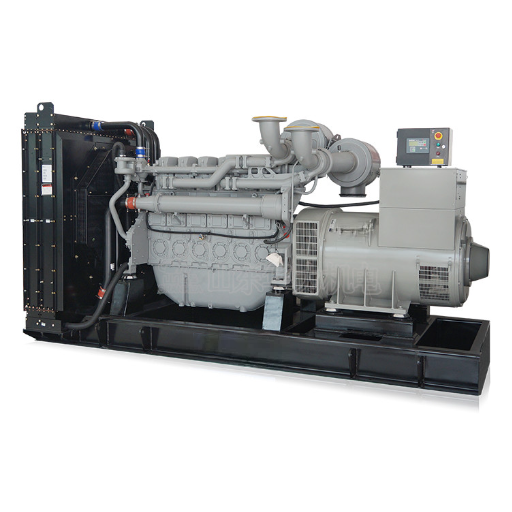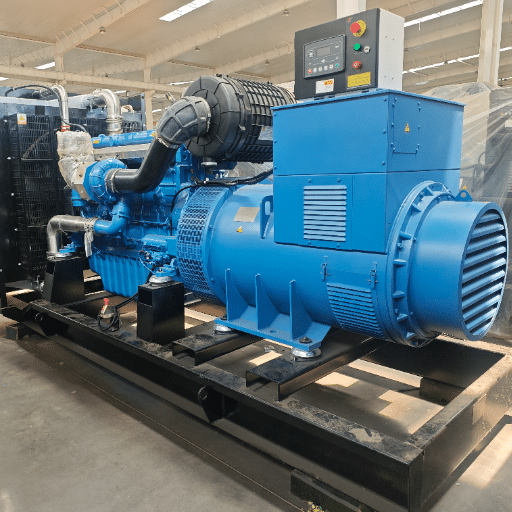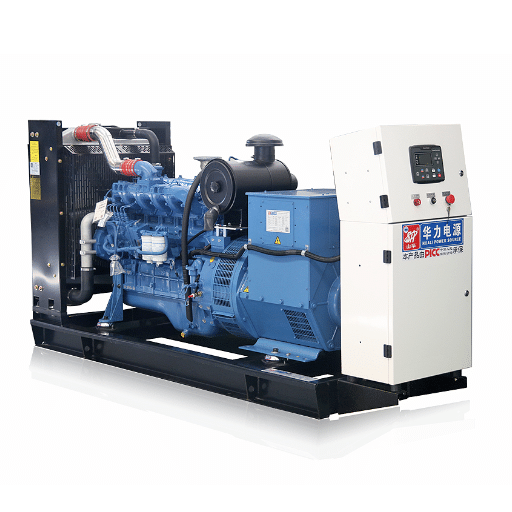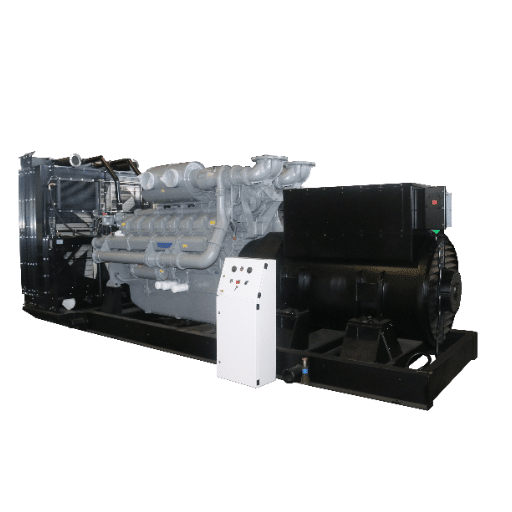



A generator set specification is the technical document that defines exactly what a genset can deliver: its power ratings, electrical performance, engine and alternator data, fuel consumption, and operating limits. Learning to read one correctly is the fastest way to compare suppliers and avoid an expensive purchasing mistake.
Here is why that matters. Two generators can sit at nearly the same price with spec sheets that look almost identical, yet perform very differently on your site. The difference is always in the details.
Consider what happened to Daniel, a procurement manager for a construction firm in Southeast Asia. In early 2025, he bought a 500 kVA generator based on the biggest number on the datasheet.
Six months into a project where the unit ran ten hours a day as the primary power source, the engine showed serious thermal wear. The set he’d bought was rated for standby duty, roughly 200 hours per year, and he had already pushed past 1,500 hours. The repair bill and downtime cost more than the price difference to the correctly rated machine.
Stories like this are common and preventable. This guide walks through a generator set specification parameter by parameter: power ratings, electrical performance, engine and alternator data, environmental limits, and control systems. It closes with the red flags that signal a misleading spec sheet and a ten-question checklist you can use on any supplier quote.
Key Takeaways
- Never buy on the standby rating. Standby (ESP) is roughly 10% higher than prime power and is limited to about 200 hours per year with no overload allowed.
- kW equals kVA multiplied by the power factor (typically 0.8), so a 500 kVA set delivers about 400 kW of real, usable power.
- ISO 8528 defines both the ratings (ESP, PRP, COP, DCP) and the performance classes (G1 to G4). Critical loads like data centers and hospitals usually require G3.
- Standard ratings assume up to 40°C ambient and 1,000 m altitude. Above those limits, output must be derated.
- A trustworthy spec sheet shows fuel consumption at partial loads, voltage regulation, THD, and derating data. If those are missing, ask why.
What Is a Generator Set Specification?

A generator set specification is the complete technical definition of a genset: rated power output in kVA and kW, voltage, frequency, engine and alternator models, fuel consumption, physical dimensions, noise level, and compliance standards. Manufacturers issue it as a data sheet so buyers can verify that the unit matches their application before purchase.
For B2B buyers, this document does three jobs. It lets you compare competing offers on equal terms, it defines contractually what the supplier must deliver, and it anchors your operating plan, since the ratings define how the set may safely be used.
Want to see what a complete specification looks like in practice? Browse our diesel generator range, where every model from 5 kW to 3,000 kW+ is published with full technical parameters.
Power Ratings: Standby, Prime, Continuous, and DCP
The power rating is the most important block on any generator set specification, and the most misread. ISO 8528-1 defines four rating types, and each one describes a different duty cycle.Because these four ratings are so easy to confuse, our guide to standby vs prime vs continuous generator ratings explains how run-hours, load factor, and overload allowance separate one from another.
Standby Power (ESP/LTP)
Emergency Standby Power is the maximum output the set can deliver during a utility outage. It assumes variable load, roughly 200 operating hours per year, and a 24-hour average load below about 70% of the rating. No overload is permitted.
Prime Power (PRP)
Prime power covers unlimited annual hours under variable load. It typically allows a 10% overload for one hour in every twelve. This is the correct rating when the genset is your main power source: construction sites, mining operations, remote facilities, and off-grid plants.
Continuous Power (COP) and Data Center Power (DCP)
Continuous power means unlimited hours at a constant, non-varying load, with no overload capacity. It suits base-load applications like powering a fixed process around the clock. DCP is a newer ISO 8528-1:2018 rating designed for data center duty, sitting between prime and standby.
| Rating | Annual Hours | Overload | Best For |
|---|---|---|---|
| Standby (ESP) | ~200 | None | Grid backup, emergency use |
| Prime (PRP) | Unlimited | 10% for 1 hr in 12 | Off-grid, construction, mining |
| Continuous (COP) | Unlimited | None | Constant base load |
| DCP | Unlimited | Per manufacturer | Data centers |
The 1.10 Rule
Here is a shortcut worth remembering: for the same engine, standby output is typically about 1.10 times the prime rating. Real datasheets confirm this pattern consistently. A Cummins 6LTAA8.9G2 set lists 250 kVA prime and 275 kVA standby. A KTA38-G5 lists 1,000 kVA prime and 1,100 kVA standby.
This rule works as a sanity check in both directions. If a supplier quotes only a standby figure, divide by 1.1 to estimate what the set can sustain in prime duty. And if a “prime” rating looks suspiciously close to a competitor’s standby number, someone may be relabeling ratings to win the comparison.
Electrical Specifications: kW, kVA, Voltage, and Frequency

kW vs kVA and Power Factor
Kilovolt-amperes (kVA) measure apparent power, the total electrical capacity of the set. Kilowatts (kW) measure real power, the portion that actually does work. The bridge between them is the power factor, which is 0.8 for most industrial diesel generators.
The math is simple: kW = kVA × 0.8. A 500 kVA genset delivers about 400 kW of usable power. Size your load in kW first, then convert back to kVA when comparing spec sheets, and you will never be surprised by the gap.For the full explanation with conversion tables and worked sizing examples, see our guide to kva vs kw generator ratings.
Voltage, Phase, and Frequency by Region
Check that the rated output matches your grid and equipment. Common configurations are 400/230 V three-phase at 50 Hz (1,500 rpm) for Europe, Asia, and Africa, and 480/277 V at 60 Hz (1,800 rpm) for North America. Many industrial gensets can be reconnected for multiple voltages, but this must be confirmed on the specification, not assumed. If you are exporting between regions or unsure which frequency your equipment needs, our guide to 50 hz vs 60 hz generator differences explains how frequency ties to engine speed and usable output.
Voltage Regulation, Transient Response, and THD
These numbers tell you how clean and stable the power will be when loads change:
| Parameter | Typical Specification |
|---|---|
| Steady-state voltage regulation | ±0.25% to ±2.5% |
| Transient voltage deviation | -15% to +20% |
| Voltage recovery time | 1 to 4 seconds |
| Frequency regulation | ±0.5% to ±5% |
| Waveform distortion (THD) | ≤2.5% to 5% |
For sensitive electronics, look for steady-state regulation of ±1% or better and low THD. Caterpillar’s white paper on transient performance is a solid reference on why these figures matter for motor starting and step loads.
ISO 8528-5 Performance Classes G1 to G4
ISO 8528-5 grades gensets into four performance classes based on how tightly they hold voltage and frequency through load changes. G1 suits general-purpose loads like lighting, and G2 fits standard commercial equipment.
G3 is required for connected loads that are sensitive to fluctuations, which is why data centers and hospitals commonly specify it. As Data Center Knowledge notes, matching the rating and performance class to the application is central to genset reliability. G4 is reserved for severe, custom-specified demands.
If your project involves critical infrastructure, our team specifies G3-class performance across the industrial generator sets of 1,001 kW and above built for data center and hospital duty.
Engine and Alternator Specifications

Engine Brand, Speed, Cooling, and Governor
The engine block of the specification lists the manufacturer, model, displacement, rated speed, and governor type. Engines running at 1,500 rpm (50 Hz) generally wear slower than 3,000 rpm designs, which matters for prime and continuous duty. An electronic governor delivers tighter frequency control than a mechanical one. Water cooling with a radiator is standard for industrial sets.To decode each of these engine parameters field by field, our guide to generator engine specifications walks through displacement, aspiration, cooling, and governor type in detail.
Established engine platforms such as Cummins and Perkins earn their reputation partly through parts availability worldwide, which directly affects your long-term operating cost. If you are still at the selection stage, our guide to choosing a diesel generator set covers how these engine decisions fit into the wider buying process.
Alternator: Insulation Class, IP Rating, and AVR
For the alternator, look for a brushless, self-exciting design with an automatic voltage regulator (AVR). Class H insulation tolerates higher winding temperatures than Class F and extends service life under heavy load. Protection ratings of IP21 to IP23 are typical; choose the higher end for dusty or humid sites. Proven alternator brands like Stamford and Leroy Somer are industry benchmarks for a reason.For a deeper read on insulation class, temperature rise, excitation, and X”d, see our guide to generator alternator specifications, and if the protection rating is what’s tripping you up, our explainer on generator ip rating codes shows exactly what each IP digit means for dust and water.
Fuel Consumption at Partial Loads
A serious generator set specification states fuel consumption at 100%, 75%, 50%, and 25% load. This curve matters more than the full-load figure because most gensets spend their lives at partial load. It also feeds directly into your total cost of ownership, since fuel is usually the largest lifetime expense of a diesel generator, ahead of purchase price and maintenance combined.To turn that curve into litres per hour and a real monthly running cost, our guide to reading a generator fuel consumption chart breaks down the numbers load point by load point.
Read the curve for shape, not just the headline number: consumption per kWh should improve as load rises from 25% toward 75%, then flatten. A flat curve at light load is marketing, not measurement.
Environmental and Physical Specifications
Noise Level
Noise is stated in dBA at a defined distance, normally 7 meters. Open-type industrial sets often run above 100 dBA at that distance, while silent canopy models typically achieve 65 to 75 dBA. The test distance is part of the number. A claim without a distance, or measured at 10 meters instead of 7, is not comparable to standard figures.If you need to know what a given dBA figure actually sounds like and how distance changes it, our guide to generator noise level db puts these numbers in context.
Dimensions, Weight, and Fuel Tank Runtime
Dimensions and dry weight determine transport, foundation design, and container loading for export orders. Tank capacity divided by consumption at your expected load gives real runtime between refueling, a number worth calculating before the unit ships, not after.
Altitude and Temperature Derating
Standard ratings are validated at reference conditions: ambient temperature up to 40°C and altitude up to 1,000 meters. Above those limits, engines lose power because the air carries less oxygen, and the output must be derated.
The working rule of thumb: expect roughly 1% capacity loss per 100 m of altitude above 1,000 m, and further losses as ambient temperature climbs past the 40°C reference point. A site at 2,000 m with 45°C summer peaks can easily cost a naturally aspirated set 10-15% of its nameplate output. A responsible supplier states the derating basis on the specification; if yours doesn’t, ask for it in writing.
A project developer named Priya learned this on a mining installation at 1,800 meters. The 400 kVA prime set she ordered performed like a much smaller machine on site, and motors tripped during startup surges. The corrected order, derated for altitude and the site’s 45°C summer peaks, added about 12% to the equipment budget but eliminated the problem. If your site sits high or hot, derating belongs in the purchase conversation on day one.
Control Systems, Safety, and Certifications

Control Panel, ATS, and Remote Monitoring
Modern specifications list a digital control panel with automatic start and stop, fault logging, and monitoring of voltage, current, oil pressure, and coolant temperature. For backup duty, an automatic transfer switch (ATS) handles the changeover from grid to generator without manual intervention. Remote monitoring lets your team catch faults before they become failures.To understand what the controller actually does and how ATS and AMF panels differ, our guide to generator control panel functions covers start logic, protection setpoints, and monitoring options.
Standard Safety Shutdowns
At minimum, expect automatic shutdowns for low oil pressure, high coolant temperature, overspeed, and overload. These protect both the equipment and the people around it, and their absence on a spec sheet is a genuine warning sign.
Certifications to Look For
Certifications convert a supplier’s claims into verified compliance. The core ones for export-grade industrial gensets are ISO 8528 for performance and ratings, ISO9001 for quality management, CE marking for the European market, and EPA Tier 4 or EU Stage V where emission rules apply. If you are unsure which emission tier applies to your market, our guide to generator emissions standards maps the EPA Tier and EU Stage frameworks against where and how the set will run.Manufacturer documentation such as Kohler’s published ratings data shows what thorough compliance documentation looks like.
Red Flags: How to Spot a Misleading Generator Specification
Not every spec sheet deserves your trust. Watch for these warning signs:
- Standby figure presented as the headline rating with no prime rating shown anywhere.
- No fuel consumption curve, only a single optimistic full-load number or nothing at all.
- No voltage regulation, THD, or transient data, which usually means the alternator is a weak point.
- Noise claims without a test distance, or figures measured farther away than the 7-meter standard.
- No derating information for altitude and temperature.
- Vague component brands, such as “Cummins-type engine” instead of a specific model number.
- No certifications listed, or certificates that cannot be produced on request.
Any one of these should trigger questions. Several together should trigger a different supplier.
Buyer’s Checklist: 10 Questions for Any Genset Spec Sheet

Before you sign a purchase order, run the specification through these ten questions:
- Is the rating quoted as standby, prime, continuous, or DCP, and does it match my duty cycle?
- What is the output in kW at 0.8 power factor, and does it cover my load plus starting surges?
- Do the voltage, phase, and frequency match my site and equipment?
- What ISO 8528-5 performance class (G1 to G4) does the set meet?
- What are the voltage regulation and THD figures?
- What are the engine and alternator brands and exact models?
- What is the fuel consumption at 100%, 75%, 50%, and 25% load?
- What is the noise level, and at what distance was it measured?
- How does output derate at my site’s altitude and peak ambient temperature?
- Which certifications are documented, and can the supplier provide test reports?
When these questions become a formal procurement document, our guide to writing a generator set specification for tender shows how to phrase each requirement so suppliers cannot substitute a cheaper rating, engine, or alternator.
A facilities manager named Tomás runs this exact list on every quote his hospital group receives. In 2025 it caught two bids where the “prime” rating was actually a relabeled standby figure, and one where the noise claim fell apart under a single question about test distance. Ten questions, twenty minutes per quote, and three bad purchases avoided.
FAQ: Generator Set Specification Questions
What is the difference between prime and standby power ratings?
Standby (ESP) is emergency-only output, limited to about 200 hours per year with no overload allowed. Prime (PRP) covers unlimited annual hours under variable load and permits a 10% overload for one hour in twelve. Standby is typically 10% higher than prime on the same machine, so never buy on the standby figure for continuous duty.
How do I convert kVA to kW on a generator spec sheet?
Multiply kVA by the power factor, which is 0.8 for most industrial diesel generators: kW = kVA × 0.8. A 500 kVA set delivers 400 kW of real power. For the full explanation with conversion tables and sizing steps, see our kva vs kw generator guide.
What does ISO 8528 G3 performance class mean?
ISO 8528-5 grades gensets G1 to G4 by how tightly they hold voltage and frequency through load changes. G3 is the class specified for loads sensitive to fluctuations, such as data centers and hospitals. G1 suits general lighting loads; G4 covers severe, custom-specified demands.
What is a good voltage regulation figure for a generator set?
Quality industrial gensets achieve steady-state voltage regulation of ±0.25% to ±2.5%, with ±1% or better recommended for sensitive electronics. Also check waveform distortion (THD ≤2.5-5%) and voltage recovery time after a step load.
How much does altitude affect generator output?
Standard ratings assume up to 1,000 m altitude and 40°C ambient. Above that, expect roughly 1% capacity loss per 100 m of elevation, plus further losses in high heat. A site at 2,000 m can lose 10% or more of nameplate output unless the set is derated at order time.
Why is the standby rating higher than the prime rating?
The same engine can produce more power in short bursts than it can sustain indefinitely. Standby duty assumes few annual hours with long cool-down periods, so thermal limits allow about 10% more output. Running that figure continuously exceeds the design’s thermal capacity and accelerates wear.
Conclusion
A generator set specification stops being intimidating once you know what each block means. Start with the rating and make sure it matches your duty cycle, because standby, prime, and continuous aren’t interchangeable. Convert kVA to kW at 0.8 power factor so you’re sizing real power.
Then check the electrical performance figures, especially voltage regulation, THD, and the ISO 8528 performance class. Finally, verify the engine and alternator pedigree, the fuel curve, and the derating data for your site’s conditions.
The suppliers worth working with are the ones who welcome this level of scrutiny, because a transparent spec sheet is a sign of a well-built machine behind it.
At Shandong Huali Electromechanical, every generator set we build is validated in our national-standard testing center before it ships, and every datasheet carries the complete parameters covered in this guide. If you are comparing quotes or specifying power for a new project, contact our engineering team for a full specification sheet and a consultation tailored to your application. The right generator is the one whose numbers hold up on your site, and we are ready to prove ours do.