
A generator has no correct phase rotation. The load does.
Generator phase rotation is the order in which the three output voltages reach their peaks, and that order decides which direction a three-phase motor turns. Reverse two of the three conductors and the motor runs the other way. What makes this a trap rather than a simple mistake is that a reversed motor usually keeps running, and a reversed pump usually keeps pumping.
Marta found that out the slow way. A newly installed centrifugal pump at a water treatment plant moved water, just not much of it. The maintenance team spent three weeks on the impeller, the suction line and the strainer before an electrician put a rotation meter on the motor and found it running backwards. It had been that way since commissioning, at a fraction of its design flow.
This article explains what generator phase rotation really is, why the generator itself has no right setting, and where the correction belongs. By the end you will know how to check rotation before a load runs, and how to fix a reversed machine without reversing everything else on site.
Key Takeaways
- Phase sequence belongs to the supply; rotation belongs to the load. Confusing the two causes most of these faults.
- A meter reading at the generator terminals is a terminal order, not your site’s phase sequence.
- A reversed centrifugal pump still moves fluid in the normal direction, at up to about 30% of design flow, so the fault hides behind a weak pump rather than a stopped one.
- Fix a reversed motor by swapping two leads at that motor. Correct at the generator only if every load on site is reversed.
- Check direction with the driven equipment uncoupled, against the arrow on the pump or machine itself.
What Phase Rotation Is, and What It Is Not
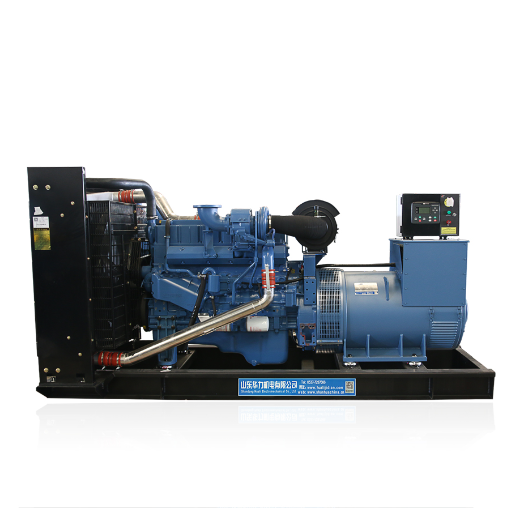
Two ideas get confused here, and almost every source on the subject says so before moving on.
The standard treatment of phase sequence opens by naming this one of the most confusing points in electrical work. Phase sequence is a property of the supply. Direction of rotation is a property of the load. The wiring between them is what connects the two.
A three-phase supply has three voltages of the same amplitude, each 120 degrees apart. They peak in some order, and there are only two possibilities. The phases can peak A, then B, then C, or A, then C, then B. That order is the phase sequence, and it is fixed by how the source is built and connected.
A motor has a shaft that turns one way or the other. Which way depends on the sequence of the supply feeding it, and on how its own windings are arranged. Swap any two of the three supply conductors and the magnetic field inside the motor rotates the opposite way. The shaft follows.
So the question “is my generator phase rotation correct” has no answer on its own. It only becomes a real question once you name a load and ask which direction that load needs to turn.
Why Generator Phase Rotation Has No Correct Setting
An alternator’s output sequence is set when it is built. It depends on the order in which the stator windings are arranged and on the direction the rotor turns. Nothing on the control panel changes it, and no site requirement is violated by the sequence a set happens to produce.
NEMA MG 1 describes the convention for a generator mounted in an engine-generator set: counterclockwise when viewed facing the end opposite the drive end, with phase sequence 1-3-2 for counterclockwise shaft rotation. That’s a description of the common arrangement, not a rule a site has to satisfy.
This is why a rotation meter at the generator terminals tells you less than it appears to. It reports the order of the three conductors in the order you attached the probes. Move the probes and the reading changes. What the instrument cannot tell you is whether that order matches what your loads need, because that information sits at the other end of the cable.
The terminal order is a measurement, not a judgement. Treating it as a verdict is where the confusion begins. For the set’s output as a whole, including the current and voltage figures that go with it, see our guide to the three phase diesel generator.
Which Loads Reverse, and Why They Keep Running
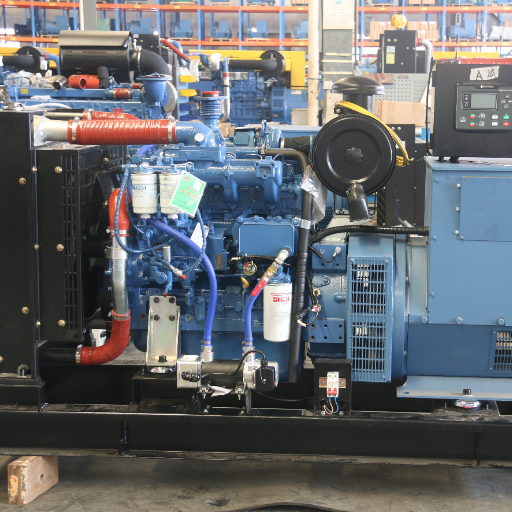
Some loads do not care which way they turn. Lighting, resistive heaters and most single-phase equipment have no direction at all.
Three-phase motors do care, and the ones that matter most are where a wrong direction causes damage quietly rather than loudly. The moment of highest risk is the start, when the motor first pulls its load the wrong way.
A centrifugal pump running backwards still pumps. It moves fluid in the normal direction through the casing, but at roughly 30% of its design flow. The pump looks weak rather than broken, and that is exactly why the problem travels so far before it is caught.
Once it is caught, the damage may already be done. In some centrifugal pumps the impeller is threaded onto the shaft. Running the pump backwards can unscrew it, and a loose impeller slams into the casing. That single event can destroy the impeller, the casing, the thrust bearing and the mechanical seal together.
Other loads have no tolerance for reverse rotation at all, and the cost of getting the direction wrong varies by machine:
| Load | What a reversed direction does | Room for error |
|---|---|---|
| Centrifugal pump | Still moves fluid in the normal direction, at roughly 30% of design flow; a threaded impeller can unscrew | Low, and easy to misdiagnose |
| Scroll compressor | Can destroy the compression elements | None |
| Screw conveyor | Carries product backwards through the process | None for the process |
| Positive-displacement pump | Pushes fluid against the system it was built to feed from | None |
| Gearbox or machine spindle | Damaged before the wrong direction is noticed | None |
| Fan or cooling tower | Moves air backwards, quietly removing cooling | Low, but compounding |
The pattern is the one to hold on to. A reversed load rarely announces itself. It underperforms, and underperformance gets blamed on everything except the wiring. If the machine in question is a motor you are also sizing for its starting demand, our guide to starting a three-phase motor on a generator covers that side.
How to Check Generator Phase Rotation Before the Load Runs
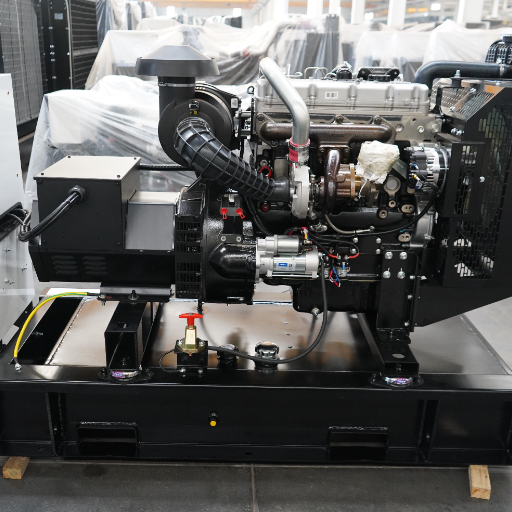
The check is cheap. Doing it before the load runs is what keeps it cheap. Four steps cover it:
- Uncouple the driven equipment. Direction is confirmed with the machine disconnected from its load, because the point of the check is to avoid the exact damage a reverse start would cause. Bumping a coupled pump to see which way it goes defeats the purpose.
- Find the arrow. Most pumps, fans and compressors carry a cast or stamped arrow on the casing or the fan cover showing the correct direction. That arrow, not the wiring diagram, is what you are matching.
- Read the supply. A phase rotation meter, also sold as a phase sequence tester, reports the order of the three conductors at the terminals.
- Confirm at the motor. A rotation tester reports which way the motor itself will turn.
The two instruments answer different questions, so it pays to be precise about each.
At the supply, connect the three leads, confirm all three phase-indicator lamps are lit, and read which rotation lamp comes on. An indicator lit on the wrong side tells you the order is reversed relative to your reference. The voltage you are measuring at those terminals is covered in our guide to three phase generator voltage.
At the motor, connect a rotation tester’s leads to the motor terminals with no voltage present, and turn the shaft by hand. The indicator reports the direction the motor will run.
Two caveats on the instruments themselves. A non-contact rotation tester that senses the shaft field will not work on a motor fed through a variable frequency drive, because the drive’s output does not behave like a plain supply. And its residual-magnetism method weakens on a motor that has been disconnected for a long time, so a null reading proves nothing either way.
Where the Correction Belongs
This is the part that decides whether you fix one machine or break the whole site.
If one load is running backwards, swap two leads at that load. Do it at the motor terminal box. Nothing else changes, because the correction stays downstream of the branch that feeds it.
If every three-phase load on site is running backwards, the correction belongs at the source. That’s the only case where swapping two conductors at the generator output is the right move.
Vasco found the difference the hard way. Chasing a single reversed conveyor at a packing plant, he swapped two phases at the generator output. Every three-phase motor on the site reversed at once, including a cooling tower fan and two process pumps that had been running correctly. One wrong direction became a plant-wide fault, found shift by shift as each machine misbehaved.
Two more points follow from thinking of rotation as a property of a pairing rather than of a machine.
Rotation does not travel with the equipment. A motor and pump set that ran correctly on one plant board may turn the other way when it is moved to another, because distribution boards are not always phased consistently across a site. Re-check after any move.
Two sources, one load. Where a machine can run from either the generator or the utility supply, compare the sequence at a common load point with the meter leads in the same order for both. Two sources can each read plausibly and still present opposite sequences to the load.
The terminal and connection work itself belongs with our guide to generator set electrical connection, which covers how the conductors are landed and sized.
Not sure which end of your site the fault is at? Send us the driven equipment list and we will help you trace it →
What Catches a Wrong Sequence Automatically
A phase sequence relay watches the order of the supply and blocks or trips when it is wrong. On a site where a reversed motor would be expensive, that device costs a small fraction of the equipment it protects.
What such a relay detects is the supply order, and it blocks the load from running until that order is right. How the set’s own controller announces and configures that protection is a separate subject, covered in our generator control panel functions guide. The split is worth stating: the relay senses, the controller reports.
Where a drive is already in the circuit, some variable frequency drives can reverse the rotating field by parameter instead of by swapping conductors. That’s a convenience for the motor the drive controls, not a substitute for checking the supply.
A correct sequence does not help if the phases are unevenly loaded, either. For what unbalanced loading does to a set, see our guide to three phase generator load balancing.
Frequently Asked Questions
What is phase rotation on a generator?
Phase rotation, also called the generator phase sequence, is the order in which the generator’s three output voltages reach their peaks: A then B then C, or A then C then B. That order decides which direction a three-phase motor turns. The generator itself has no correct order. The correct order is the one your loads need.
Does phase rotation matter on a generator?
It matters to the load, not to the set. A generator produces its output regardless of sequence. The sequence only becomes a problem when a motor at the other end of the cable is expected to turn a specific way, which is true of pumps, compressors, conveyors and fans.
How do I fix a motor that is running backwards?
Isolate and lock out the supply, verify zero energy, then swap any two of the three motor leads in the motor terminal box. Leave the ground and bonding conductor alone. Re-check rotation before returning the machine to service. Correct at the generator only if every three-phase load on site is reversed.
Will a pump run backwards on the wrong phase sequence?
Yes, and quietly. A centrifugal pump driven backwards still moves fluid in the normal direction, at up to about 30% of its design flow. It looks like a weak or worn pump rather than a reversed one, so the fault is often misdiagnosed for weeks. In pumps with a threaded impeller, running backwards can also unscrew the impeller and destroy the pump.
Can a generator be rotated the wrong way?
No. An alternator’s sequence is fixed by its stator winding arrangement and the direction its rotor turns. What can be wrong is the relationship between that output and a load’s required direction, and that relationship is set by the wiring between the set and the machine.
Conclusion
Generator phase rotation is not a setting on the set. It’s the relationship between the order of the supply and the direction a load needs to turn.
Keep three things in mind. Phase sequence belongs to the supply and rotation belongs to the load, and confusing them is the root of most of these faults. A reversed load usually keeps running, so a pump that underperforms deserves a rotation check before a rebuild. And the correction is local: swap two leads at the motor that is wrong, and go to the generator only when the whole site is reversed.
Check the arrow, uncouple the driven equipment, and confirm direction before the load runs for the first time. That habit costs a few minutes and prevents a failure that takes weeks to find.
Send us your site’s load list and connection details, and our engineers will help you plan the changeover and verify rotation at commissioning.