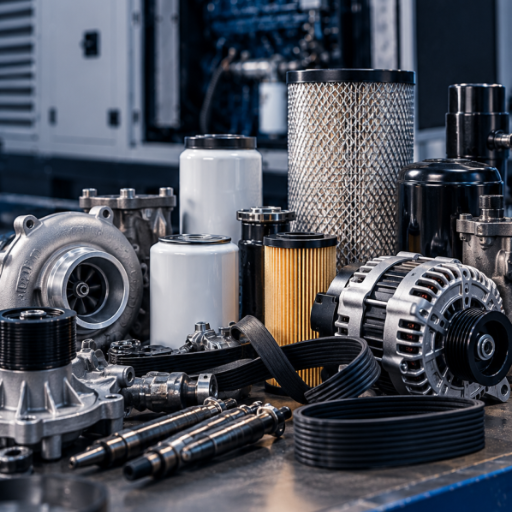


A generator maintenance kit is the pre-packed set of filters, belts, gaskets and sometimes fluids sized to one service interval, ordered by engine serial number rather than genset brand alone. At minimum it should hold the oil filter, fuel filter or filters and air filter for that hour mark. Oil and coolant are frequently sold separately.
Take a composite example from the field. Priya, a procurement lead at a packaging plant in Pune, ordered what the supplier called a “full service kit” for a Perkins-powered 200 kW set. The box arrived without engine oil, with one fuel filter where the engine takes two, and with a rocker-cover gasket the next valve-lash check would not need for another 500 hours. The technician finished the oil change from the drum store, but the missing second fuel filter left a restriction alarm pending on a set already back on standby.
Nothing in that box was counterfeit. The wrong interval tier and an unchecked packing list were the problem.
This article opens with what decides the order: which interval your hour meter and duty rating require, what must be in the box at each tier, and what suppliers often add that a plant workshop already owns. If you are holding a nameplate photo and a kit quote you cannot match to the engine serial, send both to our engineers before you pay. A photograph of the plate beats a model number typed into an email.
Key Takeaways
– A generator maintenance kit is matched to a service interval (typically 250 h, 500 h or 1,000 h), not to a genset brand name alone.
– Non-negotiable contents are oil, fuel and air filters; belts and rocker-cover gaskets appear at higher intervals; oil and coolant are often excluded.
– Standby sets need calendar equivalents: a set that runs 10 to 15 hours a year still fails a 12-month oil interval if nobody opens the box.
– Order by engine serial and duty rating, then verify the packing list against OEM part numbers on delivery.
– Service kits, overhaul kits and spare-parts inventory are three different purchases; confusing them is how workshops end up with the wrong box.
What a Generator Maintenance Kit Is (and Is Not)
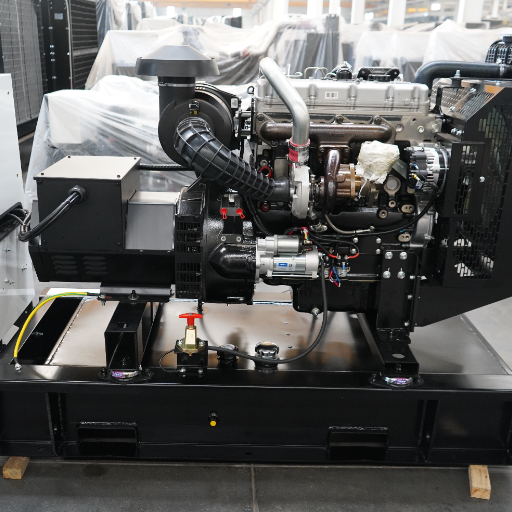
A generator maintenance kit is a pre-packed consumable set for one scheduled service, matched to the engine build and the hour interval written in that engine’s manual. It is not a spare shelf, not an overhaul package, and not a toolbox.
| Purchase type | What it covers | Typical trigger |
|---|---|---|
| Service / maintenance kit | Filters, belts, gaskets for routine service | 250 h, 500 h, 1,000 h or calendar equivalent |
| Overhaul kit | Liners, pistons, turbo, head hardware | Major rebuild interval or measured wear |
| Spare-parts inventory | Failure spares held on site | Lead-time risk, not a calendar |
| Tool kit | Wrenches, testers, torque tools | Workshop capability |
The distinction matters at the purchase order. FG Wilson’s major overhaul kits, for example, bundle a turbocharger, cylinder liners, injectors, pistons and a cylinder head under one part number for its 400 to 750 kVA range (FG Wilson major overhaul kits). That is a rebuild package. A maintenance kit refreshes consumables so the rebuild stays distant.
What you hold on the shelf for failures is a separate decision. Our generator parts guide covers the assemblies inside a set; this article covers the box that arrives when the hour meter hits its mark.
Generator Maintenance Kit Contents by Service Interval
The interval decides the maintenance kit contents. OEM kits are built around the hour marks in the engine manual, and those marks do not all need the same parts. What is in a generator service kit is therefore not a fixed shopping list; it is a function of the interval tier you are buying for.
| Interval | Must be in the box | Often included | Often excluded |
|---|---|---|---|
| 250 h or about 6 months | Oil filter, fuel filter(s), air filter | Fuel pre-filter, water separator, drive belt | Oil, coolant |
| 500 h | Same filter set; second fuel filter on multi-filter engines | Fan or drive belt, rocker-cover gasket prep | Oil, coolant |
| 1,000 h | Filter set plus rocker or valve-cover gasket for valve lash | Safety air filter, fuel pre-filter, thermostat seal | Oil, coolant, injector hardware |
| 2,000 h and above | Filter set plus inspection consumables | Oil sample bottles, coolant test strips | Major hard parts (overhaul territory) |
| Annual calendar (standby) | Same consumables as the hour tier you have not reached | Calendar reminder, exercise-log sheet | Assumption that low hours mean no kit |
Perkins runs this model explicitly. Its service-kit program covers forty and eleven-hundred series standard electrical-power builds with twelve kits. Each kit is built for one 500-hour service and one 1,000-hour service, and Perkins lists the contents as oil, fuel and air filters, belts, a rocker-cover gasket for the valve-lash check, plus a fuel pre-filter and safety air filter where the build requires them. Kit numbers are engine-build specific: T402377 belongs to an 1106D-E70TAG genset engine, not to every set that happens to wear a Perkins badge.
Kubota takes a different packaging choice that solves a common complaint. Its generator maintenance kits include the oil filter, air filter or filters, fuel filters, and one gallon of genuine Kubota oil. The filters alone are not a service if the drum store is empty on a night shift.
Caterpillar structures planned-maintenance kits as interval tiers: PM1 at 250 hours, PM2 at 500, PM3 at 1,000 and PM4 at 2,000, looked up by model and serial prefix. Parts for the specific interval ship boxed; fluids are often separate.
Retail listings show how packaging diverges on the same idea. A Generac liquid-cooled kit for a 48 to 50 kW diesel includes fuel, air and oil filters plus a funnel, with oil sold separately. A Pramac P11000 service kit lists two containers of engine oil, one oil filter, one air filter and three fuel filters. An Excel Power kit is sold either as filters only or as filters plus oil, with the first oil change at 50 hours and then every 250.
The pattern to remember: filters are the constant; fluids, belts and gaskets are the variables. When a quote looks cheap, read the contents list before you read the price.
Why Standby Sets Need Calendar Equivalents
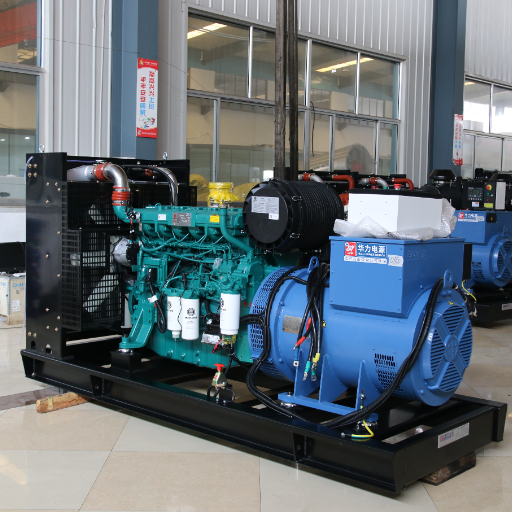
Hour meters under-report risk on standby power. A hospital or bank set that runs a monthly exercise test may accumulate only ten to fifteen hours a year. Oil still oxidises. Fuel filters still separate water from diesel sitting in a tank. Belts still take a set.
That is why standby maintenance works on two clocks. The hour clock serves prime and continuous sets that actually work. The calendar clock serves emergency sets that mostly wait.
NFPA 110 practice for emergency systems commonly pairs a monthly loaded exercise with semi-annual oil and lube-filter work and fuel-filter replacement. It also calls for annual fuel-quality testing and a load-bank test when the monthly exercise cannot reach load. Engine manuals add the same logic: Cummins genset schedules place filters at the six-month or 250-hour tier, whichever comes first on the unit you operate. (The NFPA 110 standard itself is published by NFPA.)
Amina learned this on a bank site outside Lagos. The 500 kW set had logged under forty hours in eighteen months, so the facilities vendor kept deferring the kit order. The oil analysis at the next annual visit still came back with elevated acidity. The set started when the grid failed. The kit should have been on the calendar long before that report.
Low hours do not cancel the interval. They change which clock runs it.
For the cadence behind the kit, see our generator service schedule and generator oil change interval guides. When monthly exercise cannot reach load, load bank testing is the check that proves the set can carry what the building needs.
Three Things Suppliers Add That You Rarely Need
Kits are commercial products. Padding happens.
- Consumer spark-plug sets bundled into diesel genset kits. Industrial diesels do not take the small-engine plug kits that fill air-cooled portable listings. If your kit photo shows a gap gauge and two plugs next to diesel filters, someone assembled the wrong shelf.
- Marine cooling extras on land-cooled sets. Impeller kits and zinc anodes belong to raw-water cooled marine gensets. A packaged industrial set on a radiated or remotely cooled circuit does not need them in the quarterly box.
- “All-in-one” fluid kits that charge OEM markup for bulk oil and coolant. If your plant already buys 15W-40 by the drum and coolant by the tote, paying kit pricing for one gallon is convenience, not specification.
What is often missing matters more than what is padded. At 1,000 hours the rocker-cover gasket is not optional if valve lash is being checked. Multi-filter engines need the second fuel filter and often a water separator in the same delivery. The belt profile must match the casting, not the photograph.
Marco, a workshop supervisor at a cold-storage site in Rotterdam, learned the packing-list habit the expensive way. A “complete” kit arrived for a 500-hour service without the belt. The set could not return to auto mode until a local supplier opened. Checking the list against the manual before the technician broke the seal would have caught it.
Our spare parts list for emergency sets covers what to hold on the shelf. A maintenance kit is not that shelf. It is the dated consumable delivery for one service.
How to Order the Right Generator Maintenance Kit
Order in this sequence:
- Read the engine serial number from the data plate, not the genset model alone. A genset can carry three serials: engine, alternator and set.
- Confirm duty rating and hour-meter reading against the interval in the engine OEM manual.
- Ask what one box covers. Perkins kits are written to cover one 500-hour and one 1,000-hour service. Other suppliers sell single-interval boxes.
- Ask what is excluded. Oil and coolant appear on some lists and not others.
- On delivery, check the packing list against the part numbers before the technician opens anything.
For brand-level lookup mechanics, our engine parts by brand guide covers how Perkins, Cummins, Weichai, Yuchai and Deutz resolve serials and supersessions. The kit order starts in the same place: the plate.
Send us your nameplate photo and the hour-meter reading with the next service due. Our engineers will tell you which interval tier you are buying for before a quote leaves the desk.
OEM Kit, Assembled Kit, or Filters Bought Separately
Three ways to fill the same service. The choice is not “kit versus no kit”; it is which source of generator service kit contents matches your warranty position and your store.
An OEM kit matches the build and keeps the warranty path clean. Under warranty, and on engines where the manufacturer ties coverage to genuine parts, this is the default.
A distributor-assembled kit is acceptable when the packing list names every part number. Without that list you are buying a guess.
Separate filters (a diesel generator filter kit assembled in-house) only work when your store already stocks the exact current numbers and someone owns the cross-reference.
The full genuine, OEM-equivalent and will-fit argument belongs to our genuine versus aftermarket generator parts guide. This article only needs the kit-level rule: the interval decides the contents; the warranty position decides the source.
ShanHua builds generator sets from 8 kVA to 4000 kVA with engine partners that include Cummins, Perkins and Weichai, and we support installation, commissioning and training for maintenance staff. That training starts with reading the manual interval and ordering the box that matches it.
Frequently Asked Questions
What is in a generator maintenance kit?
Oil filter, fuel filter or filters and air filter at minimum. Higher intervals add belts and a rocker-cover gasket. Oil and coolant are often sold separately.
What is the difference between a maintenance kit and an overhaul kit?
A maintenance kit refreshes consumables for a 250 to 1,000 hour service. An overhaul kit rebuilds hard parts such as liners, pistons, turbo and head hardware.
How often should you replace generator filters?
Follow the engine OEM manual. Common industrial diesel patterns place oil and fuel filters near 250 hours or six months, with calendar limits dominating on standby sets.
Do genset maintenance kits include engine oil?
Sometimes. Kubota generator maintenance kits include one gallon of genuine oil. Many Generac liquid-cooled kits exclude oil. Always read the contents list before you order.
How do I order the right kit for my genset?
Start from the engine serial number and the hour interval, not the genset brand. Confirm whether one kit covers both 500 and 1,000 hours, then check the packing list on delivery.
Can I use aftermarket filters instead of an OEM kit?
It depends on warranty position and specification discipline. See the genuine versus aftermarket guide for the decision framework.
Conclusion
A generator maintenance kit is an interval product. The hour meter and duty rating pick the tier. The engine serial picks the part numbers. The packing list picks whether the service closes on schedule.
Four rules survive every quote: filters are the constant; fluids and gaskets are the variables; standby runs on a calendar as much as an hour meter; service kits, overhaul kits and spare shelves are different buys.
When the next service approaches, send the nameplate photo, the hour reading and the manual interval. Our engineers will match the box to the engine before anything ships.