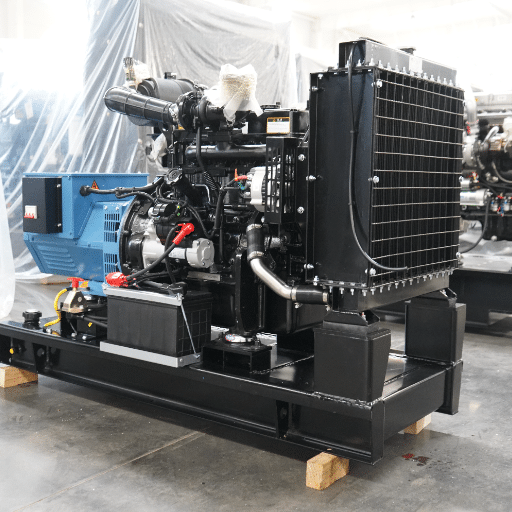


The classification of the containment of a generator is an influential factor that determines the way it will cater to your power requirements, its compatibility with the location you are working in, and the general satisfaction of the user. The same can be said for the picture one gets from soundproof versus regular power generators which can be completely different. Knowing the dissimilarities is a must for anyone who wants to choose while being well-informed and thus getting what they need, whether it is for a house, an office building, or a factory. This paper will look at the most important differences between soundproof and standard power generators and at their enclosures, main features, advantages and disadvantages so as to present a complete guide for your decision-making process.
Simple Understanding of Generators

Electric generators are machines that make electricity from mechanical energy transforming. They are used in various sectors such as houses, shops, and factories, to make sure that electricity is not interrupted when there is no power or a power cut has taken place, even in the middle of nowhere. The source of power for most generators is fuel like diesel, gasoline, or natural gas, which is used to run an engine attached to an alternator, a generator of electricity. Modern generators are manufactured to fit the varied power requirements, covering the whole spectrum from small mobile units for temporary needs to big fixed models for very tough usage. You have to know the basic workings and the main factors that are different generators apart so that you can select the most suitable one for your needs.
What is a Generator?
The electromagnetic induction principle is used by generator to turn mechanical energy into electric energy. The generator, primarily, has a bunch of main pieces such as the internal combustion engine, alternator, voltage regulator, cooling system, and control panel. The generator’s motor turns the rotor which generates electricity by passing through the magnetic field. The voltage regulator keeps the voltage within safe and steady parameters while the cooling system stops the generator from overheating while it is running. Generators are classified according to their power rating, fuel and application, and, therefore, are widely used in industry, business and residential fields. In modern generators, the technology has now become sophisticated due to features installed that include automated start systems, better fuel efficiency, and more precise monitoring of operations, ensuring a stable and efficient operation under different conditions.
Types of Generators
| Generator Type | Fuel Source | Key Features | Common Applications |
|---|---|---|---|
| Diesel Generator | Diesel fuel | High efficiency, durable | Industrial, commercial backup |
| Gasoline Generator | Gasoline | Portable, cost-effective | Residential, small tools |
| Natural Gas Generator | Natural gas | Clean emissions, reliable | Residential, industrial operations |
| Propane Generator | Liquid propane | Long shelf life, versatile | Emergency backup |
| Solar Generator | Solar energy | Renewable, environmentally friendly | Remote areas, small devices |
| Hybrid Generator | Multiple fuel sources | Combines fuel types, versatile | Industrial, off-grid locations |
| Standby Generator | Diesel/natural gas | Automatic start, permanent setup | Residential, emergency power |
| Portable Generator | Gasoline/propane | Mobile, lightweight | Outdoor activities, power tools |
| Wind Generator | Wind energy | Clean energy, renewable | Remote areas, specific industries |
| Hydrogen Generator | Hydrogen fuel | Zero emissions, cutting edge | Research, niche applications |
Importance of Generators in Daily Life
Generators are an essential part of our modern life and are responsible, in large part, for keeping systems working and being able to bounce back after a breakdown. They provide the electricity in areas where there is no supply or the supply is not reliable and so they do not let the services which are essential become less frequent. Hospitals, for example, use the backup generators to a great extent to back up the important medical equipment that during the outage, not only securing the health but also the system. And the industries are also in the practice of keeping the generators and ensuring that the operations are not hampered as they could entail huge economic losses due to the zero revenues coming from the shutdown
The diversity of applications that generators can be used for has grown as a result of the technical progress made. Green energy generators, like wind or hydrogen-powered, are more and more used as part of green house projects and thus they significantly contribute to the lowering of carbon emissions. People mean it is impossible to do without the portable generators nowadays as they are so handy for outdoor dwellers and construction places where location does not allow immediate power solutions. Moreover, there is much more residential use during the crisis, especially in the case of natural disasters, thus making the families still enjoy the lighting, cooling, and the life animation, while in the crisis period.
The continuous effort of balancing between practical aspects and environmental issues is being underlined by the persistent use of novel generator designs, e.g., the hybrids and the fuel-efficient ones. One of the major aspects that the new developments in the field show is that the generators are no longer just the backup power source, but rather the prime mover of the contemporary infrastructure, ways of living, and energetic durability.
Understanding Soundproof Generators

Soundproof generators have been created in such a manner as to deliver exceptional quality power and do so very quietly when compared to conventional generators. In general, the technologies adopted for reducing noise by these units include silent enclosures, high-tech mufflers, and vibration-absorbing mounts. The most important advantage of soundproof generators is that they are able to supply power continuously in situations where noise is an issue, like in houses, hospitals, or even construction sites where noise is on the high side. It is by obeying the more rigid noise-level laws that they offer; they have to be compliant with the conditions in the urban and sensitive areas yet still retain their adequate energy output.
What is a Soundproof Generator?
A silent generator is a device that produces electricity silently and it is used at a very low noise level in comparison to the normal generators. This is made possible by the use of superb noise-reducing methods, such as soundproofing mat, various gun-dimensioned and different shaped insolation boxes, different silencers, and duty machines. These multiple methods are visually and aurally different but they all take the same target to make the generator much quieter without losing the performances or efficiency. The soundproofing of the modern generators is such that the International noise limits are being exceeded and they are ranked in the Operating sound emission as below 75 dB(A) and they are classified as the tool to be employed in such places as the mentioned above.
Soundproof generators have been designed to have a very quiet operating operation but that is just the starting point to their versatility and efficiency. They are able to support a wide range of industrial and commercial uses: from stand-by power for very sensitive operations to the supply of power for intermittent use in remote areas. Besides, fuel economy and environmental compatibility are all improved through the engine and alternator design improvements, so much so that it complies with and supports the enforcement of the environmental laws prevailing. These are the types of generators that the plants could not perform without, for their construction is very reliable and also their silence-causing property to some extent.
Benefits of Soundproof Generators
- Noise Reduction and Compliance
Manufacturers design generators to be as noiseless as possible through the use of soundproofing materials and vibration-reducing technologies. At the moment, for instance, the decibel level produced by soundproof generators can be as low as 50-60 dB(A), the same amount as in a regular chat. Therefore, we can say, the soundproof generator is the quietest it has ever been and, on the other hand, it is also of the sort that is allowed by the new noise laws, which are becoming more stringent especially in major cities or residential areas.
- Enhanced Operational Efficiency
To the end of the product’s longevity and good repair of soundproof generators, the cooling systems become increasingly advanced while noise-isolating enclosures are added. According to a number of studies, by working with optimized designs, we can even count on 10-15% improvement in fuel efficiency that will cause a reduction in total operational costs.
- Versatility in Application
Their cutting noise pollution output makes soundproof generators applicable in spots with noise restrictions, e.g., clinics, campuses, and data warehouses, without the latter being disturbed. In addition, their strong and flexible build makes them equally good for the very different industries, viz. the building trade, the entertainment and the emergency service sectors.
- Improved Durability and Safety
The soundproof enclosure included serves as an additional frame not only making a generator more environmentally responsible but also protecting it from dust, rain, and high temperatures. The generator’s life and reliability are substantially improved by the presence of this protective layer, making maintenance less frequent. Moreover, many soundproof models are also provided with sophisticated safety features like the hot shutdown in the form of device-overloading or fuel deficiency, thus ensuring operational security.
- Environmental Sustainability
Eco-friendly technologies, like, low-emission engines, and fuel optimization systems, are put into the many soundproof generators to lessen their environmental effects. A wow factor is the compliance of the new generators with the emission standards of Tier 4 Final or Euro Stage V, thus, embodying the green energy solutions commitment.
- Convenience and Ease of Installation
Such kind of generators are usually compact, and in the form of modules which are easy to transport and set, thus installations are straightforward and fast. The built-in soundproofing of the generators has updated, so that the costly and time-consuming handling and treatment of the acoustics that are being addressed are no longer needed.
Applications of Soundproof Generators
- Healthcare Facilities
Hospitals, clinics and diagnostic centers are the main users of UPSs for the safety of patients’ lives and the continuous operation of medical machines that are indispensable. Diesel generators being noisy and polluting with their exhaust emissions have been highly influential worldwide and therefore their use must be regulated.
- Residential Areas
Soundproof generators are an ideal solution to have a quiet backup power supply for any particular family or group of people that needs a quiet power supply. Well, they may lack the edge of a diesel generator in terms of supplying power hence less pollution.
- Data Centers
With the global data volume exploding in a geometric progression, data centers must be online 24 hours a day, 7 days a week. For data centers in the heart of the city, it is advantageous to use soundproof generators to provide backup power that is reliable and inaudible according to the stringent acoustic regulations in these places.
- Events and Entertainment
Concerts, film shoots, and outdoor events all depend on soundproof generators. Power is the most necessary aspect that is also being taken care of. Stages, theatres, and other similar venues all make sure that not only the generators are the source of power but that they are noiseless as well as this is a critical issue because it can compromise the quality of live performances or recordings by ambient noise.
- Corporate and Commercial Buildings
Office buildings and shopping areas both rely on the provision of backup power to the important services like lighting, elevator, and HVAC and which is why they are directly connected with the soundproof generator units for this reason. Apart from the commercial settings and their zero-noise design is compliant with urban planning standards, which is good.
- Hotels and Resorts
The first thing that must be considered in the programs of every hotel and restaurant establishment is the patron’s satisfaction and the noiseless surroundings being the priority for the guests. As a result of this, soundproof generators have become an important part of energy solutions and at the same time providing uninterrupted services for them such as air conditioning, kitchen equipment, and lighting in power shortages.
Standard Generators: An Overview

Standard generators are an electricity supply credit for the sources of the failure reason and the time of the day, elaborated on in the first sentence. They could be running on gasoline, diesel or natural gas, and thus the adaptability can be assured accordingly with the cost and the availability of natural gas being the two possible cases. The generators operate based on the principle of converting mechanical energy into electrical energy and, therefore, still protect the systems and appliances that are of the utmost importance. Standard generators are an essential part of many households, businesses, and industries especially if power supply is something not to ever overlook. The current trend in the generator industry is that the essential aspects that have been considered are the efficiency, lifespan, and user-friendliness, turning them into a suitable option for a vast range of uses.
What is a Standard Generator?
Advantages of Standard Generators
- Reliable Power Supply
Standard generators are machines that can supply a constant and stable power output, hence their dominance in scenarios where 100% power supply is a necessity. An example of this is when a power cut occurs, and then these generators keep the necessary systems running, e.g., the health sector, data storage, and the internet.
- Versatile Applications
Standard generators are very flexible and adaptable to different environmental conditions and are commonly found in homes, businesses, and manufacturing environments. They are also popular for use in the hospitality industry for power supply on the construction sites, at the festivals, and for the projects that are far from the utility grid thus making them a good choice for the different levels of energy demand.
- Cost-Effectiveness
One of the main advantages of standard generators is their cost efficiency, especially in the case of temporary power needs. The upfront costs are frequently considerably lower compared to renewable energy systems and the further possibility of part and fuel availability, and at the same time maintenance, make them even more so. Their wide availability of parts and fuel further enhances cost-effectiveness.
- High Energy Output
Capable of running without interruption, the generators are built to handle heavy loads- outputting generous amounts of power for whatever the situation requires- ranging from a few kilowatts (kW) to several megawatts (MW). Through this economizing, the generators can supply power for entire small residential buildings or at least one side of a large industrial building with a large energy need.
- Ease of Maintenance
Maintenance is made easy by the general design principles that are applied to these generators. There are not too many technicalities involved in performing regular checks such as oil refills, filter replacements, or fuel system inspections. The various parts of these machines, which are mostly mechanical, are robust and made to last a very long time if properly maintaine.
- Quick Deployment
All these generators can be quickly installed and made operational, which is highly suitable for abrupt power blackouts; even the portable models come with very minimal dependence on power infrastructures, hence the flexibility in deployment.
Common Uses of Standard Generators
- Emergency Power Supply
Generators are a must-have during blackouts to keep the business running. The usage is so critical that the hospital cannot even think about operating without a generator if Con Edison fails. As made clear by a 2022 medical field study, nearly 72% of hospitals in the United States are provided with constantly active emergency power from the backup generators.
- Construction Sites
Construction is one of the industries where portable generators are used very often. The main benefit of these generators is that they are used with powerful tools such as mixers, drills, and welders which are essential for building homes and other infrastructural projects. According to the survey that was done among the construction industry, it is a common case that up to 65% of the projects in the remote areas are the portable generator as the project’s primary power source…
- Agricultural Operations
Generators are also used on farms for the same purpose, but their uses are more varied. As far as waiving of irrigation and refrigeration and power for lighting of large barns is concerned the tasks are some of the more important that the generators assure the farmers of. In the case of large-scale farming, the use of generators is so extensive that the absence or failure of one makes the farming unfeasible, especially in areas where the power supply is not reliable.
- Outdoor Events
Generators are a key element for all outdoor events, like concerts, festivals, and fairs. They provide power to the audio systems, lighting, food stands and other technical equipment. Portable generators are always chosen by the event hosts because of their high level of mobility and easy deployment.
- Industrial Applications
Factories and industrial areas are among the places that frequently use large-scale backup power plants to ensure that production is not disrupted during power outages. These plants have the ability to run even the biggest machines which are of the industrial type and the electrical system all the time to avoid any downtime. It is reported by various surveys that generators are installed as a part of energy resilience strategy in approximately 48% of all the industrial facilities worldwide.
- Residential Backup Power
Homeowners use smaller generators, particularly in regions that are frequently struck by natural disasters, to operate essential household equipment and devices. These include refrigerators, the HVAC system, and the communication devices. The global market for residential generators is anticipated to increase at 5.9% per annum, and its growing demand will be particularly emphasized.
Comparison: Soundproof vs Standard Generators

Soundproof generators are equipped with acoustic-reduction elements employing a sound-absorbing chamber and special materials for insulation. These generators are perfect for living areas, hospitals, and other places that require silence. They are more costly because of noise control material usage but are also better than the other types of generators in terms of the benefits they offer with respect to contentment and local noise regulations.
Standard generators, in contrast, put more emphasis on their functionality and cost efficiency than on cutting down the noise. They are quite loud in most cases, but very suitable for use in factories and in other places with a smaller level of noise pollution. When it comes to price and making a repair, standard generators are both the first choice because of the simplicity of their design.
In the long run, the operational setting and the priority of the noise control issue with regard to the budget would settle the question of going either for soundproof or standard generators. Soundproof generators are the best choice for noise-sensitive applications that require the most quietness, while standard generators are the most appropriate solution in the conditions dominated by toughness and money saving.
Differences Between Soundproof and Standard Generators
| Feature | Soundproof Generators | Standard Generators |
|---|---|---|
| Noise Level | Low noise emission, typically below 75 dB | Higher noise levels, above 80 dB |
| Design | Enclosed with sound-absorbing materials | Open frame, minimal noise insulation |
| Portability | Heavier due to soundproof enclosure | Lighter and easier to transport |
| Cost | Higher due to specialized noise control design | More affordable with simpler construction |
| Maintenance Complexity | Requires removal of enclosure for access | Easier to maintain with open design |
| Best Use Case | Noise-sensitive environments (hospitals, offices) | Rugged outdoor or industrial applications |
| Durability | Protected from outdoor elements, improving longevity | Prone to exposure, may require additional covering |
| Energy Efficiency | Similar efficiency, dependent on model specifications | Similar efficiency, dependent on model specifications |
| Market Availability | Available in limited models and higher price brackets | Wide variety, suitable for diverse budgets |
| Initial Installation | May require professional installation for proper setup | Easier DIY installation options available |
Cost Analysis
Cost always plays a vital role in the broad picture when it comes to the selection of the best option. For this reason, a close examination of the cost will certainly give clues to the return on investment for a long time. Usually, the top-of-the-line products will take the biggest slice of your budget, with the prices of the luxury models being in a range of $1,500-$2,500. On the other hand, medium options are typically in the price range from $700 to $1,200—that way, they give you the best bang for your money.
The cheaper category is represented by the low-budget products which are typically sparsely featured and can be found for less than $700 but may mean bigger expenses on maintenance or even replacement over the years. Cost is indeed one main aspect for sole consideration among other factors; however, it is better to factor in install charges and the total energy cost of the product for its lifetime when evaluating cost. They indeed add the dollar amount up to what should have been a rather more straightforward decision to make among different economic conditions.
Performance and Efficiency
The long-term stability of any system or product is evaluated through the key criteria, which are performance and efficiency. Through the progress of modern technology, we have actually witnessed the integration of certain features such as energy-economy operation modes, stronger computational algorithms, and material durability being increased. In the case of energy-efficient models, they often contain the optimized designs of the components that lead to less energy loss, thus having much better outputs of the performance but spending less on operational costs. It is mentioned in industry reports that products that get higher efficiency ratings can save about 30% of the energy as compared to the traditional variants, which is a big win-win situation in terms of both economy and ecology. This signifies the necessity of systems that are not only performance but also energy-hungry and it should be done to satisfy customers as well as to comply with the regulations.
Choosing a Generator Based on Your Needs

To guarantee the right generator, it’s a must to look at and do an evaluation of your specific power needs. The first thing you have to do is to know the total wattage of all the devices you are planning to put on power, taking into account both running and starting wattage. In the case of the home, portable generators with output capacities ranging from 3,000 to 7,000 watts are generally enough to power the needs of a small house like the refrigerator, lights as well as small HVAC. Nevertheless, for industrial or commercial usage, bigger standby generators with a minimum of 20,000 watts might be demanded.
Moreover, it is a good thing to take into account the type of fuel; and the common ones are gasoline, diesel, and propane. Each one of the fuel types has its own advantages over the others. For instance, when it comes to the diesel gensets, they are very good as far as durability and efficiency are concerned particularly as they are used heavily and the propane kinds are more environmentally friendly having that they have cleaner emissions and also the fuel can be kept for a longer time.
Go ahead with setting up the backup power systems along with the seamless conversion to the generator as the procedure to be followed if it is not a nuisance to the homeowners. Selecting the reliable, high-rated unit from the reputable company assured a homeowner to enjoy a steady and safe power supply with less noise and emissions. Moreover, to make sure the type of generator you have matches your requirements the best, consult the manufacturer’s technical data all the time.
Recommendations for RV Use
Make it a priority to pick a generator for RV use that is explicitly intended to be portable and has a good compatibility with the RV power systems. Focus on inverter generators for the clean and stable electricity they produce, thus guaranteeing the safety of sensitive electronic devices like the navigation unit, computer, and other devices with the same onboard requirements. A generator that provides power in the range of 2,000 to 3,500 watts would usually be enough for the majority of RV applications, including the use of air conditioning units and major appliances.
To save on fuel, it is advised to make use of dual-fuel generators, which can change the fuel source to either gasoline or propane and hence are very reliable for long usage and can cope with the different fuel availability conditions. When it comes to the noise level, it is a very important and critical factor to consider for the use of RVs. You should then buy a generator having a decibel rating lower than 60 dB to have a quiet and peaceful retreat especially in campgrounds or any other residential area where noise rules are set.
RVs have problems with weight and space and, thus, they are frequently equipped with limited storage spaces. Hence, for the process of transportation and set up, it is preferable to have generators that are small, lightweight and have built-in handles or wheels. Also, it is important to see to it that the generator is able to connect to the RV through RV-ready outlets like a 30-amp or 50-amp plug so as to eradicate the usage of adapters and also to make the RV power input compatible.
Rather, go for a manufacturer brand who has a good reputation with regard to product reliability and customer support. An extended warranty provider through the same dealer or company and with numerous service centers is indeed a welcome offering. Doing regular maintenance as per the owner’s manual will be of great assistance in terms of prolonging the life of the generator and, thus, making it more reliable and efficient for your road trips.
Which Generator is Right for You?
When comparing soundproof and common generators, it is crucial to consider your case and the place where you need the generator. Different from the standard ones, the soundproof ones are equipped with new noise-reduction techniques, which often include the generator itself being surrounded by a sound-insulating container, and this reduces the sound of operation below 60 decibels. They are best for locations that need very quiet operation, such as a campground with time restrictions on the use of devices or a construction site where nothing can be disturbed. It is common that the standard generators are much lighter, smaller, and cheaper because of having no need for those expensive and bulky noise-reduction features.
On the contrary, traditional power plants stress effectiveness in using money and the ability to produce more power, making them perfect for the ones who put performance before noise. The generators in question usually run at higher decibels and are not as quiet as the new ones, but on the other hand, are smaller, save more money, and are more accessible to many budgets. Even though they might not correspond to the strict noise restrictions in quiet areas, they still stand as a sensible solution for huge power needs that do not require quietness.
One way to help you with this decision includes to know your noise tolerance, how much you can spend on the generator, power requirements, and also the climate where the generator is to be used. The two types of generators are beneficial in their own rights, and by matching these factors with the goals of your operation, you will also achieve an optimum performance and effectiveness.
Reference Sources
- Noise Level Investigation and Control of Household Electric Power Generator
Read the paper here - Establishment of Safe Distances for Installation of a 500 kVA Sound Proof Electric Power Generator at a Non-Work Environment
Read the paper here - Determination of Actual Distances for Installation of a 100 kVA Non-Soundproof Power Generator at Residential Areas
Read the paper here