

While electrical failures rank among the primary concerns in domestic and business settings, they are very much misinterpreted and shrugged off because electricity can seem so simple to restore. Instances where the circuit breaker trips and the dome light works only when the player keys the ignition occur much more often than one would want to admit; however, the silver lining is that most people will implement the ‘light cures’, salvaging some operations instead of looking for the root cause. Such an outlook on short-term rectification of difficult situations is, however, dangerous as it takes the system apart even further and may result in destructive equipment setbacks up to serious cases of fire. This paper is intended to elucidate the drawbacks of such quick solutions in the electricity use span, the potential implications these drawbacks have with regard to safety and effectiveness, and the reasons for recommending a much more technical and coherent means of action as most preferably appropriate. It will provide readers with a better understanding of electrical failures and the hidden risks of quick fixes, to discourage short-term solutions before they snowball into giant problems.
Understanding Common Electrical Issues
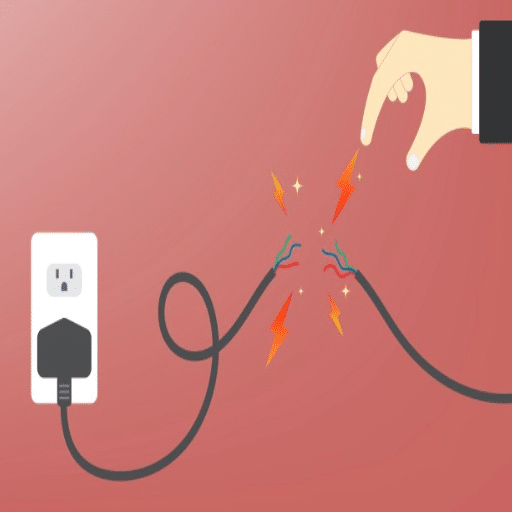
Irrespective of how the electrical systems are utilized, some electrical components simply lose functionality over time due to wiring faults, circuit congestion, or destruction of certain parts. As a result, irregular power or short circuits due to poor wiring become hazardous and a health concern. Exploring the first option, where the circuit might be uncomfortable with the demand, may consequently result in the circuit breaker tripping many times. Outlets, switches, or light fixtures that have been compromised due to physical damage can also impair normal use and create clear hazards. This paragraph highlights such electrical failures and the hidden risks of quick fixes, which can encourage non-involvement of an electrician when it becomes necessary.
Identifying Electrical Failures
Various factors can cause electrical failures, and the hidden risks of quick fixes cannot be ignored. Faulty wiring is the most common factor, which may occur due to poor installations, infrastructure that is long overdue for an upgrade, or damage. Sometimes people experience disruption in electricity due to wiring problems, which may be demonstrated by the flickering of lights, outlets that are warm or have a dark color, among others, and an unending stench of something burning. Another issue that should be covered is the overloaded circuits, for instance, how they come into place. Circuits come into place when the breakers are very high, so they frequently trip, or when in some parts, there is no power. However, some issues are even more dangerous because of the loose or tight belting due to corrosion, which causes a lack of efficient energy supply or even sparks, which cause fires. On top of that, defective devices or old electrical systems – for instance, faulty breakers or burnt fuses – also contribute to poor performance of the entire system, hence the safety concerns.
Major and minor symptoms like flickering lights, humming sounds around outlets, and partial outages are vital to address to maintain the reliability of electrical systems. Applicable safety regulations are also maintained by using competent electricians to fix those problems, and also improve the durability of the wiring system and components used.
Recognizing Warning Signs of Faulty Wiring
Faulty wiring is one of the many electrical problems considered to have warning signs, but it is rarely noticed until something more serious, such as the occurrence of shocks or fires, happens. When lights begin to dim or flicker upon turning on appliances, this is one of the signs of short circuits or worn-out wiring. If the circuit breakers continually trip or the fuses always blow, then it is a sign that there is overloading or uneven distribution in the electric circuits. Additionally, an easy telltale would be a strange burnt odor with nothing unusual around, a brown or red discoloration of walls, especially around the sockets and outlets, or sounds of buzz or crackle from an electrical switch. Furthermore, all instances of exposed wires or metal outlets with sparks are a cause for concern and should be addressed without delay. In order for these problems to be corrected and effectively dealt with in order to avoid any danger, the majority of people’s households normally opt for a professional to assess and do the necessary repairs.
Common Electrical Issues in Homes
Wiring in buildings can sometimes be stressful, especially for households, because they can face some of those challenges from time to time and require fixing. The following is a short list of the major electricity-related problems:
Tripping of Circuit Breaker More Than Usual
A circuit breaker is likely to keep tripping because of the excessive current flow, which is excessive enough that it would not be very healthy for the system. In such a case, this becomes a possible message of overloaded, bulged, and weak electrical circuit components that need to be rewired or all of the parts removed for new ones.
Lights Flickering or Going Dim
Flickering or dimming lights without a cause might be caused by wiring which is loose or connections which are corroded or an overloaded circuit. If these problems are not rectified on time by a qualified electrician, a fire due to electrical connections is likely to occur.
Dead Outlets or Those Which Feel Warm To the Touch
Outlets that do not work or those that feel warm are, in most cases, because of broken wires in the circuit, loose wire connections, or sometimes even defective outlet components. This is usually electrical arcing, which can turn into a danger of fire if no one minds.
Burning Odors or Odd Noises
A burning smell accompanied by humming and sparking sounds coming from the vicinity of electrical equipment or sockets is a result of the overheating of some wires or components. It is advisable to immediately take necessary measures to diagnose and fix the problem to prevent further damage.
Old or Inadequate electrical boards
The majority of homes were constructed with electrical panels that are past their time and, therefore, insufficient to handle the needs of today’s appliances and gadgets. A lot safer, as well as adequate capacity for the current energy use, is accomplished through a contemporary panel, which is quite an upgrade.
In case of the aforementioned situations, householders should see a professional electrical engineer evaluate the situation, instead of unnecessarily breaking things. Symptoms that are indicative of failure in the electrical system should be addressed in their early stages to avert further damage and make sure that everyone in the home is safe.
The Risks of DIY Electrical Repairs

Significant risks are associated with trying to fix electrical systems with no training, such as injuring oneself, posing fire risks, and more serious injuries and even fatalities. Not knowing how to manage risk poses a danger of getting an electric shock or causing a short circuit. In such cases, however, there is a risk of great bodily injury and even death. Furthermore, incorrect fixing may lead to electrical failures and the hidden risks of quick fixes, such as possible breakdowns or even fires within the house. Visitors raised the need for tenable solutions by professional aid that is within the confines of the existing legal framework on electrical systems, where they have the required skills and standards. However, to keep one’s family out of danger, always employ a properly qualified person when carrying out any dangerous or complicated work around the house.
Common DIY Fixes and Their Hidden Dangers
Fixing electrical failures
In most cases, homeowners handle the replacement of electrical sockets, putting back broken wiring or lifting circuit breakers, little knowing and understanding the hidden risks of quick fixes. Most of the time, when one does electrical repairs at home without any prior knowledge, one is taking a risk, either that of a shock, a short circuit, or even burning the house down. With strict regulation within this sector, correction of these errors doesn’t come into play except through the issuance of a certified electrician to do so in a way that guarantees safety and compliance with laws.
Handling leakage and clogging
There are also men and women who have DIY skills, and their frustrations are overcome by fixing pipes facilitated leakage, or clogging drainage, and reinstalling accessories. Lying underneath all these simplistic operations is the fact that incorrect repair works will let water in, and these kinds of things cause fungus/mildew in the house or burst pipes. For many issues that amateurs cannot fix, experienced and equipped plumbers are available who can detect the source and take steps to prevent further damage.
Fixing roofs
While roof leak patching and shingle replacement sound manageable, the risk of falling whilst working at heights should not be taken lightly. Furthermore, poor repair work can destroy the entire roof structure, which necessitates more complex and expensive repairs to make. On the other hand, roofers can perform roof maintenance safely since they have a good mastery of their work and protective equipment.
Repairs Involving Gas
For jobs dealing with gas, such as repairing a stove or a heater, the worst possible outcomes could occur if repairs are not done correctly. There is a high possibility of asphyxia or explosion due to gas leakages. It is safe to repair and check such systems because there are certified experts who do all the servicing.
Wall Destruction
Tearing down the walls of the house, without checking whether they are load-barrier walls, could cause great damage to the structure of the house. Before performing any demolitions, the professionals will be in a position to put out some of these elements, like electrical failures and the hidden risks of quick fixes or plumbing systems, and many more, so that the integrity of the structure will not be compromised.
In the end, what appears to be a straightforward DIY project aimed at saving costs can bring out untold problems in their full extent. Hiring certified experts minimizes the chances of getting problems and maximizes the chances of perfect work to acceptable standards of safety. It is important to seek professional services as opposed to embarking on self-help services.
Overlooking Professional Help: When to Call an Electrician
Combating issues related to intricate electrical systems generally requires involving a person who has a valid license in the trade. This is necessary to avoid accidents and to be in compliance with the set standards. Such issues of installation or modification of circuit breakers, sockets, or wires become obvious when factors like prevention of fires, electrocution, and wrong installations come into play. It is also recommended for a homeowner to obtain help from an expert in case they experience the above-mentioned or other problems, such as burnt or flickering lamps, circuit breaker overloading, or disturbances of supply, as these problems hint at the presence of more serious faults that need to be addressed by an expert.
Besides, all those, and especially mounting appliances which require high voltage consumption, repairing electrical failures, and the hidden risks of quick fixes, may pervade the conservative approach in the absence of knowledge, hence the need for a guild specialist. Safety may become compromised when people opt for doing these themselves, which further includes failure to meet the set safety standards and codes in the region. In the end, the usage of a burglar satisfies accuracy devoid of induced hazards, which ensures the initiative is deemed safe over a lengthy span.
Electrical Hazards Associated with Quick Fixes
One should always avoid shortcuts while handling electrical problems, as they can be extremely dangerous if undertaken without the requisite knowledge and expertise. In the case of electricity, one of the major dangers is the risk of electrical shocks, which can be experienced whenever live wires or non-insulated components are touched. Fire is another established danger that is normally associated with faulty, overloaded, or sub-standard equipment and installations. Such quick fixes could also lead to unforeseen risks, such as the inner workings of equipment that can be damaged and compromise the equipment, in other words, could be termed as electrical failures, and the hidden risks of quick fixes and the side effects.
Electrical Circuits and Their Vulnerabilities

Issues generally associated with the failure of electrical systems are the possibility of such systems becoming compromised. One of the most common of these issues is overloaded circuits, which occur when the power demand on an electrical circuit is more than its capacity to supply. Such situations can cause overheating and fires. Poorly developed wires, as in the case of weak insulating materials idles, or bare cables without appropriate enclosures. This, in turn, predisposes the circuits to shorts, or in the worst-case scenario, arc faults. Another equally important issue is that most of modern infrastructure is equipped with old systems, which causes frequent electrical failures and the hidden risks of quick fixes. Solving problems of this nature necessitates compliance with installation guidelines, performance of regular checks on the systems, and provision of good-quality components as a necessary measure of constructing efficient systems.
Understanding Circuit Breakers and Overloads
Our Circuit protection model is one of the essential components in an electrical network, whose primary purpose is to protect the circuit from overloads and short circuits, resulting in electrical failures and the hidden risks of quick fixes. They shut down the electricity supply by trip shifting through the circuit bracking line, the minute the current crosses the safety barrier. This is known as an overload, and it’s simply putting on a Secure delay mechanism; however on some instances, it may arise when there is power applied to the circuit beyond its capacity. For instance, this is because there may be many energy-consuming appliances with very high currents switched on at a time, or there may be a device that has a defect but is still connected to the power.
Understanding electrical failures and the hidden risks of quick fixes is accomplished by drawing analogies, such as considering a missile fuse for a circuit breaker. Every chunk has its breaking point, and it is referred to as ‘fusible’. Why does one use a knife on hard shells of crabs instead of mawkishness? Taking care of one’s heart – or, more precisely, one’s breasts – why care for a circuit? Breasts break gradually, and that is the concern of the W-shaped illumination bar: ‘slow blowing’, ‘low heat’, and ‘quick heating’, ‘ameliorating’ ‘burning’ and ‘melting’. Overcurrent protection devices, built-in circuit protective devices, and ordinary circuit breakers with their thermal and magnetic tripping integrations do provide that protection.
Fire Hazards from Overloaded Circuits
In both homes and businesses, overloaded circuits are among the top causes of electrical failures. The excess heat generated as a result of the current below the maximum permissible level causes overheating, and this can affect the insulation in the wires and the materials around, leading to a fire. A tripping circuit is one of the most common symptoms of an overload. In extreme cases, you will even find the outlets on the walls, warm as if the power is still flowing. You may notice certain lights fluctuate or hear a buzzing sound within the electrical appliances. There are variables, however, which include up-to-code wiring, misuse of cable extensions, or excessive plugging in of electronics in one power socket, among others. Furthermore, the exponential growth of electronic devices over the past several decades has given rise to an increasing number of cases of electrical failures and the hidden risks of quick fixes such as electrical overloads.
Problems such as these are addressed when loads are distributed across different circuits, improvements are made to aging electrical systems for user safety, and circuit breakers, as well as wires that bear the appropriate current ratings, are used. Installing Ground Fault Circuit Interrupter (GFCI) as well as the Arc Fault Circuit Interrupter (AFCI) serves as a wrapper for such devices by preventing specific detectable malfunctions with the potential to cause fire outbreaks. The system shall always be inspected by a qualified electrician for conformance with the applicable codes, and any unsafe circumstances that may endanger life or property shall be avoided.
Loose Connections: A Hidden Risk
Deficiencies in electrical connections promote safety hazards chiefly because of the heat buildup in the connection due to the provision of highly increased resistance at the junction. As a result, overheating and arcing can occur, and extreme instances can result in electrical fires. Among these issues are improper wire terminations, vibrations that loosen the connections over time, or screws not tightly secured in electrical panels and outlets. Indicators of concern include lights flickering, breakers frequently tripping, or burn marks appearing around outlets.
The risk can be avoided through the regular checking and servicing of electrical connections. For example, may be necessary to adjust terminal screws periodically, check that the wires are well held in place, and ensure that the components of the devices are the right ones for the circuit. Also, thermography is quite an advantage as loose joints failing can be a source of local heating, which can be identified quite clearly. Prompt corrective measures of these problems assure a stable and safe electrical system, therefore minimizing risks of operations and initiating no expensive programs for repair activities in the future.
When to Hire a Licensed Electrician

Hiring a certified electrician becomes a necessity, especially when there is some complicated or dangerous electrical work needed. New wiring and electrical panel installation, circuit repair, and adherence to the particular electrical codes are activities where issuing safety measures requires a licence. More so, any projects involving high voltage systems, any health and safety elements, and projects warranting permits must be managed under the supervision of a certified individual. The work they do is not only efficient but also precise and error-free in the sense that it meets the set regulations.
The Importance of Professional Electrical Work
Proper installation and maintenance of electricity structures serve as public health measures. Therefore, the services of competent engineers are, Acne useful. While general renovation works are. Karlie, a general construction manager, says that electricians undergo a significant amount of training on the functionality of electrical systems and the dos and don’ts so that they do not cause any electrical fires, shocks, or system malfunctions. Proper training enables such professionals to work with electrical systems and solve challenging problems as well in residential and business areas. Professionals also make sure to acquire all required permits along with the completion of their work by following the national and local IBLA and decision criteria. Except for support installations, engaging in electrical works can result in unavoidable costs or severe consequences, hence necessitating the services of skilled electricians.
How to Choose a Qualified Electrician
Choosing an appropriate electrician is a critical decision that needs thorough planning and evaluation. Firstly, look at the contractor’s qualifications and ascertain that they have the appropriate licensing, insurance cover, and certification to ensure compliance of the work with both national and regional regulations. This is backed up by the possession of a license, which implies having the necessary skills for the job as well as concern for safety in one’s work. Secondly, examine their degree of experience as well as specialization, more particularly if the job is one of a kind, for instance, commercial works or complicated electrical systems. Obtain a few references or check online reviews to help you gauge the level of satisfaction from their previous clients and the image of the contractor. Therefore, an important aspect of this is data obtained from multiple clients, for example, in the case of electrical failures and the hidden risks of quick fixes, and hence, every project, how well it was managed and/or done, can be reviewed.
Moreover, I would suggest obtaining written and precise bids from different electricians so as to clearly understand their rates, time span, and the inclusions in the price package. Try not to choose the services of the minimum cost, as that might put the quality at risk. Once they commit to a particular job, find out if they guarantee their work with warranties or any guarantees, as this further shows that their services meet some professional standards. Finally, make sure you work with a person who is able to clarify everything you inquire about and to convey detailed messages to you regarding the particular procedures and how they should be done. These procedures are useful to ensure that the right electrician is chosen for the job, who can perform safely and effectively.
Understanding Electrical Panels and GFCI Outlets
The role of electrical panels, or breaker boxes, is to act as the core component of a building’s electrical structure. Electrical energy is transferred from the utility service to each circuit of the house, and its components include overload, short circuit, and even fire protection mechanisms such as circuit breakers or fuses. As for the recent electric panels, the power ranges between 100 and 200 amps, while the correct allocation of circuit labels is very important for effective maintenance and solving problems, since most electrical failures are due to overload and functional breakdowns that require pinpointing the hidden risks of quick fixes.
Outlet-specific GFCI monitoring devices, commonly known as ground fault circuit interrupter outlets, consist of a wide range of safety equipment meant to stop individuals from unnecessary current flow in the presence of a grounding circuit. Such outlets protect the recipient from electric currents and cut off the electricity immediately whenever an imbalance is found to exist, since it refers to the danger of current flowing in the wrong places. These are installed in rooms in areas where there may be water, for instance, in bathrooms, water heaters in kitchens, garages, and outdoor areas, owing to the National Electrical Code (NEC). It is possible to test them regularly by following the ‘Test’ and the ‘Reset’ buttons on the socket so as to remain operational and meet the given regulations.
Through proper use of electrical panels and GFCIs, the household can make its electrical system safer and more organized according to the relevant regulations.
Preventing Electrical Fires and Shocks

Every home can be made safe from electrical failures and the hidden risks of quick fixes if the right actions are taken. They are It is recommended that motions ensure that there is no fraying or discoloration of wires or plugs, which call for repair or replacement. To save the circuits from being overloaded, like plugging electronics into different wall sockets, as well as in some very inevitable cases, plugging the gadgets into power strips or surge protectors. All electrical appliances should be installed according to the law in respective cases; however, standards apply. They also include the installation of ground and arc fault circuit interrupters in places where they will help prevent such faults. Finally, seek the services of a qualified professional for periodic maintenance and any advanced construction involving wires and terminals.
Identifying Fire Hazards in Your Home
No home fire safety precaution should be considered fully implemented unless practiced from the side of risks inherent to them – the precautions themselves. Electrical failures and the hidden risks of quick fixes in every house are perhaps the most common reasons for home fires – not repaired old cables, ‘firing’ sockets, or damaged power cords. Furniture containing flammable substances, such as drapes, cloth, papers, or cleaning liquids, must be well secured, for example, when close to appliances such as cookers, heaters, or candles. Don’t forget to mention cooking as one of the major causes of fires. One must never leave a cooking range or stove unattended, and a fire extinguisher should be placed within reach to use in case of a panic fire. At the end, one should not place space heaters on any kind of object other than a fireproof one and keep them at a distance of three feet or more from any combustible object. Finally, smoke alarms should be tested without any batteries during the course of each and every year as a requirement or replacement of batteries should be made at least on an annual basis. These dangers have to be identified and controlled as part of obtaining or maintaining a healthy home environment.
Preventive Measures Against Electrical Shocks
To avoid dangerous electrical failures and the hidden risks of quick fixes, I make sure all equipment is correctly grounded and checked for any damage before using it. I ensure that outlets are not overloaded, and if ever necessary, I use surge protectors. In the operation of electrical appliances, I ensure that my hands are dry and never use electrical fittings in or near water bodies. Moreover, I regularly inspect the cords and the cover plaques over the plugins, replacing them whenever damage is observed to avert any more risks. Therefore, such measures make it possible to ensure safety is observed and potential dangers averted.
Maintaining Your Electrical System for Safety
Maintenance and proper use of the electrical system are necessary to sustain its safe and functioning condition. First of all, perform a thorough inspection of your existing cabling systems, outlets, and circuit boards to check for any wear, rusting, or damage. Wires that are worn out or not current must be replaced before an overload occurs, which could lead to fire. Only licensed electricians should make significant repairs and modifications for safety reasons, as well as in accordance with the provisions of law.
The other thing to consider is cleanliness — make the electrical panels, fittings, and, of course, the other areas clean without any dirt, dust, or moisture that may cause short circuiting or electrical failures. In addition, when utilizing appliances, do not exceed the maximum load per outlet and follow the manufacturer’s specifications. There are even devices such as overload protectors and circuit breakers that help prevent excessive electricity and damages on appliances that result from high voltages.
Lastly, each month, test the functionality of smoke detectors and ground fault circuit interrupters (GFCIs) to verify their good working condition. This foresight provides protection and improves the efficiency and durability of the system. These steps are a key component in ensuring the safety of properties and individuals.
Reference Sources
NIOSH Electrical Safety Manual for Students
A manual from Duke University focusing on recognizing and controlling electrical hazards.
Electrical Safety Program – UC Merced
A detailed program document discussing safe practices and the importance of avoiding quick fixes under pressure.
Invisible Threats: An Investigation of Electrical Hazards
A PubMed Central article exploring the causes and risks of hidden electrical faults.
Frequently Asked Questions (FAQs)
When should you consider contacting a repairman if your household device is the reason for the sparks or a breaker that keeps tripping?
If sparks or heat, bad smell, and the circuit breaker’s continuous tripping are encountered due to one of your appliances, it is about time to call a qualified electrician and get the needed repairs done. These occurrences might end up due to the outlets and the switches being overloaded, or there might be machine-internal problems like damaged components, or there might be issues with the wiring system that could heat things up to an extent where an electrical fire can break out. Still, our skilled electricians will examine and fix the problems, and eventually, nothing but peace will prevail. So, why take the risk of an electrically caused fire when a simple call can make the house secure for the family? That being said, shall we leave the worrying to the professionals? Would you agree on that note?
What are the most common hazardous electrical conditions that homeowners tend to overlook the most?
The homeowner needs to be informed about the loss of power that occurs when using multiple devices on the same circuit or when plugging several high-load devices into one power source. Regular electrical inspections and consistent maintenance are great at finding and fixing problems like bad wires and system failures before they can cause a fire or someone might get an electric shock. A lot of customers who depend on blanket circulators, electrical signs, and industrial coolers are not aware of the significant electrical consumption that these devices use up, and that could lead to future issues if not resolved.
Why is maintenance of electrical systems often neglected?
Neglecting the electrical maintenance, small issues grow into huge breakdowns: for example, loose connections that contribute to the heat and resistance, parts that break down because of their old age, and installations and repairs that no longer comply with the safety regulations might be the major contributors. Consequently, the electrical system might not function properly, potential safety hazards could emerge, and the lifespan of the household appliances might be shortened. A well-planned inspection regularly, accompanied by repair work of good quality, can avert a disastrous situation and extend the operation of the system without trouble for many years.
What are the main reasons for calling a licensed electrician instead of trying DIY electrical solutions?
Would you wish for me to nudge you away from the subject of electricity before you sustain irreversible damage? Yet, the thought of associating fire with a domestic thing like a radio is in itself rather off-putting, and one may ask if a cable containing aluminum inside is what has caused the toast ground, or the problem may be the worn insulation. No matter how you come to think of it, the whole truth is that a common incident resulting from electrical failures–visualized in the companion diagrams–may be more than just loose connections, that is, powerstream stoppage. This is true because this is the main cause of smoke, and such a basic fault as loose connections does not cause enough heat to melt the cable. At this point, it becomes almost impossible to count the types of electrical issues that are floating around the homeowner, and many of them, which are hard to spot, may actually be present.
Could the fires really be caused by plugging too many devices into a single circuit?
Yes, those are overloaded circuit-related problems. If you plug too many high-draw appliances at once or use the strip power outlets beyond the design capacity, the current and the heat produced in the circuit would be higher than safe levels and could be enough to melt insulation and ignite surrounding materials like wood. Moreover, this is the most common electrical problem, and it has a lot of fire as potential consequences. That’s why it is really important to know how to evenly distribute electric power among different circuits, and if anything seems to be not right, the first person you should always contact is a licensed electrician.
When is the time to ask for help in the case of problems with your electrical system, and what are the signs?
A burned area, a wrong color, a faint hum, poor connections, and the overheating of outlets and switches are only some of the factors that can cause house fires, and that is why every dangerous situation is to be controlled with the proper electrical service. Moreover, there are other dangers, like a flawed connection or a defective part, that can lead to electrically induced fires. The sooner the mentioned issues are attended to, the more secure the household will be, and the more effective the electrical system will be at the same time.
How can the life of your electrical system and the protection of your property be guaranteed by a regular inspection carried out regularly?
Regular electrical inspections prevent wear, overloaded circuits, and other problems from becoming serious issues by finding them in the first place. The inspection points out electrical maintenance that is needed, updates to electrical installations and repairs to be made, and gives solutions that are tailored to your electrical requirements. This proactive attitude is a great help in protecting your money and reducing the chances of an electrical system breakdown. It also makes you feel secure in the knowledge that the house’s electrical system was specifically installed to counteract electrical hazards.
What ought I to do if I experience intermittent power loss or frequent tripping—could it be that I am overlooking electrical safety?
When power outages are not continuous or occur frequently, it is a good indication of circuits being overloaded, faulty wiring, and failing breakers. If those electrical problems are not being addressed, they could actually be serious and result in such a significant loss of electricity and even fire as a consequence. The best thing to do initially is to shut off the affected circuits, take out the sensitive devices from the outlet, and call a licensed electrician to troubleshoot the issue.