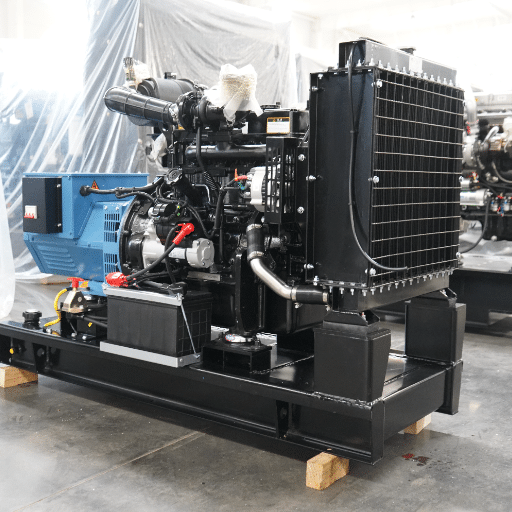


In situations where there is low or no supply of electricity to a particular location, there is a need first to weigh the importance of purchasing a quality generator. Of all the questions that may face potential generator customers, the most common one is that of whether to go for brand new equipment or just go for refurbished one. There are particular advantages and disadvantages of each of the above proposing wide range of considerations starting with efficiency in terms of operating cost and reliability of functions or even warranty and residual value. This article shall concentrate on comparing used and new generators and will attempt provide the necessary information for making such a decision. This will enable the reader to compare features of the two in respect to their pros and cons. Nevertheless, we will focus the summary on the analysis where the cut-off below power will be most effective.
Definitions & Initial Comparisons

A refurbished generator is defined as a used device that was not working as expected, but has since been repaired to function properly. The entire restoration process involved maintenance, servicing, and repairs of all damages or malfunctioning parts. Such devices are refurbished to be in near-new condition, although their quality might be poor, especially due to old age or overuse. They are often sold to customers who look for affordable and environmentally preferable variants.
A new generator, on the other hand, is a new one, which, however, is a better and normal one that has not been assembled. Its features are advanced and also has warranty for its repairs. Certainly, those new machines are able to run for longer periods than used machines. Still, they are relatively expensive than used machines.
It is true that, when set side by side, rebuilt generators mostly observe cheap prices and also cause less harm to the environment since they use fewer materials for fresh production process. On the other hand, fresh generators are likely to last longer, have more advances in terms of technology and improved warranties which makes them more appealing to those who opt for sophistication and longevity in usage.
What is a Refurbished Generator?
A remanufactured generator is machine which was used at one point of its life but was later found to be faulty and diagnosed; thus, some systems were replaced, others repaired. The majority of these machines are sourced from trade-ins, all customer returns etc., or the machines that were only used for a short time, for example in commercial and industrial areas. Most of the time that is in use of refurbishment, the key elements, such as the engine, alternator, and control systems are restored in order to remove defects and improve performance in some instances. Most of the remanufactured machines and more specifically the generators have to conform to standard testing procedures so that they can be installed. This is also because it is economically viable and logical to salvage a used or faulty good like a generator at a much lower cost than purchasing a new one.
Understanding New Generators
The Latest crowd is equipped with state-of-the-art technology and efficiency incorporating most of the requirements of the power generation technology. Operations such as this tend to include control panels to enable real-time monitoring and to aid remotely and accurately managing these loads. The efficiency of an electric power plant is another factor aside from the present value of emissions and weight. Patented high-efficiency engines and fuel systems with variable compression and multiple-stage ignition or stratified combustion are used in such applications. These operating modes facilitate optimal oxygen concentration in critical regions and for short periods, eliminating the oxygen transport lag time.
In addition, the new generators do not just up performance but are meant to be scalable, easily allowing integration with solar and wind energy systems in hybrid designs; an essential quality for those who are conscious about the conservation of the environment, such as businesses and households alike. Also, a lot of them have advanced safety features including the automatic switch off features, protection against overloading as well as being weather protective thus, ideal for several conditions and circumstances to be used including many others. Not only does the improvement of the inverter come with increased efficiency, but they last longer in terms of ability not just prolonging the power production era but also cutting down the operating cost to the service.
Key Differences Between Refurbished and New Generators
| Parameter | Refurbished Generators | New Generators |
|---|---|---|
| Cost | Lower upfront cost | Higher upfront cost |
| Performance | Tested for functionality | Optimal, guaranteed performance |
| Warranty | Limited or no warranty | Comprehensive manufacturer warranty |
| Customization | Limited customization options | Multiple configuration options available |
| Lifespan | Shorter lifespan than new | Longer expected operational lifespan |
| Condition | Pre-owned, restored condition | Factory-new, unused condition |
| Availability | Immediate availability | May require lead time |
| Initial Testing | Thorough testing during refurbishment | Factory-tested and certified |
| Environmental Impact | Eco-friendly through reuse | Higher production energy impact |
| Support | Limited or third-party support | Full manufacturer support |
Refurbished Generators Explained

A pre-owned generator, which has been restored to the most efficient working status by an elaborate inspection, correction and testing process is referred to as a reconditioned generator. Not any single aspect is left in a deteriorated state and not corrected in the meticulous evaluation of these units so that they are not only failure-free but safe to use. Such reconditioning, likely, also involves the order of new elements, cleaning, and testing for efficient working straightaway.
Reconditioned power gensets appeal to many people not only due to their low cost but also due to absence of waste on the environment. They do not have the inclusion of warranties and full technical support of the manufacturers available for the new units. However, they also add convenience of availability and less expenditure. These reusable devices are better in situation where financial issues and potential harm to natural electricity sources are the primary concerns.
What Does Refurbished Mean?
Remanufacturing is the practice of rebuilding an obsolete or used equipment to a condition that is like new. The process includes a thorough or partial disassembly of the equipment cleaning, repairing and replacement of worn out parts and restoration of failed mechanisms and components to their required standards. Sometimes items like used generators may get refurbished using the latest technology just to make them more effective and reduce fuel consumption. This helps, lower the cost of production since buying this costly machinery again is omitted thanks to this alternative introduced to serve the needs of sustainability and more efficient spending of funds. What we need to appreciate is the fact that even though these are not brand new goods, they are perfectly functioning to the extent that one checks in the market to purchase another new one, superiority in performance of the machine is never a case.
Benefits of Purchasing a Refurbished Generator
1. Cost Savings
When it comes to a beneficial aspect of purchasing an overhauled generator sets, money saving is a factor that cannot be ignored in that the cost of buying the new one is very high as compared to that one on a newly overhauled. Refurbished generators usually costed between 30%-50% of the original cost stipulating the category either new or used, therefore, is very useful as they are cheaper for organizations.
2. Reliability and Performance
Refurbished units are subjected to strict inspections and quality assurance measures before they are deemed compliant to industry specifications. Once such generators are completed for distribution to the market, especially with high grade renovations and replacement of worn out parts, they are capable of giving the same results as new generators and those are able to work for a quite a long period of time.
3. Sustainability and Environmental Impact
Purchasing a good functioning refurbished generator helps in the reduction of the amount of waste. By creating other uses for old equipment and materials that have reached the end of their cycle, less resources are thrown away into landfills and hence the push towards new resource manufacture is reduced underscoring the environmental requirements of the industry.
4. Quick Availability
Lead time for new generators is often extended due to high demand or specific production plans. Conversely, generators that have been refurbished are often quickly available to procure when there is an urgent need especially when within an emergency scenario, a time bound one should not fail to get necessary equipment.
5. Customizable Features
Refurbished generators are also very accommodative and accept new technological concepts and features that meet the specific needs of any modifications in the generators. Such a broad scope explains their tremendous demand among other services in certain sectors whose energy needs are simply too costly to ignore.
6. Proven Track Record
Unlike new equipment, however, that may have some of the design flaws that have not been quite rectified, known as latent defects, and may generally be afflicted by some unanticipated problems, used generators have a history of operation. Those are the strengths, limitations, and so on, which are all well understood upon studying the performance of the equipment in the previous environments served.
7. Warranty Options
One of the most reassuring features of the generators that have been restored, is that they often come with a warranty, so that the user can have redress in any case of malfunctions in handling fixes or servicing issues. The warranties for these appliances are typically not less than 6 months nor exceed a year, which indicates the trust of the Manufacturer or the refurbisher in the quality of the returned products.
8. Ideal for Backup Power Applications
It is worth noting that remanufactured generators can significantly mitigate the cost of reconditioning, as most are extremely expensive when brand-new. This is a cheap option. Especially with health and credit IT, non-operating or used generator sets can be organized effectively during electricity standoff.
New Generators Explained

New generators are systems of energy production that are bought and sold in new condition. Specifically, they are made to perform the best and are expected to adhere to current engineering principles. The good advantage new generators have over older generations is that they do include warranties often stretching from one year to multiples across the manufacturer. The use of new generators is hence encouraged whenever it becomes necessary to establish and maintain power generation that is both steady in performance and also conforms to stringent safety criteria. These range from electrical infrastructure, power plant production requirements and power grids. They can be run on numerous types of fuel and come in various power outputs and configurations thus enabling a purchaser to buy the most convenient equipment that satisfies their given criteria such as industrial, commercial and residential.
Benefits of Purchasing a New Generator
1. Enhanced Efficiency
Brands are constantly upgrading technology in order to cut costs and prevent energy losses. For instance, there is significant change in the design and maintenance of engines. The system helps contain fuel use for new generators by at least 20% as compared to earlier machines.
2. Lower Maintenance Costs
Technology usage in the upcoming high efficient equipment, improved design and materials minimized failure and the equipment will go for longer periods of time without need for any servicing or costly maintenance processes. It is a fact according to trade that first five years with new models have lesser upkeep of 30-40% than for the used gensets.
3. Improved Reliability
A new generator ensures consistent performance even under heavy loads or continuous operation. These units are manufactured to meet stringent quality standards, reducing the probability of unexpected breakdowns.
4. Warranty Coverage
Up to five years is the measured point that new power generators are attached to, being free from faults in materials, workmanship or performance, even such average issues as technology support and solutions within this device provided by the seller. This means that you will not worry once you purchase a generator in case it comes with a issue or an issue develops in operating it.
5. Compliance with Environmental and Regulatory Standards
These are energy generation devices that are built to adhere to environmental regulations and EPA standards, such as EPA Tier 4, for operations in the US. By doing these alterations, the systems do not break laws and also do not emit as many greenhouse gases which is pollution to the environment.
6. Customizability and Advanced Features
When you get next year’s model, it will likely offer smart control, internet of things energy provision, and the possible power using renewable energy sources with the generator unlike when they were first introduced in the market without such capabilities. These features allow for operational flexibility and are meant to help in very hot conditions where there will be variations in the demand for power.
Cost of Buying a New Generator
Specific prices for purchasing new generators are mostly known to everybody and are significantly influenced by factors that include type, capacity, brand, and any extras included. An average example takes into account medium-sized portable generators which stretch from $500 to $2,500 while backup generators for households with automatic switches usually lie between $3,000 and $100,000. It is worth noting that heavy-duty generators which are used for industrial purposes only are even more expensive and may retail for as much as $50,000 if taken the technicality of the equipment and the load into consideration.
Beside that, it should also be taken into account, that aside from the generator, there might be a need for its installation which costs starting from $500 and going all the way up to $5000 depending on the sophistication of the configuration and legal building requirements. There are several other factors that affect the total cost such as fuel types-diesel, natural gas, propane, efficiency levels, load management and remote monitoring. It may be better to buy a highly efficient genset with new, and possibly modern control systems because in the longer term it allows significant cost savings and has higher reliability, a good supplement for all – residential areas and business sectors.
Warranty and Support for New Generators
One of the most important aspects that should be considered when you are going to buy a new generator is what comes with it in terms of warranty and maintenance. It is common that reputable manufacturers of generators offer warranties ranging from 2 years to 5, the period depending on the model of the generator and whether it will be used at home or for business purposes among others. These warranties all cover damaged goods and mechanic’s charges, but the coverage varies from brand to brand. An extended warranty is another option that may be availed of, besides the default original warranty, and which ensures that repairs are made in the future, paid for early so that external repair can be done.
The helpful agent providing customer service help is additional system. This is simply agent also help when it comes to the repair or making of any technical aspect of one. Most should also 24/7 customer support, online help and the services of a professional technician. Some companies also do not offer free maintenance but rather charge it in the overall maintenance cost of their generator. Others are even are more extravagant; their plans involve machines that come with maintenance programs, in ensuring that the generator is excellently serviced.
Comparing Costs: Refurbished vs New

Most of the time people look at the cost of renewal or purchase of the goods in terms of capital invested. Generally, the renewed goods are cheap or cheaper in the market. It is often claimed that renewed goods should cost about 30 – 50% of the price estimated for new products. Yet the acquisition cost will bring most of the time place no concern as it may be lower than the product is based on its quality of refurbishing and warranty of the manufacturer.
Conversely, with cost in mind, the new products while high on budget often come with full warranties, several significant additional features, and last longer on the same application as the old ones. These warranties as well as new and appropriately enhanced technology tend to climinate the income that would otherwise be used to perform repairs and in certain instances they got greatly reduced or done away totally.
Cost Savings with Used and Refurbished Generators
Refurbished and used generators are a good option for those who want to capitalize on the investment in a more financially sound way. This often translates to a minimum of 20% – 50% less cost in buying the generator as opposed to buying a new one depending on the make, status, and specification of the generator. It is this drastic reduction in prices that makes them the go to solution for purposes of cost-effectiveness for companies or individuals whose budgets are much smaller.
Moreover, refurbishing includes upgrade or repair of any faulty parts making generators serve longer and less dangerous to people. Provided that lubrication and timely repairs are maintained well, a typical refurbished generator is likely to deliver performance that is almost equal to what a new generator would offer but at only a price segment. The buyer shall also consider other factors necessary for example the degree of technology and output per unit of these devices as well as attainment of optimal operation over the life of the operated devices.
Financial Decision: Is a Refurbished Generator Worth It?
The finances of a revived generator demand several keys; it is necessary to weigh its immediate cost in terms of long run benefit. It is a known fact that rebuilt generators on average remain 30-50% cheaper than new models which makes them an appealing proposition for cost savers. However, one must think about a number of things like the available guarantee period, remaining operational life span and present another cost which is the power consumption. For example, a new diesel engine may have higher costs in comparison with a remanufactured engine, but as the latter warrants a guarantee.
The analysis of operational data provides evidence that rejuvenation and maintenance of such equipment can deliver reliability that is comparable to that of new models. In particular low to moderate usage services. However, to critical infrastructure or heavy duty energy services a discounted life expectancy of the regenerated apparatus when compared to the brand new ones can lead to a disadvantage for the economic benefits. Due to this, purchasers are advised to tune up their energy usage to refurbished options that are up to par with the energy standards as well as those that help sustain the required performance, while keeping costs in check in the long run.
Long-term Value of New vs Used Generators
Certain aspects of the basic eternal investment analysis explained above, the environmental factor by examples of new and used generators, are more inclined appraisals where environmental pollution and conservation are in place. It should howeverl be understood that new generators tend to have more advanced technology with the ability to operate within narrow emission limits. This further minimizes release of greenhouse gases as well as reduces fuel consumption. This is therefore a viable option for firms that seek to comply with the administrative as well as sustainability behaviour over a very long period of time.
On the flip side, purchasing used or reconditioned generators is a good practice in terms of reducing waste in a given economy and most significantly in maintaining the lifetime of particular equipment in industry. Nonetheless, there is a likelihood that older models do not include new emissions treatment and control technologies. This means that there is a range of financial repercussions that might apply as the negative environmental effects increase in the process. Managers should therefore fully take this into account, especially when considering sectors or areas that are concerned with environmental protection.
Buying Considerations

Several parameters should be considered while making the decision of whether to go for a refurbished generator or a new one:
1. Cost Efficiency
The refurbished generators are designed of a lower cost as compared to the new one and therefore they are usually preferred whenever spending plan is a little bit tight. However much this could be the case, the user should identify the repair and the cause of the problem so that it does not prolong their dwelling any further.
2. Performance and Reliability
New generators have the benefit of using the latest technology and consistent performance with some form of the consequence of the manufacturer’s warranty. While that holds the truth, a refurbished generator, although operational, is expected to start showing signs of wear, thereby reducing its reliability over time.
3. Warranty and Support
Generators purchased directly from a manufacturer or authorized dealers are most likely to have a comprehensive warranty and customer service thus reducing the risks of loses in terms of finance. On the other hand, most of the refurbished units do not have any warranty and at most, a very limited one hence increase the cost of maintenance by resellers.
4. Environmental Impact
Consumables are one of the major sources of waste in industry and government. Harness the refurbished generators and eliminate both waste and the need for new production concurrently. But many of rats features compared to new era ones with much more advanced technology.
It is very important for the buyer to carefully examine requirements for using the machine including the cost implications and the options that warrant the suited equipment best. It pays to put saving money at the bottom of the priority list and go ahead to prioritize buying generators based on their fuel efficiency, ability to comply with emission standards and acquisition of a warranty because buying decisions can be very costly.
Assessing Your Needs: New or Used Generator?
When thinking of whether to buy a new or a second-hand generator, several key areas need to be looked at to ensure that the system is reliable, efficient and cost-effective. New generator systems will usually have state of the art features which might include greater fuel efficiency, increased safety precautions and compliance with emission limits such as the latest EPA standards like the Tier 4. Moreover, new products in the market are often sold with back-up and after-sales services which reduces down time and decreases running costs.
Used generators, on the other hand, represent an easily more pockets friendly option, particularly for lower power ratings customers or infrequently operated generators. In any case, buyers have to look out for the condition of generator, its age and the number of hours the generator has been operated. The tools of the present age are always useful for the Circumference of the used device that would ensure its suitability for use. However, some models are likely to have low effectiveness levels since technologies increase and the machines fail to adhere to strict emission laws which can result in higher costs throughout the life of the machine.
Determining total power output, conditions of installation, anticipated usage, and costs are crucial factors that have to be taken into account most essentially. In cases of high usage or those applications that are very sensitive and very important, it may be very advisable even, to install a new one, which has got new capabilities. For the rest of the users, it may be enough to cut costs and buy a second hand one.
What to Look for When Buying Used Generators
Evaluating the condition of any old generator you’re looking to purchase is an important step to assess its value and reliability more often than not. What you can do first is to examine the generator and try to find if there is some washed rust (if there is) or a little orange peel, and tears; that is an indicator of a lousy upkeep or age-related failures. You may ask to see the reading on the hour meter to understand the usage of the generator; fewer hours of operation will mean less wear, but it means absolutely nothing if the generator is missing.
Check the logs of the generator’s activities and references to make sure that the equipment was serviced as scheduled by the manufacturer. The most vital sections such as the engine, alternator, and the control board must be examined cautiously for performance and convenience. The generator should be put on a loaded basis for testing purposes so as to ascertain whether it performs as per specifications without any trend towards instability. In addition, it is important that the generator be checked for compliance with the present pollution standards and any other law guiding its operation in that area to avert any later adherence issues.
It is also important to determine whether there is compatibility with other systems and the existing parameters. Make sure that the power (kW) of the generator is within the range that your company wants and assess if the voltage characteristics are suitable for your machinery or the area. Additionally, learn how the fuel type such as that the turbine might be using diesel or natural gas, and the actual fuel renewable calculation so that one can estimate the future running costs of the system.
Only buy used generators from trusted sellers that offer some sort of warranty, return policy, or guarantee. This way of operating is even more secure so that if any issues come about after the purchase, one is safe from loss.
Reference Sources
- Pulsed Power Facility Refurbishment and Analysis
Read the document here - Generating Learning by Generating Wind Power
Access the paper here
Frequently Asked Questions (FAQs)
Should I buy a used or refurbished generator when considering generator options?
The decision whether to purchase a used generator or to go for a reconditioned generator is based on their power requirement and budget. Refurbished generators are an investment by rebuilding and improving the structure and components to functionally yield a more reliable machine than majority of available second hand generators. Preferably a reconditioned generator is superior due to assured quality and can be used as a backup power device, whereas for used generators, repairing the over used parts rather than replacing them may have some wear and tear benefits performance-wise, but quite a number of resets would be needed.
How do you weigh the pros and cons of purchasing a new generator versus used generators for sale?
Prior to drawing the conclusion on whether you should purchase a brand-new generator or go to used generators for sale, also check the warranty, provided with the equipment, the pros and cons that come with new purchases as well as long-term reliability characteristics and cost implications especially the cost of used generators. The appeal of a new system is that it usually comes with a new generator that includes the latest environmental features and a minimal amount of wear, thus reducing the need for the more frequent testing that is seen under the maintenance plans once the new systems are put in place.
Can I buy a refurbished generator from a reputable supplier to secure standby power during power outages?
Indeed, purchasing a second-hand power generator from a credible dealer might be quite a clever move to ensure availability of an extra source of power in case of blackouts, or even better, at reduced products price that would be the case in the original purchase of a new equipment. A trustworthy seller wouldn’t hesitate to provide the necessary refurbishment documentation for components that had been subject to refurbishment and any worn out diesel components that were replaced. Refurbished generators have had their functions on check with testing, and may or may not come with extended warranties which is quite necessary for a shut down system of power as a standby or permanently utilized system in a facility.
What does refurbished means in the context of a diesel generator or rebuilt diesel unit?
When we say a diesel generator has undergone a refurbishment period or when we say a diesel engine and generator has been refurbished, it means that such facilities have been thoroughly checked on the internal and physical part, repaired so that they could be functional, often times replacement parts are used due to the fact they are more than used up and/or even some signs of breaking down. Diesel engines and generators often include reconditioning steps that may involve mechanical rebuild, change of controllers and full testing of load banks to ensure for other power applications.