

Section 01
Understanding Three-Phase Generators

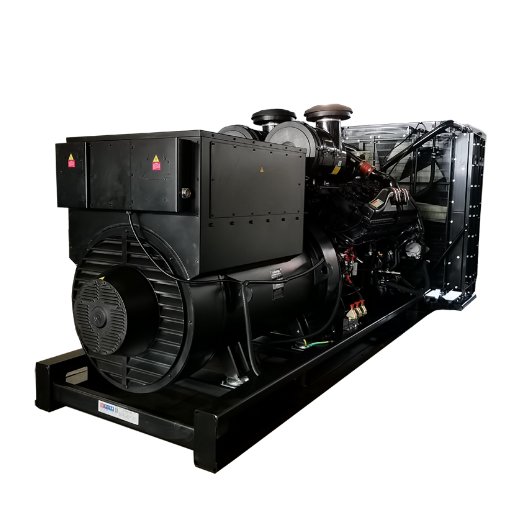
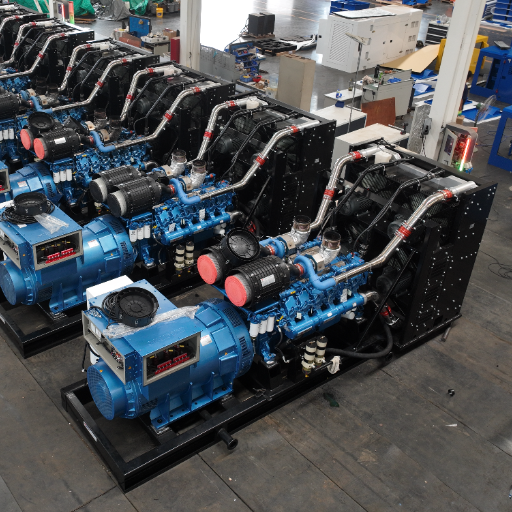
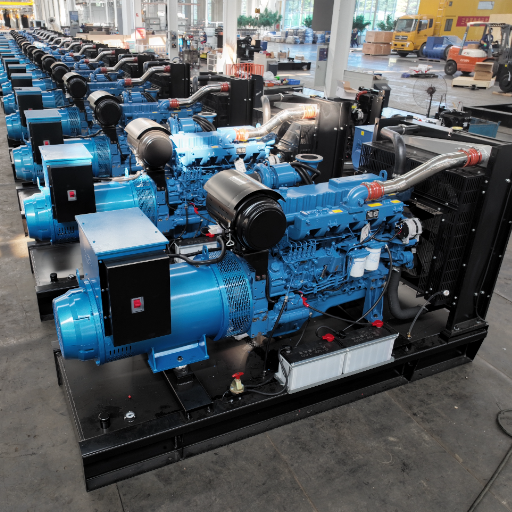
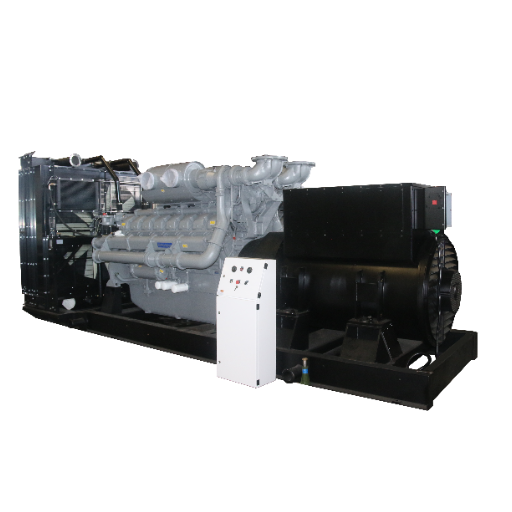
A three-phase generator is an electrical device that generates three separate, yet equal in phase voltages with 120 degrees of phase displacement between each voltage phase. Due to that the generated power is smooth and unchanging, the generator is most suitable for widespread industrial and heavy uses. Dealing with the conversion of mechanical advantages, often through an engine or metallic wheel, to electrical power using electromagnetism, the power is that which is generated by the generator. Lastly, dependable, high-powered units are most effective for several applications inclining powering motors, air-conditioners, and different heavy machines in commercial applications.
Benefits of Three-Phase Power
-
01
Higher Power Density
There are practical reasons for utilizing three-phase systems over single-phase. They also allow more power to be transmitted with less material. Comparatively speaking, Three-phase systems are about 1.5 times more efficient than single phase system (using the same conductor of copper or aluminium) at delivering the same amount of voltage and thereby reducing installation costs drastically for high power applications.
-
02
Consistent Power Delivery
Unlike a single-phase system that undergoes variations in power, three-phase power remains constant and continuous in its supply of power. This constant power supply is essential for the operation and maintenance of delicate machinery as well as any equipment sensitive to fluctuations.
-
03
Improved Efficiency of Motors
The mechanical performance of three-phase induction motors is superior in all aspects when compared to their single-phase counterparts. Additionally, these motors offer a more powerful start together with safety during operation making them preferable to use in industries having high demands on performance and reliability.
-
04
Balanced Load Distribution
The use of three-phase motor results in current that is divided into three phases throughout the system. This helps to prevent the situation of excessive current per unit area by spreading it within three conductors. This stabilizes the voltage and allows current flowing to be normal/stable hence improving the safety of operation.
-
05
Cost-Effective Long-Distance Transmission
Three-phase transmission offers advantages over single-phase systems when it comes to the distance that energy needs to be transmitted. Thanks to the decreased wastage of energy and the possibility to use less massive and thicker conductors for the same maximum power, the systems lower the costs of the infrastructure as well as the operating costs and limit the infrastructure investment costs that the utility firms have to incur.
-
06
Scalability for Expanding Power Needs
Three-phase systems are modular systems as a rule, which implies that they are discrete, and their performance can be changed easily. Moreover, they are capable of accommodating the increase in power consumption without the necessity of changing the majority of their components making them very practical for upsurging sectors as well as applications.
Applications of Three-Phase Generators in Industry
01 / Manufacturing
Manufacturing Plants
Three-phase generators are often employed in manufacturing settings as they can supply the voltage needed for running mechanical loads of high capacity. For instance, belt conveyers, turning and gear cutting machines are generally operated within the perimeters of the respective equipments functioning. This means that these generators need to be able to run high load machinery including industrial plants where continuous production is required.
02 / Technology
Data Centers
As reliance on cloud services and the amount of data increase, there is a need for three-phase generators systems to generate power to data centers. Data centers have to be compatible with virtually all business processes – they constantly require power feed to operate special equipment performing servers, air handling and data network routing. The high performance configurations of these systems are sufficiently to service the load of the modern data center with very minimal downtime during power failures.
03 / Energy
Oil and Gas Industry
The oil and gas industries, especially drilling and processing, involve a lot of fuel powered machinery that much reliable power. For the driving of pumps and compressors and other equipment which requires a lot of power, three phase power is introduced through the engines. These are also used to power up small installations and offshore drilling fleets where uninterrupted power is essential for continuous functioning of systems.
04 / Construction
Construction Sites
Three-phase equipment, specifically three-phase generators, are typically used on construction sites to provide support when it functions as temporary source of energy to equipments such as cranes, welding machines, concrete mixers where constant and heavy power delivery is needed. A good example in this case would be utilizing a 10 kVA three-phase generator for medium scale contracting works.
05 / Commercial
HVAC Systems in Commercial Buildings
In most cases hotels, apartments and other commercial establishments such as shopping malls are also fitted with some form of heating, ventilation and air conditioning system (HVAC). Considering that HVAC consumes a significant amount of energy, three-phase power is more efficient for supplying these devices without any difficulty and hence providing energy-efficient comfort to the users as well as ensuring the effective operation of the system in place.
06 / Transportation
Transportation and Railway Systems
Three-phase electric engines in electric trains/locomotives and ring also three-phase based power systems to power such equipments are a key usage of three-phase generators. These are also applied at airports for power to soft services as unloading baggage, lighting, among other operational equipment to ensure effective service provision with reliability and cost efficiency.
Differences Between Three-Phase and Other Generators
| Feature | Three-Phase Generators | Single-Phase Generators | DC Generators |
|---|---|---|---|
| Output Power | Consistent, balanced power output | Fluctuating output power | Steady direct current output |
| Efficiency | High power conversion efficiency | Lower efficiency for large loads | Moderate efficiency, depending on load |
| Voltage Stability | More stable voltage, minimal fluctuations | Prone to voltage drops | No AC voltage produced |
| Power Transmission | Ideal for long-distance transmission | Inefficient for long distances | Not suited for AC transmission |
| Applications | Large industrial, commercial, and railway systems | Suitable for small residential and portable devices | Used in battery charging and specific equipment |
| Cost | Higher initial cost, better long-term value | Cheaper, reduced lifespan under heavy loads | Variable cost depending on system size |
| Current Type | Delivers AC in three-phase cycles | Delivers AC in single-phase cycle | Produces only DC |
| Load Handling | Efficiently handles large, balanced loads | Struggles with high or uneven loads | Limited by DC compatibility |
| Reliability | Highly reliable for continuous operation | Less reliable for industrial applications | Stable but possibly outdated |
↔ Scroll horizontally on mobile to view full table
Section 02
Choosing the Right Generator Size

Efficient selection of the size of a generator always requires more attention to be given to the amount of power output that their solution will require. To do this, it is necessary to first determine the number of watts produced by each piece of equipment and element that the generator is intended to work on. In fitting motors, both continuous and the start-up wattage ratings of these equipment must be documented. Also take into account such conditions as consideration for surging in load and require more than the minimum power available.
For less critical applications, such as at home, a 5,000–7,500 watts generator can be used to provide power to few selected items, such as fridges, sump pumps and lighting. On the other hand, large generators rated at above 20,000 watts are used in industrial or commercial areas to operate numerous and heavy machines as well as other equipment. Always check your user’s manual and find out the manufacturer’s exact rated wattage; if you are unable to do so, it would be advisable to use services of professionals in that area.
Calculating Power Requirements (kVA)
To decide on power rating in kilo-volt amperes (kVA), it is important to grasp how apparent power (kVA) reacts to real power (Kilowatts or KW) with Power Factor (PF). The power factor (PF) is the proportion of the total power which is used to perform useful work, while the remaining part is lost due to network transients or reactive power.
Formula
kVA = kW ÷ PF
Example: A motor requiring 10 kW at 0.8 power factor → 10 ÷ 0.8 = 12.5 kVA
Real power, however, is the load or actual power absorbed by the equipment in kilowatt (kW) units. The power factor, on the other hand, represents the efficiency of the electrical system, typically in figure form within the range of 0 and 1. For resistive loads, e.g., circuit, generally lighting or heating, illuminating or heating devices, their power factor is quite close to 1. But for inductive loads, such as motors or transformers, their corresponding power factor tends to be lower, which is usually estimated at around 0.8.
Furthermore, when there are multiple devices in the system, the individual ratings in kw of all connected apparatus are to be averaged and the sum of individual kw divided by the average power factor has to be multiplied to find the total kVA. Calculating kVA appropriately is essential if the machine is to be operated safely and in addition adequate housekeeping is necessary in order to avoid the loading of generators or exceeding rated values of the electrical circuits.
Assessing Load Types: Single-Phase vs. Three-Phase
| Parameter | Single-Phase | Three-Phase |
|---|---|---|
| Voltage Levels | Typically 120V or 240V | Typically 208V, 400V, or higher |
| Power Supply Lines | Requires two wires | Requires three or four wires |
| Efficiency | Less efficient for high loads | More efficient for high loads |
| Power Stability | Prone to voltage fluctuations | Provides stable power delivery |
| Complexity of Design | Simpler wiring and installation | More complex than single-phase |
| Common Applications | Residential appliances, small devices | Industrial machinery, large motors |
| Cost | Lower installation and maintenance | Higher installation cost |
| Power Output Balancing | Cannot balance load phases | Phases balance power output |
| Maximum Power Capability | Suitable for low-demand equipment | Ideal for heavy-demand equipment |
↔ Scroll horizontally on mobile to view full table
Factors Influencing Generator Selection
- 01.
Power Output Requirements
It is important that the generators fulfill the requirements of the load to be expected considering the critical conditions of the maximum demand and the possible future load extensions. In case of domestic users, single phase generators of lower capacities might be enough for use while for industrial applications generally three-phase generators that can operate with heavy electrical equipments are the order of the day.
- 02.
Fuel Type and Availability
It goes without saying that diesel, petrol (gasoline), natural gas, and LPG (or propane) are significant fuel options in this context. In most cases, diesel driven power generators are utilized in harsh conditions due to their great strength and capabilities. However, external market dynamics also greatly compromise reasons that underpin such a choice of generator.
- 03.
Run Time and Fuel Efficiency
Older diesel and gasoline generators differ in fuel consumption and durable running time. It is recommended that the generator be built to meet the criteria in operating for a longer period with high energy consumption level. A generator with higher fuel efficiency not only lowers the operational costs, but also ensures that the users do not spend long hours involving cases of fueling.
- 04.
Noise Level and Environmental Impact
In residential and urban areas, the concern over noise, a unit of measurement in decibels (dB), gains substantial significance. In noise-sensitive situations, this will mean more extensive utilization of silent generators. Moreover, it will be necessary to address all and any issues related to the compliance of the gensets with the standards and orders when diesel gensets are the main source of power.
- 05.
Control Systems and Features
Recent models of generators are being outfitted with increasingly intricate systems of control, which include automatic transfer switches, overload protection and digital monitoring devices. The decreased possibility of confusion from the specifics of applying an inappropriately designed generator, coupled with the fact such devices create unnecessary danger to people.
- 06.
Size and Portability
For mobile applications, the design must be as small as possible and there needs to be emphasis on portability. In contrast, for use in industry or in other commercial applications, an immobile generator will require more than ruggedness; it will need serious installation as well.
Section 03
Site Considerations for Generator Installation

Location
It is wise to pick a location with good air circulation, i.e. breeze, somewhere with a cool atmosphere and no obstructions, to circulate air and prevent the risk of overheating. The site should also keep in mind dangers like rain, snow and think about rating distances recommend by the organization of the equipment.
Accessibility
Ensure easy access of the generator for maintenance, refueling and examination purposes. Avoid placing the generator in a place which is too confined. This will make its repair and maintenance a bit more straightforward.
Ground Stability
Making use of a concrete foundation to anchor it, place the generator on a flat surface away from vibrations to avoid risk while operational. Likewise, avoid putting it in areas that tend to be submerged or where the risk of soil erosion is high.
Noise Mitigation
Put the noise making generator poles farther away from residential or occupational premises to minimize distraction from unwanted noise. In case such a distance isn’t feasible, employ noise-reducing cases to meet the noise allowances.
Compliance with Local Codes
Check to be certain that the installation place follows the agreement of the local buildings and land usage laws. Get the correct approvals and inspection permits done in time to prevent any legal difficulties.
Location and Accessibility
When selecting an appropriate location for a generator, one has to consider access requirements for future maintenance and repair works. It should be such that one does not have to waste time in all directions to find a service engineer’s point of location. One should bear in mind the path width, the availability of service vehicles, how portable should equipment and or spares should be.
The location of the generator should enhance airflow to prevent its overheating. A place with adequate air circulation is better for the efficiency of the generator and also reduces the effect on people’s health as there will be no build-up of harsh sounding exhaust gases. The premises would also be such that it is not overgrown with debris or any other rubbish or plants which might block the access or result to fire interruptions.
Lastly, the use of advanced technology aids in and enhances the planning of distances and site layouts that minimize risks and provide comfort. This technology helps in preparing site plans provided that such features as distances are converted into physical measurements, and indistinct factors such as hazards, or other deficiencies are taken into account for purpose of safety and operational strength of the chosen location.
Electrical Connections and Earth Requirements
The electrical connections and their proper grounding are crucial to safety aspects of the system and economy of the system entire for the systems depending on the electrical systems. It is important to buy quality cables, connectors and protection enclosures that are recommended in this sector also the ones that are highly rated are the best because it will minimize the risks of shortening, sweeping, or even interfering. For instance, there is a need to use electrical machineries which should follow the standards that are in place in any particular region like the relevant articles of the National Electrical Code (NEC) or International Electrotechnical Commission (IEC) in case of exports, etc.
Grounding installations, or grounding purposes as it is known, should be planned properly to minimize the impact of short circuit currents and electric shocks. Another alternative in achieving this can be the execution of an acceptable earthing system designed by burying conducting rods, grids, or plates at some depths that could reach the appropriate system effectiveness. Soil resistivity, its moisture content, and the amount of corrosion each structure is supposed to have must also be accounted for before carrying out the grounding design. There are innovative technologies such as computer modeling and measuring resistance instruments to study how good a grounding system will be. Besides that, it goes without saying that applying surge protection equipment and proper earthing, serious losses and casualties caused by short-term voltage increase can be eliminated.
Safety Measures and Compliance with Local Codes
Importance should be placed on the safety of all users especially the grounding and earthing polymer surfaces put in place as they should also comply with the local codes. The guidelines that have been set as per local codes such as the US National Electrical Code (NEC) or the IEC standards from the international perspective provide the correct procedures for installation, conductor sizing as well as material specification. Inspections and spot checks of the system at various intervals are required so that the system is within the required standards for a suitable period.
For security improvements, it is also advisable to conduct regular maintenance of the earth-embedded components to check weather or corrosive induced degradation. For higher performance as a permanent measure, the use of high-purity, materials, for example copper or special alloys, prevails. Similarly, reasonable clearance zones between the grounding conductors and combustible materials eliminates the risks of rapid spread of fire in the event of faults in the electrical systems.
As of late developments in the systems that can monitor in real time have become more pervasive with use in areas such as health and safety. Soil adhering and its effective checking are the issues being dealt with in the enhancement of the safety of machinery and systems. The large risk of not controlling risk fully is understood to be a threat and is considered when contemplating the application of the model developed.
Section 04
Step-by-Step Installation Procedure

-
01
Site Preparation
Identify and secure a level and strong base for the generator while preventing any obstacles around the generator and ensuring that local guidelines on location and safety are met. Clean up the workplace and remove any debris if there is any.
-
02
Electrical Load Assessment
Compute the sum of energy requirements of all loads to be connected to the generator and make sure the rating of the generator power matches the total load. Mark the necessary equipment so that the power allocation will go from the most important to worthless.
-
03
Positioning of the Generator
Haul the generator to the leveled position and place it there after making sure it is placed in a parallel plane. Also, fasten the generator so it does not shake during operation.
-
04
Connection to a Transfer Switch
Either install an ATS (automatic transfer switch) for the circuit that is to be connection to the generator or manually wire the generator within the distribution panel circuit when utility power fails. Make sure the equipment complies with the limit requirements of electrical codes.
-
05
Grounding the Generator
Follow the manufacturer’s instructions as well as the national electrical installation regulations and attach an earthing rod to the generator. It is important that a low impedance conductive bond is provided in order to address the safety hazards brought about by electrical risks.
-
06
Fuel System Setup
Use a flexible hose to join the gas tank to the carburetor in the generator. Make sure all connections are sealed and free from any kind of leakage. In case of a generator that is powered up by a combustible fuel like petrol, make sure to take a check on the tank capacity and the quality of the fuel.
-
07
Electrical Wiring
Simply take wires and attach the generator output to a transfer switch or load panel. Also, inspect for correct or even excessed filing of the gasoline-powered generator. Safety precautions should be taken, especially at a generator changeover.
-
08
Pre-Operation Inspection
Check the generator for damaged parts, loose wiring and any oil or other leaks. Explore the oils, refrigerant and fuel levels as given in the instructions of the manufacturer.
-
09
Initial System Test
Initiate the generator based on the procedures provided in the user manual. After that, increase the load by stages and observe the parameters regarding the operation of the device, such as the voltage and the frequency of the generated power.
-
10
Final Operation and Maintenance
Check that there are no obvious problems with the generator running under load. Develop a set of maintenance activities that will involve regular services, additional oiling, and the testing of components in place to guarantee the longevity of the generator.
Preparing the Installation Site
Installation of the generator requires that the site is holistically prepared for the occurrence of the generator as well as it remains functional over a period. The first thing ought to be decided where it is legally permissible to erect or install a structure. The place should be even, devoid of any cavity, and well air circulated to counter the accumulation of damp because of stagnant air and a shortage of room for exchange of air. Keep the space around the generator free so that when it is time for repair or maintenance, one can locate the generator as well as prevent it from excess temperature.
By placing the generator in an outside area, place a strong base or mount made of concrete or another such durable material suitable to uphold or withstand the generator attributes and minimize noise generation when the system eventually becomes operational. To protect the interior space from CO contamination, this has to be away from windows, doors and return air intake louvers. Otherwise, a water resistant casing will be required in order to guard against the wet as well as snow, and low surrounding temperatures on the outside. A means of earthing should be available as this is crucial in case of any electric shock related emergencies, and the generator needs to be fused.
Every effort should be made to ensure that connection is within the reach of electricity and provision of fuel. It is all the more significant to have an adequate supply of fuel be it diesel, Propane or natural gas as well as safety features to prevent leakages or sabotage of such connection. In addition, the compliance of all electrical installations with the applicable regulations shall be given due attention, which involves the use of automatic transfer switches or other protection devices.
Mounting the Generator and ATS (Automatic Transfer Switch)
The correct mounting of the generator and ATS determines the degree of its efficiency and the lifespan of the entire system. The generator needs to find a platform on which it can be mounted which should be strong but may not cause vibration. In fact, a concrete pad is commonly used for this purpose because it is durable, level and has resistance from outside factors. Protective enclosures are required for outdoor installations to provide protection from weather, debris and any impacts which can also ensure compliance with the NEMA standards or which ever is specified for that particular site.
It will be essential to install the preamp vertically on the wall in order to properly and easily access the wiring connections. The apparatus is to be positioned near the main switchboard to reduce the length of the running cables and, correspondingly, any blending drops. All connections linking the generator, ATS, and the electricity of the building are expected to observe the National Electrical Code (NEC) or applicable code of practice. The cables insulation type, the size of the conduits, along with the earthing system ends, must conform to the principles of the above related standards for ensuring proper flow of current and the operation fault devices. Also, it is argued that there should be enough space to clear up both the generator and ATS for repair and heat release.
Section 05
Final Checks and Testing

Check 01
Visual Inspection
Check that the connections are properly fastened, all wires are in place and there is no visual defects on the generator or ATS. The working area should not block any materials that could catch fire easily.
Check 02
Grounding Check
Make sure that the generator has been sufficiently earthed as per the requirements of the NEC or local codes to avoid possibilities of electrocution.
Check 03
Load Testing
Carry out relevant examinations for testing the generator under specific load conditions in order to verify the generator can maintain its voltages and frequencies.
Check 04
Phase Balance Verification
Take voltage and current readings each of the three conductors to check for balance. The presence of imbalances could help in rectifying the installation or equipment defect.
Check 05
Safety System Validation
After this comes a need to test the circuit breakers, signals and automatic shutdown measures to check for their presence and functionality in case of an overload or malfunction.
Check 06
Operational Check
Turn the generator on and then load the ATS (Automatic Transfer Switch), which is how the electricity is distributed to the load.
Verifying Electrical Connections
The necessity of thorough testing and inspection for all electrical connections cannot be overstated when it comes to avoiding operating inefficiencies as well as dangerous scenarios. This includes checking each connection and terminal for defects, such as cracked, loose or missing insulation; signs of corrosion, or loose or tight fitting. It is important to use a calibrated digital multimeter to check resistance to the flow of electricity on sections where current should be present as this is typical of loose or wrongly fitted terminals. All three phase systems shall undergo continuity tests to confirm proper connection and safeguarding contacts against insulation failure.
According as well, the resistive faults can also lead to the increase of temperature of the points of contacts and hence can be observed with thermal imaging monitoring which in general is not simple in the course of the commissioning stage. Utilize conductors that are big enough to carry the given silicon iron losses under the optimal operating conditions without the danger of overheating and deteriorating the insulation system in the event of failure. All tests carried out have to be filed with all test data and actions that were carried out in resolving the issue in case of failure, else maintenance will not carry out the required changes with reference to standards.
Testing Generator Functionality
Ensuring reliable generator performance requires first, running it through the required functional tests. Running it under different load conditions. Work from verifying the ease of the generator’s start, and then test for the smooth transition to the operating speed where there should be no sound or disturbing delays. Make sure to have the voltage and frequency readings at both no load and full load situations so as to be able to confirm whether the measurements have been performed within the normal configurations. Also, check and keep the power output or any changes in the power output which will also help in checking the mechanical or electrical operation of the machine and fault diagnosis of potential causes of accidents such as misalignment and the degree of wear and tear property.
Advanced testing methods include the use of real-time data acquisition tools which enables the study of harmonic content, power factor as well as temperature profiles over a long period. Assessment of fuel system heating, cooling load cooling, lubricating oil and use of special mechanisms is needed to avoid engine or generator efficiency loss under steady state operation conditions. Simulation of generator’s reaction to power loss and working of auto main failure schemes can also be included. So, that makes the proper assessment of all the components of the genset possible without any further delay but it becomes possible effectively under contingencies.
Section 06
Frequently Asked Questions
How does a 3-phase generator installation differ from a single-phase and three-phase setup?
Installing an electric generator in three-phase is not a simple job since it has several difficult requirements when it comes to its voltage and current restriction–requirements that are needed to be passed in order to meet the voltage output needs of the generator which could be 208/240/480V, multi-tapped. One of the duties of an electrical fitter is to first understand the system will be separately derived or not and whether a neutral wire should be used in a three-phase system to power a single phase system. When working on power circuits, special care is needed to ensure that safety and efficiency in the implementation of bonding and service disconnect elements is up to the relevant codes.
What are the main considerations when connecting a three-phase generator to the main distribution?
Connecting a three-phase generator to the main service line is an involving process. Among the numerous solutions provided, acceptable methods include application of changeover circuits and automatic transfer switching to avoid backfeed and handle phase loads properly. It is necessary to ascertain whether the generator rotor satisfies the demands of star or delta connection configuration and to refer to the generator nameplates as well as control panels to determine whether it is 4-pole or other appropriate frequency. Finally, inspect the nameplates, stator windings, and control panels to understand them.
Can a phase generator supply both single-phase power and 3-phase loads simultaneously?
Most 3-phase generator installations can feed power to single-phase loads by connecting two of the three phases together, or by a middle opened taping of the windings, but it is necessary to establish the capability of such a generator and the appropriate wiring diagram. It is also important to note that the active load between the phases should be as equal as possible since even planning the utilization of loads such as hand tools, electric bed lights, and sensitive loads will result in the possible overloading of one phase while the others are nonexistent in terms of load energy. For particular cases, there is reliance on a special type of control panel or a transformer that will enable two n-phases at 240V or 208 V of the system bringing single-phase circuits.
How do you size a 3-phase generator in kVA for industrial use?
Specifying the mVA capacity of a generator necessitates inspecting the total loading capacities of all three phases in every expected load, factoring in the motor starting currents including the power factors to identify the correct mVA level. Consider specific loads like hand tools, the blower motors in HVAC systems and large induction motors where the starting current could be especially high; apply correction factors for the use of three phase four-wire distribution or even three-phase three-wire distribution. In addition to this, also allow for the possibility of extension of the system in the future and whether the loads are perfect balanced or not so that both the stator and the rotor of the generator can be taken to the optimum performance.
Reference Sources
- [1]
Solar-powered Shunt Active Power Filter Using an Advanced Inverter Topology ZSI: A Review — ieeexplore.ieee.org
- [2]
Optimised TSO–DSO Interaction in Unbalanced Networks Through Frequency‐Responsive EV Clusters in Virtual Power Plants — ietresearch.onlinelibrary.wiley.com