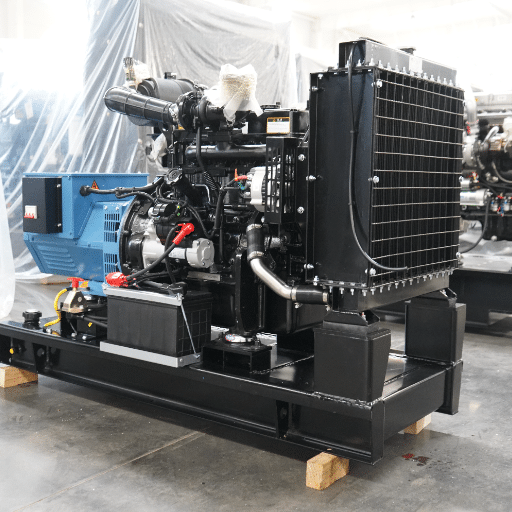


When it comes to energy reserves that are capable of surviving power outages, procurement of the appropriate is vital for both commercial and residential premises. In addition to the operational aspects various options like choice of fuel type and nature (diesle or gas) will also may effect not only the performance of the afore-mentioned facility but also complex construction and the worth of the same. Of course, in each of these cases, different rules and limitations will greatly help you in making decisions. This article addresses the problem of natural gas and diesel generators in detail, explaining the factors that influence their installation, maintenance, and application. Having gone through the material, it is expected that you will understand the requirements of any of the two options and hence pick one without any ambiguity.
Understanding of Common Generator Types

Generators are often divided on the basis of respective power sources, with natural gas and diesel generators the most common.
Natural Gas Generators
Natural Gas Generators rely on a steady supply of natural gas from a connected pipeline, and it has several advantages. The ones that stand out are its cleaner exhaust, reduced amount of noise level when running that is allows for residential areas use or even cities, especially with a striking proximity to the coast. Moreover, unlike the above mentioned sources, these generators often do away with the need of specific tanks to be placed on site but rely on the continuous supply of natural gas utilities.
Diesel Generators
Diesel Generators run on diesel fuel in an efficient manner ensuring that their output is not compromised due to the reliability of this type of fuel. As opposed to other generators they find importance in industries that require a high amount of power or are situated far away from civilization, as they tend to be more powerful and reliable. Simply said, diesel generators do need a full fuel tank that must be filled with the right type of fuel as well as maintenance and safety kits on time.
Most of the times the two types meet differing requirements, and the selection depends on the amount of fuel available and the size as well as the angularity at which the power is required.
What is a Natural Gas Generator?
A natural gas generator is a device that produces electric power by running on natural gas as the basic fuel. The generators exploit the principle of internal combustion, in which natural gas is turned down to the gas engine gives the engine no red-hot. There are pistons and/or turbines that compress gas, and mechanical energy is then produced and thereafter converted to an electrical output. Such units are very environmentally friendly as they burn very clean fuels which produces much less pollution compared to diesel or petrol generators.
There are well established pipelines that help in circulating natural gas and sufficient availability is there to fuel, thus in many cases natural gas is the most reliable and affordable energy source. Generators due to the kind of technology they are made of have widespread application like for home use, in a factory, as well as available as a part of the national electricity supply and more. Furthermore, the ability to generate power economically through natural gas generators is increased as there are usually much less expensive fuel costs and virtually no maintenance costs when compared to conventional diesel powered generator options. This is why they are the most feasible option in contemporary energy technologies because it managed to conquer the challenges of efficiency, customization and environment.
What is a Diesel Generator?
A diesel generator functions using a diesel engine which rotates to provide energy for a generator. These generators are powerful and ideal in cases of emergencies. They can also be used in more rugged situations such as military installations, hospitals or any kind of competition. There are also systems built for this in power for examples such as organizations or a complicated office situation. The same as a generator that is set in a place that is not in the city, or acute need of power.
The efficacy of diesel engines especially the advanced technology, is that they are designed for compression work unlike the ordinary spark-ignition engines. It enables the fuel used in the engine, to last for relatively more longer periods which ultimately saves money in operation for a longer term. Today, diesel engines generate most power are not only convenient for use when there is no electricity especially with the use of Automatic Transfer Switch (ATS) technology, but some of them are silent and endure harsh environmental conditions. Other than ATS, the modern diesel generators have a number of very attractive features like quiet case/enclosure and also elements of emission technology to comply with the prevailing environmental codes call for the green diesel generators.
Key Differences Between Diesel and Natural Gas Generators
| Parameter | Diesel Generators | Natural Gas Generators |
|---|---|---|
| Fuel Type | Diesel | Natural Gas |
| Fuel Efficiency | Higher fuel efficiency | Lower fuel efficiency |
| Initial Cost | Lower initial cost | Higher initial cost |
| Maintenance | Requires frequent maintenance | Less frequent maintenance |
| Lifespan | Longer lifespan | Shorter lifespan |
| Environmental Impact | Higher emissions | Lower emissions |
| Availability of Fuel | Widely available | Requires pipeline access |
| Noise Level | Higher noise levels | Typically quieter |
| Power Output | High power output | Moderate power output |
| Startup Speed | Faster start-up | Slower start-up |
| Application Suitability | Ideal for heavy-duty applications | Best for consistent use |
Installation Requirements for Natural Gas Generators

-
1Site Selection
While placing the generator make sure to keep it in a well-ventilated location out of doors or inside a suitable structure with venting dedicated to the equipment should overheating need to be avoided, to allow for safe expulsion of exhaust gases. And also, it is necessary to note how far the generator can be as per the manufacturer’s instructions in relation to the surrounding buildings. -
2Fuel Supply Connection
Ensure and guarantee an adequate supply of natural gas through hard connection, say, through city mains. Affix the generator in such a way that it fits the demand of the prevailing available fuel with a great deal of flexibility during operation. -
3Ventilation and Exhaust
Cooling a space and its utilities in which people stay occupies an important place. So one shall be installing an exhaust system that removes the exhaust away from the occupants of a building or other undesired locations as well as blows it away to some allowed areas instead. -
4Electrical Connections
In case of connection of the generator to the electrical system, the thing to do is to get in touch with an electrician. Moreover, the procedure includes fitting a transfer switch which should prevent reverse power flow, along with observing the existing local electrical regulations. -
5Grounding
Mount the generator in such a manner that it obstructs any risks of electrical damage in line with the guidelines laid down on health and safety, while securing its stability in the process. -
6Inspection and Permitting
All permits needed for the erection of the device should be acquired in advance and the installation should be subjected to local building codes and building practices inspections. Regular examinations regulate the underground systems and also prevent any operational problems.
Site Preparation for Natural Gas Generators
Proper preparation for the construction of a natural gas generator plant is very important for the safety, comfort, and efficiency of the operation. Choose a site that complies with manufacturer and local zoning standards. Ventilation of the site has to be wide enough to protect against spilling of exhaust gases and provide the necessary oxygen for combustion. Make the required no-clear zones and keep the operational area free from any interference or any combustions.
For the natural operation of the generator without instabilities due to various foundation issues, it is important that a stable, even ground is available on which the generator can be placed. To stop slip and vibration, the use of concrete pedestals or ready-made generator bases to support the generator is popular. It is necessary least to have no limitations for achieving fuel, electricity or maintenance. It is also a priority to establish that, the gas pressure and flow stated in the generator’s operation are corresponds to what’s on the ground.
It is advised that drainage concerns be attended to as they can raise safety concerns and equipment on the roof. Include a water cove issue near the genset may incorporate re-grading it or installation of proper drainage in place as needed. Lastly, make sure that the site is ready for commissioning in line with all existing codes like NFPA 37 and other similar ones in the locality.
Exhaust Systems for Natural Gas Generators
The design of an exhaust system for a natural gas genset serves to fulfill a number of critical functions from safely discharging combustion gases to the environment, to dampening sound levels, and to meeting environmental requirements related to gas emission. These systems are made to work with high-temperature gases needs to be made of stainless steel or other appropriate metallic materials to avoid wear and tear if used continuously for long periods of time.
A good exhaust system that has been expertly designed has the advantage of reducing the pressure difference behind the tips of a generator or other power generator which is of paramount importance in case of increasing the efficiency of the generator as well as the prevention of any undue stress from the engine itself. In addition, today’s exhaust systems are often equipped with catalytic silencers that reduce the amount of harmful emissions such as nitrogen oxides (NOx), carbon dioxide (CO), and uncombusted hydrocarbons, thus allowing compliance with the strict environmental requirements that are imposed by public authorities such as the EPA.
Furthermore, worn-out or damaged exhaust parts may lead to losses in performance. For instance, correct assembly and orientation of the piping are very important to prevent leaks and define the boundaries of the inner pot holding the system. Layering with insulation, for example, with the use of high temperature wraps, is common for protection of the components and containment or dispersion of heating loads. Furthermore, scheduled upkeep and preservation which is also focused on checking for possible encumbrances or any signs of corrosion naturally improve the working capacity of the generator and expand the life span of the exhaust system.
Installation Requirements for Diesel Generators

-
1Site Selection
Placing the unit in an area with adequate ventilation is essential for an ideal flow pattern for cooling and for the correct routing of exhaust gases outdoors. An indoor location is best and ideally, the floor should be level and not interfere with buildings or property lines, and should not have any combustible materials around it. -
2Foundation and Mounting
The generator should have a reinforced concrete base to help it in supporting its own weight and insulate vibrations when in motion. Anti-vibration pads assist in reducing the extent of object-induced vibrations. -
3Electrical Connections
When any electrical work needs to be carried out, it is good to ensure that a competent individual does the job in order to avoid infringing on the relevant statutes. A good earth is necessary to lessen the likely chance of an electric shock and to protect the unit’s other components from over-voltage. -
4Exhaust System Design
It is the purposeful direction of such system so that it moves all the exhaust gases away from the sites of operations in a way that adheres to the applicable law and permits safe activities to be performed without generating and unnecessary noise and emissions. -
5Fuel Supply
When installing diesel generators, it is important to make sure that the fuel storage tank is located in a designated space access to which is regulated and does not violate fire standard operating procedures. To ensure that the facility does not abruptly change from active to inactive mode, it is vital to carry out inspection and maintenance of the fuel system. -
6Accessibility
There must be a clearance around the generator to enable easy access for maintenance, which might lead to shut down at the time of emergency.
Site Preparation for Diesel Generators
For the proper functioning of the diesel generators, one has to ensure the area the generators are set on is well organized. The terrain where installation is to be done must look plain and able to support the dead and live loads of the generator and any other accessories connected to it. A good practice is to build a reinforced concrete pad to perfectly level the surface and absorb the bounces from the vibrations of the running diesel engine. The surface of the surface must include some ways of tying the pad to the ground in order to prevent it from shifting positions in case of extreme damages like earthquakes and typhoons, among others.
In the same vein, it is crucial to provide site grading and drainage technologies to retain the kinds of water resources that do not interfere with the generator – or its prospects in operation, as they might form massive water ponds. However, it is also important to observe all the necessary regulations once stormwater has been disposed to avoid polluting soils or aquifers with fuels or oils that may leak. For internal generator buildings, specific ventilation outsystems placed within the building should be able to dissipate any additional heat and gaseous waste according to the recommendations of OSHA and EPA.
In conclusion, measures to mitigate the negative effects of noise, such as sound-proofing literary schemes or noise barriers, can also help in stopping environmental noise in residential and urban settlements. Typically, such solutions would not only fit the needs in the area but would help the nearby employees to work comfortably. Therefore, procedures and elements that pertain this challenge like roughing in and precision cutting converge the design of the scope of a diesel and ensures such specifications, including the dimensions of the openings are consistent with the operations of the genset.
Exhaust Systems for Diesel Generators
Performance, environmental and safety factors are all reasons why the exhaust system of a diesel generator is very important. It is vital that any exhaust system for this equipment is effective at removing the combustion materials without releasing the often dangerous residues which can cause environmental pollution. These systems possess such aspects as mufflers, catalyses and exhaust pipes which reduce the noise emissions, thus enabling the equipments to operate under the standards recommended by the EPA regulations for the off-road category of diesel powered engines.
Diesel generators often reach temperatures of up to 1,000°F (537°C) if running on full power. Due to this reason, it is necessary to apply special materials and be meticulous in the design of parts and insulation in diesel engines and generators to withstand the heat in operation without it causing damage. Moreover, some provisions are requisite to prevent backpressure which can compromise the performance of the engine and cause unnecessary wear of components.
Emerging technologies such as Diesel Particulate Filters (DPFs) as well as Selective Catalytic Reduction (SCR) systems are usually part of the solutions to limit toxic emissions by delivering diesel-powered generators into compliance to Tier 4 standards in many jurisdictions. A well-executed setup and machine servicing, as well as punctual examination of exhaust system parts, assist in the proper performance of the generator while maintaining safety and legality measures.
Comparative Analysis: Diesel vs. Natural Gas Generators

- 1. Fuel Availability and Cost
Diesel generators are dependent on diesel fuel, which is found almost anywhere and is simple to store for a long period. However, it is worth noting that reliance on a natural gas generator, as compared to the diesel option, must always be accompanied by the mechanism of gas being available through a pipe, which limits the use of the technology in certain places. When buying, it is less expensive in terms of the cost of natural gas than the cost of diesel, although rates could be based on the availability and pricing. - 2. Environmental Impact
Compared to diesel generators, natural gas engines are more energy-efficient and therefore do not produce as many nitrogen oxides and particles that contribute to global warming and acid rain. This type of generator, used with all emission additives, does produce more carbon oxides (CO) and nitrogen oxides (NOX). - 3. Performance and Efficiency
The output from diesel generators is more than that of natural gas generators and are therefore more applicable in most applications with high power requirements. The distribution of power generation using natural gas-fueled generators is less effective, but there is a good operative performance and less noise during operation in stable areas. - 4. Maintenance Requirements
Compared with diesels, natural gas equipment offers less time-consuming maintenance even though their lifespan and resource consumption are less. Furthermore, complex maintenance is necessary in the use of natural gas plants; pipe connections and gas flow systems tend to be very delicate due to valves, filters and drying equipments located at different sections. - 5. Applications
Across various industries and locations, diesel generators can be found working for a variety of reasons, most notably their versatility. Just as often it will be seen that in residential and even commercial areas, natural gas generators emerge as the best option given their ease of connection to the gas supply and constraints imposed by the environmental preservation policy.
Power Interruptions and Backup Power Solutions
Power failures come without notice due to an assortment of factors like severe weather conditions, natural calamities, system failure or electricity overload. In order there is thus an increasing demand for short-term power solutions both at residential and industrial levels. This is where a potent features backup powers. Be it loss of data, physical damage to devices or the entire system experiencing a breaker which is costly to repair, a proper generation system has to be in place.
Recent advancements in backup power systems include automated transfer switches (ATS) technology that facilitates nearly instant transfer from electricity grid to emergency diesel generator in case of blackouts. Moreover, intelligent power solutions with onboard monitoring systems allow for the remote control and monitoring of generator status, fuel level, and other such essential parameters with accuracy and promptly.
Over the years, however, businesses and a lot of the power consumers in urban centers, have moved to use systems that have both renewable energy sources like solar and ordinary diesel generators. The advantage of such systems is that they not only lower the use of nonrenewable sources but also enhance efficiency in energy use and fulfill environmental regulation policies. Moreover, with battery storage technologies more in use, lithium-ion battery products are now compatible with backup generator systems also accommodating the most noise or emission-sensitive applications such as hospitals and data centers.
Emissions and Environmental Impact
Hybrid power systems help improve the environment with the combined use of renewable energy sources with the help of new technologies and traditional generators while basically restricting the production of greenhouse gases. The absence of power-generation without regard to the need and without the use of solar panels and windmills decreases the fossil-derived electricity consumed and hence, the resulting release of carbon. Indeed, the available data indicate that the introduction of this type of systems in industries and commercial organization is combating climate change between 15%-30% when compared to diesel or gas gensets.
Environmental sustainability of the energy solutions provided can be assessed by the readings of the Life Cycles – Assessments, with emphasis placed on the life cycle emissions from production, usage, and decommission. Mobile phone batteries that use lithium-ion and are combined with solar or wind energy sources will have much less environmental damage than the ones that use the regular electricity from the grid because they efficiently manage to shift energy to lessen wastage. It is important to understand that Batteries are one-use and disposable items as they cannot be recycled.
Employing hybrid systems which are appropriate under the policies of international standard including the Paris Accord relieving climate change is both an obligation and an ingenuity. Governments and organisations are pushing to implement more renewable and hybrid systems supported by data and analysis needed to evaluate if any environmental benefits will be achieved beyond clean energy.
Cost Considerations for Installation and Operation
Hybrid energy systems show a mixed nature with costs. This emissions a collision of both initial scoping and implementation costs and the more clinical operational costs throughout the life of the professhed product. Initial costs encompass the procurement of sophisticated technologies such as photovoltaic cells, wind turbines, inverters, batteries and system control systems. Things such as these move the costs, installation of the project and its location and labor involved in setting up the equipment and especially the grid. Most industries built in such systems require more finances to be used more than depending on the same for a home installation focused on small scale energy production.
On the contrary, operational costs are expenses needed to continue maintaining, servicing and replacing worn out or damaged parts of the system as long as it is operational. Naturally, renewable energy systems, for instance, the solar and wind systems, bring about lower operational costs. This is because they do not require any fuel hence utilization of natural energies is practiced. However, the costs of surveillance, battery degradation control and regular checkups of the system are an issue of concern. However, the recent past has seen these costs drop drastically especially in the cost of starring components such as photovoltaic solar panels, battery storage facilities to mention a few.
Making the Right Choice for Your Business

To help you make the right decision for your business, always bear in mind the following when it comes to comparing natural gas and diesel powered:
-
Fuel Availability and Cost —
Regarding natural gas, it is good to use gas over diesel generation especially for areas where there is a gas pipeline facility. Similarly, where there is no way of transportation of gas through a pipe, diesel generators are of great use since the fuel oil can be stored within the boundaries. -
Environmental Impact —
Natural gas generators are known to emit less pollutants compared to diesel generators which make them a cleaner alternative. Diesel powered gensets are able to work out sound pollution, however, the exhaust produces quite a considerable amount of oxygen compounds and particulate matter. -
Durability and Maintenance —
Diesel generators are well-known for their reliability and have the capacity to withstand heavy usage for a longer period making them invaluable in industrial settings. Natural gas driven generators usually have more upkeep requirements due to a different operating principle as of late, though a great deal of them perform remarkably well due to improvements in design and technology. -
Initial Costs and Lifespan —
Diesel generators usually require a large capital outlay but are designed to have a longer life cycle, reasonably higher efficiency and better maintainability. Natural gas generators may come at a cheaper price in the beginning but they may require more servicing within a few years thereafter. -
Operational Reliability —
One of the major advantages of diesel generators is the enhanced reliability during emergency situations as they do not require external fuel supply. Gas systems can be reliable only if there is a constant and regular access to the pipeline that delivers gas, which can be considered a disadvantage when one is tackle mother nature or as a result of infrastructure failure.
Overall, the issues discussed above need to be given weight within the framework of your business operation and environmental standards in order to arrive at a decision that fulfills both the requisite functionality and the principles of sustainability.
One-Size-Fits-All vs. Customized Solutions
When selecting between natural gas or diesel generators, more often than not, the discussion boils down to the “fuel strategy” or whether an all-inclusive or a customized model would be more suitable. All-inclusive (standard) generators are designed to fit standard requirements hence proving both cost-effective and quicker in terms of commissioning. These are best suited for where little or no variations are expected in usage such as providing a standby generator power for small businesses or residential areas where isolation happens.
Conversely, in contrast to standard off the shelf generators, bespoke generator design and production suits particular operating settings and practices quite well. A review of case studies in the manufacturing sector shows that typical build of small diesel generator for high peak power use has been designed to more power loads effectively with longer life expectancy. The same applies to natural gas fueled generators which can be used in various flexible arrangements since the overall combustion is lower, and fuel is more stable over time.
Market research data shows that customised solutions are, on the one hand, more costly, to begin with, yet in most cases, ensure far higher efficiency in the operation, and economize on expenditures in the long run by optimizing operations with respect to the state of a particular object. Precise parameters – such as the geographic location, temperature or amount of fluctuating demands of power – all matter a lot as far as choosing a prepared system is concerned.
When all is said and done, deliberation whether a one-size-fits-all generator or a tailor-fitted one is more appropriate, it necessitates evaluating factors like the duration of installation, the limits of the available resources, and the extent of the operation’s intricacy. While off-the-shelf generators do more harm than good to some extent, companies with more sophisticated power consumption will find a need to invest in a custom-built product to keep the energy needs stable and efficient.
Long-Term Operational Efficiency
One of the core ingredients in ensuring smooth operational efficiency all through the prolonged time period is the connection of the cutting-edge technology-based approaches. For instance, the introduction of automatic operations in corporations with the use of machine learning, as well as other advancements, helps management forecast the possibilities of the breakage of the system and hence enforce a disciplined maintenance schedule. Such elements of technology support decision making that is anchored on information, so that there is no wastage and resource deployment is done with detail precision.
Extensive analysis opines that predictive maintenance can lessen production shutdowns by around 30-40% and reduce maintenance outlay in the aggregate by 20%. Moreover, energy management improvements and investments in renewable energy systems notably deplete the ecological burden and at the same time, reduce operational costs to a more extent. Proper implementation of these measures does not only allow an entity to remain ‘at the top’ vis-à-vis other entities, but it also presides towards efficient compliance, fellowship, and practices that ensure the profitability and durable performance of the business.
Reference Sources
- 01
Syracuse University — Electrical Power Generator Use and Procurement Guidance View PDF - 02
University of Nebraska–Lincoln — Safe Operating Procedure View PDF
Frequently Asked Questions (FAQs)
How do fuel storage and ventilation requirements compare between natural gas and diesel generators?
In many cases, adopting natural gas as the energy source efficiently eliminate the need to have diesel fuel storage in facility. Nevertheless, while diesel engines require extra safety precautions such as building additional combustion air and exhaust gas systems in order to equate the combustion of the fuel, gas fired engines ensure the proper driving force. Diesel driven generating set necessitate additional private tanks and a leakage prevention system and develop a culture of fuel conservation within the system. Provision of various types of electric power particulates scrapping and NOx representing gas levels cleaning technologies catering diesel power generators requirements may be another compliant solution.
What are the emissions standards and environmental compliance considerations for each type?
Diesel engines are observed through regulations to emit higher levels of particulates and NOx more than natural gas engines and as a consequence may require selective catalytic reduction or low sulfur diesel in some cases to be compliant with oxidized treatment and emission-related controls while natural gas engines typically have lower emission factors of particulate and CO2. Environmental compliance may necessitate the use of air pollution control devices, obtaining permits and even enforcement of specific operating or run-hour conditions. In all operations of the generator, there is need for consideration of the fuel consumption levels, which are important during the choice of process and during the operation of equipment in order to manage the level of pollutants in the environment.
What are the transfer switch and electrical hookup requirements for installations?
In the deployment of acquired power generation, natural gas and diesel generators each utilize a proper Transfer switch, grounding, ground wire, and compliance with the National Electrical or local electrical codes in respect to orderly connection as well as load control and management. At the design stage, considerations such as sensitivity of the load in case of emergencies, automatic transfer switch sizing and interfacing with the utility interconnection standards should be taken into account. Compliance with noise regulations and arrangement of the equipment affects the distance between the assembly points and the need for parallel operation with other systems and remote monitoring.
Are there specific noise regulations and site placement considerations for generators?
Very often diesel machines produce more sound and might need a few sound attenuating barriers or may have to adhere to few setbacks to adhere to the noise restriction, whereas these noises are inevitable with the natural gas machines although in a lower decibel level which too doesn’t mean that in residential places there are soundproofing possibilities. Ventilation, and the existence and location of a chimney in case of diesel as well as the location of the gas line in the case of gas generating systems should guide the choice of the site. It is important to locate the equipment correctly since the efficiency of the entire operation is at stake, and there are issues of permits application and pollution dispersion.