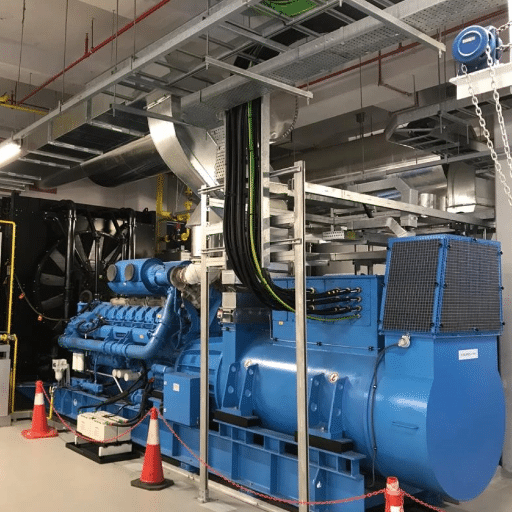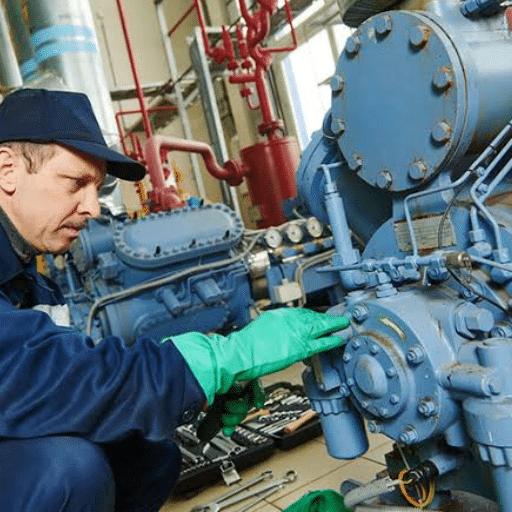


A customized generator set manufacturer designs and builds generator sets around your exact requirements: power output, voltage, engine brand, enclosure type, site conditions, and branding. The right partner turns a specification sheet into a tested, ready-to-install power system. The wrong one sells you a standard unit with a painted logo and calls it custom.
That difference is not semantic. In 2024, a project manager named Tomas ordered twenty “customized” 250 kVA gensets for a coastal resort development in the Philippines. The units arrived with standard canopies and standard cooling. Within eight months, salt air had corroded the radiators and control panels on eleven units. The replacement order went to a manufacturer that engineered salt-spray-resistant enclosures, coated heat exchangers, and sealed control cabinets from the start. Those units are still running without a single corrosion failure.
If you have ever received a “custom” quote that was really a catalog page with your logo on it, you know the problem. This guide explains what can genuinely be customized in a generator set, how the custom manufacturing process works, when customization is worth the cost, and how to choose a customized generator set manufacturer with real engineering capability. It is written by a manufacturer that handles custom power system design for mining, data center, marine, and OEM customers every year.
Key Takeaways
- Real customization falls into two levels: configuration-level (options from a standard menu) and engineering-level (bespoke design for extreme environments or non-standard integration). Know which one you need.
- Almost everything in a genset can be customized: power output, voltage and frequency, engine and alternator brands, enclosure type, control systems, environmental protection, and OEM branding.
- Custom generator sets typically cost 10-30% more than standard equivalents and add 2-6 weeks to delivery, but they prevent far more expensive site failures.
- A capable manufacturer proves itself with engineering drawings, a real testing center, transparent component brands, and documented load-bank testing on your actual unit.
- Prepare your load profile, site conditions, and compliance requirements before requesting a quote; it shortens the process by weeks.
What Is a Customized Generator Set?

A customized generator set is a genset built or configured to a buyer’s specific technical, environmental, or branding requirements instead of shipped as a fixed catalog model. Customization ranges from selecting engine brands and enclosure types to fully bespoke engineering for extreme climates, special voltages, or unique integration needs. If you are new to the terminology, start with what a generator set includes before diving into customization options.
This is where many buyers get misled, because the industry uses one word for two very different things.
Configuration-level customization means choosing from a manufacturer’s existing options menu. You pick the engine brand, the alternator, the canopy type, the controller, and the color. The engineering is already done; you are assembling a proven combination.
Engineering-level customization means the manufacturer designs something that does not exist in the catalog. Examples include a genset rated for 50°C desert ambient temperatures, a salt-spray-resistant marine build, a super-silent unit for a hospital courtyard with strict night-time noise limits, or a non-standard voltage for a specific national grid.
Both are legitimate. Problems start when a supplier sells configuration-level work at engineering-level prices, or when a buyer assumes a canopy color change counts as environmental engineering. A trustworthy customized genset manufacturer will tell you clearly which level your project needs.
What Can Be Customized in a Generator Set?
More than most buyers expect. Here is the full menu, grouped by system.
| Category | What You Can Specify | Common Options |
|---|---|---|
| Power and electrical | Output, voltage, phase, frequency | 5 kW to 3,000 kW+, 220V/380V/400V, single or 3-phase, 50Hz or 60Hz |
| Engine | Brand, emission standard, speed | Cummins, Perkins, Weichai, Yuchai, MTU; EPA Tier 4 or EU Stage V; 1500/1800 rpm |
| Alternator | Brand, insulation, protection | Stamford, Leroy Somer, Mecc Alte; Class H insulation; IP23 |
| Enclosure | Type, material, noise rating | Open frame, silent canopy, super-silent, containerized, trailer-mounted |
| Controls | Panel brand, automation level | DeepSea, Smartgen, ComAp; ATS; remote monitoring |
| Environment | Climate and site protection | -50°C cold-start packages, 50°C desert cooling, salt-spray coating, dust filtration, altitude derating |
| Fuel system | Tank size and type | Extended-runtime tanks, dual-wall tanks with leak detection |
| Branding | OEM and private label | Logo, colors, custom documentation, packaging |
Power and electrical specifications
Output rating, voltage, phase, and frequency must match your load and your grid. Export buyers should confirm frequency early, since 50Hz and 60Hz units use different engine speeds and alternator windings.
Engine and alternator selection
Engine choice sets the reliability baseline. International joint-venture engines suit export-critical projects, while leading domestic brands like Weichai and Yuchai offer strong cost-performance for standard duty. For alternators, insist on genuine Stamford, Leroy Somer, or Mecc Alte units with verifiable serial numbers, plus Class H insulation for hot climates.
Enclosure and environmental adaptation
This is where engineering-level customization earns its price. Desert projects need oversized radiators and high-temperature-rated components. Coastal and marine installations need corrosion protection. Noise-sensitive sites need double-wall acoustic enclosures with documented ISO 3744 test results, typically 72 to 75 dBA at 7 meters for silent models.
Leading manufacturers build for operating ranges from -50°C to +50°C with site-specific designs for deserts, coastal zones, and high altitude, as documented by major producers like Yuchai International.
Controls, ATS, and monitoring
Specify the controller brand, automatic transfer switch rating, and whether you need remote monitoring. For critical applications like data centers and hospitals, these choices matter as much as the engine.
Standard vs. Custom Generator Set: Which Do You Need?

Customization is a tool, not a default. Sometimes the standard unit wins.
| Factor | Standard Generator Set | Customized Generator Set |
|---|---|---|
| Purchase price | Lower | Typically 10-30% higher |
| Delivery time | Faster, often from stock | Adds 2-6 weeks for engineering and testing |
| Fit for extreme environments | Poor to fair | Engineered for the site |
| Integration with existing systems | Your responsibility | Designed in |
| Resale and standardization | Easier | Harder, unit is unique |
| Best for | Typical climates, standard grids, tight budgets | Extreme sites, critical loads, OEM programs |
Here is the contrarian truth most manufacturers will not tell you: if your site has a temperate climate, a standard grid, and a normal noise limit, a standard unit plus a correctly sized ATS will serve you just as well as a custom build. Paying for engineering you do not need is as wasteful as skipping engineering you do need.
A distributor in Germany learned the first half of that lesson in 2025. He requested fully bespoke gensets for a warehouse backup project, including custom dimensions and a non-standard controller. His manufacturer’s engineers reviewed the site data and recommended a standard silent unit with an ATS instead. The simpler package saved him 18% on unit cost and four weeks of lead time, and it has performed flawlessly through two winters.
The demand context favors suppliers who can do both. Global Market Insights values the global diesel genset market at roughly USD 40.9 billion in 2026, growing at about 8% per year, and Mordor Intelligence confirms that industrial buyers and backup power dominate that demand. Large units above 750 kVA are the fastest-growing segment, driven by data centers, and those projects almost always require engineering-level customization.
How the Custom Genset Process Works

A professional custom generator manufacturer follows a structured process. Expect these six stages:
- Requirement definition: You provide the load profile, duty type (standby power, prime power, or continuous), site conditions, and compliance requirements. The manufacturer asks questions you may not expect, which is a good sign.
- Engineering proposal: The engineering team produces a technical proposal with drawings, component selections, and performance data. You review and approve before production starts.
- Component sourcing and production: Engines, alternators, controllers, and enclosure materials are procured and assembled. Custom enclosures and special coatings are fabricated in this stage.
- Factory testing: Your actual unit goes through load-bank testing at 25%, 50%, 75%, and 100% load, plus voltage stability, frequency response, and noise measurement where specified. Reputable manufacturers welcome witnessed testing by video call or third-party inspectors such as SGS or TÜV.
- Delivery and commissioning support: Export packing, documentation, shipping coordination, and installation guidance.
- After-sales support: Warranty handling, spare parts supply, and technical assistance for the unit’s service life. A routine generator maintenance checklist helps protect your investment from day one.
A mining contractor in Zambia saw this process work end to end in early 2026. His prime-power site sat at 1,400 meters altitude with daytime temperatures above 40°C and heavy dust. The manufacturer derated the engines for altitude, fitted cyclonic air pre-cleaners, and upsized the cooling system. From first inquiry to witnessed load test took nine weeks, and the three 500 kVA units have since logged over 1,800 hours each without a heat-related shutdown.
How to Choose a Customized Generator Set Manufacturer
The market includes thousands of suppliers, and most describe themselves as custom manufacturers. These five checks separate real engineering capability from assembly shops.
Verify real engineering capability
Ask for a technical drawing package from a past custom project. A manufacturer with in-house engineers produces dimensioned drawings, wiring diagrams, and load calculations. An assembly shop sends you a brochure. Also confirm they operate a testing center with load banks, not just an assembly line.
Check certifications and export experience
ISO 9001 is the baseline, and CE is essential for most export markets. If you are buying for North America or the EU, ask specifically about EPA Tier 4 or EU Stage V compliance. Request reference projects in your region and contact at least two of them.
Demand component brand transparency
Every major component should carry a named brand and model number: engine, alternator, controller, and ATS. Verify alternator serials directly with Stamford or Leroy Somer. Vague descriptions like “China diesel engine” are a red flag.
Evaluate communication and documentation quality
Custom projects live or die on communication. Notice how the supplier handles your technical questions during the inquiry stage. Slow, vague answers before payment become silence after payment.
For a complete supplier verification framework, see our guide to choosing an industrial generator set supplier in China.
Prepare your generator set specification before requesting a quote

You will get better proposals, faster, if you arrive prepared. Bring:
- Total load in kW or kVA, with starting currents for large motors
- Duty type: standby, prime, or continuous
- Site conditions: temperature range, altitude, humidity, dust, salt exposure
- Noise limit, if any, with the measurement distance
- Voltage, phase, and frequency requirements
- Compliance requirements for your market (CE, EPA, local codes)
- Fuel autonomy target (hours of runtime per tank)
If you are still working out your power requirements, our guide on how to size a diesel generator set walks through the calculation step by step.
Custom Generator Solutions from Shandong Huali
This is our daily work, so a few words about how we approach it.
Shandong Huali Electromechanical Co., Ltd is a customized generator set manufacturer with more than 20 years of industry experience, over 100 completed global projects, and an engineering team of 80-plus specialists. Our production base runs more than 300 advanced machines and a national-standard testing center, and we hold ISO9001, CE, and CCC certifications.
Our customization work covers the full spectrum in this guide. We build units from 5 kW to over 3,000 kW with Cummins and Weichai engine options, genuine Stamford alternators, DeepSea control systems, and silent, containerized, and trailer-mounted configurations. Environmental engineering includes desert cooling packages, cold-start systems, dust protection, and corrosion-resistant builds for coastal and marine sites. For distributors and brand owners, our OEM program covers custom branding, documentation, and long-term production capacity.
Every unit, standard or custom, passes full load-bank testing before shipment, and we welcome witnessed testing and factory audits. You can review our manufacturing and testing capability or browse our diesel generator range to see the platforms our custom work starts from.
Frequently Asked Questions
Can generator sets really be customized?
Yes. Power output, voltage, frequency, engine and alternator brands, enclosure type, control systems, environmental protection, and branding can all be customized. The depth ranges from configuration-level choices on a standard platform to fully bespoke engineering for extreme environments.
How much does a custom generator set cost?
A customized generator set typically costs 10-30% more than the equivalent standard model, depending on how much engineering is involved. Configuration-level changes like branding or controller selection add little, while bespoke environmental engineering or non-standard electrical designs add more.
How long does custom production take?
Expect 2-6 weeks on top of standard production time. Configuration-level orders move faster, while engineering-level projects need time for design, drawing approval, special component sourcing, and testing. Clear specifications at the inquiry stage shorten the timeline significantly.
What is the difference between OEM and custom manufacturing?
Custom manufacturing adapts the generator set to your technical and site requirements. OEM manufacturing produces generator sets under your brand, with your logo, colors, and documentation. Many buyers combine both: a technically customized unit built for their market, sold under their own brand.
What information does a manufacturer need to quote a custom genset?
At minimum: total load in kW or kVA, duty type (standby, prime, or continuous), site temperature and altitude, voltage and frequency, noise limits, and any compliance requirements. The more complete your specification, the more accurate and faster the quotation.
Conclusion
Choosing a customized generator set manufacturer comes down to a few clear principles:
- Know which level of customization you need: configuration-level options or engineering-level design
- Match customization to real site demands, and skip it when a standard unit plus an ATS will do the job
- Verify engineering capability through drawings, testing facilities, and reference projects, not brochures
- Insist on named component brands and witnessed load-bank testing on your actual unit
- Prepare your load profile and site data before requesting quotes to save weeks
Done right, a custom generator set is not a luxury. It is insurance against the most expensive failure mode in power projects: equipment that cannot survive the site it was sent to. The global market is growing at roughly 8% a year, and the projects driving that growth, from data centers to remote mining, increasingly demand engineered solutions.