

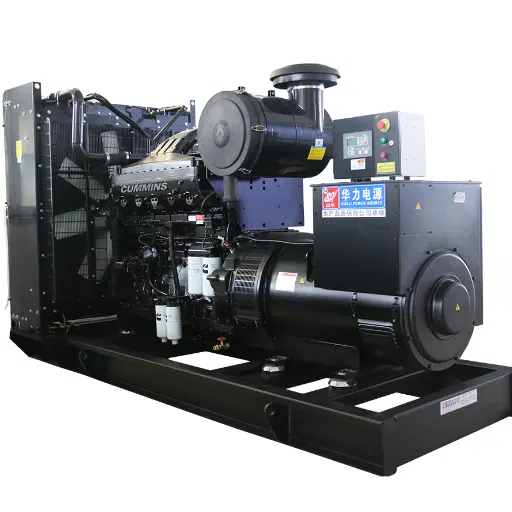
Generator set exhaust system installation requires properly sized piping, limited back pressure, flexible connections at the engine, and code-compliant termination to prevent engine damage and ensure safe operation. NFPA 110 mandates flexible connectors, independent pipe supports, condensate traps, and back pressure within manufacturer limits.
What if the exhaust system you installed last week is quietly destroying the engine it was meant to protect? It happens more often than most contractors admit. A generator exhaust that looks fine on the outside can create back pressure double the manufacturer’s limit on the inside. The result is turbocharger damage, power loss, wet stacking, and in the worst cases, complete engine failure during a critical outage.
You already understand that proper exhaust routing removes dangerous gases and controls noise. But the engineering behind pipe sizing, backpressure limits, and code compliance is where many installations fail. This guide covers the NFPA codes, calculation methods, silencer selection, and common mistakes that separate reliable exhaust systems from problematic ones. Whether you are routing a 200kW commercial standby unit or a 2,000kW industrial plant, you will find actionable guidance grounded in manufacturer experience.
For full-process engineering implementation specifications of industrial generator set installation, ( see our generator set installation guide).
Key Takeaways
- Exhaust pipe must be sized for actual hot gas flow (2.5-3x ambient volume), keeping velocity under 12,000 FPM.
- Total system back pressure must stay below 90% of the engine manufacturer’s limit, typically 27-35 in H2O.
- NFPA 110 requires flexible exhaust connectors, independent supports, condensate drains, and approved thimbles at combustible penetrations.
- Stack termination should be at least 10 feet above the highest roof point with a hinged flapper rain cap.
- The most expensive mistake is rigid pipe mounted directly to the engine, which can crack turbochargers and void warranties.
Why Generator Set Exhaust System Installation Matters

Engine Damage from Backpressure
Every diesel engine has a maximum allowable exhaust restriction. For most industrial generators, this limit falls between 7 and 10 kPa, or roughly 27 to 35 inches of water column. When the total back pressure from piping, elbows, and silencers exceeds this limit, the engine cannot expel exhaust gases efficiently.
The consequences are immediate. The turbocharger works against increased resistance, accelerating bearing wear and risking oil seal failure. The engine cannot reach rated power because trapped hot gases reduce the mass of fresh air entering the cylinders. Incomplete combustion leads to carbon buildup in the exhaust ports and turbo, a condition called wet stacking. Sustained high back pressure can crack exhaust manifolds, damage head gaskets, and cause valve train problems. All of this voids the engine warranty.
The Cost of Getting It Wrong
Post-installation exhaust modifications are among the most expensive fixes in generator commissioning. Unlike electrical or ventilation issues, exhaust problems often require cutting open walls, floors, or roofs to replace undersized pipe. The cost multiplies when the generator is in an occupied building where disruption must be minimized.
In 2022, a hospital contractor in Dubai installed rigid 8-inch pipe directly from a 750kW genset turbocharger to a rooftop silencer 40 feet away. The pipe weight and thermal expansion cracked the turbocharger housing during the first four-hour load test. Repair cost $18,000 plus a three-week parts delay from Europe. The solution was simple: a stainless steel flex connector within 3 feet of the engine and independent pipe supports every 8 feet. The lesson cost far more than the fix would have.
NFPA 110 Exhaust System Requirements
Indoor generator installations must comply with NFPA 110 Chapter 7, which provides specific mandates for emergency power supply system exhaust installation.
Flexible Connection and Independent Support
NFPA 110 Section 7.10.3 requires that exhaust piping connect to the engine via a flexible connector. Section 7.10.3 further mandates that all piping after the flexible section must be independently supported. No damaging weight or stress can be applied to the exhaust manifold or turbocharger.
This is not a suggestion. It is a code requirement. The flexible connector isolates engine vibration from the building structure. The independent supports carry the weight of the pipe, silencer, and insulation. Together they protect the engine’s most expensive and most fragile exhaust component: the turbocharger.
Condensate Management
Section 7.10.3.1 requires a condensate trap and drain valve at low points unless the piping is self-draining. Diesel exhaust contains water vapor that condenses as it cools. This condensate is acidic and will corrode carbon steel pipe from the inside if allowed to collect.
Muffler Placement
Section 7.10.3.3 states that mufflers must be placed as close to the engine as practicable, in a horizontal position where possible. The closer the silencer is to the engine, the shorter the un-silenced pipe run and the better the noise control.
Wall and Roof Penetrations
Section 7.10.3.4 requires an approved thimble where exhaust piping passes through combustible walls or partitions. Section 7.10.3.7 requires that design consideration be given to insulating the exhaust system inside buildings after the flexible section. Uninsulated exhaust pipe running through occupied spaces creates both a burn hazard and an excessive heat load.
Backpressure Elimination
Sections 7.10.4 and 7.10.5 are critical: the exhaust system shall be designed to eliminate excessive back pressure on the engine by properly selecting, routing, and installing piping size, connections, and muffler. Section 7.10.5.1 adds that exhaust systems must be installed to ensure satisfactory operation and meet manufacturer requirements.
Termination Requirements
Section 7.10.3.5 requires that piping terminate in a rain cap, tee, ell pointing downwind, or vertical stack with provisions for draining rain and snow. The termination must prevent water entry while maintaining upward exhaust discharge.
When you are planning the full installation, remember that exhaust design cannot be separated from generator set ventilation requirements. The exhaust system and ventilation system must be coordinated to prevent exhaust recirculation into intake air.
Exhaust Pipe Sizing and Velocity

Velocity Targets
Proper exhaust pipe diameter balances back pressure against installation cost and space constraints. The following table shows recommended velocities by application type.
| Application | Velocity Range | Notes |
|---|---|---|
| General installations | 4,000-7,000 FPM (20-35 m/s) | Standard industrial practice |
| Vertical stacks | 8,000-12,000 FPM | Common for rooftop discharge |
| Critical / low-noise | 6,000-8,000 FPM | Lower back pressure, larger pipe |
| Absolute maximum | 12,000 FPM | Exceeding this causes acoustic degradation and excessive pressure drop |
Temperature Correction
Diesel exhaust exits the engine at 800 to 1,200 degrees Fahrenheit. At these temperatures, gas volume is 2.5 to 3 times larger than at ambient conditions. You must size pipe using the actual exhaust flow at operating temperature, not standard conditions. A pipe that is adequate for ambient airflow will be severely undersized for hot exhaust.
Pipe Sizing by Generator kW
The following table provides a quick reference for exhaust pipe diameter selection by generator class. These values assume typical diesel exhaust temperatures and standard silencer placement.
| Generator kW | Approx. Exhaust CFM | Min. Pipe Diameter | Recommended Diameter |
|---|---|---|---|
| 100-200 kW | 1,500-3,000 | 6 inch | 8 inch |
| 250-400 kW | 3,500-6,000 | 8 inch | 10 inch |
| 500-750 kW | 6,500-10,000 | 10 inch | 12 inch |
| 800-1,000 kW | 10,000-14,000 | 12 inch | 14 inch |
| 1,250-1,500 kW | 15,000-20,000 | 14 inch | 16 inch |
| 2,000+ kW | 22,000+ | 16 inch | 18-20 inch |
For a 500kW genset producing approximately 8,000 CFM of hot exhaust, a 12-inch pipe yields about 10,000 FPM. Upsizing to 14-inch pipe reduces velocity to roughly 7,500 FPM and cuts pressure drop by approximately 40%. The small increase in material cost is almost always worth the reduction in back pressure and noise.
Exhaust Backpressure Calculation: The Complete Method
The Engineering Formula
The only reliable way to verify that your exhaust design is adequate is to calculate total system back pressure. The imperial formula for piping friction loss is:
P = (22 x L x Q^2) / (D^5 x (460 + T))
Where:
- P is pressure drop in inches of water column
- L is total equivalent length of straight pipe in feet
- Q is exhaust gas flow in CFM
- D is pipe inner diameter in inches
- T is exhaust temperature in degrees Fahrenheit
Here is a worked example for a typical installation:
A 500kW diesel generator produces 8,000 CFM of exhaust at 950F. The exhaust run includes 50 feet of straight 12-inch pipe, two 90-degree long-radius elbows, one 45-degree elbow, and a critical-grade silencer. The engine manufacturer specifies a maximum back pressure of 30 in H2O.
Step 1: Calculate equivalent pipe length.
| Fitting | Quantity | Equivalent Length Each | Total |
|---|---|---|---|
| Straight pipe | 1 | 50 ft | 50 ft |
| 90-degree long-radius elbow | 2 | 1.67 x 12 in = 1.67 ft | 3.34 ft |
| 45-degree elbow | 1 | 1.25 x 12 in = 1.25 ft | 1.25 ft |
| Total equivalent length | 54.6 ft |
Step 2: Calculate piping back pressure.
P = (22 x 54.6 x 8,000^2) / (12^5 x (460 + 950))
P = (22 x 54.6 x 64,000,000) / (248,832 x 1,410)
P = 76,838,400,000 / 350,853,120
P = 21.9 in H2O
Step 3: Add silencer back pressure.
A critical-grade silencer for 8,000 CFM typically adds 8 to 12 in H2O. Using 10 in H2O as a conservative estimate:
Total back pressure = 21.9 + 10.0 = 31.9 in H2O
Step 4: Compare to engine limit.
The engine limit is 30 in H2O. The calculated total of 31.9 in H2O exceeds the limit. The solution is to upsize to 14-inch pipe or select a lower-backpressure silencer. With 14-inch pipe, the piping back pressure drops to approximately 9.8 in H2O, yielding a total of 19.8 in H2O, well within the 90% safety margin target of 27 in H2O.
Engine Backpressure Limits
Most diesel engine manufacturers specify maximum back pressure between 27 and 35 inches of water column. Always design for less than 90% of the manufacturer’s limit to allow for fouling, soot buildup, and manufacturing tolerances. The engine data sheet is the only authoritative source for this value.
Silencer Selection and Placement

Silencer Types and Attenuation
Silencers reduce exhaust noise but add back pressure. Selection requires balancing noise attenuation against the available pressure budget.
| Silencer Grade | Attenuation | Typical Backpressure | Best For |
|---|---|---|---|
| Critical grade (industrial) | 25-35 dB | 6-12 in H2O | Standard commercial and industrial |
| Residential / hospital grade | 35-45 dB | 12-20 in H2O | Noise-sensitive locations |
| Super critical / low profile | Varies | Check manufacturer curves | Strict noise limits, limited space |
Size silencers for actual exhaust flow and temperature, not just pipe diameter. Never exceed silencer design velocity: 9,000 FPM for critical grades, 12,000 FPM maximum for standard grades.
Placement Rules
Mount the first-stage silencer as close to the engine as possible, ideally within 10 to 20 feet. Support the silencer from the building structure, not from the exhaust pipe, to avoid vibration transmission. Include a flexible section at the silencer inlet and outlet if the piping is rigid.
If you are installing in a noise-sensitive environment like a hospital or residential area, the indoor vs outdoor generator set installation decision becomes even more important. Outdoor installations with properly sized silencers often achieve lower noise levels than indoor installations with extensive ductwork.
Installation Best Practices
Thermal Expansion
Steel exhaust pipe expands approximately 0.64 inches for every 10 feet of length at 900 degrees Fahrenheit. A 30-foot vertical stack grows nearly 2 inches when the generator reaches operating temperature. Without accommodation for this movement, the pipe will stress the turbocharger, crack welds, or damage building penetrations.
Install stainless steel flex connectors or bellows near the engine outlet and at silencer connections. Use spring hangers or sliding supports that allow axial movement. Never anchor rigid pipe at both ends.
Routing and Drainage
Minimize bends. Use long-radius elbows with a radius of at least 1.5 times the pipe diameter rather than sharp 90-degree turns. Maintain a minimum 3-degree downward slope away from the engine to drain condensation. Install drain taps at all low points and at vertical turns.
Clearance and Insulation
Maintain at least 1.5 times the pipe diameter clearance from combustible materials. Use double-wall insulated breechings for roof and wall penetrations. Wrap indoor pipes with 50mm high-density insulation and an aluminum outer sheath to reduce radiated heat and protect personnel from burns.
Pipe Material Selection
| Material | Pros | Cons | Best For |
|---|---|---|---|
| Carbon steel | Low cost, widely available | Corrosion from condensate, heavy | Standard indoor installations |
| Stainless steel 304 | Corrosion resistant, lighter | Higher cost | Coastal, humid, or corrosive environments |
| Stainless steel 316 | Highest corrosion resistance | Highest cost | Marine, chemical, or severe environments |
| Galvanized steel | Moderate corrosion resistance | Zinc degrades above 400F, limited lifespan | Budget outdoor installations only |
For most industrial applications, carbon steel with proper condensate drainage is adequate. For coastal or marine installations, stainless steel 304 or 316 is worth the additional cost to prevent internal corrosion.
Stack Termination and Height

Minimum Stack Height
General engineering practice requires the exhaust stack to terminate at least 10 feet above the highest point on the roof. This prevents exhaust from being trapped in the building wake or cavity zone, which can pull contaminants back into air intakes. For complex buildings or sites with multiple structures, use the Good Engineering Practice (GEP) stack height formula: H + 1.5L, where H is building height and L is the lesser of building height or width.
Exit Velocity Requirements
ANSI/AIHA Z9.5-2011 specifies a minimum exhaust exit velocity of 3,000 FPM. ASHRAE recommends 2,000 to 3,000 FPM for general exhaust. For diesel generators, a higher minimum of 35 m/s (approximately 6,900 FPM) is recommended to prevent soot fallout and wind backflow. The exit velocity should be at least 1.5 times the local design wind speed at stack height to avoid stack-tip downwash.
Rain Cap Selection
Not all rain caps are equal. The wrong cap can create back pressure, cause downwash, and direct exhaust horizontally into air intakes.
| Cap Type | Recommendation | Reason |
|---|---|---|
| Hinged flapper cap | Recommended | Opens fully during operation, preserves vertical discharge |
| Fixed inverted cone | Avoid | Deflects exhaust horizontally, causing downwash |
| Stack-in-stack cap | Acceptable | Outer stack shields inner from rain, no flow obstruction |
| Hexagonal stack cap | Acceptable | Diverts air around the internal wedge with the drain hose |
If local codes or institutional standards require a rain cap, specify a hinged flapper type that opens to at least 45 degrees during operation. Fixed caps, especially inverted cones, are discouraged or prohibited by many industrial standards because they impede dispersion and increase back pressure.
Termination Away from Intakes
Position the exhaust termination away from building air intakes, operable windows, and pedestrian areas. A minimum horizontal separation of 10 feet from any air intake is a common standard. Prevailing wind direction should be considered: the exhaust plume should blow away from, not toward, intake openings.
Many of these clearance and placement errors appear on our list of common generator set installation mistakes. Reviewing both guides together helps you avoid compounding small errors into major problems.
Common Generator Exhaust Installation Mistakes
Even experienced contractors make errors. Here are the most costly mistakes we see in the field:
- Rigid pipe mounted directly to the engine. Connecting rigid piping to the turbocharger without a flexible connector places damaging weight and stress on the manifold. This is the leading cause of turbocharger cracks and warranty disputes.
- Undersized piping for the run length. Using pipe sized for ambient airflow rather than hot exhaust volume creates back pressure double or triple the engine limit. The engine cannot reach rated power and begins wet stacking immediately.
- Missing condensate traps at low points. Without drains, acidic condensate collects inside the pipe and corrodes carbon steel from the inside. The first sign is often a pinhole leak that fills the room with exhaust during a routine test.
- Fixed inverted cone rain cap causing downwash. These caps deflect exhaust horizontally, reduce plume rise, and can direct exhaust directly into HVAC intakes during certain wind conditions.
- Exhaust termination too close to HVAC intakes. Even a properly sized exhaust system becomes a hazard if the termination point allows recirculation into building ventilation.
- Inadequate pipe supports causing sag and stress. Unsupported long spans create sag, which collects condensate and adds bending stress at the engine connection.
- Wrong material for the environment. Carbon steel in coastal or marine environments corrodes rapidly from salt-laden condensate. The pipe may look fine on the outside while deteriorating from the inside.
In 2021, a data center in the Philippines installed a 10-inch pipe for a 1,000kW generator with a 60-foot run and three elbows. The contractor used ambient air CFM values instead of hot exhaust volume. During the first full-load test, measured back pressure was 42 in H2O against a 30 in H2O limit. The engine could not reach full load and produced visible wet stacking. Replacing the pipe with a 14-inch diameter and a lower-back pressure silencer reduced back pressure to 22 in H2O. The fix cost $12,000 in materials and labor, plus a two-week commissioning delay.
Exhaust Systems for Special Configurations
Paralleling Multiple Units
When multiple generators operate in parallel, each unit requires its own exhaust system. Connecting multiple engines to a common exhaust manifold is almost never recommended. Exhaust pulses from one engine can create back-pressure pulses in another, causing uneven loading and potential turbocharger damage. Individual exhaust stacks with adequate separation prevent exhaust from one unit from entering the intake of another.
Containerized Generator Sets
Containerized generator sets have built-in exhaust routing that limits modification options. The container walls constrain pipe diameter and elbow radius. External stack extensions are often needed to achieve adequate termination height. The compact space also limits silencer size, which may require a higher-grade silencer to achieve noise targets in a smaller package.
Marine Installations
Marine exhaust systems differ fundamentally from land-based installations. Wet exhaust systems inject raw water into the exhaust stream after the silencer, cooling the gases and allowing smaller diameter piping. Dry exhaust systems require the same sizing and back pressure management as land-based installations but must account for vessel motion, hull penetrations, and waterline considerations.
When planning any special configuration, coordinate the exhaust design with the generator set electrical connection layout. Cable trays and conduit runs near hot exhaust pipes require adequate clearance and heat shielding.
Conclusion
Generator set exhaust system installation is not a place to cut corners. The five critical elements are accurate pipe sizing for hot exhaust flow, total back pressure calculation with a safety margin, flexible connectors and independent supports per NFPA 110, proper stack termination height and rain cap selection, and condensate management with drains at all low points.
From the manufacturer’s perspective, exhaust considerations begin at the factory. Shandong Huali generator sets can be specified with factory exhaust elbows, turbocharger configurations optimized for your run length, and exhaust-ready skid packages that reduce field installation complexity.
After installation, verify the actual back pressure with a manometer at full load before accepting the system. If you need guidance on specifying a generator with the right exhaust configuration for your project, contact our engineering team.