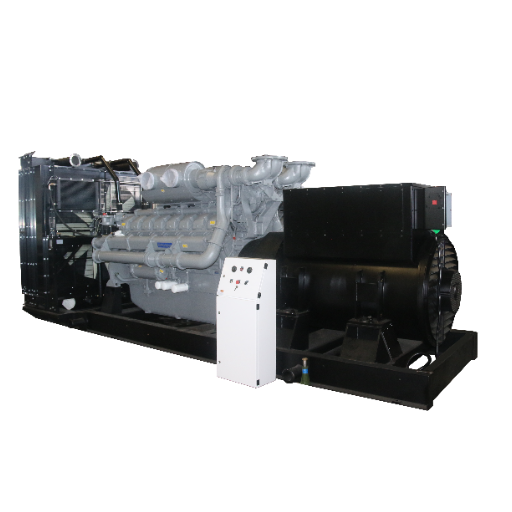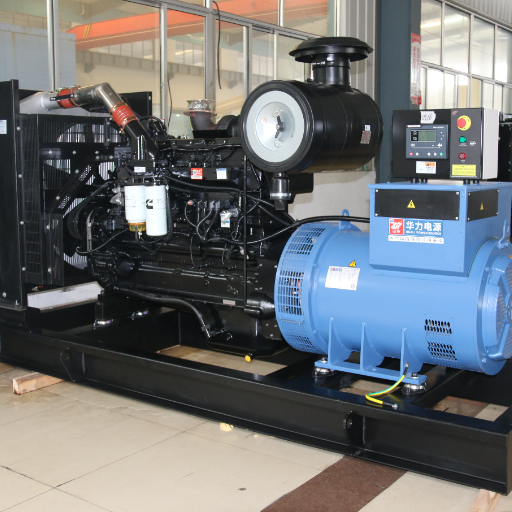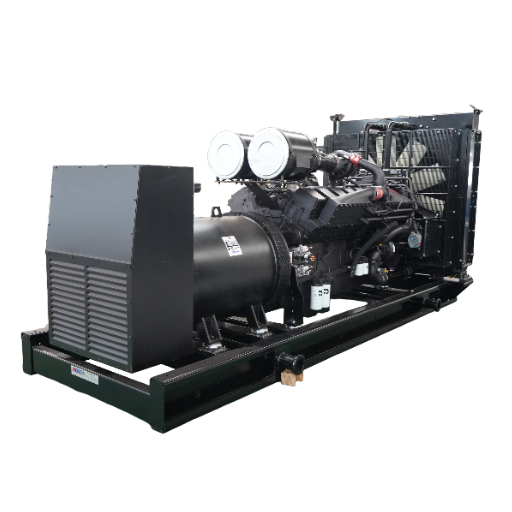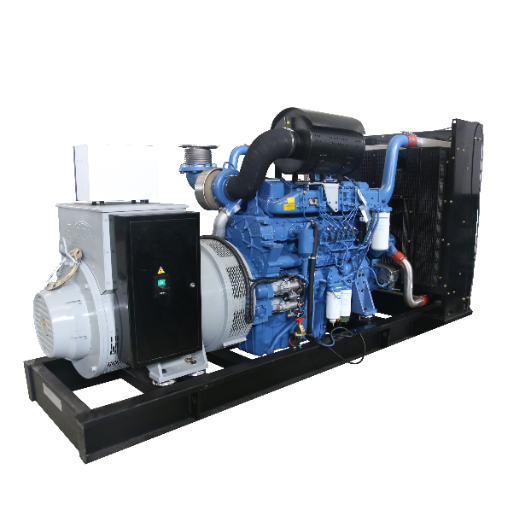



A diesel generator cooling system is a closed loop. The water pump pushes coolant through the engine block and cylinder head, where it picks up combustion heat. Once the coolant passes about 80 °C, the thermostat opens and routes it to the radiator. A fan pulls air through the core, the heat leaves the coolant, and the cooled coolant returns to the pump to start the circuit again.
Here’s the part most guides skip. Coolant does not flow through the radiator all the time. When the engine is cold, the thermostat keeps the radiator out of the circuit, so the set reaches working temperature in minutes, not after half an hour of idling.
We build and test these loops daily at Shandong Huali, on sets from 20 kVA to 3,000 kVA with Cummins, Perkins, Weichai, and Yuchai engines. What follows is the loop our engineers size, not a textbook sketch. By the end you can name every part, quote normal numbers, and read a failure off the gauge.
Key Takeaways
- A generator cooling system is a closed loop: pump, engine block, thermostat, radiator, fan, and back to the pump. Coolant is not consumed; it carries heat away and returns.
- The thermostat keeps the radiator out of the circuit while the engine is cold, so the set warms fast and does not overcool at light load. Most guides never explain this bypass.
- Normal jacket-water temperature is about 80-95 °C, warning near 100-105 °C, shutdown near 110-115 °C.
- A radiator only sheds heat when the air through it is cooler than the coolant. Draw-through airflow and room ventilation are part of the system.
- Each part fails in a recognizable way, and overheating is the most common serious breakdown the loop prevents. Our overheating guide ranks the causes.
How Does the Generator Cooling System Loop Work?

Think of the system as a pipe closed on itself, then follow one teaspoon of coolant around the loop:
- The water pump spins off the engine’s drive and pushes coolant out of the bottom of the block. It is the only mover in the loop.
- Coolant flows through the engine block and cylinder head, through cast passages that hug the cylinders and valve seats, so heat moves from steel to coolant fast.
- The thermostat, in a housing on the head, makes the call. Cold coolant loops straight back to the pump through a bypass. Above about 80 °C it heads for the radiator.
- The radiator core spreads the coolant across thin tubes wrapped in aluminum fins. Heat moves from the coolant to the tube to the fin to the air streaming past.
- The fan pulls air across the core. Only about a third of the fuel’s energy becomes power; roughly a quarter is carried here by the coolant and dumped as heat. If you want to turn that “roughly a quarter” into the actual kW your radiator has to shed, our guide to generator heat rejection calculation works through the heat balance and shows how the coolant share lands near 60 to 70% of the rated kW.
- Cooled coolant collects in the bottom tank and returns to the pump, and the next lap begins.
The loop is continuous, so a small leak matters: nothing is consumed, every drop lost is cooling capacity gone, and the air entering in its place can lock the circuit. On a 500 kVA set, the loop shifts heat at several hundred litres a minute.
Want to see how this loop is sized on a real set? Every build starts on our diesel generator range, where the radiator, fan, and pump are matched to the engine and site before we quote.
What Are the Parts of a Generator Cooling System?

Six parts carry the whole system, each with one job and one familiar way it fails:
| Part | What it does | How it fails |
|---|---|---|
| Water pump | Moves coolant around the loop, driven by the engine | Weeps from the seal, then the bearing runs dry |
| Thermostat | Blocks or opens the radiator path at about 80 °C | Sticks open (engine runs cold) or shut (engine boils) |
| Radiator core | Spreads coolant across finned tubes so air can cool it | Fins clog with dust, tubes scale or corrode |
| Radiator fan | Pulls air across the core | Belt slips, shroud gaps, electric motor burns out |
| Expansion tank and cap | Absorbs coolant expansion and sets system pressure | Cap loses its seal, level drops unnoticed |
| Intercooler | Cools charge air in a second, low-temperature circuit | Oil or air leaks cut power, not coolant temperature |
The generator water pump is the only mover. It is a centrifugal impeller that shifts volume, not pressure. When the shaft seal weeps, coolant escapes fast enough that a long run can boil over. A damp patch under the pump is a service item, not a mystery.
The thermostat is not a restrictor. It’s a wax pellet that expands at a set temperature and lifts a valve. It is the least understood part in the system, and the bypass it controls gets its own section below.
The generator radiator is a heat exchanger with air. Its core is a stack of flat tubes laced with aluminum fins, and airflow across those fins is the whole game. Temperate packs are rated for 40 °C ambient and tropical packs for 50 °C or more, the figures Jubaili Bros’ cooling guide cites. A core rated for 40 °C sheds far more heat when it can breathe 25 °C air, so airflow design starts at the intake.
The expansion tank and pressure cap are part of the system. Coolant expands when hot, so the loop needs room to breathe and a place for air to collect out of the flow. The cap does a second job: at 7-15 psi it raises the boiling point of a 50/50 glycol mix from about 105 °C to roughly 120 °C or more. That is how the engine can run at 100 °C and never boil. That 50/50 glycol mix is a choice, not a default, so our guide to diesel generator coolant antifreeze explains how to pick the right chemistry and ratio and why more antifreeze is not more protection.Never open a hot cap.
Air is the loop’s enemy. A service crew at a Western Australian quarry changed a hose, refilled hot water, and left the expansion tank short. The next morning, the set ran clean at no load and climbed past 105 °C the moment it took load. An air pocket sat in the thermostat housing, blocking the hot side. After they bled the high point and set the cold level, the gauge settled at 88 °C within minutes.
Small Cycle vs Large Cycle: How the Thermostat Routes the Coolant
The detail that separates a real explanation from a parts list is what the thermostat does while the engine is cold. It looks wrong, and it is right.
Small cycle: engine cold. Below its opening temperature the thermostat stays shut and coolant flows from the block straight back to the pump through a bypass, leaving the radiator out on purpose. Recirculating a small volume heats it fast, so the engine reaches working temperature in minutes and burns clean from the start of load.
Large cycle: engine warm. Above about 80 °C the wax pellet expands, the valve lifts, and coolant begins flowing to the radiator. Between fully shut and fully open the thermostat splits the flow, and that mixed state holds a steady temperature as load climbs and falls. On the engines we build, opening starts in the 70-82 °C band and full opening lands around 86-97 °C, engine-specific, with full lift only about 8 mm.
A thermostat stuck open is as bad as one stuck shut, just slower to show. The engine never warms, fuel burns dirty, and unburned fuel glazes the bores over months. A standby set we built for a cold store in Ho Chi Minh City tripped its low-load alarm on every weekly test. A contractor had removed the thermostat years earlier, so the engine rarely passed 70 °C. Oil analysis flagged so much fuel dilution that a warranty inspection caught glazed bores within two years. A replacement thermostat restored normal operation in an afternoon.
Where the Radiator Air Goes: The Draw-Through Path
The loop does not end at the radiator face because a unit-mounted radiator throws heat into the room, and the room has to move that air. Most gensets use a draw-through layout: the fan pulls air in at the alternator end, across the alternator and engine, then through the radiator core, discharging at the front.
That one airflow does three jobs: it cools the alternator, cools the engine skin, and then cools the radiator. By the time air reaches the core it is already warm. Cooling capacity is therefore rated for the site ambient plus the air temperature rise across the engine and alternator, as the Electrical Generating Systems Association’s generator set standard requires.
The one rule is that the hot discharge air must never recirculate back into the intake. A radiator breathing air that it has already heated loses a large share of its capacity, no matter how good the core is.
At a telecom compound in northern Nigeria, a 500 kVA set derated every hot afternoon. The radiator discharged into a louvre, and an exhaust fan pulled that hot air straight back across the intake, so the core saw air it had already heated by 15 degrees or more. Ducting the discharge away from the intake lets the set hold full load at 42 °C ambient.
A unit-mounted radiator is half the cooling system; the room is the other half. Our generator room ventilation requirements cover how much air a set needs and how to duct it without a recirculation loop.
What Normal Looks Like: Temperatures, Pressure, and Flow

Here are the numbers our engineers treat as a healthy baseline. Treat them as a band, not a target:
| Reading | Healthy band | Action point |
|---|---|---|
| Jacket-water temperature | 80-95 °C | Above ~100 °C warn, ~110-115 °C shut down |
| Thermostat operation | Opens at about 80 °C | Full open by 86-97 °C, engine-specific |
| Radiator cap pressure | 7-15 psi (0.5-1.0 bar) | Replace a cap that holds no pressure |
| Coolant flow | Roughly 100-500+ L/min by engine | Watch the pump and hose condition |
| System pressure when hot | Just above cap rating | A steady gauge is a healthy gauge |
The habit that matters is watching the trend, not a single reading. A set that creeps 2 °C warmer each month is telling you something a one-time check misses. When the gauge does cross into that warning band, it helps to know exactly what the controller is signalling, so our guide to the generator coolant temperature alarm walks through the warning and shutdown setpoints and what each stage means before the set trips. Every engine differs slightly, so confirm the exact figures in your set’s manual.
When a Generator Cooling System Part Fails, What Does the Operator See?

Each failure leaves a signature you can read from the gauge and the hoses:
- Hot gauge, cool top radiator hose. The thermostat is stuck shut, or an air lock is blocking the radiator path. The block is hot and the radiator never sees it.
- Overheats only under load in hot weather. The airflow side is weak: clogged fins, a slipping fan belt, or room air too warm to cool anything.
- Temperature swings with a damp pump. The pump seal is weeping, coolant is being lost, and air is being pulled in to replace it.
- The gauge reads high but the radiator is cool and the level is full. The fault may be in the monitoring, not the cooling.
Every entry on that list is a part of the loop above: coolant stopped moving, the radiator stopped breathing, or the thermostat made the wrong call. Overheating is the most common serious breakdown on diesel gensets, and the ranked list of causes, in the order to check them, is in our generator overheating causes guide.
Frequently Asked Questions
What are the main parts of a generator cooling system?
The main parts are the water pump, the engine’s internal coolant passages, the thermostat, the radiator core and fan, and the expansion tank with its pressure cap. Turbocharged sets add an intercooler as a second, low-temperature circuit for the charge air.
Does coolant flow through the radiator all the time?
No. Below about 80 °C the thermostat stays shut and coolant recirculates through the engine in the small cycle, bypassing the radiator so the engine warms quickly. Above that temperature the thermostat opens and coolant flows to the radiator in the large cycle.
What temperature should a generator cooling system run at?
Normal engine coolant temperature on a diesel genset is about 80-95 °C. Warning typically fires near 100-105 °C and shutdown near 110-115 °C. Exact numbers are engine-specific; confirm against your set’s manual.
What happens if the generator thermostat sticks?
Stuck shut, coolant stays in the engine, the radiator never gets the hot flow, and the set climbs toward the high-temperature warning under load. Stuck open, the engine runs cold, burns fuel dirty, and can wet-stack and glaze the bores over time. Both need the thermostat replaced.
Why does a generator need an expansion tank and a pressure cap?
Coolant expands when hot, so the tank gives the loop room to breathe and a place for air to collect out of the coolant path. The pressure cap raises the boiling point by about 15 °C or more, which is why the engine can run near 100 °C without boiling. Never open a hot cap.
What does the intercooler do on a turbocharged diesel generator?
Turbochargers compress air, and compression heats it. The intercooler cools the charge air before it enters the cylinders, so the engine gets more oxygen and more power without running hotter. A plugged intercooler shows up as lost power, not a high coolant temperature. Sizing and derating on turbocharged builds are covered in our intercooled engine specifications guide.
Conclusion
That is how a generator cooling system works: it is a closed loop, and once you see it as flow instead of parts, everything else falls into place. The pump moves the coolant, the engine gives off heat into it, the thermostat lets the radiator join at about 80 °C, and the radiator and fan shed the heat to the air the room must carry away. Normal running sits in a comfortable 80-95 °C band, and each part fails with a signature you can read before it becomes a shutdown.
Understanding the mechanism is step one. Choosing how your site rejects that heat, unit-mounted or remote, is step two, and that decision is where a spec turns into a working installation. We do that sizing for free on every build.
If you’re pricing a genset for a hot room, a high altitude, or a load that never lets up, send us the site numbers and the load profile, and our engineers will spec the cooling system with the rest of the set.