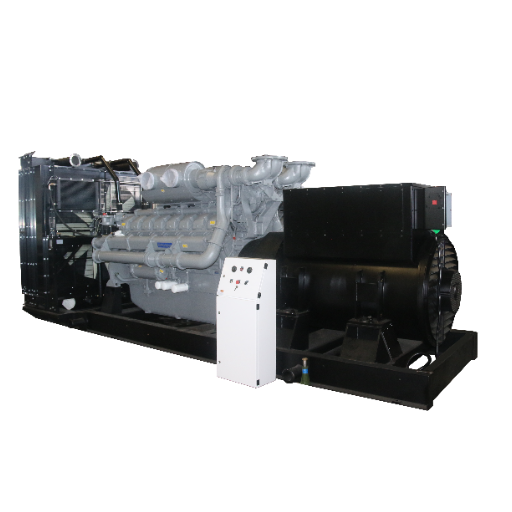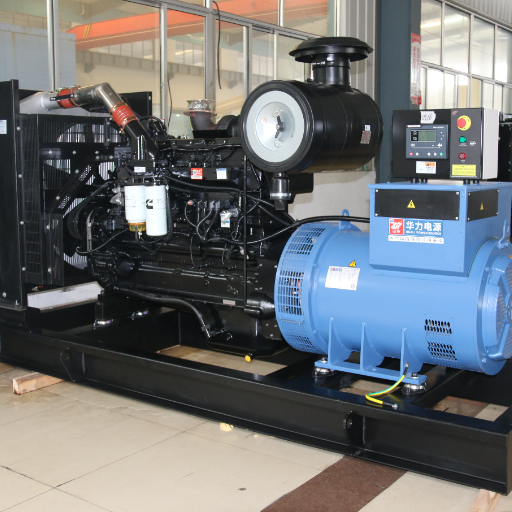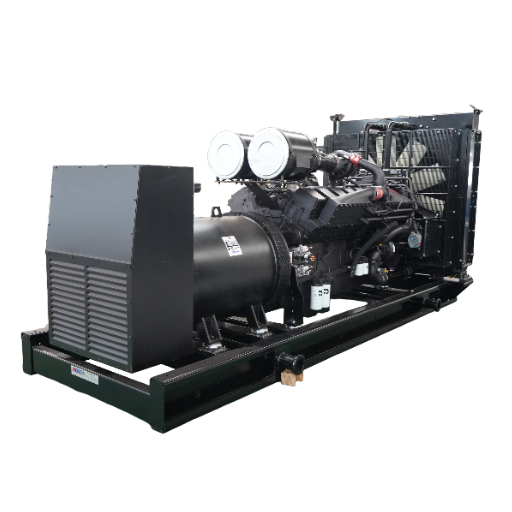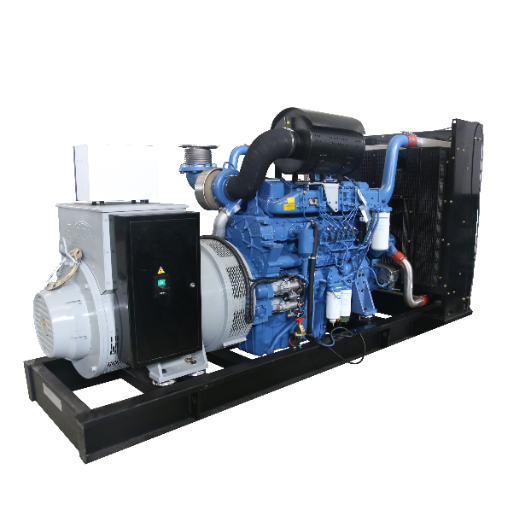



A generator cooling system is the closed-loop liquid circuit that carries waste heat away from a diesel engine so it can run at a safe, steady temperature. It moves a mix of coolant and water through the engine block and cylinder head, then rejects that heat to the outside air through a radiator. Without it, a diesel genset would overheat, derate, and eventually shut down within minutes of taking a load.
That is the short answer. But most buyers treat the cooling system as an afterthought, something the factory sizes for them and they never think about again. Then the site hits 45°C and the standby unit trips on high temperature exactly when backup power matters most.
You are here because you want to understand the one part of a genset that decides whether it runs all day at full load or shuts itself off in the heat. This guide covers it end to end. You will learn where the heat actually goes, how the cooling circuit works, the four ways to reject that heat, what coolant to use, why generators overheat, and how to specify the right cooling configuration for your site.
As a manufacturer that builds gensets with Cummins, Perkins, Weichai, and Yuchai engines, we configure cooling systems for a lot of hot, dusty, and confined sites. We will finish with the questions we ask before we quote one.
Key Takeaways
- A generator cooling system rejects roughly 25% of the engine’s fuel energy. Only about 35% becomes power, so a 500 kW genset sheds roughly 350 kW through the radiator and 650 to 900 kW in total.
- The circuit is simple: a water pump pushes coolant through the block and head, a thermostat regulates it, and a fan blows air across a radiator to dump the heat. Normal coolant temperature is 80 to 95°C.
- There are four ways to reject the heat: unit-mounted radiator, remote radiator, heat exchanger, and split-core. Your site’s airflow and ambient temperature decide which one you need.
- Coolant chemistry matters more than most people think. Use a 40 to 60% glycol mix, never mix green and red coolant, and add SCA additive if your engine has wet cylinder liners.
- Overheating causes about 40% of diesel generator failures, and almost all of it is preventable with the right coolant, clean airflow, and a correctly sized radiator.
Why a Generator Needs a Cooling System (and Where the Heat Goes)

A diesel engine is not a very efficient machine at turning fuel into electricity. Of every unit of fuel energy you put in, only about 35% comes out as electrical power. The other 65% becomes heat, and that heat has to go somewhere before it destroys the engine.
The heat splits three ways. Roughly 30% leaves through the exhaust as hot gas. About 25% is absorbed by the coolant and carried to the radiator. The remaining 10% or so radiates off the engine block and turbocharger directly into the engine room. The cooling system is responsible for that middle 25%, and it is the reason a genset’s engine room needs so much airflow.
| Energy path | Share of fuel energy |
|---|---|
| Electrical power output | ~35% |
| Exhaust heat | ~30% |
| Coolant / radiator heat | ~25% |
| Radiated heat (surfaces) | ~10% |
Here is the number that surprises most buyers, and there are actually two of them. The heat a genset must reject is not equal to its electrical output. A 500 kW genset pushes roughly 350 kW into the coolant and out through the radiator, and that is the load the radiator core and fan are sized to. The exhaust carries away a similar amount, so the total heat the room has to shed is around 650 to 900 kW. The radiator handles the coolant share. The ventilation handles the rest.
Think of it this way. If you undersize the cooling, you have not bought a smaller radiator. You have bought a genset that derates itself on hot days. The engine’s controller watches the coolant temperature and starts pulling back load the moment it climbs too high, protecting the engine by giving you less power.
The cooling system is the part of the genset that lets it keep its promises. Our diesel generator range is configured so the radiator, fan, and coolant circuit are matched to the engine’s actual heat rejection, not just its nameplate kW.
How a Diesel Generator Cooling System Works
The circuit of a diesel generator cooling system is simple, and once you can picture it, most cooling problems become easy to diagnose.
A belt-driven or engine-driven water pump pushes coolant through the engine block and cylinder head, where it absorbs combustion heat. The hot coolant flows to a thermostat. When the engine is cold, the thermostat stays closed and recirculates the coolant inside the engine so it warms up quickly. Once the coolant reaches its opening temperature, around 80°C, the thermostat opens and lets it flow to the radiator.
The generator radiator is a matrix of thin tubes and fins. The hot coolant enters the top, spreads through the tubes, and transfers its heat to the fins. A fan blows cool air across those fins, carrying the heat away. The now-cooled coolant returns to the pump to start again. A small expansion tank sits above it all, giving the coolant room to expand as it heats and letting you check the level without opening the pressurized cap.If you want to follow one drop of coolant around the full loop step by step, our guide to how does a generator cooling system work traces the circuit part by part with the normal temperatures at each stage.
On turbocharged engines there is one more piece. An intercooler or aftercooler cools the compressed intake air before it enters the cylinders because denser, cooler air makes better combustion. On smaller sets this is a separate core in front of the radiator; on larger sets it is built into the same frame.
The Draw-Through Airflow Path
Most gensets use a draw-through design. The fan sits on the radiator side and pulls air across the engine, then through the radiator, and pushes the hot air out. This is why the alternator end is the intake side and the radiator end is the discharge side.
The one rule that matters here: hot discharge air must never be allowed to recirculate back into the intake. If the hot air leaving the radiator curls around and comes back in, the generator cooling system is trying to cool a hot engine with hot air, and it loses capacity fast. This is the most common installation mistake we see, and it is a ventilation problem as much as a cooling problem.
How Much Heat a Generator Rejects (The Sizing Number)

Before you can pick a cooling configuration, you need the generator heat rejection number. This is where buyers and even some suppliers go wrong.
The rule of thumb is that a diesel genset rejects about 25% of its fuel energy through the cooling system. For a 500 kW set, that works out to roughly 300 to 400 kW through the radiator. The total heat rejection, across the coolant, the exhaust, and the block, is around 650 to 900 kW, and that larger figure is what sizes the room ventilation.To turn these rules of thumb into the exact kW figures for your engine, our guide to generator heat rejection calculation works through the full heat balance and shows how to read the numbers off a data sheet.
Why the wide range? Because the number moves with the engine. A modern turbocharged, aftercooled engine is more efficient, so it rejects less heat per kW than an older naturally aspirated one. The manufacturer’s data sheet always lists heat rejection to coolant and to the exhaust separately, and those two numbers are what you hand to the ventilation and cooling engineers.
For the electrical side of the same story, our generator alternator specifications guide explains where the alternator’s own temperature rise fits into the total heat load.
Coolant and Antifreeze: What Goes in the System
Diesel generator coolant is the working fluid of the whole system, and getting it wrong causes more cooling failures than almost anything else.
Use a heavy-duty ethylene glycol antifreeze mixed with water. Propylene glycol exists but is mostly for food-processing sites. The standard mix is 50:50, which gives you freeze protection down to about -37°C and boil-over protection up to roughly 108 to 129°C. Keep the glycol concentration between 40% and 60%. Above about 60%, glycol actually carries less heat and can make the engine run hotter, not cooler.
There is one chemistry rule that costs people a radiator if they break it. Coolant comes in three additive technologies: IAT (inorganic, usually green), OAT (organic, usually orange or red), and HOAT (hybrid, usually yellow or pink). Never mix IAT with OAT. The two chemistries can react and form a gel that plugs the radiator core and the coolant passages. Do not choose coolant by color alone. Follow the engine manufacturer’s specification, and Huaquan Power’s cooling system guide walks through the coolant selection in more detail. For a deeper walk through the chemistry, the right glycol ratio, and why more antifreeze is not more protection, see our guide to diesel generator coolant antifreeze.
The water matters too. Use deionized, distilled, or demineralized water, never hard tap water. Minerals in hard water form scale on the cylinder liners and inside the radiator, and scale can cut heat transfer by up to 40%.
One more thing for engines with wet cylinder liners, which include most Cummins and Perkins blocks. These need a supplemental coolant additive (SCA, sometimes sold as DCA4) to prevent liner pitting and cavitation. If you run one of these engines, test the SCA level on schedule and keep it in range. Our generator engine specifications guide explains wet-liner engines and the rest of the engine data sheet.
The Four Cooling Configurations

Now the decision most buyers actually face: how to reject the heat. There are four ways, and the right one depends on your site, not on your preference.
Unit-Mounted Radiator
This is the factory default and the cheapest, simplest option. The radiator and fan are mounted directly on the genset skid, matched to the engine from the start. It needs no external pumps or field piping. The trade-off is airflow: the room has to supply and exhaust a very large volume of air, and a 500 kW unit can push out tens of thousands of cubic feet per minute. If the room is tight or the louvers are undersized, the unit will not cool.
Remote Radiator
A remote radiator generator setup mounts the radiator separately, on a roof or outside wall, and connects it to the engine with coolant piping. The fan is usually electric and can be controlled by a variable frequency drive. This is the answer when the genset lives in a confined basement, when noise is critical, or when hot air recirculation is hard to avoid. The trade-off is cost and complexity: remote systems need pumps, piping, an expansion tank at the high point, and more careful design. Jubaili Bros’ cooling systems guide compares these configurations side by side. If the radiator is much higher than the engine, you may also need a heat exchanger or a hot well to protect the engine.For the distance rules, pump sizing, and the traps that send remote installs back to the shop, see our full guide to the remote radiator generator.
Heat Exchanger (Closed Loop / City Water)
A heat exchanger replaces the radiator with a shell-and-tube unit that transfers engine heat to a separate water loop, often building chilled water, a cooling tower, or city water. This is how large indoor and marine installations reject heat when there is no easy path for air. It isolates the engine from whatever is in the secondary water, which protects the engine if the city water is dirty or corrosive.When a site has no practical air path at all, this is the route to take, and our guide to generator heat exchanger cooling covers how the secondary water loop is designed and protected.
Split-Core Radiator
On larger turbocharged sets, the charge-air cooler needs its own cooling circuit at a different temperature. A split-core radiator gives the jacket water and the aftercooler separate cores in one frame. If you are specifying a big prime-power unit, ask whether the engine needs a split-core system so the aftercooler does not fight the jacket water for the same airflow.
| Configuration | Best for | Main trade-off |
|---|---|---|
| Unit-mounted radiator | Open, well-ventilated rooms | Needs very high airflow |
| Remote radiator | Confined or noise-critical sites | Cost, pumps, and piping |
| Heat exchanger | Indoor, marine, or chilled-water sites | Secondary water loop required |
| Split-core | Large turbocharged engines | More complex, two cores |
Choosing a remote radiator or heat exchanger is a design decision, not an accessory order. Tell us your site conditions and our engineering team will work out which configuration fits.
Cold-Start and Standby Readiness
Cooling is not only about getting rid of heat. It is also about keeping heat in when the engine is cold.
A standby genset that sits for weeks and then has to start and take full load in seconds has a problem: a cold diesel engine cannot accept full load immediately. Below its operating temperature, fuel does not atomize properly, and the engine burns rich, smokes, and makes less power. A block heater, also called a jacket water heater, keeps the coolant warm while the engine is off, so the genset is ready to take load the moment the transfer switch calls for it.For sizing, wiring, and how a heater keeps a standby set ready in cold conditions, see our guide to the generator block heater.
Running too cold is expensive even when the engine is running. A diesel running with jacket water around 40°C instead of 80 to 90°C burns roughly 10 to 30% more fuel and produces about 10% less power. Run it lightly or cold for long stretches and unburned fuel collects in the exhaust, a condition called wet stacking. This is why the thermostat exists, and why a stuck-open thermostat is a real fault, not a minor annoyance.
Overheating: Causes, Symptoms, and What It Costs

Overheating is the most common serious failure in diesel generators, behind roughly 40% of all genset breakdowns. The good news is that almost all of it is preventable.
The symptoms are usually clear before the shutdown. Coolant temperature climbs past the normal 80 to 95°C band. The controller shows a high-temperature warning around 100 to 105°C. If it keeps climbing toward 110°C or higher, the protection system shuts the engine down to prevent damage, and you lose power precisely when you cannot afford to.
The causes, in rough order of how often we see them:
- Low coolant level, usually from a leak at a hose, the water pump, or the radiator.
- A blocked radiator core, from dust, debris, or grass packed into the fins.
- A stuck-closed thermostat, which traps hot coolant in the engine and never lets it reach the radiator.
- A failing water pump or a loose belt which slows the coolant flow.
- A failed fan or fan clutch, which stops the airflow.
- Air is trapped in the system, which needs bleeding.
- Scale buildup from hard water, which insulates the liners and the radiator.
- Overloading the genset beyond its rating generates more heat than the cooling was sized for.
For the full ranked list, the symptom-to-cause matrix, and a 15-minute on-site check, see our dedicated guide to generator overheating causes.
Marcus runs a cold-chain depot in North Africa and lost a full summer of cooling capacity in one afternoon. His 400 kW standby unit was installed against a wall with the radiator discharge aimed at a corner, so the hot air curled straight back into the intake. In a 44°C week, the unit tripped on high coolant temperature two days running. The fix was not a bigger engine. It was a duct and a set of louvers that stopped the recirculation. The cooling system was fine all along; the airflow around it was not.
If you are diagnosing a unit that keeps shutting down, our generator troubleshooting guide walks through the full fault tree, cooling included.
Cooling in High Ambient Temperatures
Every generator cooling system is designed to a reference ambient temperature, and for most of the world that reference is 40°C. That is the important number, because it is where the cooling system runs out of headroom.
Above 40°C ambient, the radiator has less ability to shed heat, and coolant temperature climbs roughly 0.5 to 0.8°C for every 1°C of ambient rise. Once ambient pushes past about 45°C, a standard configuration may no longer hold full load, and the engine starts derating.
There are four ways to buy that headroom back:
- Upgrade the radiator so the core has more cooling surface than the standard size.
- Upgrade the fan, or add an electric fan that runs independently of engine speed.
- Move to a remote radiator, placed somewhere with cooler, cleaner air.
- Derate the rating, and accept that a “500 kW” unit is a 450 kW unit in your climate.
If you are exporting to the Gulf, North Africa, or a high-altitude site, this is the section of the spec sheet that matters most. High ambient temperature and high altitude compound each other, and both eat into cooling capacity. For the derating math and the configuration choices that keep full load in the heat, see our guide to the high ambient temperature generator.
Generator Cooling System Maintenance

A cooling system is a mechanical system, and like everything mechanical, it lasts only as long as you look after it.
The big-ticket item is the coolant flush and replacement. Depending on the coolant type, you replace it roughly every 2 to 3 years or 3,000 to 6,000 hours, whichever comes first. When you do, flush the system with clean water before refilling, and never open the pressure cap while the engine is hot.
The routine checks are smaller but just as important:
- Check the coolant level in the expansion tank when the engine is cold.
- Clean the radiator fins with low-pressure air, blowing against the normal airflow direction, not with it.
- Check the fan belt for cracks and tension.
- Test the freeze point and SCA level with test strips or a refractometer.
- Inspect hoses for soft spots and the water pump weep hole for drips.
For a full schedule with intervals and step-by-step how-to for each task, see our guide to generator cooling system maintenance.
Priya runs a textile mill in Gujarat where the grid drops for hours at a stretch, and her maintenance team made cooling their religion after one bad monsoon season. The first year, dust and cotton lint packed the radiators of three gensets, and two of them tripped mid-outage. The next year, they added a weekly radiator blow-down and a monthly coolant-level check to the schedule. Three years on, the same three gensets have not missed a single start. The maintenance cost a few hours a month; the outages had cost them entire production shifts.
Recovering the Heat Your Cooling System Throws Away

Here is a thought that changes how you see the cooling system. The heat it throws away is not waste, it is a resource.
That 25% of the fuel energy going into the coolant is recoverable heat. In a combined heat and power setup, the jacket water can heat buildings, provide process hot water, or drive an absorption chiller for cooling. Recover the exhaust heat too, and a genset that was 35% efficient becomes 60 to 85% efficient. For a facility that needs both power and heat, like a textile plant, a laundry, or a food processor, that is the difference between a running cost and a payback.For how a combined heat and power setup taps that jacket water and exhaust in practice, see our guide to generator heat recovery.
The cooling system is the mechanism. A jacket water heat exchanger taps the hot coolant before it reaches the radiator and routes it to the building. The radiator still handles the excess.
Protection and Monitoring
The cooling system protects the engine. The control system protects the cooling system.
Every modern genset controller monitors the coolant temperature and takes action in stages. A high-temperature warning first. Then, if the temperature keeps climbing, an automatic shutdown will occur before damage occurs. The two sensors that matter most are the coolant temperature sensor and the low-coolant-level switch. Between them, they catch almost every failure mode from the list above, from a slow leak to a failed fan.To understand exactly what each stage of the warning means and how the setpoints are configured, see our guide to the generator coolant temperature alarm.
Ask what your controller is actually set to. The warning and shutdown thresholds should match your engine and your climate. A unit spec’d for a temperate market and shipped to a hot one may have shutdown thresholds that trip too early, or worse, that were never reset at all.
Frequently Asked Questions
What does a generator cooling system do?
A generator cooling system removes the waste heat a diesel engine produces so it can run at a safe temperature. It circulates coolant through the engine block and cylinder head, then rejects that heat through a radiator. Without it, the engine would overheat and shut down within minutes.
What is the normal coolant temperature for a diesel generator?
A diesel generator normally runs with coolant between 80 and 95°C. The thermostat begins opening around 80°C, a high-temperature warning usually fires around 100 to 105°C, and automatic shutdown happens around 110°C or higher.
What coolant should I use in a diesel generator?
Use a heavy-duty ethylene glycol antifreeze mixed 50:50 with deionized or distilled water, keeping the glycol between 40 and 60%. Choose the additive technology your engine manufacturer specifies, and add SCA additive if your engine has wet cylinder liners.
Why does my generator overheat in hot weather?
Most likely the cooling system was designed for a 40°C ambient and your site exceeds it, or the radiator is blocked or the airflow is restricted. Clean the radiator fins, check the coolant level and fan, and consider an uprated or remote radiator for sustained high ambient.
How often should I change the generator coolant?
Replace the coolant roughly every 2 to 3 years or 3,000 to 6,000 hours, whichever comes first, depending on the coolant type. Flush the system with clean water before refilling, and test the freeze point and SCA level on schedule.
Worked Example: Specifying Cooling for a 500 kW Genset in a 45°C Site
Let us put it all together, because this is where the theory becomes a decision.
Take a 500 kW standby genset going into a building in Riyadh, where summer ambient regularly hits 45°C and can touch 48°C. The buyer starts with three questions.
How much heat must it reject? From the engine data sheet, the set pushes about 350 kW into the cooling circuit at full load, and roughly 900 kW in total across the coolant, exhaust, and block. The cooling circuit sizes the radiator. The total sizes the room ventilation. Neither is the 500 kW nameplate.
Can a unit-mounted radiator handle 45°C? At the 40°C design point, yes. At 45°C and above, the radiator loses enough capacity that the engine will derate by several percent unless the radiator is uprated. The answer is either a high-ambient radiator package or a remote radiator on the roof.
Where is the unit installed? The engine room is below ground with limited louver space. That rules out the default unit-mounted fan, which needs a very large intake and discharge. The specification becomes a remote radiator on the roof, an electric fan tied to coolant temperature, and a coolant loop with a small auxiliary pump.
The result is a unit that holds full 500 kW at 48°C ambient, where a standard configuration would have derated itself exactly when the building needed maximum backup power. The cooling system was not an afterthought. It was the specification.
Conclusion
A generator cooling system looks like a simple radiator bolted to the front of an engine, but it is the part that decides whether a genset holds full load in the heat or shuts itself down just when it is needed. Only about 35% of the fuel becomes power. The cooling system is responsible for the roughly 25% that becomes heat in the coolant, and it has to shed that heat continuously.
Remember the essentials. The circuit is a water pump, a thermostat, a radiator, and a fan, moving coolant in a closed loop. Coolant chemistry matters, from the glycol ratio to the SCA additive and the ban on mixing green with red. There are four ways to reject the heat, and your site’s airflow and ambient temperature pick the winner. Overheating causes about 40% of genset failures, and nearly all of it is preventable.
Shandong Huali builds diesel gensets with Cummins, Perkins, Weichai, and Yuchai engines, from 5 kW portable units to 3000 kW industrial systems, all supported by ISO9001, CE, and CCC-certified manufacturing. Tell us your ambient, altitude, and enclosure, and we will match a cooling system that keeps your genset at 80°C, not 110°C.