
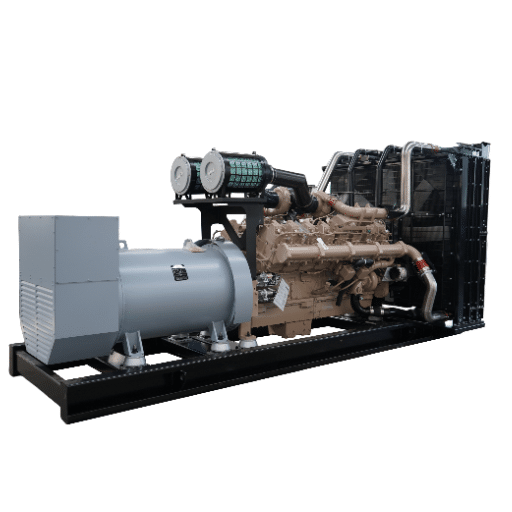
NFPA 110 generator maintenance requires weekly visual inspections, monthly loaded exercise, annual load bank testing when building load is insufficient, fuel quality testing, and detailed records retained for at least 36 months. The standard applies to the entire Emergency Power Supply System (EPSS), not just the generator set.
A 400-bed hospital in Florida prepared for a Joint Commission survey by reviewing two years of generator logs. The monthly runs were documented, but the load never exceeded 15% of the unit’s nameplate rating. The deficiency was not equipment failure; it was the absence of load bank testing to satisfy the 30% load requirement. The corrective action cost $8,000 in load bank rental and documentation updates, and it delayed survey clearance by two weeks.
This guide explains NFPA 110 generator maintenance in practical terms. It covers how the standard classifies emergency power systems, what testing is required by frequency, how fuel and records fit into compliance, and the common mistakes that cause facilities to fail inspections.
Key Takeaways
- NFPA 110 applies to the entire EPSS, including the generator, transfer switch, fuel system, and controls.
- Diesel generators must be exercised monthly for 30 minutes at a minimum of 30% nameplate kW.
003e – Annual load bank testing is required when monthly building load cannot reach the 30% threshold.- Level 1 systems require a 4-hour full-load test every 36 months.
- Fuel testing per ASTM D975 and record retention for 36 months are mandatory.
What Is NFPA 110 and Who Does It Apply To?

NFPA 110, Standard for Emergency and Standby Power Systems, sets minimum requirements for the performance, installation, testing, and maintenance of EPSS. It covers more than the generator engine. The standard addresses transfer switches, fuel storage, distribution equipment, ventilation, controls, and documentation.
Facilities that commonly fall under NFPA 110 include hospitals, nursing homes, data centers, government buildings, emergency response centers, and commercial high-rises. Whether an installation is Level 1 or Level 2 is usually determined by other codes, such as NFPA 99 for healthcare or NFPA 101 for life safety, along with the Authority Having Jurisdiction (AHJ).
NFPA 110 is widely referenced in the United States, but it is also used as a benchmark for emergency power design in international projects. Exporters and contractors outside the U.S. often specify equipment to NFPA 110 because it signals compliance with a recognized standard, even when local codes take precedence.
For a broader view of generator maintenance practices, see our generator maintenance guide.
NFPA 110 EPSS Classification: Level, Type, and Class
NFPA 110 classifies emergency power systems by three criteria: Level, Type, and Class. Understanding these terms is essential before scheduling maintenance because they determine how rigorous the testing program must be.
| Classification | Definition | Examples |
|---|---|---|
| Level 1 | Failure could result in loss of human life or serious injury | Hospitals, emergency response centers, fire pumps |
| Level 2 | Failure is less critical to life safety | Data centers, manufacturing, commercial buildings |
| Type 10 | Power restored within 10 seconds | Life safety and critical branch loads |
| Type 60 / 120 | Power restored within 60 or 120 seconds | Less time-sensitive standby loads |
| Class 2 / 6 / 48 | Minimum runtime of 2, 6, or 48 hours | Standard runtime categories |
| Class X | Runtime as required by application | Often 72 or 96 hours for healthcare |
Level 1 vs. Level 2
Level 1 systems have the strictest requirements. They serve life safety and critical loads where interruption is unacceptable. Level 2 systems support operations where outage consequences are economic or operational rather than immediately dangerous. Most industrial standby systems fall into Level 2.
Type
Type defines how quickly the system must restore power. Type 10 is the most common for life safety loads and is required for healthcare critical branch circuits. Type 60 and Type 120 apply to loads that can tolerate a longer transition.
Class
Class defines minimum runtime. A hospital might specify Class X with 96 hours of fuel, while a small commercial building might use Class 2 or Class 6. NFPA 110 requires fuel storage at 133% of anticipated consumption for the required Class duration.
Weekly Inspection Requirements
NFPA 110 requires a weekly visual inspection of the EPSS. The generator does not need to run during this inspection. In fact, running it unloaded can be harmful because it promotes wet stacking and carbon buildup.
Weekly Checklist
- Fuel level and fuel system integrity
- Engine oil level
- Coolant level
- Battery electrolyte level, voltage, and terminal condition
- Leaks at engine, generator, or fuel lines
- Control panel indicators and alarms
- Block heater operation
- Exhaust system condensate drain
- Air intake filter condition
- Enclosure ventilation and heating systems
Lead-acid batteries require monthly recording of electrolyte specific gravity. Battery failure is the leading cause of generator failure to start, so this check is especially important.
A complete list of routine checks is available in our diesel generator maintenance checklist.
Monthly Operational Testing Requirements

The core of NFPA 110 generator maintenance is monthly operational testing. The generator must start automatically and run under load for at least 30 minutes.
Diesel Generators
Diesel units must run at a minimum of 30% of the EPSS standby nameplate kW rating. The alternative is to run at a load sufficient to maintain the minimum exhaust gas temperatures recommended by the manufacturer. The goal is to ensure complete combustion and prevent wet stacking.
Spark-Ignited Generators
Natural gas and propane generators must run monthly under the available EPSS load for 30 minutes or until water temperature and oil pressure have stabilized. They are not subject to the 30% minimum load requirement.
What to Verify During the Monthly Test
- Automatic start and transfer
- Retransfer to normal power
- Output voltage and frequency
- kW load and percentage of nameplate
- Oil pressure and coolant temperature
- Battery charger operation
- Exhaust appearance
If the facility load cannot reach 30% for diesel units, a load bank must be used, or the facility must complete annual load bank testing as described in the next section.
For guidance on load bank testing, see our load bank testing requirements guide.
Annual Maintenance and Load Bank Testing
If monthly tests cannot achieve the required 30% load, NFPA 110 requires an annual load bank test. The 2025 edition specifies two load steps:
- 50% of nameplate kW for 30 minutes
- 75% of nameplate kW for 1 hour
Earlier editions sometimes used a three-step profile beginning at 25%. Always confirm which edition your AHJ enforces.
Annual Maintenance Tasks
- Complete engine service and filter replacements
- Full ATS inspection, including contacts, arc marks, and sensing relays
- Battery load or impedance test
- Coolant and oil analysis
- Fuel system inspection for water, sediment, and microbial growth
- Calibration of control and protection devices
The annual cycle is also the right time to review maintenance records and verify that documentation is complete and accessible.
For a breakdown of maintenance costs, see our generator maintenance cost guide.
Triennial Testing for Level 1 Systems
Level 1 EPSS must undergo a full-load operational test every 36 months. The test must last at least 4 hours under the system design load or actual building load, whichever is greater.
This test verifies that the generator, transfer switch, fuel system, and cooling system can sustain critical loads during an extended outage. It also confirms that transfer times remain within the required limits, especially for Type 10 systems.
A full facility power outage is not strictly required, but many facilities schedule one if an actual outage has not occurred during the 36-month period. The test is also an opportunity to validate fuel consumption assumptions and update runtime calculations.
Fuel Quality and Storage Requirements

Fuel is one of the most overlooked parts of NFPA 110 generator maintenance. Stored diesel degrades over time through oxidation, water contamination, and microbial growth. NFPA 110 requires fuel testing in accordance with ASTM D975.
Common Fuel Tests
- Water and sediment
- Microbial contamination
- Cetane index
- Sulfur content
- Flash point
- Viscosity
Fuel Storage
NFPA 110 requires fuel storage equal to 133% of the anticipated consumption for the required Class duration. For a Class X hospital system with a 96-hour runtime requirement, this means sizing the tank well above the nominal daily consumption rate.
Best Practices
- Inspect tanks annually for water and sediment
- Polish fuel periodically, especially in standby systems
- Use biocides where microbial growth is a risk
- Keep tank fill caps sealed and vents protected
- Document fuel test results with test dates and laboratory certification
A data center in Virginia discovered this requirement the hard way. During an extended utility outage, operators found that water had accumulated in the diesel storage tank. NFPA 110 fuel testing had been skipped for two years. Fuel polishing and filter replacement restored operation, but the incident showed that code compliance involves more than exercising the engine.
Record Keeping and Documentation
NFPA 110 requires all EPSS inspection, testing, exercising, repair, and modification records to be maintained on the premises and made available to the AHJ upon request. Records must be retained for at least 36 months.
Required Record Fields
| Field | Description |
|---|---|
| Date and time | When the test or inspection was performed |
| Technician identity | Person who performed the work |
| Equipment ID | Generator, ATS, or other component identifier |
| Test parameters | Voltage, frequency, load percentage, oil pressure, coolant temperature |
| Load conditions | Actual kW load and duration |
| Transfer times | Time required for automatic transfer and retransfer |
| Anomalies | Any defects or abnormal conditions |
| Corrective actions | Repairs, adjustments, or follow-up work |
| Fuel test certificates | ASTM D975 results |
| Signatures | Inspector or supervisor sign-off |
Digital maintenance management systems can simplify record keeping, but paper logs are still acceptable if they are complete, dated, and accessible. The key is consistency and availability during an inspection.
Common NFPA 110 Compliance Mistakes
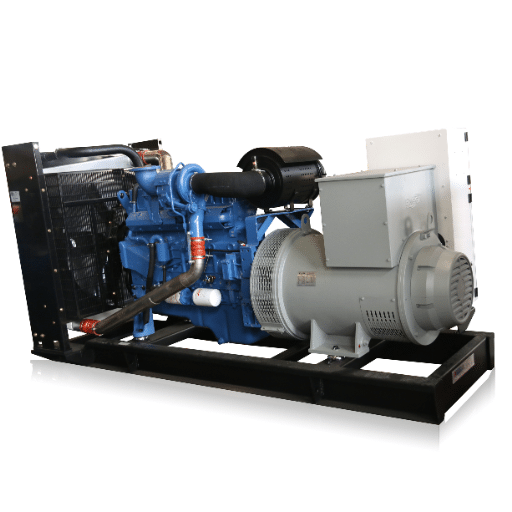
Even well-maintained facilities make errors that lead to NFPA 110 violations.
- Running monthly tests at no load. No-load exercise does not satisfy the 30% load requirement for diesel generators and can cause wet stacking.
- Skipping annual load bank testing. When building load is light, the annual load bank test is the only way to prove rated output capacity.
- Neglecting fuel testing. Degraded fuel is a common cause of generator failure during extended outages.
- Ignoring ATS maintenance. The transfer switch is often the weakest link in the EPSS.
- Incomplete records. Missing signatures, load percentages, or transfer times can result in findings even when the equipment performs correctly.
- Confusing Level, Type, and Class. Each classification affects design and maintenance requirements.
A manufacturing facility in Texas used a standby generator rated for prime power as a Level 2 emergency unit. The maintenance team treated it as a non-critical asset and skipped the annual ATS inspection. During a utility outage, the ATS contacts failed to transfer cleanly, causing a 12-second interruption. The event prompted a full EPSS review and the creation of a written maintenance program.
FAQ: NFPA 110 Generator Maintenance
What does NFPA 110 require for generator maintenance?
NFPA 110 requires a written maintenance program that includes weekly visual inspections, monthly loaded exercise, annual load bank testing when needed, fuel testing, transfer switch maintenance, and complete record keeping retained for at least 36 months.
How often must an emergency generator be tested under NFPA 110?
Emergency generators must be exercised under load at least once per month for a minimum of 30 minutes. Diesel units must reach at least 30% of nameplate kW or the manufacturer-recommended exhaust temperature.
What is the difference between Level 1 and Level 2 EPSS?
Level 1 systems serve loads where failure could result in loss of human life or serious injury. Level 2 systems serve loads where failure is less critical to life safety and primarily causes operational or economic disruption.
What is a Type 10 generator system?
A Type 10 system must restore power to the load terminals of the transfer switch within 10 seconds. It is commonly required for healthcare and life safety applications.
When is load bank testing required?
Load bank testing is required annually if the monthly test cannot achieve the required 30% load for diesel generators. Level 1 systems also require a 4-hour full-load test every 36 months.
How long must NFPA 110 records be kept?
Records must be retained for at least 36 months and be available to the AHJ upon request.
Does NFPA 110 apply outside the United States?
NFPA 110 is a U.S. standard, but it is often used as a reference for international projects, especially when owners or contractors want equipment that meets a recognized emergency power standard. Local codes still take precedence.
What happens if a generator fails NFPA 110 testing?
The deficiency must be corrected and retested. Records must document the failure, corrective action, and successful retest. Repeated or serious deficiencies may trigger AHJ enforcement or insurance implications.
Conclusion
NFPA 110 generator maintenance is a structured program, not a single task. Weekly inspections, monthly loaded exercise, annual load bank testing, fuel quality verification, and complete documentation all work together to ensure that the EPSS will perform when it is needed.
The standard is a minimum. Best practices often exceed it, especially for critical facilities where downtime is not an option. Correct specification at the design stage, including the right Level, Type, and Class, reduces maintenance burden and improves compliance outcomes.
If you need NFPA 110-compliant generator specification, maintenance planning support, or replacement parts for your EPSS, contact Shandong Huali for engineering support. Our team can help you select and maintain generator solutions that meet recognized standards and perform reliably under real emergency conditions.