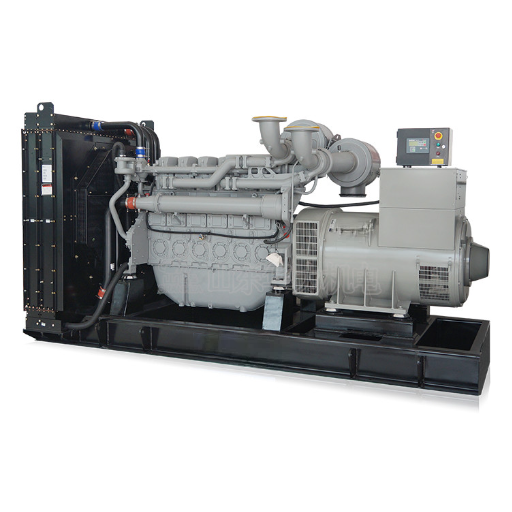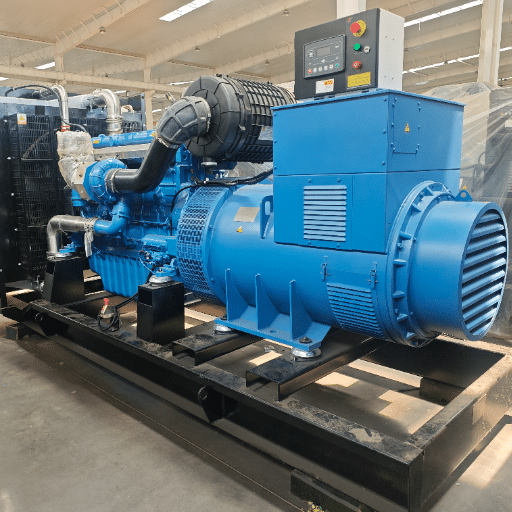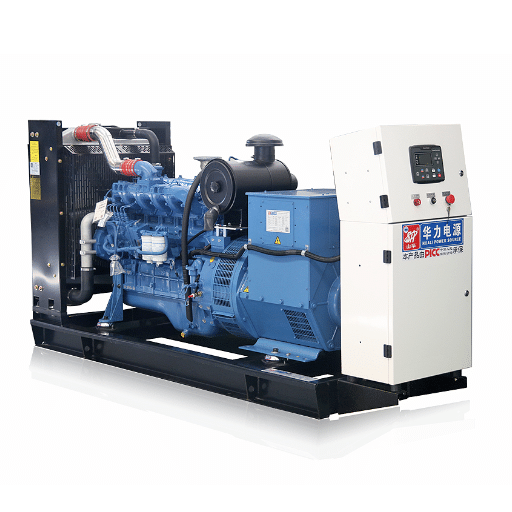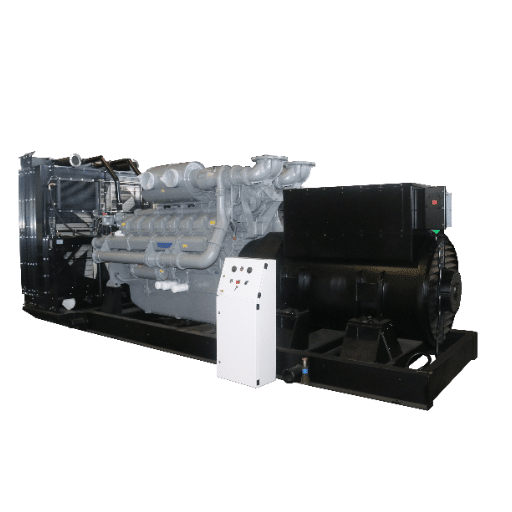



The generator set efficiency tips with the biggest payback are three: run the unit in its 60-80% load band, keep the air and fuel systems serviced, and protect fuel quality in storage. Together they are worth 5-15% in fuel savings, and most facilities can capture them within one maintenance cycle.
Why does this deserve attention? Because fuel is the largest controllable cost of owning a generator set. Over a 15-year service life, diesel typically costs several times the purchase price of the machine itself. A 10% efficiency improvement on a hard-working 500 kW prime unit can be worth more than the engine overhaul you are putting off.
You probably already suspect your fuel bills are higher than they should be. Most operators are right about that. This guide gives you a measured program rather than a generic tips list: baseline your real consumption, apply eight fixes in impact order, then verify the gains with data. These are the same checks our engineers run when customers ask us why a genset drinks more fuel than the spec sheet promised.
Key Takeaways
- Modern diesel generator sets should burn 0.20-0.28 L/kWh. If your measured figure is above 0.30, something on this list is wrong.
- The efficient load band is 60-80% of rated capacity. Chronic running below 30% load causes wet stacking and can waste 10-20% of fuel.
- Maintenance and load management together typically cut fuel use 5-15%, with clogged filters and fouled injectors among the cheapest fixes.
- Standby units lose money even when idle: block heaters and battery chargers can draw 1-3 kW around the clock.
- Efficiency work without measurement is guesswork. Baseline your L/kWh, apply fixes, and re-measure after 30 days.
Measure First: Baseline Your Generator Set Efficiency

Every efficiency program starts with a number. Yours is liters per kilowatt-hour, and it takes one week to establish.
Record fuel drawn from the tank and kilowatt-hours generated over a normal operating week. Divide fuel by energy. That is your baseline specific fuel consumption, and it tells you where you stand against the 0.20-0.28 L/kWh band that modern diesel engines achieve, as references like Depco’s efficiency FAQ confirm. Above 0.30 L/kWh, you have a real problem worth fixing. Below 0.24, you are already running well.
A worked example makes this concrete. Say your 500 kW set drew 9,600 liters over a week in which its meter logged 38,000 kWh. Your baseline is 9,600 ÷ 38,000 = 0.253 L/kWh, comfortably inside the efficient band. The same unit drawing 12,000 liters for the same energy would read 0.316, signaling a problem worth hunting down with the tips below.
A digital control panel with remote monitoring makes this automatic, logging fuel rate and load continuously instead of relying on a weekly clipboard reading. Either way, do not skip this step. Without a baseline, you can’t prove any improvement, and you can’t find the specific problem when consumption creeps up.
Typical Diesel Generator Fuel Consumption by Load
If you need a quick sanity check before your own baseline is ready, these figures show what healthy modern diesel sets typically burn at each load level:
| Unit Size | 25% Load | 50% Load | 75% Load | 100% Load |
|---|---|---|---|---|
| 100 kW | ~8 L/h | ~13 L/h | ~17 L/h | ~23 L/h |
| 250 kW | ~20 L/h | ~32 L/h | ~42 L/h | ~57 L/h |
| 500 kW | ~40 L/h | ~64 L/h | ~83 L/h | ~113 L/h |
| 1,000 kW | ~79 L/h | ~127 L/h | ~165 L/h | ~225 L/h |
Two patterns stand out. First, consumption per hour climbs with load, but consumption per kWh (the figure that matters) actually improves as you move from 25% toward 75%. Second, the penalty for chronic light loading is visible in the 25% column, where each liter produces far less energy. Treat these as reference values; your engine’s published fuel curve is the authority for your specific unit.
When Tomas, the facilities manager at a beverage bottling plant in Monterrey, ran this check in March 2025, the numbers surprised him. His two 400 kW diesel sets alternated weekly, each carrying about 25% load during the plant’s single-shift operation. His baseline came out at 0.34 L/kWh, far above the efficient band. The fix cost nothing: consolidate the load onto one unit and keep the second as standby. His next baseline read 0.26 L/kWh, a 23% fuel saving from a scheduling change alone.
Generator Set Efficiency Tips That Matter Most

Here is the full program in impact order. Each tip is detailed in the sections below.
- Run in the 60-80% load band. Biggest single lever: 5-15% fuel impact.
- Service air filters, fuel filters, and injectors on schedule. Worth 2-5% when neglected.
- Polish or replace degraded fuel. Worth 2-4% on stored diesel older than 12-18 months.
- Fix chronic low-load operation with load bank testing. Restores rated efficiency and prevents wet stacking damage.
- Balance three-phase loads and correct low power factor. Recovers 2-5% of usable capacity.
- Manage parasitic loads on standby units. Saves 1-3 kW of continuous draw, around the clock.
- Control intake air temperature and ventilation. Every 10°C of excess intake heat costs roughly 1-2% output.
- Account for altitude and ambient derating. About 1% capacity lost per 100 m above 1,000 m elevation.
Run in the Efficient Load Band
A diesel engine’s fuel map is not flat. Specific fuel consumption bottoms out between 60% and 80% of rated load, rises modestly at full load, and climbs steeply below 30%. Running a 500 kW set at 100 kW doesn’t just waste fuel. It actively harms the engine.
Why Low Load Kills Efficiency
At light load, combustion temperatures drop too low to burn fuel completely. Unburned fuel and carbon accumulate in the exhaust system, a condition known as wet stacking. Technopower’s analysis of wet stacking documents the chain: deposits build up, injector spray patterns degrade, and fuel consumption rises further in a self-reinforcing cycle. Left alone for months, it also shortens engine life.
Load Bank Testing as an Efficiency Tool
The standard cure is a load bank test: run the generator against an artificial load at 75-100% of rating for two to four hours. This burns off accumulated deposits, restores combustion temperature, and verifies the unit can actually deliver its nameplate power. For standby sets that rarely see real load, schedule a load bank test at least annually.
Load Management and Power Factor
Efficiency also lives on the electrical side. Unbalanced three-phase loads force the alternator to work harder on one winding, wasting capacity as heat. A power factor below 0.8 means you’re generating current that does no useful work. Redistribute single-phase loads evenly across phases, and correct poor power factor at the load side where practical.
One caution on power factor correction: don’t switch large capacitor banks while the generator carries the load. The leading current can push the alternator into over-excitation and trip the voltage regulator. If your facility runs correction equipment, involve your supplier or a qualified electrician in the switching sequence.
If your load profile is permanently light, the honest answer may be a smaller unit or a different operating plan. Our fuel efficient diesel generator buyer’s guide covers how to match engine selection to your real duty cycle.
Maintenance Tasks with Direct Efficiency Payback

Deferred maintenance shows up on the fuel bill before it shows up as a breakdown. This table connects each task to its efficiency cost when neglected.
| Maintenance Task | Symptom of Neglect | Estimated Fuel Impact |
|---|---|---|
| Air filter replacement | Starved airflow, black exhaust smoke | 2-3% |
| Fuel filter and injector service | Poor atomization, rough running | 2-5% |
| Engine oil and filter change | Higher friction losses | 1-2% |
| Cooling system service (coolant, radiator) | Higher operating temperature | 1-2% |
| Valve clearance adjustment | Incomplete combustion | 1-3% |
| Battery and charging system check | Failed starts, not a fuel item, but the #1 cause of standby failure | Reliability |
Two points matter here. First, these percentages stack: a unit with clogged filters, dirty injectors, and old oil can easily sit 5-8% above its rated consumption. Second, the fix costs a fraction of the waste. A full filter and injector service on a 500 kW set typically pays for itself within two to three months of prime-power running.
For the complete service schedule by interval, use our diesel generator maintenance checklist, and for the operating routine around it, see how to maintain a genset.
Fuel Quality, Storage, and the Hidden Loads
Two efficiency drains hide outside the engine itself: what sits in your tank, and what draws power while the generator sleeps.
Fuel Degradation and Polishing
Diesel stored longer than 12 to 18 months degrades. Oxidation forms gums and sediments, water condenses in the tank, and microbial growth clogs filters and fouls injectors. The engine still runs, but combustion quality drops and consumption climbs.
The fix is a fuel management routine: test stored fuel annually, polish it (filter and treat in place) when contamination appears, and size tank inventory to what you’ll actually burn within a year. Standby operators get caught here most often, because a tank filled at commissioning can sit untouched for years.
Parasitic Loads on Standby Units
A standby generator set never fully sleeps. The coolant block heater, battery charger, and control electronics draw power continuously, typically 1-3 kW combined. That’s up to 26,000 kWh per year of electricity that produces nothing.
You can’t eliminate these loads (the block heater is what makes a 10-second start possible), but you can manage them. Thermostatically controlled heaters, high-efficiency chargers, and sensible heater setpoints cut the draw meaningfully in mild climates. Ask your supplier what the standby parasitic draw is before you buy; almost nobody does.
Site Conditions: Altitude, Temperature, Ventilation
Engines breathe air, and thinner or hotter air means less oxygen per intake stroke. The standard derating figure is about 1% of capacity per 100 m of altitude above 1,000 m, with further losses as intake air temperature climbs above 25-40°C depending on the engine’s rating basis.
You can’t move the mountain, but you can stop making it worse. Keep radiator cores and air inlets clean, maintain clear airflow paths around the enclosure, and never let recirculated hot exhaust air reach the intake. Our guide to generator set ventilation requirements covers airflow design in detail. A unit gasping in a poorly ventilated room burns more fuel per kWh and lives a shorter life.
Verify the Gains

Apply the fixes, then close the loop. Re-measure your L/kWh after 30 days of normal operation and compare it to your baseline. A realistic combined result across load management, maintenance, and fuel quality is 5-15%.
Keep the measurement conditions consistent between readings. Compare similar duty weeks, not a heavy production week against a light one, or you’ll measure your schedule instead of your machine. Remote monitoring handles this automatically by logging fuel rate against load in real time, which removes the guesswork entirely.
Aisha, who runs maintenance at a cement plant outside Lahore, did exactly this in late 2025. Her 800 kW prime-power set baselined at 0.31 L/kWh. She scheduled injector service, replaced air and fuel filters, and had the 14-month-old tank inventory polished. Thirty days later the unit read 0.275 L/kWh. At roughly 400 operating hours a month, that 11% improvement saved about 2,200 liters of diesel monthly, worth close to $1,800 at her delivered fuel price. The service cost was recovered in under six weeks.
One honest caveat: if a unit still reads above 0.30 L/kWh after service and load correction, the engine itself may be worn or the unit may simply be wrong for the duty. At that point, compare repair cost against a modern fuel-optimized diesel generator set before spending more on the old machine. Repowering sometimes beats repairing.
FAQ: Generator Set Efficiency Questions
What is a good fuel consumption figure for a diesel generator set?
A modern diesel generator set in good condition should burn 0.20-0.28 liters per kWh generated. Readings above 0.30 L/kWh signal a problem, usually chronic light loading, neglected filters and injectors, or degraded fuel. Below 0.24 L/kWh means the unit is running efficiently.
How much fuel does a 500 kW diesel generator use per hour?
At 75% load, a healthy 500 kW diesel generator burns roughly 83 liters per hour. That drops to about 64 L/h at 50% load and rises to around 113 L/h at full load. Exact figures depend on the engine, so check your unit’s published fuel curve for authoritative numbers.
Is it bad to run a diesel generator at low load?
Yes. Sustained operation below 30% of rated load causes wet stacking, where unburned fuel and carbon foul the exhaust system and injectors. Fuel consumption per kWh rises 10-20%, and engine life shortens. The cure is load consolidation or periodic load bank testing at 75-100% of rating.
How often should a standby generator be load bank tested?
At least once a year for standby sets that rarely carry real load. Units in critical service, such as hospitals and data centers, are often tested semi-annually or quarterly. Each test should run the unit at 75-100% of rated capacity for two to four hours to burn off deposits and verify nameplate output.
Does old diesel fuel really reduce generator efficiency?
Yes. Diesel stored longer than 12-18 months oxidizes, forming gums and sediments, while water condensation encourages microbial growth that clogs filters and fouls injectors. The result is measurably worse combustion and 2-4% higher fuel consumption. Annual fuel testing and polishing restore quality at a fraction of the waste cost.
How much can maintenance improve generator fuel efficiency?
A full service round (air filter, fuel filters, injectors, oil, and cooling system) typically recovers 2-8% in fuel efficiency, depending on how long maintenance was deferred. On a 500 kW prime-power unit, that service usually pays for itself within two to three months of fuel savings alone.
What is the most efficient way to run multiple generator sets?
Consolidate load onto fewer units running in their 60-80% efficiency band rather than spreading light loads across many machines. A plant running two sets at 25% load each will almost always save 15-25% on fuel by running one set at 50% and keeping the other as standby.
How much power do block heaters and battery chargers waste?
Standby parasitic loads (coolant heater, battery charger, control electronics) typically draw 1-3 kW continuously, up to 26,000 kWh per year. Thermostatically controlled heaters and high-efficiency chargers cut this meaningfully in mild climates. Ask suppliers for the parasitic draw figure before purchase; almost no buyer does.
Conclusion: Efficiency Is a Program, Not a Purchase
The generator set efficiency tips that actually move the needle form a loop, not a list:
- Measure your baseline L/kWh first, so every fix is provable.
- Run in the 60-80% load band and use load bank testing to cure chronic light loading.
- Service filters, injectors, oil, and cooling on schedule; neglect stacks up to 5-8% in wasted fuel.
- Protect stored fuel and manage the parasitic loads that draw power around the clock.
- Re-measure after 30 days and expect 5-15% total improvement.
Fuel will remain your largest operating cost for as long as you own the machine. The operators who win that cost battle are the ones who measure it.
Ready to find your baseline? Contact the Shandong Huali engineering team → with your unit’s rating, duty profile, and recent fuel records. We’ll benchmark your consumption against rated data and tell you which of these eight fixes will pay back fastest on your site.