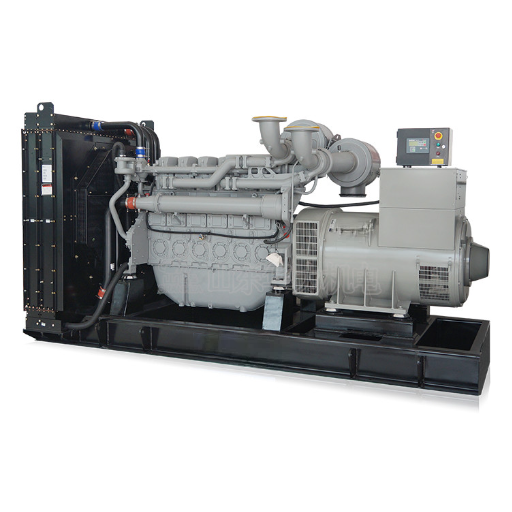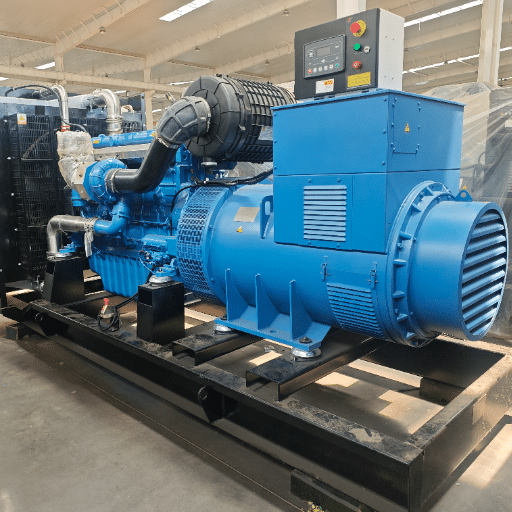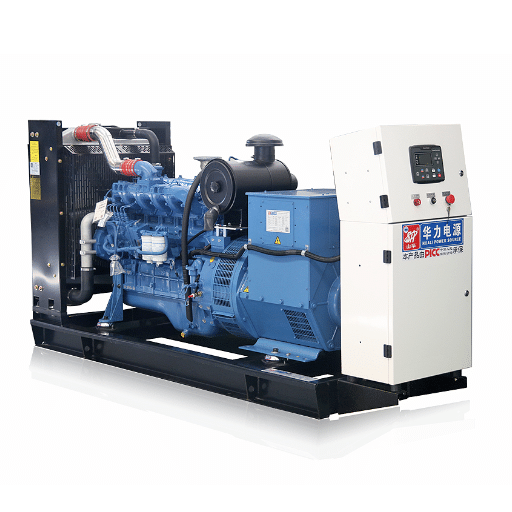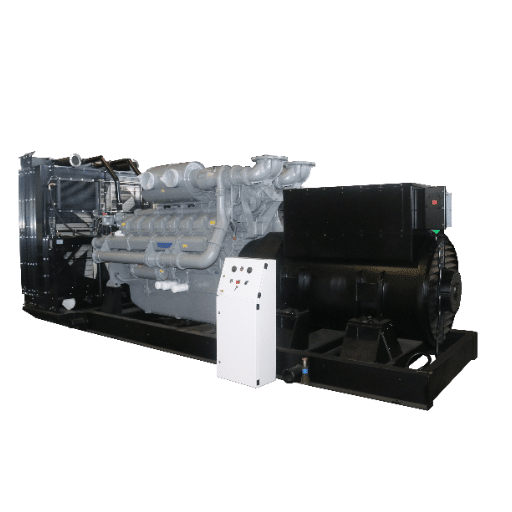


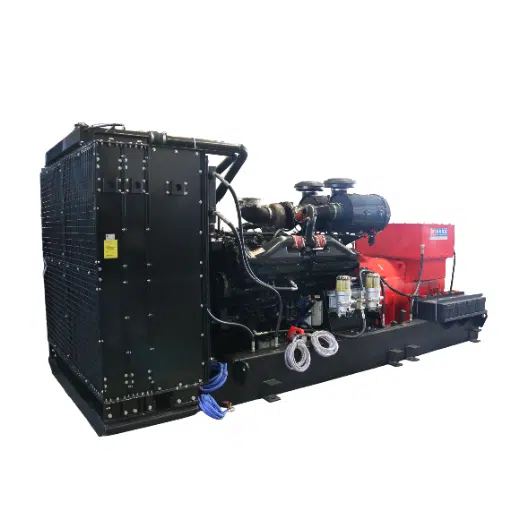
A generator IP rating is a two-digit code, defined by the IEC 60529 standard, that tells you how well a generator is protected against dust and water. The first digit rates protection against solid objects (0 to 6), and the second digit rates protection against liquids (0 to 9K). Most diesel generators have an IP rating between IP21 and IP65, depending on whether they are open-type, canopy, or containerized units.
Those two small digits decide whether your generator survives its environment or fails in it. When Daniel, a site manager for a road construction project in Southeast Asia, installed an open-type IP23 genset outdoors last monsoon season, the unit ran fine for six weeks. Then wind-driven rain reached the alternator windings, moisture tracking caused a short, and the project lost three days of power while a replacement alternator was shipped in. The repair bill exceeded the cost of an IP54 canopy upgrade.
Most buyers we work with have seen an IP code on a spec sheet and skimmed past it. That is understandable: the code looks like jargon. This guide decodes the generator IP rating system in plain language, shows which ratings match which environments, explains why a higher rating is not automatically better, and gives you the exact questions to ask a supplier before you sign a purchase order.Since the IP code is only one line among many on a data sheet, our guide to reading a full generator set specification shows how it fits alongside the other ratings you need to check before buying.
Key Takeaways
- A generator IP rating (IEC 60529) uses two digits: the first covers dust and solid objects (0-6), the second covers water (0-9K).
- Open-type gensets are typically IP22-IP23, soundproof canopies IP44-IP45, containerized units IP65, and marine or special-application units up to IP67.
- Indoor generator rooms usually need only IP21-IP23. Outdoor exposed installations need IP44 minimum, and coastal or desert sites need IP55 or higher.
- Higher is not always better: sealed enclosures restrict airflow, so IP65+ units may need thermal derating or upgraded cooling.
- Always ask for an IEC 60529 test report. An IP claim without test documentation is a marketing statement, not a specification.
What Is a Generator IP Rating?

A generator IP rating (Ingress Protection rating) is a standardized code from IEC 60529 that classifies how well the generator’s enclosure or alternator housing keeps out solid objects and liquids. It appears on spec sheets as “IP” followed by two digits, such as IP23 or IP54.
Each digit is independent. A high first digit says nothing about water protection, and a high second digit says nothing about dust. You have to read both. The full term, ingress protection, describes exactly what the code measures: how effectively the enclosure stops outside elements from getting in.
First Digit: Protection Against Solids and Dust
The first digit runs from 0 (no protection) to 6 (completely dust-tight):
| Digit | Protection Level | Practical Meaning |
|---|---|---|
| 0 | No protection | No barrier at all |
| 1 | Objects larger than 50 mm | Accidental hand contact |
| 2 | Objects larger than 12.5 mm | Fingers, small tools |
| 3 | Objects larger than 2.5 mm | Thick wires, screwdrivers |
| 4 | Objects larger than 1 mm | Small wires, insects, large debris |
| 5 | Dust-protected | Dust ingress limited to harmless amounts |
| 6 | Dust-tight | No dust ingress at all |
Second Digit: Protection Against Water
The second digit runs from 0 to 9K. Many guides stop at 6, but the upper end matters for marine, flood-prone, and washdown environments:
| Digit | Protection Level | Practical Meaning |
|---|---|---|
| 0 | No protection | Indoor dry use only |
| 1 | Vertically dripping water | Light condensation |
| 2 | Dripping water at 15° tilt | Minor splashing |
| 3 | Spraying water up to 60° from vertical | Light rain, angled spray |
| 4 | Splashing water from any direction | Rain, general outdoor splash |
| 5 | Low-pressure water jets | Hose-directed water |
| 6 | Powerful water jets | Heavy seas, strong washdown |
| 7 | Temporary immersion (1 m, 30 min) | Flooding events |
| 8 | Continuous immersion (manufacturer-specified depth) | Permanent submersion conditions |
| 9K | High-pressure, high-temperature jets | Steam cleaning, washdown facilities |
One useful detail: water protection digits are not cumulative. An IP67 rating (immersion) does not automatically include IP65-level jet protection, which is why some equipment carries dual markings like IP65/IP67.
Common IP Ratings for Diesel Generators

In practice, generator IP ratings cluster around a handful of codes tied to enclosure type. Whatever the power output, the ingress protection level follows the enclosure strategy:
| IP Rating | Protection Summary | Typical Generator Configuration |
|---|---|---|
| IP21 | Finger-safe, vertical drips | Open-type gensets in clean generator rooms |
| IP23 | Finger-safe, rain spray to 60° | Open-type gensets, standard alternator rating |
| IP44 | 1 mm solids, splashing from any direction | Soundproof canopies, construction-site gensets |
| IP54 | Dust-protected, splashing from any direction | Silent canopies, exposed outdoor installations |
| IP55 | Dust-protected, low-pressure jets | Harsh outdoor, coastal, and desert sites |
| IP65 | Dust-tight, low-pressure jets | Containerized gensets, very dusty industrial sites |
| IP67 | Dust-tight, temporary immersion | Marine, military, and flood-prone installations |
Notice that the rating has nothing to do with power output. A 20 kW canopy unit and a 1,000 kW canopy unit can share the same IP44 rating, while a 20 kW open-type unit sits at IP23.
Want this table matched to a real project? Our diesel generator range covers open-type, silent canopy, and containerized configurations. Every spec sheet states the IP rating of both the enclosure and the alternator. Send us your site conditions and we will recommend the right protection level.
What IP Rating Do You Need? Matching Rating to Environment
The right generator IP rating depends on where the unit will live, not on how big it is. Here is how to think about each environment.
Indoor Generator Rooms: IP21 to IP23
A clean, dry, ventilated generator room is the least demanding environment. IP21 to IP23 is sufficient, and there is a real advantage to staying low: open-type construction allows better airflow around the alternator, which means better cooling and a longer winding life.
Outdoor and Construction Sites: IP44 to IP54
Any generator exposed to rain needs at least IP44. Construction sites add dust, mud, and physical abuse, so IP54 with a soundproof or weather canopy is the safer choice. This is the standard configuration for the units discussed in our guide to generators for construction sites.Because these same canopies are chosen partly to keep sound down, our guide to reading a generator noise level db figure explains how the enclosure that earns your IP rating also shapes how loud the unit is on site.
Coastal, Desert, and Harsh Environments: IP55 and Above
Salt-laden coastal air corrodes unprotected windings and terminals, and wind-blown desert sand works its way into anything that is not sealed. For these sites, specify IP55 minimum and ask about anti-corrosion coatings and sand filtration on air intakes. The IP rating alone does not cover corrosion, so treat coating systems as separate line items.
Marine and Flood-Prone Installations: IP56 to IP67
Deck-mounted marine gensets face powerful water jets and green-water events, which calls for IP56. Sites with genuine flood risk should consider IP67-rated alternators, which survive temporary immersion at 1 meter for 30 minutes. That 30-minute window is often the difference between a generator that restarts after a flood and one that needs a full rewind.
IP23 vs IP44: The Most Common Comparison
This is the decision most buyers actually face, because IP23 and IP44 are the two most quoted ratings in the diesel generator market.
IP23 is the standard rating for open-type gensets and most industrial alternators. It keeps out fingers and rain falling at up to 60 degrees from vertical. Indoors or under a roof, it does the job well and keeps cooling simple.
IP44 adds protection against solids down to 1 mm (including most insects and wind-blown debris) and water splashing from any direction. It is the entry point for genuine outdoor exposure.
The practical rule: if the generator will ever sit unsheltered in the rain, choose IP44. The cost premium is modest, while an alternator rewind after water ingress can run into thousands of dollars plus downtime. Only stay at IP23 when the generator has a permanent indoor or fully sheltered home.
Why a Higher Generator IP Rating Isn’t Always Better

It is tempting to specify IP65 everywhere and feel safe. Resist that instinct, because protection and cooling pull in opposite directions.
Every generator converts fuel into heat as well as power, and that heat has to escape. Sealed, dust-tight enclosures restrict airflow, which raises internal temperatures. Alternator windings have strict temperature limits, so a highly sealed unit may need to be derated (run below its nameplate capacity) or fitted with upgraded cooling fans and filtration systems. Both add cost.
Over-specifying also wastes budget directly. Moving from IP44 to IP65 on a mid-size canopy genset typically adds a meaningful percentage to the enclosure cost, with zero benefit on a sheltered site. The goal is not the highest IP rating. The goal is the lowest rating that safely covers your actual environment.
For the cooling side of this equation, proper airflow design matters as much as the rating itself, which we cover in our generator set installation guidance.
Alternator IP Rating vs Enclosure IP Rating
Here is a detail that trips up even experienced buyers: a generator has two IP ratings, not one.
The alternator carries its own rating (commonly IP23) for the winding housing. The enclosure or canopy carries a separate rating for the outer shell. A spec sheet might show “Alternator: IP23, Canopy: IP44,” which is perfectly consistent: the canopy takes the weather, and the alternator sits inside the protected space with filtered ventilation air.
Problems arise when a buyer reads only one number. Maria, a facilities engineer at a food processing plant, approved a genset quote showing “IP54” without checking which component it referred to. The canopy was indeed IP54, but the control panel door seals were not part of the tested assembly. After the first washdown season, moisture reached the controller and caused nuisance shutdowns. The lesson: ask which components the stated rating covers, and confirm the alternator, canopy, and control panel separately.
IP Rating vs NEMA Rating
If you buy equipment for North American projects, you will encounter NEMA enclosure ratings instead of IP codes. They are not identical systems, but approximate equivalents help with cross-market specifications:
| NEMA Type | Approximate IP Equivalent | Environment |
|---|---|---|
| NEMA 1 | IP20 | Indoor, general purpose |
| NEMA 3R | IP24 | Outdoor, rain and sleet |
| NEMA 4 | IP56 | Outdoor, hose-directed water |
| NEMA 4X | IP56 plus corrosion protection | Coastal and corrosive environments |
| NEMA 6/6P | IP67/IP68 | Temporary or prolonged submersion |
The conversion is approximate because NEMA ratings also cover corrosion resistance, icing, and other factors that IP codes do not address. When a tender specifies NEMA 4X, do not assume IP56 alone satisfies it; confirm the corrosion requirement separately. The NEMA enclosure types documentation and the IEC 60529 standard are the authoritative references when a specification is disputed.
How to Specify IP Protection in a Generator RFQ

A good IP specification in a tender or RFQ does three things: states the rating, ties it to the standard, and demands proof.
- State the rating per component. Write “Alternator IP23 minimum, canopy IP44 minimum” rather than a single blanket number.
- Reference IEC 60529 explicitly. This removes ambiguity about which test regime applies.
- Request the test report. Reputable manufacturers test enclosures per IEC 60529 and can provide certificates or test reports. If a supplier cannot produce documentation, treat the claimed rating as unverified.
- Describe the environment. Include ambient temperature, dust conditions, salt exposure, and washdown practices. A good manufacturer will flag if your stated rating is insufficient or excessive for those conditions.
Maintaining IP Protection Over Time
An IP rating is measured on a new unit at the factory. Real-world protection depends on keeping the sealing system intact:
- Inspect gaskets and door seals at every service interval. Compressed or cracked seals are the most common failure point.
- Clean or replace air filters on schedule. Clogged filters on sealed enclosures starve the alternator of cooling air.
- Check for condensation in humid climates. Breather drains and anti-condensation heaters inside the alternator prevent moisture buildup even when the enclosure is intact.
- Verify seals after any service work. A canopy panel refitted with missing fasteners or a misaligned gasket silently downgrades your protection.
Include these checks in your regular generator maintenance routine so the rating you paid for is still the rating you have five years from now.
Frequently Asked Questions
Is IP23 enough for an outdoor generator?
No. IP23 protects against rain spray up to 60 degrees from vertical, but not wind-driven rain from all directions. For unsheltered outdoor installation, specify IP44 minimum and IP54 for dusty or exposed sites.
What does IP54 mean on a generator?
IP54 means the generator is dust-protected (limited ingress, no harmful deposits) and protected against water splashing from any direction. It is the standard rating for silent canopy gensets used outdoors.
Can a diesel generator run in the rain?
Only if its IP rating covers it. An IP44 or higher canopy genset can operate in rain. An open-type IP23 unit should not run unsheltered in rain, because water can reach the alternator windings and cause short circuits.
What IP rating do I need for a coastal site?
Specify IP55 minimum, combined with anti-corrosion coating (C3 or C4 class) on the canopy and hardware. Salt air corrodes components even when liquid water never touches them, so the coating matters as much as the rating.
Does a higher IP rating reduce generator performance?
It can. Sealed enclosures restrict cooling airflow, so IP65 and above may require thermal derating or upgraded cooling systems. Specify the lowest rating that safely covers your environment rather than the highest available.
Conclusion
The generator IP rating is a two-digit code with an outsized impact on reliability. Read both digits independently, match the rating to the environment rather than the budget instinct, and remember the four rules from this guide:
- Indoor rooms need only IP21-IP23; exposed outdoor sites need IP44 minimum.
- Coastal and desert environments call for IP55 plus corrosion protection.
- Higher ratings trade away cooling capacity, so over-specifying costs money twice.
- Verify the rating per component and demand IEC 60529 test documentation.
Get the rating right at purchase, maintain the seals during service, and environmental ingress becomes one failure mode you never have to think about.
Ready to specify the right protection level for your site? Shandong Huali manufactures open-type, silent canopy, and containerized diesel generator sets up to 3000 kW, with IP-rated enclosures tested and documented at our national-standard testing center. Contact our engineering team with your site conditions, and we will recommend a genset that matches your environment, your load, and your budget.