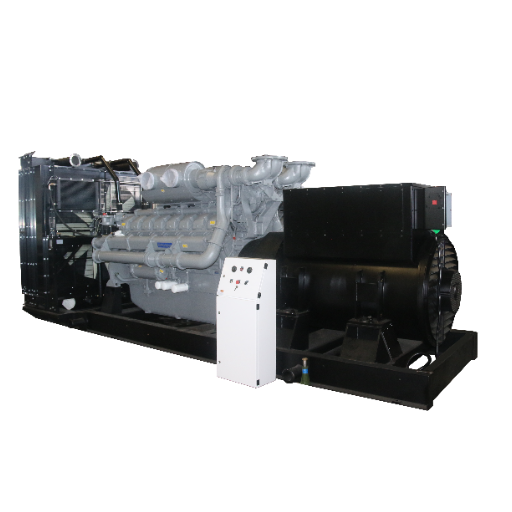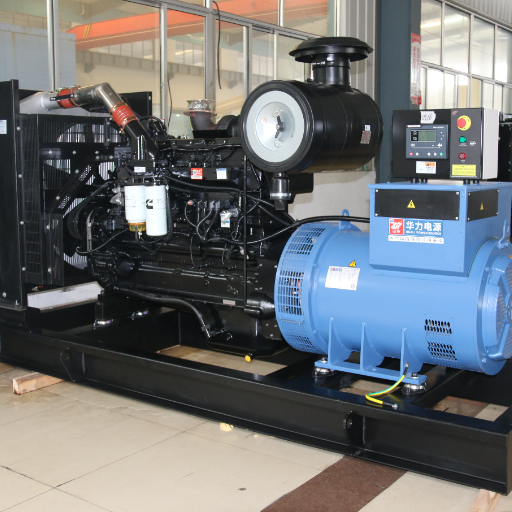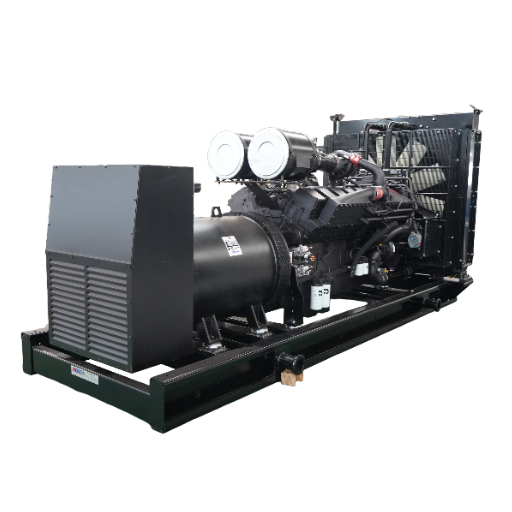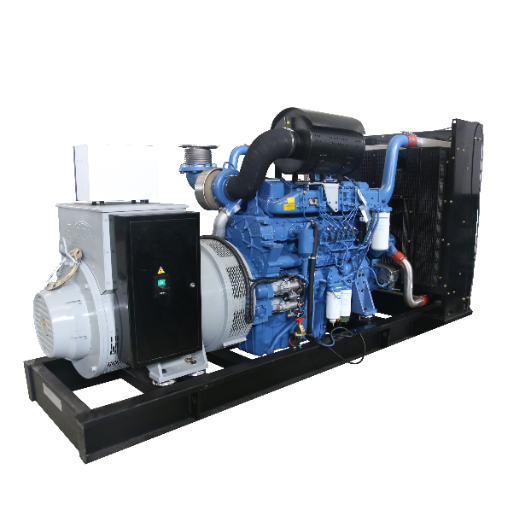


A generator fuel consumption chart shows how many litres of diesel a genset burns per hour at different loads, usually 25%, 50%, 75%, and 100%. As a rough starting point, a modern diesel genset burns about 0.25 litres per kWh at full load, which works out to roughly one litre per hour for every 4 kW of rated output. So a 100 kW genset burns about 25 litres per hour flat out.
Here is the thing most buyers get wrong. Two 400 kW gensets can sit side by side on a spec sheet and look identical, yet one costs thousands more a year to run. The difference does not live in the headline kW. It lives in the fuel consumption chart and in how you read it.The chart is only one line on the datasheet, so if you want to read the whole document with confidence, our guide on how to read a generator set specification walks through every field alongside the fuel figures.
If you have ever stared at L/h, L/kWh, and g/kWh on a data sheet and wondered which one actually matters, you are not alone. These three units describe the same engine from three different angles, and mixing them up is how buyers overpay. This guide sorts them out. You will learn what each unit means, how to read a fuel consumption chart, how to turn the numbers into a monthly running cost, and why loading a big engine lightly wastes more fuel than most people realize.
As a manufacturer that builds gensets with Perkins, Cummins, Weichai, and Yuchai engines, we spend a lot of time walking customers through exactly this math. We will finish with the questions we ask before recommending an engine size.
Key Takeaways
- A generator fuel consumption chart plots litres per hour against engine load. A modern diesel genset burns about 0.25 L per kWh at full load, or roughly one litre per hour per 4 kW of rated output.
- L/h is what you actually pay, g/kWh (specific fuel consumption) is the honest efficiency number, and L/kWh is efficiency per unit of work. They describe the same engine differently.
- Efficiency is best at high load and collapses below 50%. A genset running at 25% load can burn over 40% more fuel per kWh than at full load.
- The formula is simple: L/h = (kW x SFOC) / (density x 1000). Always use kW, not kVA, or you will overestimate by about 25%.
- Turning the chart into money is the step most guides skip. Monthly fuel cost = L/h x running hours x fuel price, and that figure is the real operating cost of a genset.
What Is a Generator Fuel Consumption Chart?

A generator fuel consumption chart is a table that lists a genset’s diesel burn rate in litres per hour across its normal operating range. The columns are usually 25%, 50%, 75%, and 100% of rated load, and the rows are the genset’s rated output in kW or kVA.
This chart is significant because fuel represents the highest cost over the entire lifecycle of a diesel generator set—far exceeding the initial purchase price. For a 400 kW generator set priced at $60,000, fuel costs alone could exceed $100,000 over ten years of routine operation. If fuel consumption estimates are inaccurate, you haven’t truly saved on equipment costs; you have simply shifted that expense into the fuel tank.
The number itself is not fixed. It moves with engine brand, alternator efficiency, load, altitude, temperature, and maintenance. That is why a chart gives a range rather than a single figure. Read it as a planning tool, not a promise.
Daniel runs a small cold-storage facility outside Lagos and chose his backup genset purely on the kVA printed on the nameplate. When the grid dropped and his compressor bank kicked in, the unit burned through its day tank in half the hours his vendor had quoted. The problem was not the engine. It was that he had never looked at the fuel consumption chart and had sized the unit for a load it rarely saw. His actual burn rate at 30% load was far worse, per kWh, than the full-load figure he had assumed.
The Three Units: L/h, L/kWh, and g/kWh
Every fuel conversation eventually runs into three abbreviations. They are not interchangeable, and knowing the difference is the fastest way to read a chart correctly.
Litres per Hour (L/h): What You Actually Pay
Litres per hour is the raw burn rate. It tells you how much diesel leaves the tank in an hour at a given load. This is the number that shows up on your fuel bill and the one you use to size a fuel tank or plan a refill schedule.
Its weakness is that it depends on engine size. A 500 kW engine burns more litres per hour than a 50 kW engine even when both are efficient, simply because it is doing more work. L/h alone cannot tell you whether an engine is good or wasteful.
Specific Fuel Consumption (g/kWh): The Honest Efficiency Number
Specific fuel consumption, or SFOC, measures how many grams of diesel an engine burns to produce one kilowatt-hour of work. This is the number engineers care about because it strips out engine size and lets you compare efficiency directly.
A modern diesel genset typically sits around 200 to 215 g/kWh at full load under ISO conditions. Older engines run 230 g/kWh or worse. Lower is better. When two suppliers quote the same kW, the one with the lower SFOC is the cheaper machine to run, every time.
Litres per kWh (L/kWh): Efficiency in Practical Terms
Litres per kWh is SFOC converted from grams and weight into litres you can picture. It is the same efficiency number, just expressed in fuel volume instead of mass. A genset running at 0.25 L/kWh burns 250 ml of diesel for every kWh it produces.
Here is the relationship that ties them together. Diesel weighs about 0.84 kg per litre, so you can move between the units using a simple formula. We will cover that below, but the key takeaway is this: g/kWh is the number that tells the truth, and L/h is the number you actually pay. The chart connects the two.
How to Read a Generator Fuel Consumption Chart

The chart below shows typical diesel generator fuel consumption per hour for a modern engine across the standard load points. The figures assume an engine with a full-load SFOC of about 210 g/kWh and diesel at 0.84 kg per litre. Your engine will vary slightly by brand, alternator, and conditions. If you work in US gallons, Generator Source’s fuel consumption chart lists the same data in gallons per hour.
| Rated kW | 25% load (L/h) | 50% load (L/h) | 75% load (L/h) | 100% load (L/h) |
|---|---|---|---|---|
| 10 kW | 0.9 | 1.4 | 1.9 | 2.5 |
| 20 kW | 1.8 | 2.8 | 3.8 | 5.0 |
| 50 kW | 4.5 | 7.0 | 9.6 | 12.5 |
| 100 kW | 8.9 | 14.0 | 19.2 | 25.0 |
| 200 kW | 17.9 | 28.0 | 38.4 | 50.0 |
| 400 kW | 35.7 | 56.0 | 76.8 | 100.0 |
| 500 kW | 44.6 | 69.9 | 96.0 | 125.0 |
| 800 kW | 71.4 | 111.9 | 153.6 | 200.0 |
| 1000 kW | 89.3 | 139.9 | 191.9 | 250.0 |
Three patterns jump out of this table, and they are the same on any honest chart.
The 75% Load Sweet Spot
Efficiency is not flat across the load range. It improves as the engine approaches full load, and 75% is the practical sweet spot where you get near-peak efficiency while still leaving headroom. At 75% load, most modern engines run around 0.26 L/kWh, within a few percent of their full-load best.
This is why manufacturers recommend sizing a genset so it normally runs between 70% and 80% of rated load. You get the best fuel economy per kWh without redlining the engine, and you leave a cushion for inrush currents and future growth.How much headroom you should leave also depends on the duty the set is built for, so our guide to standby vs prime vs continuous generator ratings explains how run-hours and load factor change the right sizing target.
Why Efficiency Drops Below 50% Load
Below half load, the numbers get worse quickly. At 25% load, SFOC climbs toward 300 g/kWh, which means the engine burns over 0.35 L per kWh. It is producing less work but not proportionally less fuel, because a large diesel engine is simply inefficient when it idles along under a light load.
This is the hidden cost of oversizing. Run a 500 kW genset at an average of 150 kW of load and you are paying the partial-load penalty every single hour. The same 150 kW delivered by a correctly sized 200 kW genset would cost noticeably less per kWh.
Getting the engine size right is where the savings start. Our diesel generator range spans 5 kW to 3000 kW, and matching engine size to your real load profile is the single biggest fuel-saving decision you will make.
The Formula: Turn kW into Litres per Hour

If you want to calculate fuel consumption instead of reading it off a table, you can work the math by hand or drop your numbers into a generator fuel consumption calculator. The formula behind both is straightforward, and Jubaili Bros’ fuel consumption guide follows the same approach.
L/h = (kW x SFOC) / (density x 1000)
Let’s break it down. kW is the engine’s actual electrical output at that moment. SFOC is specific fuel consumption in grams per kWh, which you can read from the engine data sheet. density is diesel density, around 0.84 kg per litre. The 1000 converts grams to kilograms.
Worked example. A 400 kW genset at full load with a 210 g/kWh SFOC and 0.84 kg/L diesel:
L/h = (400 x 210) / (0.84 x 1000) = 84,000 / 840 = 100 litres per hour.
That matches the chart above. The same engine at 75% load (300 kW, SFOC 215) drops to about 77 litres per hour, and at 50% load (200 kW, SFOC 235) it is around 56 litres per hour.
Use kW, Not kVA
This is the most common arithmetic mistake buyers make, and it is expensive. Generators are often quoted in kVA, but the fuel formula needs kW. The two are related by the power factor, usually 0.8.
A 500 kVA genset is a 400 kW genset, because 500 x 0.8 = 400. Plug 500 into the formula instead of 400 and you overestimate consumption by 25%. When you size a fuel tank or budget a running cost on the wrong number, you buy a tank you do not need and scare yourself with a fuel bill that will never arrive.
For a deeper look at how kW, kVA, and power factor relate, our generator alternator specifications guide covers the electrical side in detail.
Quick Rules of Thumb
When you need a number in a meeting and there is no chart in front of you, these approximations are close enough for planning.
- Full load: about 0.25 litres per kWh, so L/h is roughly the rated kW divided by 4.
- Three-quarter load: about 0.26 litres per kWh, so L/h is roughly kW x 0.75 x 0.34.
- Half load: about 0.28 litres per kWh, so L/h is roughly kW x 0.50 x 0.37.
- US gallons: divide litres by 3.785. A 100 kW genset burning 25 L/h is using about 6.6 gallons per hour.
These rules assume a modern, well-maintained engine. An older engine or one running in extreme heat or altitude will land higher, so treat it as a floor, not a ceiling. For a complete kW-by-kW table with a built-in calculator, Huaquan Power’s fuel consumption guide is a widely cited reference.
Turn the Chart into a Running Cost

A chart is only useful once it becomes a number with a currency symbol in front of it. Here is the calculation every procurement team should run before choosing a supplier.
Monthly fuel cost = L/h x running hours x fuel price.
Priya manages a textile mill in Gujarat that runs a 400 kW genset for roughly 200 hours a month during grid outages. At 75% load, the chart gives her about 77 litres per hour. With diesel at 90 rupees per litre, her monthly bill works out to 77 x 200 x 90, which is about 1,386,000 rupees.
When she compared two suppliers, the quote with the lower sticker price used an engine with a 230 g/kWh SFOC instead of 210. Over the same 200 hours, that difference added more than 12% to her fuel bill every single month. Within a year, the cheaper generator had become the more expensive one. The chart, not the price tag, was the real decision.
The lesson is simple. A 5% or 10% difference in SFOC sounds small on a spec sheet, but compounded across thousands of running hours it dwarfs the purchase-price difference. When you evaluate gensets, always ask for the SFOC at your actual operating load, not just the rated full-load figure.If you are turning that comparison into a formal procurement document, our guide to writing a generator set specification for tender shows how to phrase fuel and SFOC requirements so suppliers cannot quote a thirsty engine against an efficient one.
What Shifts the Numbers
The chart assumes ISO conditions and a healthy engine. In the field, three things push consumption up.
Load profile. This is the biggest one. An engine that spends most of its life below half load burns far more fuel per kWh than the chart suggests, as we covered above.
Altitude and temperature. Diesel engines lose power as air thins at altitude and as intake air heats up. A genset derated for a 2,000-metre site produces less usable power, so it must work harder for the same load, and consumption per kWh rises. High ambient temperature has a similar effect.
Maintenance. Clogged air filters, worn injectors, and dirty fuel all force the engine to work less efficiently. A neglected engine can burn 5% to 15% more fuel than a well-serviced one, which is why the maintenance schedule is a fuel-saving measure as much as a reliability one.
Ahmed runs a telecom network with sites across high-altitude East Africa and discovered this the hard way. His first sites used a single large genset running at around 30% load most of the day. The engines wet-stacked, fouled their injectors, and burned fuel at a rate that made the full-load chart look optimistic. He switched the new sites to smaller units sized for the real load, and per-site fuel cost dropped even though the engines were smaller. The spec that mattered was not more kW. It was the right kW.
For the engine-side details behind these figures, including how SFOC is measured, our generator engine specifications guide walks through the full data sheet.
Frequently Asked Questions
How much fuel does a diesel generator use per hour?
A modern diesel generator uses about 0.25 litres per kWh at full load, which means a 100 kW genset burns roughly 25 litres per hour and a 500 kW genset burns about 125 litres per hour. The actual figure rises sharply at light load and varies with engine brand and conditions.
How do I calculate diesel generator fuel consumption?
Use the formula L/h = (kW x SFOC) / (density x 1000). Multiply the actual electrical output in kW by the specific fuel consumption in g/kWh, then divide by the diesel density (about 0.84 kg/L) times 1000. Always use kW, not kVA, or you will overestimate by roughly 25%.
What is specific fuel consumption (g/kWh)?
Specific fuel consumption, or SFOC, is the grams of diesel an engine burns to produce one kilowatt-hour of work. It is the efficiency number that lets you compare engines of different sizes directly. Modern gensets sit around 200 to 215 g/kWh at full load, and lower is always better.
What is the most fuel-efficient generator load?
Around 75% of rated load. Efficiency improves as load rises and near-peak efficiency arrives between 70% and 80%, which is why manufacturers recommend sizing a genset to run in that band. Below 50% load, fuel consumption per kWh climbs sharply.
Why does my generator use more fuel than the chart says?
The most common reasons are running below half load, operating at altitude or in high heat, and poor maintenance. A neglected engine can burn 5% to 15% more fuel than a well-serviced one, and a large engine idling under a light load wastes the most fuel per kWh of all.
Conclusion
A generator fuel consumption chart looks like a simple table, but it carries the real cost story of a genset. Fuel is the largest lifetime expense, and the chart is where you see it before you commit. Remember the essentials. L/h is what you pay, g/kWh is how efficient the engine truly is, and efficiency collapses below half load. Use kW, not kVA, and always turn the chart into a monthly cost before you compare suppliers.
The mistake to avoid is buying on headline kW and ignoring the curve behind it. An oversized engine running lightly costs more to run than a smaller one doing the same work, and a low SFOC engine pays for itself across thousands of hours.
Shandong Huali builds diesel gensets with Perkins, Cummins, Weichai, and Yuchai engines, from 5 kW portable units to 3000 kW industrial systems, all supported by ISO9001, CE, and CCC-certified manufacturing. Send us your load profile, running hours, and local fuel price, and we will match an engine that keeps your fuel bill where the chart says it should be.