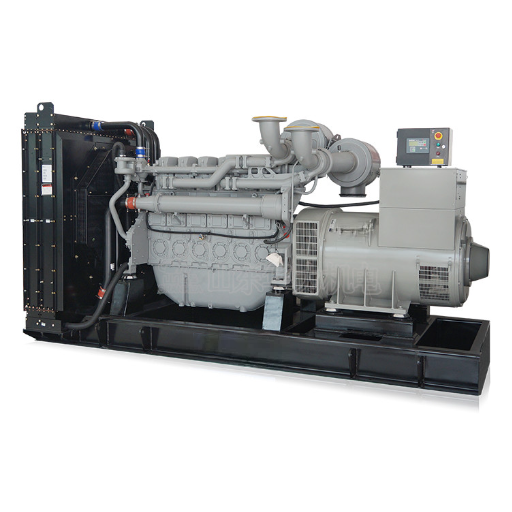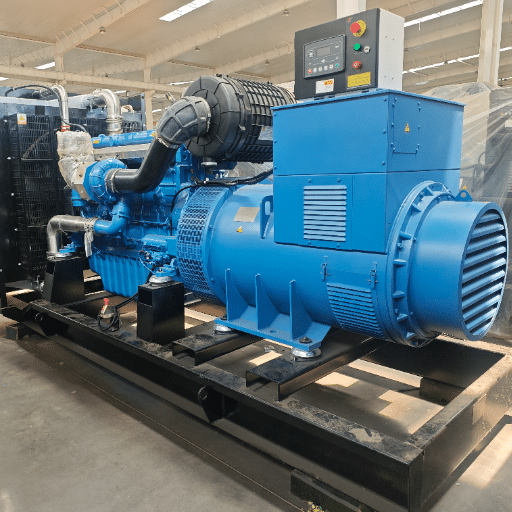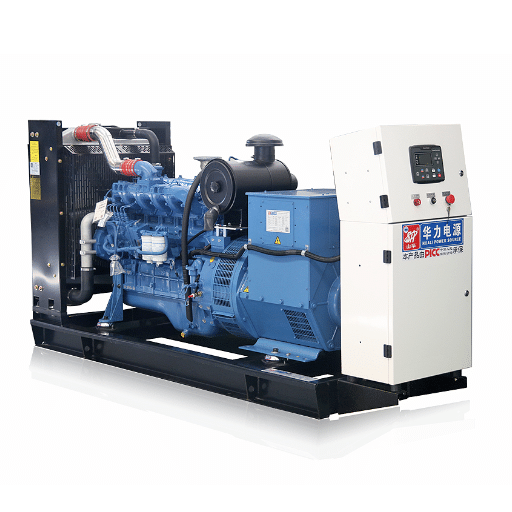

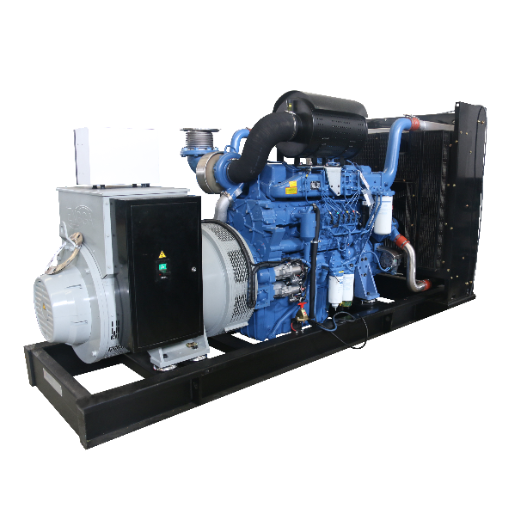
Generator single phasing is usually described as something that happens to a motor. It can start at the generator too, and when it does, almost nothing on site behaves the way the guides say it should.
A phase can be lost inside the set or between the set and the load: at an alternator terminal, a breaker pole, a fuse, a contactor, a cable joint. The lights stay on, the plant keeps running, and a motor somewhere cooks itself. The fault that should’ve stopped it is the one thing it hides.
This article covers the version the guides leave out. Not what single phasing does to a motor, which our three phase diesel generator guide covers, but what it means when the set is the source, and what protection actually catches it.
We build three-phase sets from 5 kW to 3,000 kW and specify the protection around them.
Chasing a phase-loss alarm that keeps coming back? Send us the alarm history and the set’s model number, and we’ll help you work out whether the fault is in the machine or in what it feeds. Talk to our engineering team →
Key Takeaways
- A generator can be the source of a lost phase, not just a victim of one. A marine casualty investigation traced a vessel’s phase loss to a failed alternator winding terminal connection, not to anything in the motor circuit.
- The fault is silent because a running motor regenerates the missing phase. Per FM Global, the voltage triangle often does not collapse, and connected motors “act like a generator maintaining a fairly balanced voltage.”
- That is why undervoltage protection cannot be relied on here. A three-phase undervoltage relay cannot be assumed to operate under single-phase conditions.
- Fuses cause this far more often than breakers, because a ganged breaker opens all three poles while one fuse can fail alone.
- Protection belongs after the last credible single-phase isolation point and before the load that cares. An alarm that keeps returning is reporting a connection, not a nuisance.
Generator Single Phasing: The Fault Can Start at the Set
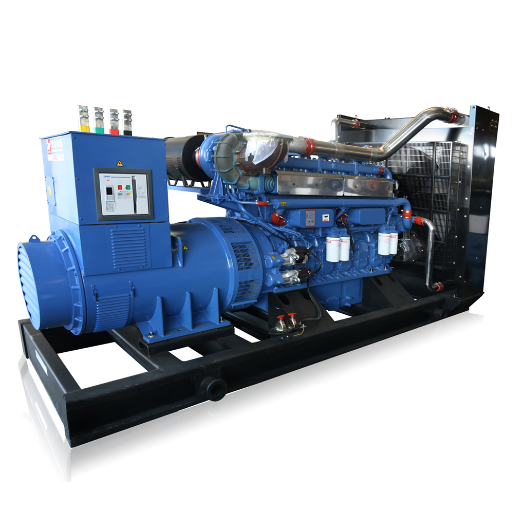
Start with a case where the set was unambiguously the culprit.
A marine casualty investigation traced a vessel’s loss of three-phase power to an alternator winding terminal connection that had failed. The ring terminal was burnt, there was arcing residue on the terminal block posts, and a wiring harness had been rubbing against those posts until its insulation gave way.
The symptoms weren’t what a voltage check would have caught cleanly. Output voltage and amperage fluctuated, lights flickered, the switchboard showed a ground fault, and three-phase steering pump motors stopped for want of torque.
The fault was inside the alternator’s terminal box. Nothing was wrong with the motors. They failed first because they were the first thing that needed all three phases at once.
That’s the shape of the problem. A lost phase is an event in the circuit, and the circuit runs from the alternator windings through the set’s breaker, out along the cable, through whatever isolation the installation has, and into the load. Any point along that path can be where the phase disappears, and the symptom always shows up at the far end.
For how the alternator itself is built, our guide to generator alternator specifications covers it. What matters here is narrower: the set is a candidate fault site, and on a standby system it’s the last place anyone looks.
Why the Motor Keeps Running and the Voltage Looks Fine
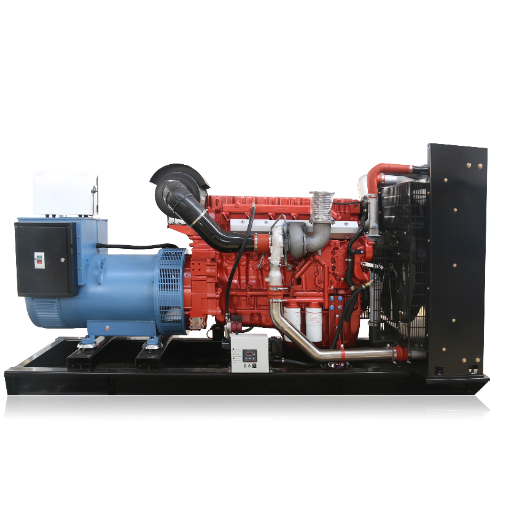
A running three-phase motor regenerates a voltage on the phase it has lost. It becomes, in effect, a small generator driven by its own inertia, holding up a voltage on the open conductor. The motor keeps turning and the reading at its terminals looks plausible.
FM Global’s loss-prevention data states the consequence plainly:
A three-phase undervoltage relay cannot be assumed to operate under single-phase conditions, because the voltage triangle often does not collapse. Connected motors continue to run on single-phase supply and act like a generator maintaining a fairly balanced voltage.
Read what that does to standard fault-finding advice. Most guidance says to measure phase-to-phase and phase-to-neutral and look for a reading that’s absent or wildly different. That works at the terminals of a motor that isn’t running. It’s exactly what fails downstream of one that is.
So the two things people rely on both miss it. A voltage check reads something reasonable, because the motor supplies the missing phase. Undervoltage protection doesn’t operate, because there’s no undervoltage to detect. The motor runs, the lights work, the alarm stays quiet, and the winding heats.
What does still show is the current. With an open circuit, the current in one motor leg can be twice that in the other two. That asymmetry is the fingerprint, and it’s why current-based protection catches what voltage-based protection doesn’t.
If your fault-finding stops at a voltage reading, you haven’t tested for this. The reading that matters is the one on the clamp meter, per phase, on a running motor.
What It Does to the Winding
A phase-loss event doesn’t damage all three windings equally, and that’s the whole mechanism.
The two healthy phases carry the load. The third sits in a circuit that is now single-phase, so the current distribution across the motor’s windings stops being symmetrical.
Doubling the current in one winding roughly quadruples the heat it must reject, and there’s nowhere for that heat to go while the motor keeps running at load. Insulation at the hottest point degrades first, and faster than an equivalent overload would, because the heating is concentrated rather than spread.
The damage is local and progressive. The motor doesn’t fail dramatically. It runs slightly differently, then badly, then not at all. The report afterwards says “burnt winding,” which tells you nothing about the phase that went missing a fortnight earlier.
Victor’s site ran a set for most of a month with a phase down. A standby unit had a high-resistance joint developing at its output, and the changeover happened late one Friday.
The lighting and office equipment were fine, because both were single-phase loads on the two healthy phases. The first casualty was an extractor fan motor on day nineteen, the second a pump three days later. Nobody connected them until an electrician clamped a motor and found the currents weren’t close.
For what an unbalanced load costs the set itself, our guide to kVA vs kW covers how apparent power and usable output relate. The point here is simpler: the set often tolerates the fault longer than the motors do, which is why the motors fail first and the wrong thing gets blamed.
Why a Blown Fuse Is the Classic Cause
Here is the structural reason phase loss happens at all, and it decides whether your site is exposed.
A ganged breaker opens all three poles together. When it trips, the circuit loses every phase at once. The motor stops. Nothing is ambiguous.
A fuse bank doesn’t have that property. Fuses operate independently, one per phase, and one can fail while the other two carry on. The circuit then has two live phases and one dead one, and every three-phase motor downstream is single-phasing.
So a site protected by fuses is structurally more exposed than one protected by a ganged breaker. That isn’t a comment on fuse quality. The problem is that the installation now has a condition it was never designed to run in, with nothing announced.
A second consequence surprises people. Once a motor has stopped under single phasing, it won’t restart, because a single-phase supply can’t produce starting torque in a three-phase motor. It sits there humming and heating if someone keeps pressing start. The motor that kept running was the dangerous one; the one that stopped got lucky.
Nnamdi spent a shift on exactly this. A fused board fed a workshop, and one fuse in a three-phase feed opened on a single-phase fault downstream. The other two held, and a conveyor motor ran on two phases for most of a shift. It only came to light at the shift change, when the motor stopped for cleaning and refused to restart.
If your three-phase circuits are fuse-protected, raise it with whoever specifies the protection. A ganged device removes the single-failure path, and it costs far less than the motor it protects. Motor starting behaviour is covered in our guide to starting a three phase motor on a generator if you need the torque side.
Where the Protection Belongs
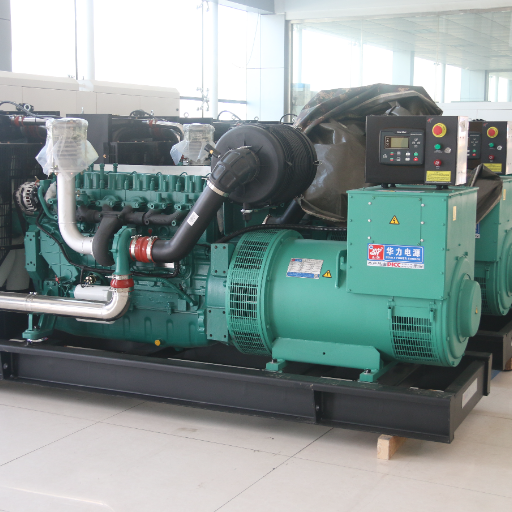
A phase failure relay, or phase monitoring relay, watches all three phases continuously and disconnects the load when one is missing. Sizing it is the manufacturer’s job. Where it goes in the circuit decides whether it works.
The rule: put it after the last credible single-phase isolation point, and before the load that cares.
On a fused installation that means downstream of the fuses. Every point where one phase can be lost independently has to be upstream of the relay, or the relay won’t see the fault. Nearer the load is better: it’s easier to maintain, it cuts the fault level the device must interrupt, and it still covers faults further upstream. That reasoning comes from a practitioner discussion on phase failure relays in the IET’s wiring regulations forum.
What each device catches is worth being precise about:
| Device | Catches a lost phase? | Why |
|---|---|---|
| Phase failure / monitoring relay | Yes | Watches all three phases directly, by design |
| Undervoltage relay | Not reliably | The regenerated phase keeps the voltage triangle from collapsing |
| The motor’s own thermal overload | Eventually | It responds to heat, so it reacts late rather than not at all |
| A voltage check on a running motor | No | A running motor supplies the missing phase |
That table is the argument for the device. The overload already in the starter isn’t useless, but it responds to heat, and the motor is being damaged throughout.
Relays in this class are specified for motors, generators, transformers and similar plant, and typically detect phase loss, phase unbalance and phase reversal together. Check the device’s own data for its frequency rating rather than assuming.
Disconnecting the load rather than the set is usually right. A relay on the generator’s output takes the whole site down for a fault that may affect one circuit. A relay on the motor’s feeder takes down the machine at risk, keeping the lights on while it protects the motor.
How a controller annunciates a fault, and where its setpoints are configured, is covered in our guide to generator control panel functions.
Specifying protection for a new set, or fixing a site that has already lost a motor? Send us the single-line diagram and we will tell you where the device needs to sit. Ask our engineers to review the protection →
When Your Generator Phase Loss Alarm Keeps Coming Back
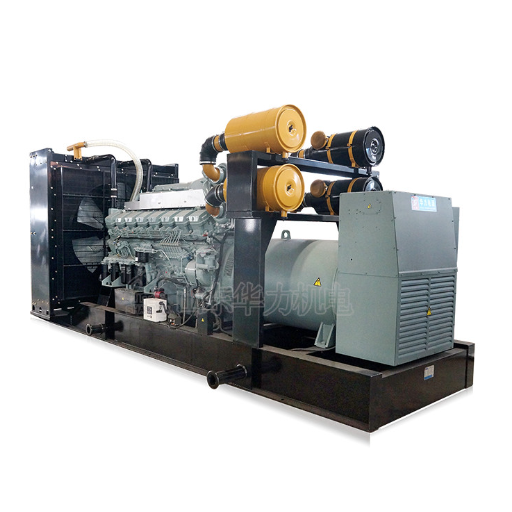
The most useful diagnostic here is the fault pattern, and it’s already sitting in the controller’s alarm history.
An alarm that always names the same phase points at a hard fault on that leg. Something is genuinely open on one conductor.
An alarm that alternates between phases points somewhere else. A fault that moves around isn’t a conductor that has failed. It’s a connection that’s intermittent, and the usual suspects are breaker contacts, terminations, sensing leads and the control board. The fault is in the measurement or the connection rather than the power path.
That distinction saves time. Both cases present as the same alarm and lead to different places.
The most expensive response to either is to keep clearing the alarm. On a standby system the temptation is real: the alarm is inconvenient, the site needs power, and resetting brings it back. But phase-loss protection exists to prevent the condition you’re reinstating.
Ulla watched that argument play out. A site with an alarm moving between phases had it reset at the start of each shift for nine days, because the alternative was stopping production. On the tenth day a conveyor motor failed, and the electrician found a loose contactor termination that had been arcing the whole time intermittently.
If the alarm keeps returning, the question isn’t how to clear it. It’s what is moving, and the answer is usually a connection. For faults beyond the three-phase ones covered here, our generator troubleshooting guide covers the wider diagnosis order.
Frequently Asked Questions
What happens if one phase is lost on a generator?
The set keeps running and the site usually keeps working, because single-phase loads carry on normally on the two healthy phases. Three-phase motors are where it shows. Ones already turning may keep turning while drawing heavily asymmetric current, and ones that stop won’t restart. A phase-checking relay on the load side turns that silent condition into a trip.
Can a generator lose one phase and still run?
Yes, and that’s the normal outcome. Losing a phase doesn’t stop the engine or shut the set down, so the condition persists until something detects it or a three-phase load fails.
How do I know if my generator lost a phase?
Measure current, not voltage, and measure it per phase on a running motor. A running motor regenerates the missing phase, so a voltage reading can look normal while the fault is present. Current won’t: one leg typically carries around twice what the other two do. If a generator phase loss fault alternates between phases, suspect the wiring rather than the machine.
Why does a motor keep running on two phases?
A motor that’s already turning doesn’t need a rotating field to keep turning, and it regenerates a voltage on the phase it lost. As FM Global puts it, it acts like a generator maintaining a fairly balanced voltage. That’s also why it can’t restart once stopped: starting does need the rotating field, and two phases won’t produce it.
Do I need a phase failure relay on a generator?
On any site where three-phase motors matter and a single phase can be lost independently, yes. The case is strongest where circuits are fuse-protected rather than on a ganged breaker, because one fuse can fail alone and leave every motor downstream single-phasing.
Conclusion
Generator single-phasing is dangerous because of where it hides.
The fault can originate in the set, and an alternator terminal connection is a documented site for it. It’s silent because a running motor regenerates the missing phase, which defeats both the voltage check people reach for and the undervoltage protection some sites rely on.
The evidence that survives is current asymmetry, one leg carrying around twice the others. Fuses cause it far more often than ganged breakers, because one fuse can fail alone. And protection belongs after the last isolation point and before the load that cares.
Three things to do from here:
- Put a clamp meter on a running motor’s phases and compare. If they aren’t close, you’ve found something.
- Read the alarm history for a pattern. One phase, or several?
- Stop clearing a returning phase-loss alarm. It’s reporting a connection, not a nuisance.
If your alarm history and single-line diagram aren’t adding up, that’s a quick conversation with people who specify this protection on sets every week. Send us both → and we’ll help you work out where the phase is going.