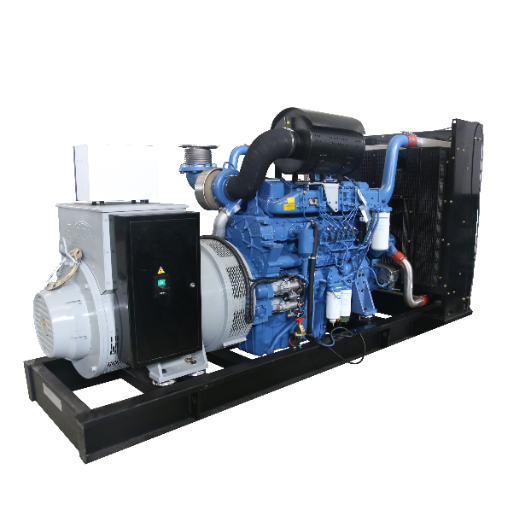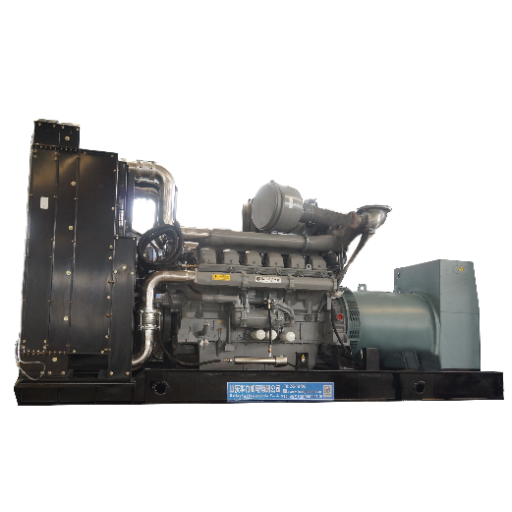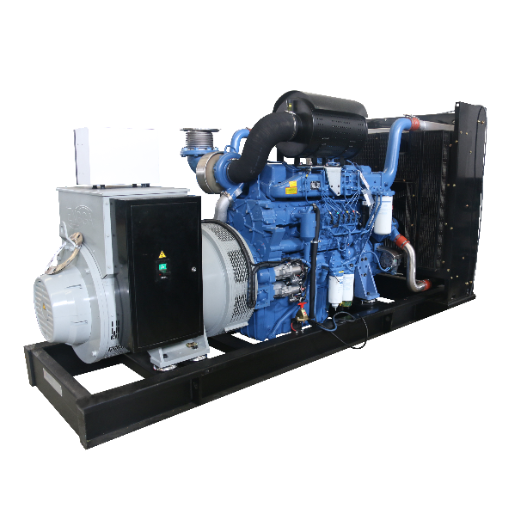

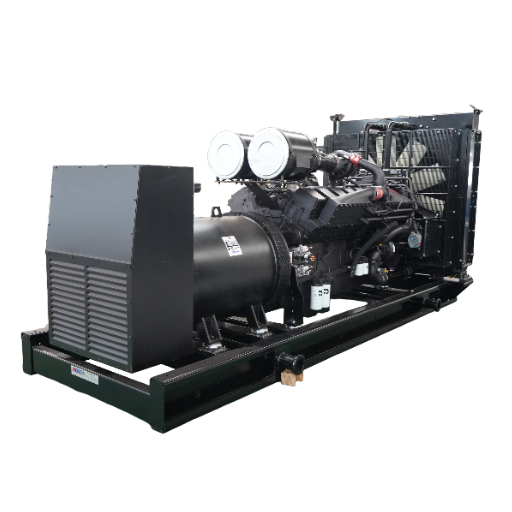
A custom branded generator supplier can put your name on the set plate, the canopy, the control panel, the manual and the carton. It can’t put your name over the engine’s emissions label, and that is a legal line rather than a design preference.
Most buyers discover this after they’ve sent a logo file and a colour code, and expected a blank machine to arrive wearing their identity. What arrives instead is a machine with your brand on the outside and three other manufacturers’ marks on the inside, all of them doing a job.
This guide sets out what can actually be branded on a generator, which single surface is off limits and why, the four identifiers a branded set carries, and the artwork pack a factory needs from you before the first unit is built. It is written for distributors and brand owners sourcing their own line.
Planning a branded range? Send us your target market and we will set out what your programme involves →
Key Takeaways
- A generator carries seven branding surfaces: the set plate, canopy, control panel, manual, packaging, model nomenclature and serial scheme. Each behaves differently.
- The engine’s emission control information label cannot be removed or altered. Under the US rule at 40 CFR 1068.101(b)(7), applying a valid label to the wrong engine is itself a violation.
- A branded set carries four identifiers, not one: your set serial, the engine serial, the engine model and critical parts list, and the alternator data plate.
- Most first branded orders slip on artwork, not production. Vector files, colour codes, model naming and serial format all need settling before tooling.
- Colour consistency across production batches is the classic branding failure, and it usually traces to subcontracted paint and eye-matched colour.
What a Custom Branded Generator Supplier Can Actually Brand
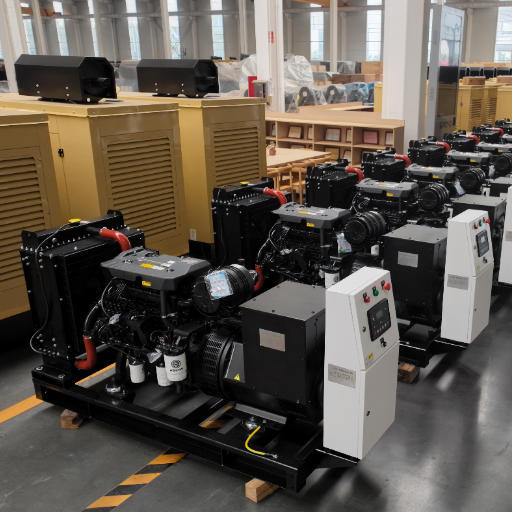
A generator isn’t one surface. It’s seven, and each one takes your branding in a different way, at a different cost, and with a different effect on lead time.
| Surface | What carries your brand | What it takes |
|---|---|---|
| Set plate | Your name, logo, model and serial number | Artwork and an agreed plate format. The single most important carrier |
| Canopy | RAL paint colour, decals, logo on the doors | An in-house paint line, or outsourced decals with a colour-match risk |
| Control panel | Boot screen, splash logo, fascia label | Depends on the controller; usually needs the controller maker’s support |
| Operator manual | Your brand throughout, in the destination language | Text, translation and layout work |
| Packaging and carton | Generator logo printing, model marking and handling marks | A print run, and a decision about how much stock to hold |
| Model nomenclature | The names and numbers your range carries | A decision made once, and expensive to reverse later |
| Serial-number scheme | The format that identifies each unit | Must reconcile with the engine and alternator serials |
Two of these deserve a warning. The control panel is the surface most often promised and least often delivered, because customising a boot screen or splash logo depends on what the controller manufacturer allows. Ask which controller is fitted and whether the branding route is supported, before you promise your customers a custom start-up screen.
The custom generator nameplate deserves a decision of its own. It is the surface a buyer, an inspector and a service engineer all read first, and it is the one your model and serial scheme has to fit. Settle what it states, in what order, and in which languages before the first unit is built. A plate redesigned after a run has shipped leaves the earlier units carrying a format you no longer use.
The model nomenclature is the decision buyers most regret rushing. A range named ad hoc produces a catalogue that cannot be indexed, and makes a parts enquiry five years later into a research project.
For what can be customized on a generator technically, beyond branding, our guide to the customized generator set manufacturer route covers the specification side.
The Plate You Must Not Touch
Here is the part that surprises distributors, and it is not a matter of taste.
The engine carries an emission control information label, and it isn’t yours to move, cover, repaint or replace. Under the United States rule at 40 CFR 1068.101(b)(7), that label may not be removed or altered except in a narrow set of defined cases: the engine has been destroyed, permanently disassembled or has otherwise lost its identity; the regulations direct the removal; the labelled part had to be replaced, in which case a duplicate label is obtained through the certifying manufacturer; or the original label was simply wrong. What the label must carry, and how permanent it has to be, is set out in the labeling provisions at 40 CFR 1068.45.
Read the next part carefully, because it is where well-meaning branding programmes go wrong. Applying a valid label to the wrong engine is itself a violation. A label isn’t a sticker whose meaning survives being transplanted.
The same section sets the civil penalty at up to $44,539 for each engine or piece of equipment in violation, with the highest tier applying to manufacturers and dealers. Treat that as the published maximum rather than a typical outcome, and treat the rule itself as absolute.
So the honest description of a branded generator is not “fully customised branding.” It is full branding of the surfaces that belong to you. The engine’s compliance label, the engine data plate and the alternator data plate belong to the parties that certified and warranted those components, and they are also how a buyer, a port inspector or a warranty engineer establishes what the machine actually contains.
A note on jurisdiction. The rule above is United States law. Other markets impose their own engine identification and marking requirements, and they are not identical. Match the requirement to the market you are selling into rather than assuming one rule travels.
One related point, without going further into it here: when your name goes on the set plate, the compliance duty for the machine as a whole follows your brand rather than the factory’s. That obligation sits with whoever places the unit on the market under their own name.
Four Identifiers on One Machine
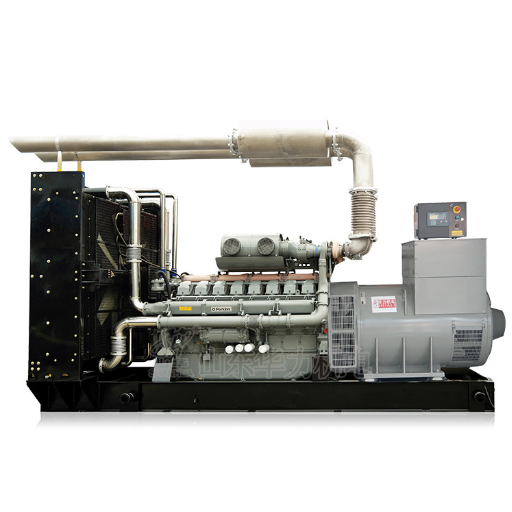
Yohannes learned this one two years too late. His company had taken delivery of a branded run for a Middle Eastern distributor, and the set plates carried its own serials. When a customer needed an engine part, the engine maker’s parts lookup asked for an engine number, and nobody had recorded which engine sat inside which set. The sets had to be opened and identified one by one.
That’s the practical cost of treating a generator as having “a” serial number. It has four identifiers, and they answer different questions.
| Identifier | Whose it is | What it is for |
|---|---|---|
| Set serial | Yours | Your unit record, your warranty, your field history |
| Engine serial | The engine maker’s | Engine warranty, parts, the critical parts list |
| Engine model and CPL | The engine maker’s | The build specification; the CPL is the parts-list code for that configuration |
| Alternator data plate | The alternator maker’s | Alternator spares and rating verification |
The engine serial is also called an engine serial number, or ESN, and it isn’t the same as your set serial. The engine maker treats that number, not your plate, as the authoritative identity of the engine, which is why it is also stamped on the block itself in case the plate is lost.
The practical rule is simple: capture all four at build, and map them to each other. Record the set serial against the engine serial, the engine model and CPL, and the alternator details, for every unit in the run. Then print your set serial where it can be read without opening the canopy, so a field engineer can start the lookup without stripping the enclosure.
There is a commercial reason for the mapping as well as a service one. Branded units change hands, cross borders, and arrive at dealers who never spoke to the original buyer. When the set serial and the engine serials are recorded against each other, any of those parties can identify the machine from its plate. When they are not, the first question at every handover becomes a physical inspection.
For the plate-level detail on what each marking means, including the rating lines that sit alongside the serial, see our guide to the generator nameplate.
What to Send a Custom Branded Generator Supplier
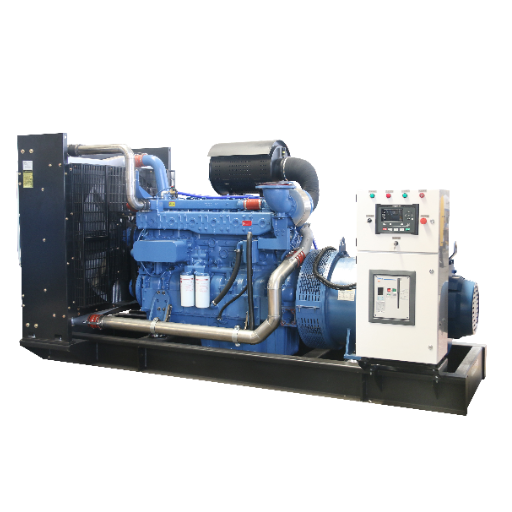
Most first branded orders do not slip on production. They slip on artwork, because the buyer benches the artwork until after the order is placed, and then discovers the factory is waiting.
Here is the pack to send up front.
- Logo artwork in vector form. A PNG taken from a website will not stencil or etch cleanly. Supply the vector original, plus a single-colour version and a reversed version for dark surfaces.
- Colour codes as references, not samples. RAL or Pantone numbers, written down. A photograph of a painted part is not a colour specification, because screens and lighting change it.
- Model names and the numbering rule for the whole range, agreed before tooling. Decide whether numbers encode output, enclosure type or a sequence, and write the rule down.
- Serial-number format, and the mapping to the engine serial described above.
- Manual text, and the language or languages of the destination market. Translation is usually the longest lead item in the pack.
- Regulatory label artwork for the market you are selling into, with a clear split between the labels the factory supplies and the ones that are yours to create.
- A first-article approval gate. One unit, built and finished, for you to approve paint, decal placement and plate layout before the run begins.
That last item is the one that saves the most money. Approving a sprayed sample and then a full run is how colour disputes start.
If you are still selecting between candidate factories at this stage, the assessment criteria for a supplier sit with our guide to choosing an industrial generator set supplier in China.
What to Look for in a Generator Branding Programme
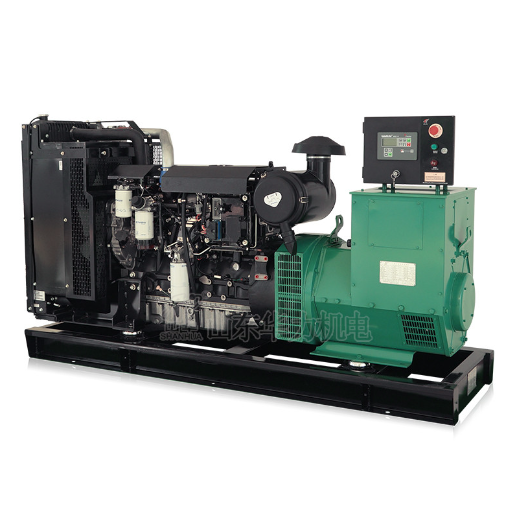
Wanda’s problem was colour. Her company approved a canopy in a specific RAL tone from a sprayed sample, and by the third production batch the units were visibly different. The coating had been subcontracted, and the match had been made by eye under workshop lighting.
That failure mode is worth screening for, because it’s invisible in a sample. Five questions will surface most of it:
- Is the paint and decal work in-house? Subcontracted coating is where colour drift enters, and it is hard to recover once a batch has shipped.
- Will the factory hold your artwork and colour records? Repeat orders should not require re-sending the pack, or worse, re-matching the colour.
- Is panel and manual customisation a standard workflow, or a favour? One-off goodwill does not survive a change of production planner.
- Can they operate your serial and model scheme? A naming rule only works if the people building the units apply it consistently.
- What is the first-article process? If there is no approval gate, there is no way to catch a mistake before it is multiplied.
Note that this is not the same as verifying whether a supplier manufactures at all, and it isn’t a substitute for that assessment. A factory can be entirely genuine and still be poor at branding, because branding is a finishing discipline rather than a production one.
For the emissions and marking regimes themselves, our guide to generator emissions standards explains how the labels differ between markets. For the commercial terms behind a private-label programme, our custom diesel generator guide covers the agreement side, including what a branding contract should record.
Frequently Asked Questions
Can I put my own brand on a generator?
Yes, across most of the machine. Your name can go on the set plate, the canopy, the control panel, the operator manual, the packaging and the model designation. The engine’s emission control information label is the exception; it must stay as the engine maker supplied it. Everything else is a matter of artwork and production process.
Can the engine nameplate be changed on a branded generator?
No. The engine’s emission label may not be removed or altered under 40 CFR 1068.101(b)(7), which applies to machinery sold in the United States, and applying a valid label to the wrong engine is a violation in its own right. The engine data plate identifies the unit for warranty and parts, and other markets impose their own equivalent requirements.
What does a generator supplier need from me to brand my generators?
Vector logo artwork, colour codes as RAL or Pantone references, the model names and numbering rule for the range, your serial-number format, the manual text and destination language, and any regulatory label artwork that is yours to supply. Send that pack before the order is placed, not after, because translation and artwork review are usually the longest lead items.
How many generators do I need to order to get my own brand?
It varies by programme and by how much of the machine changes, so treat any single number with caution. Practical minimums for branded and private-label work commonly sit above single-unit quantities, and the commercial terms behind them are covered in our custom diesel generator guide.
What is the difference between white label and private label?
Both describe buying generators to sell under your own brand rather than the factory’s. The distinction between them decides how much of the machine carries your identity, so it is worth settling before you negotiate terms.
Conclusion
A custom branded generator supplier gives you the surfaces that belong to you, and one of the surfaces you might reach for first does not. The engine’s emission label stays as it left the engine maker, and that is a rule rather than a preference.
Three things follow from that. Brand the seven surfaces that are yours, from the set plate through the canopy, panel, manual, packaging, model naming and serial scheme. Record all four identifiers for every unit, so a parts enquiry years later does not mean opening canopies. And send the artwork pack before the order, with a first-article gate, so that colour and layout are settled on one unit rather than discovered across a batch.
Send us your artwork and the market you are selling into, and our engineering team will set out what your branded programme involves and what we need from you.