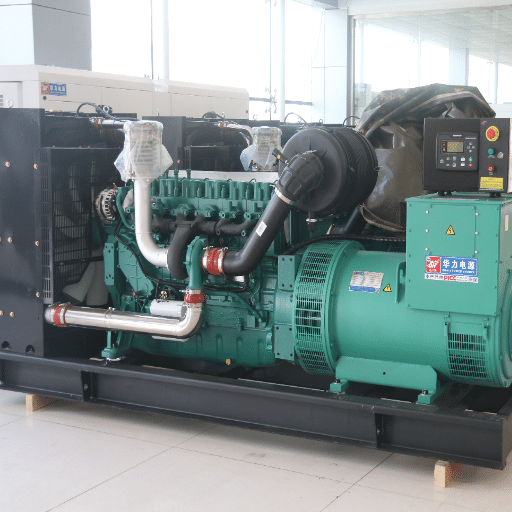


Generator cooling system maintenance is the scheduled care of the closed loop that keeps a diesel genset at working temperature: daily coolant checks, periodic coolant testing and flushing, radiator and fan cleaning, water pump and thermostat checks, and cold-weather preparation. Run it on hours OR calendar time, whichever comes first, and most overheating failures never happen. Industry sources repeatedly rank overheating as one of the largest causes of diesel generator failure, and nearly all of it traces back to the postponement of maintenance, not parts that wore out.
That is easy to forget because the radiator does its job quietly. It sheds roughly 60-70 percent of the engine’s waste heat while you hear nothing but the fan. The cheap parts keep it that way: a bottle of coolant, a belt, a thermostat, a fin comb. Each costs less than a service call, and together they protect the most expensive parts on the set, the engine and its liners.
We build and load-test these loops daily at Shandong Huali on Cummins, Perkins, Weichai, and Yuchai engines. This guide is the maintenance program our own service engineers follow, written for the person who actually runs the schedule.
What follows covers what the schedule includes and why it matters, a duty-aware maintenance table, the coolant tests and flush procedure that protect wet-liner engines, radiator and fan care, water pump and thermostat checks, cold-weather preparation, and a printable checklist. It keeps to the cooling circuit only; oil, fuel, and electrical care live in our general genset maintenance guide.
Key Takeaways
- Service the cooling system by hours OR calendar time, whichever comes first. On a standby genset that barely runs, the calendar wins, because coolant chemistry expires even when the engine sits.
- Test the coolant before you change it. Wet-liner engines (Cummins, Perkins, Deutz) need SCA/DCA additive at about 1.5-3.0 units; above 3.0 is as harmful as too little.
- Flush with distilled or deionized water, never tap water. Scale from hard water acts as an insulator and quietly cuts heat transfer.
- Clean the radiator with low-pressure compressed air from the engine side outward. Never use a pressure washer; it bends fins and damages the core.
- Check freeze point with a refractometer, never by coolant color, and size protection about 10-15 °C below your local minimum.
What Does Generator Cooling System Maintenance Include?

Picture the system as a pipe closed on itself: the water pump moves coolant through the engine block and head, the thermostat sends it to the radiator above about 80 °C, and the fan pulls air through the core so the heat leaves to the room. How a generator cooling system works walks through it part by part. Maintenance is simply protecting every step of it.If you want the full component-by-component breakdown before diving into the schedule, our guide to how a generator cooling system works explains each part of the loop and how they fit together.
The circuit breaks into four care areas:
- The coolant. It is tested for chemistry and freeze point, flushed on schedule, and refilled with the right mix and distilled water. This is the heart of the program.
- The radiator and fan. Fins are cleaned so air can flow, the core is inspected for leaks and scale, the cap holds pressure, and the belt and fan actually move air.
- The pump and thermostat. The pump seal is checked for weeping, and the thermostat is verified so the engine reaches and holds working temperature.
- Cold-weather kit. Freeze protection is confirmed and the block heater is checked before the cold season.
Why does it earn a dedicated program? Because the cooling circuit is where expensive failures hide. Liner cavitation from neglected coolant chemistry can destroy wet cylinder liners, a repair routinely quoted in five figures, and it gives no warning until the damage is done.
A radiator that cannot breathe produces overheating under load exactly when the set is needed most. Both are preventable, and both are caught by the schedule below.
This article deliberately stays on the cooling circuit. For the full genset plan, our diesel generator maintenance checklist covers oil, filters, fuel, and batteries in one place.
The Generator Cooling System Maintenance Schedule
One rule governs everything: service by hours OR calendar time, whichever comes first. For a prime-power set running hundreds of hours a month, hours arrive first. For a standby set that runs fifty hours a year, the calendar arrives first, and it is the calendar that protects you.
Standby sets are where most owners slip. A standby engine is exercised weekly and rarely reaches high coolant temperature for long, so its coolant oxidizes slowly and its additives deplete without anyone noticing. Corrosion inhibitors do not care how many hours the engine has.
This is exactly why NFPA 110 requires standby sets to be exercised under load at not less than 30 percent of nameplate rating for at least 30 minutes: it forces the engine and cooling system up to operating temperature, where moisture burns off and the thermostat actually opens. Running the set hot enough to open the thermostat is itself a maintenance act.
| Frequency | Task | Why it matters |
|---|---|---|
| Daily (standby: every start) | Check coolant level cold in the expansion tank, between MIN and MAX | A low level is the first leak warning; air drawn in to replace it can lock the circuit |
| Weekly / ~50 h | Inspect hoses and fittings for leaks; clean radiator fins if dusty; check belt tension (~10-15 mm deflection) | Fins clog fast in dusty sites; a slipping belt cuts airflow before it squeals |
| Monthly / ~250 h | Test coolant SCA/DCA level and pH; check radiator cap seal and pressure; inspect the water pump weep hole | Chemistry and pressure degrade before temperature does |
| Quarterly | Full radiator inspection: blockage, fin condition, leaks, scale signs; fan and shroud check | Most internal problems are invisible from the outside until inspected |
| Semi-annual / ~500 h | Lab sample of coolant; pressure-test the system; verify thermostat operation | A lab report catches additive depletion a strip test cannot |
| Annual / ~1,000 h | Flush and refill conventional coolant; change the coolant filter; replace worn hoses and belts | Fresh inhibitor charge resets the corrosion clock |
| Every 2 yr / ~2,000 h | Coolant change (or per the long-life interval in your manual) | Inhibitors expire on a calendar, not an hour meter |
| Pre-winter | Verify the freeze point with a refractometer; confirm the block heater works | A frozen block cracks before the first cold start |
Hot, dusty, or coastal sites compress these intervals. Construction dust can clog a radiator core in a single season, and salt air corrodes fins and fan hardware year-round. When in doubt, shorten the cleaning and inspection intervals and keep records so you can see the trend. Our generator service schedule puts this table into the whole-genset plan, and for compliance-level standby rules the NFPA 110 generator maintenance guide has the details.
Buying a set or writing the service contract? Every unit we build leaves with a duty-matched maintenance schedule and the part numbers for its coolant and filters. Browse the models on our diesel generator range, or send us the model and run-hours profile and we will send the exact service plan.
Coolant Testing, Flushing, and Refilling

Coolant does three jobs at once. It carries heat, it protects metal from corrosion, and on wet-liner engines it stops cavitation, the pitting that hammers liner walls from the outside. The coolant chemistry that does all three depletes over time, so the maintenance question is not only “when to change it” but “what does it still have left.” Test before you change.
Test the coolant before you change it
Three numbers matter, and a $10 test-strip pack plus a refractometer measures all of them:
- SCA/DCA level (wet-liner engines). Cummins calls the additive DCA (current version DCA4); Perkins and others call it SCA. The target is about 1.5-3.0 units. Below range, liners cavitate; above 3.0, silicates drop out and form gel that blocks the core. Both ends damage the engine.
- pH. Healthy coolant sits around 8.0-10.5. Creeping below 8 means the corrosion inhibitors are spent and the coolant is turning acidic, which is exactly what happens to standby coolant that never gets changed.
- Freeze point. A refractometer reads protection directly. A 50/50 ethylene-glycol mix protects down to about -37 °C; confirm it covers your site with margin.
Not sure which coolant type, additive, or mixing ratio your engine actually needs? Our guide to choosing the right diesel generator coolant antifreeze explains IAT, OAT, and HOAT formulations and how to mix them correctly. The industry reference that demystifies the additive side is a good read if you run wet-liner engines: how coolant filters and SCA protect industrial diesel generators. The practical cadence is a strip test at every oil change, or about every 250 hours or three months, plus a lab sample of the coolant at the semi-annual service. Never judge coolant by its color. Color varies by brand, not chemistry, and the same green in two bottles can be two different formulations.
When to flush and replace
The interval depends on coolant type and duty. Conventional (IAT) coolant is typically changed about every two years or 2,000 hours. Long-life coolants (OAT and HOAT) stretch to four or five years and several thousand more hours, per your engine manual. The trap is standby duty: an engine that barely runs still needs its coolant changed on the calendar, because inhibitors expire and pH drifts regardless of hours.
The flush-and-refill procedure
When the interval arrives, flush, do not just drain:
- Run the set, then shut it down and let the coolant cool to about 40-50 °C. Never open a hot, pressurized system; the cap can release scalding coolant.
- Drain the old coolant into a container and dispose of it properly, never onto the ground or down a drain.
- Fill with clean distilled or deionized water and run the engine with the thermostat open for about 15 minutes to push old chemistry out of the block and heater circuit.
- Drain again and repeat until the water runs clear.
- Refill with the manufacturer-specified coolant at the correct mix, using distilled water. Tap water leaves scale, and scale is an insulator that quietly raises operating temperature over years.
- Run the set to operating temperature with the cap area vented, bleed any air at the high point, then top up the cold level.
Change the coolant filter at the same service or at the OEM first-change rule if the manual calls for one. If your maintenance records show coolant disappearing without a visible leak, stop and find the leak before flushing; you would otherwise flush money and still lose coolant.
Radiator and Fan Care

The radiator sheds most of the engine’s waste heat, so its airflow is the highest-use maintenance target on the set. The heat it rejects, and how to calculate it, is the subject of our generator heat rejection calculation guide; here we keep the radiator alive.
Cleaning the radiator core
Dust, grass, and paper clog the fins from the air side, and in a construction environment a core can plug in hours, not months. Clean it the right way:
- Use low-pressure compressed air, blowing from the engine side outward, so debris leaves the way it came instead of being driven deeper into the core.
- Follow with a soft brush and straighten bent fins with a fin comb.
- Never use a pressure washer. High pressure bends the fins flat and can cut the soft aluminum tubes. Generator Source’s radiator maintenance procedure spells out the same rule from the service side.
- If an oil film from a leaking cooler coats the fins, use a proper degreaser, then rinse gently; a detergent can also lift accumulated dirt that a dry blow cannot.
In dusty sites, make fin cleaning a weekly task. Elsewhere, an annual clean plus a quick check whenever you service the set is enough.
The quarterly inspection and pressure test
Every three months, look past the coolant level. Check the fins for blockage and damage, the core for leaks and residue, and the radiator cap: the seal should be intact and the cap should hold its rated pressure, typically about 7-15 psi. A weak cap lets coolant boil early. If you can, pressure-test the system, because internal scale and corrosion are invisible from the outside and only show up as a core that cannot shed heat.
A useful field check is the temperature difference across the radiator. A healthy core shows a clear drop between inlet and outlet when the thermostat is open. A small difference with a hot engine means the core is not doing its job.
Belts and the fan
A spinning fan does not guarantee airflow. A worn belt slips under load and a damaged blade moves less air, so inspect belt tension (about 10-15 mm deflection under moderate thumb pressure) and replace belts as a set. Never replace one belt in a multi-belt system; a new belt stretches differently and loads the old one unevenly.
Confirm the fan clutch engages at temperature or the electric fan runs when the coolant calls for it. Fan failure cuts cooling capacity by a large margin, and it is a leading cause of the “overheats under load” call we see in the field. The ranked list of overheating causes, in order, is in our generator overheating causes guide.
Water Pump, Thermostat, and Hoses
Three small components decide whether the coolant actually circulates at the right temperature, and each gives a readable warning.
The water pump is the only mover in the loop. Its shaft seal is the weak point: a damp patch or drip at the weep hole means the seal is failing, and coolant loss at that rate will end in an overheat under load. Listen for worn bearings and check that the pulley does not wobble. Coolant flow should rise with engine speed; if the top hose stays soft at speed, the pump is not moving volume.
When a pump weeps or its bearing grinds, replace it rather than patch it.
The thermostat is a wax-pellet valve that opens near 80 °C on the engines we build, then splits flow to hold a steady temperature as load changes. Stuck shut, it overheats the engine while the radiator stays cool. Stuck open, the engine runs cold, burns fuel dirty, and can wet-stack over time.
Test a suspect thermostat in hot water: it should begin to open at its rated temperature and lift fully a few degrees higher. If it fails either test, replace it. Never run a diesel genset without a thermostat; the engine needs the warm-up the bypass provides.
Hoses and the pressure cap carry the pressure that raises the coolant’s boiling point. Check hoses for cracks, soft spots, bulges, and oil contamination, and replace them at coolant-change time if they show any. Confirm the cap holds pressure, typically about 7-15 psi. Two warning signs belong on your radar: coolant in the oil (milky oil) or oil in the coolant (an oily film in the expansion tank) point to a failing head gasket or cooler, and it needs attention before the cooling system can be trusted again.
A standby set at a Gulf data center taught us the value of the little checks. The operator changed coolant on the hour meter alone, every 2,000 hours, and the unit banked about 3,000 hours over six years, so the coolant was changed roughly once. At the annual load test the coolant sample came back acidic with SCA near zero. Six-year-old coolant, on a set that mostly sat, and the liners were already starting to pit.
The fix was a coolant change on the calendar plus a test-strip habit, about $40 in parts and ten minutes a quarter. Catching it early turned a potential five-figure liner repair into a routine service.
Cold-Weather Care and Winterizing the Cooling System
The cooling system is where winter damage starts, because water expands as it freezes and a block or core can crack in a single hard freeze. Preparation happens before the cold season, not after the first alarm.
- Verify freeze protection with a refractometer. Size it about 10-15 °C below your local minimum temperature. A 50/50 mix protects to roughly -37 °C; very cold sites may run toward 60 percent, and beyond that protection actually weakens, so follow the coolant label and your manual.
- Confirm the block heater works. A jacket-water heater holds the coolant warm, so the set can take load quickly and cold starts do not shock the block. On NFPA 110 Level 1 standby installations, the heater must keep jacket water at or above 32 °C. Check it before the season, when the fix is easy.
- Run a pre-freeze load test. Bring the set to operating temperature under load, confirm the thermostat opens and the coolant holds steady, and burn off any moisture the way the 30 percent, 30-minute exercise rule intends.
- On seasonal units, treat fuel, protect the battery (cold cuts cranking capacity sharply), and keep the enclosure dry. If a unit is drained for storage, drain properly and refill with the right mix before it returns to service.
A facility manager in northern China trusted the color of his antifreeze for three winters, the deep green looked fine. When a technician finally ran a refractometer before the season, it read about -12 °C of protection, far short of the site’s winter minimum. A near-miss on a -25 °C night, caught two weeks early by a $25 tool.
After a proper 50/50 mix and a verified heater, the set has started clean through two winters. For sites that run hot the rest of the year, our high ambient temperature generator guide covers the other end of the climate problem.
Generator Cooling System Maintenance Checklist

Here is the whole program on one page. Print it, date each line, and keep it with the service log.
- Daily: coolant level cold (MIN-MAX); no leaks under the set; no new smells or belt squeal.
- Weekly / ~50 h: hoses and fittings for leaks; radiator fins clear of dust; belt tension.
- Monthly / ~250 h: SCA/DCA and pH strip test; radiator cap seal; water pump weep hole.
- Quarterly: radiator blockage, fins, leaks, scale signs; fan, shroud, and cap pressure.
- Semi-annual / ~500 h: coolant lab sample; system pressure test; thermostat operation.
- Annual / ~1,000 h: flush and refill (conventional coolant); coolant filter; hoses and belts.
- Every 2 yr / ~2,000 h (or per long-life interval): coolant change on the calendar even if hours are low.
- Pre-winter: refractometer freeze-point check; block heater verified; pre-freeze load test.
Common Cooling System Maintenance Mistakes
- Judging coolant by color. Color is a brand choice, not a chemistry report. Test strips and a refractometer tell the truth.
- Trusting “the level is full.” Full coolant with dead chemistry still lets liners cavitate and metal corrode.
- Flushing with tap water. Scale from hard water insulates the block and radiator for years afterward.
- Pressure-washing the radiator. Bent fins and damaged tubes cut airflow you cannot see.
- Changing coolant only every few hours. On standby sets the calendar is the master clock.
- Ignoring the weep hole. A damp pump is a failing pump, not a mystery.
- Skipping the thermostat. Removing it to “fix” an overheat causes cold running, dirty fuel burn, and glazed bores.
- Over-treating with SCA. Above 3.0 units, additives drop out and gel; test before you top up.
- Opening a hot system. Let it cool to below 50 °C before touching the cap, and dispose of coolant properly.
Frequently Asked Questions
How often should a generator cooling system be serviced?
Service it by hours OR calendar time, whichever comes first. At minimum, test the coolant chemistry monthly and flush and refill conventional coolant about every two years or 2,000 hours. A standby set that barely runs still needs its coolant changed on the calendar, because the additives expire even when the engine sits.
How often should I flush the generator coolant?
For conventional (IAT) coolant, flush and refill about every two years or 2,000 hours. Long-life OAT or HOAT coolants extend to roughly four or five years per your engine manual. Always flush with distilled or deionized water and refill with the manufacturer-specified coolant.
Why do standby generators need coolant changes if they barely run?
Because coolant is chemistry, not just fluid. Corrosion inhibitors deplete and pH drifts acidic over time regardless of running hours, and low-hour standby coolant rarely gets hot enough to burn off moisture. Test it, and change it on the calendar.
What does a coolant test check?
A coolant test measures SCA/DCA additive level (about 1.5-3.0 units for wet-liner engines), pH (about 8.0-10.5), and freeze point. A refractometer reads freeze protection directly; test strips read SCA and pH. A lab sample at the semi-annual service adds metals and contamination analysis.
Can I clean a generator radiator with a pressure washer?
No. Pressure washing bends the fins flat and can damage the core tubes. Use low-pressure compressed air from the engine side outward, a soft brush, and a fin comb for bent fins. This is the rule every service guide, including ours, repeats for the same reason.
How do I know if my water pump or thermostat is failing?
A water pump weeps from its weep hole and may grind from worn bearings; coolant flow should rise with engine speed. A thermostat stuck shut overheats the engine while the radiator stays cool; stuck open, the engine runs cold and burns dirty. Test a suspect thermostat in hot water, and replace either part when it fails.
How do I winterize a generator cooling system?
Verify freeze protection with a refractometer, sized about 10-15 °C below your local minimum, confirm the block heater works, and run a pre-freeze load test so the set reaches operating temperature under load. For standby installations, NFPA 110 Level 1 expects jacket water held near or above 32 °C.
Conclusion
Generator cooling system maintenance is not a long list of exotic tasks. It is a rhythm: check the level daily, test the chemistry monthly, clean the radiator the right way, flush on the calendar, and mind the pump, thermostat, belts, and freeze point before the season turns. Run it on hours OR calendar time, whichever comes first, and you take the largest preventable failure category on diesel gensets largely off the table.
The parts involved are cheap and the schedule is short. The failures they prevent are not. A coolant test strip, a refractometer, and a fin comb cost less than a single service call, and they protect the most expensive components on the set, the engine and its liners, from damage that gives little warning until it is done.
If you need a schedule matched to your exact model and duty, send us the genset model and run-hours profile. We will send the matching service plan, the genuine coolant and filter part numbers, and the maintenance documentation our own service engineers use on every Huali set.